Artwork
The Search for Michael Dwyer
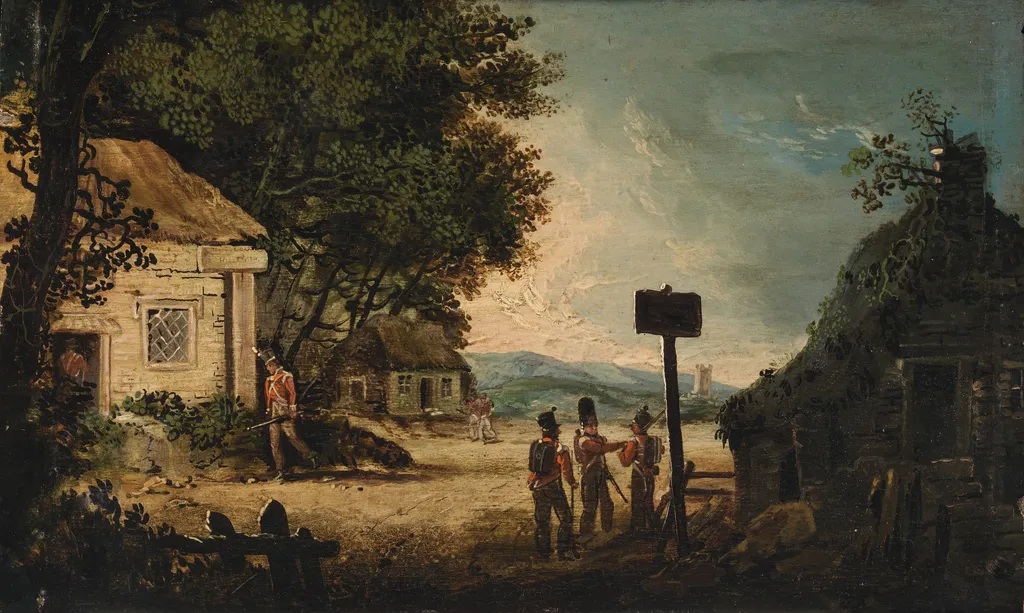
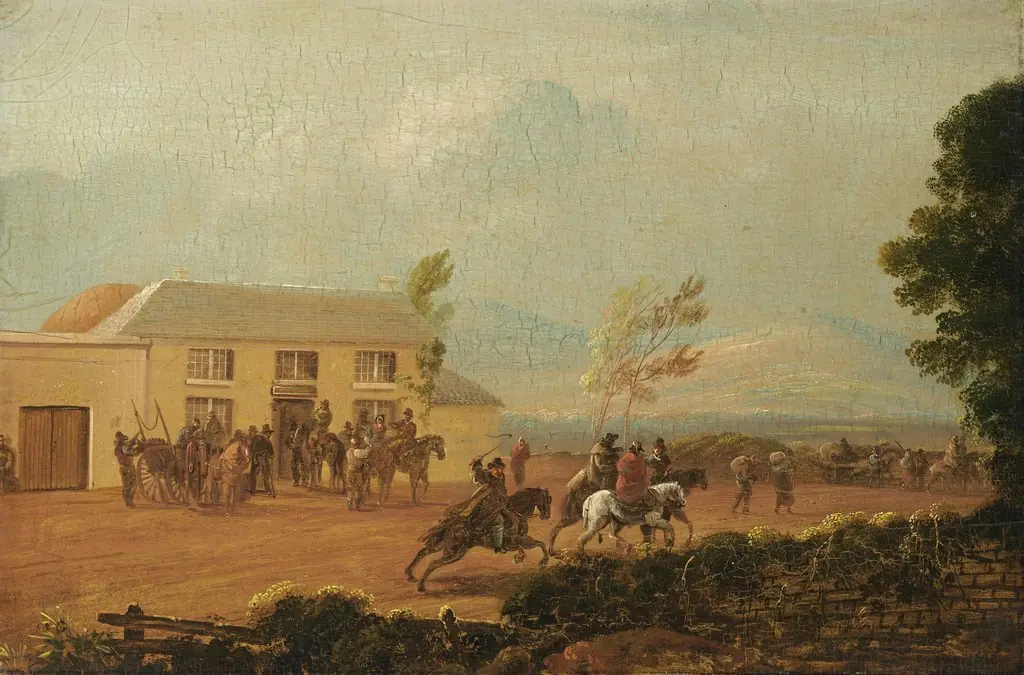
The Search for Michael Dwyer is an unspecified painting by William Sadler. It dates from 1803 and is held in the collection of the National Gallery of Ireland.
About this work
Overview
The Search for Michael Dwyer is an 1803 painting by Irish landscape and historical event painter William Sadler II. The work is part of the National Gallery of Ireland's collection.
Subject & Meaning
The painting depicts a tense scene of military men in uniform, with some armed, gathered around a rustic thatched-roof building. A figure enters the building while another observes the group, conveying an atmosphere of anticipation and tension, likely related to the pursuit of the titular Michael Dwyer.
Technique & Style
The composition utilizes chiaroscuro, a technique emphasizing strong contrasts between light and dark to create volume and depth. This is evident in the interplay between the illuminated figures, the shaded building, and the contrasting blue sky with clouds.
History & Provenance
Created in 1803 by William Sadler II, the painting is now held in the National Gallery of Ireland's collection. Sadler was also known for depicting significant historical events, notably the Battle of Waterloo.
Context
The subject, Michael Dwyer, suggests a connection to Irish historical or rebellious contexts of the time, though the specific event depicted is not detailed here. The painting reflects Sadler's interest in capturing moments of historical significance.
Legacy
While *The Search for Michael Dwyer* showcases Sadler's skill in historical and landscape painting, its broader impact or influence on subsequent artistic movements is not prominently noted in available information.
Artist & collection
Artist
William Sadler II (c. 1782 – 1839), also known as William Sadler the Younger, was an Irish painter. He was a noted landscape painter who is known for his depiction of the Battle of Waterloo.

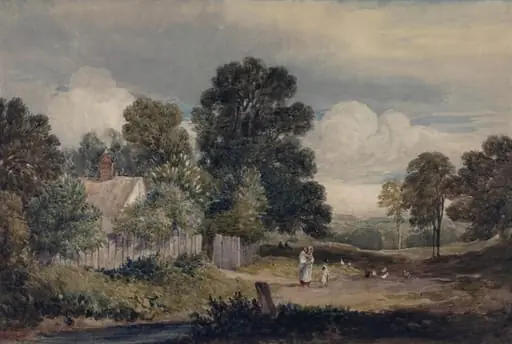 Cottage near Norwood
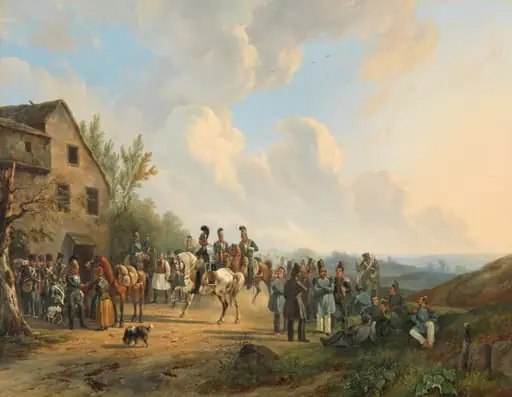 Scene from the Ten Days' Campaign against the Belgian Revolt, August 1831
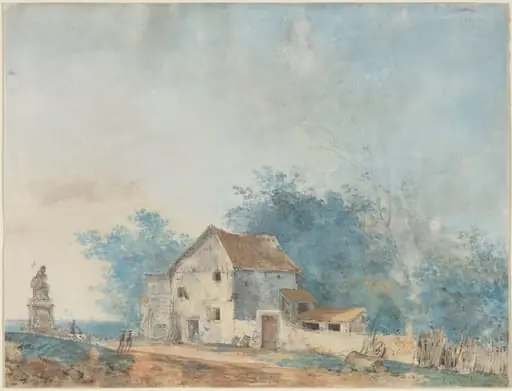 Landscape
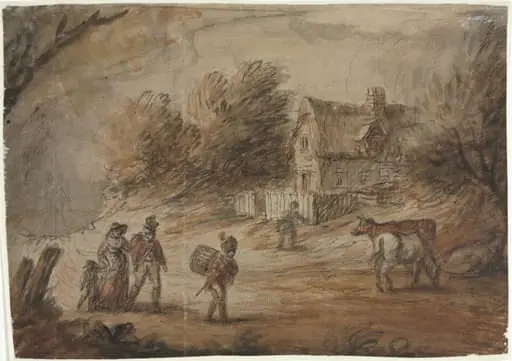 Country Scene with Soldiers
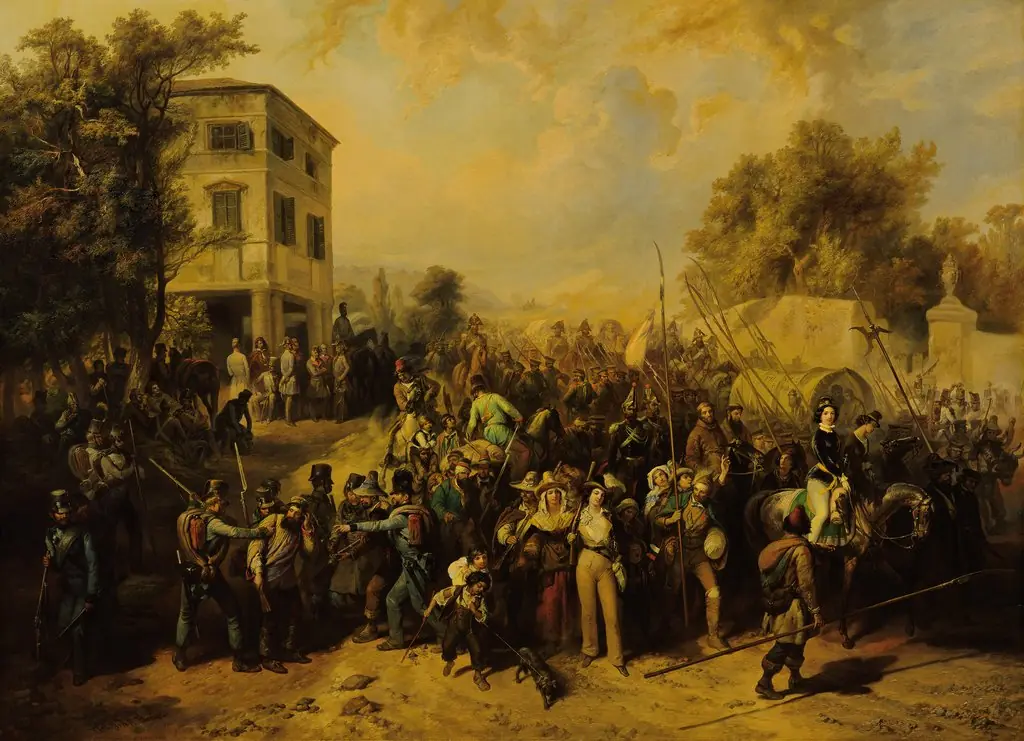 Der Auszug der Römer aus Vicenza
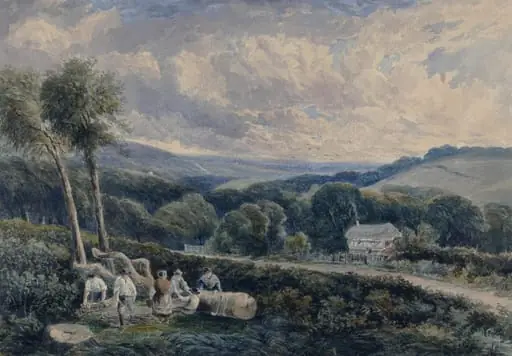 Landscape with cottage - labourers binding cordwood
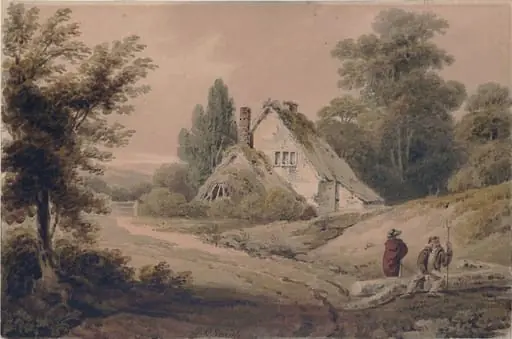 Landscape with cottage and figures
 Landscape with Barn
 The “Last Penny” tavern near Warsaw
 Cossack Camp, 1813
 View of the Thames near Eton