Artwork
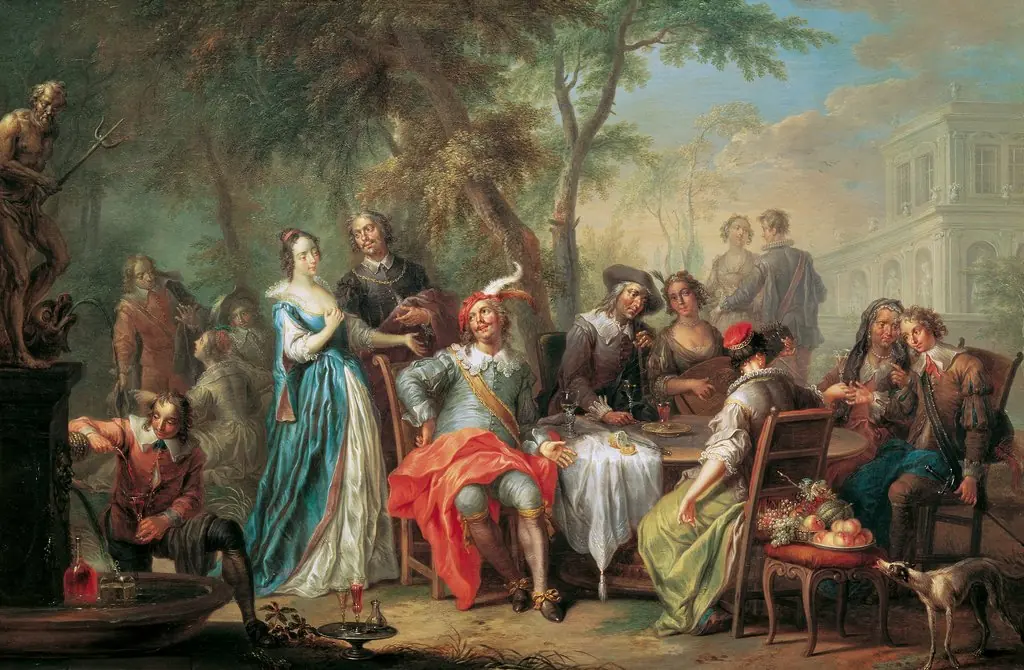
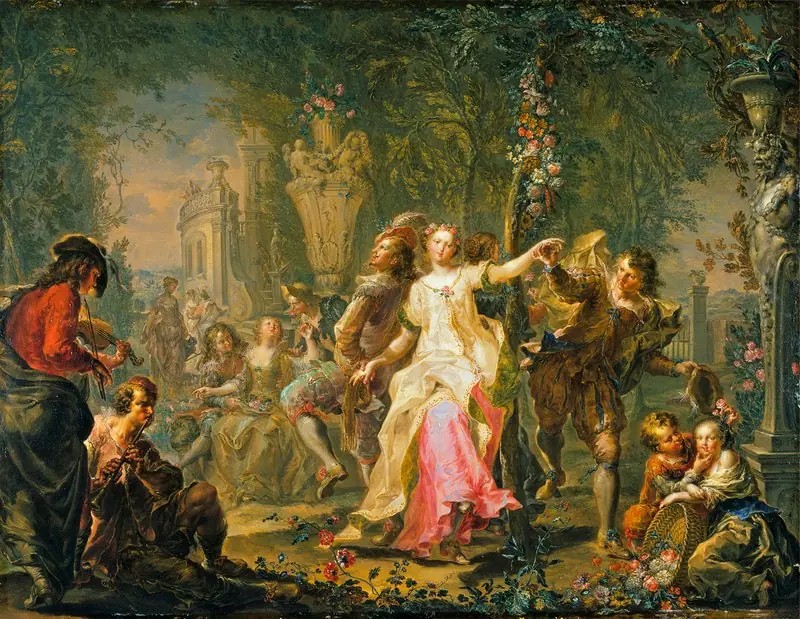
Elegant company dancing and drinking at the edge of a forest
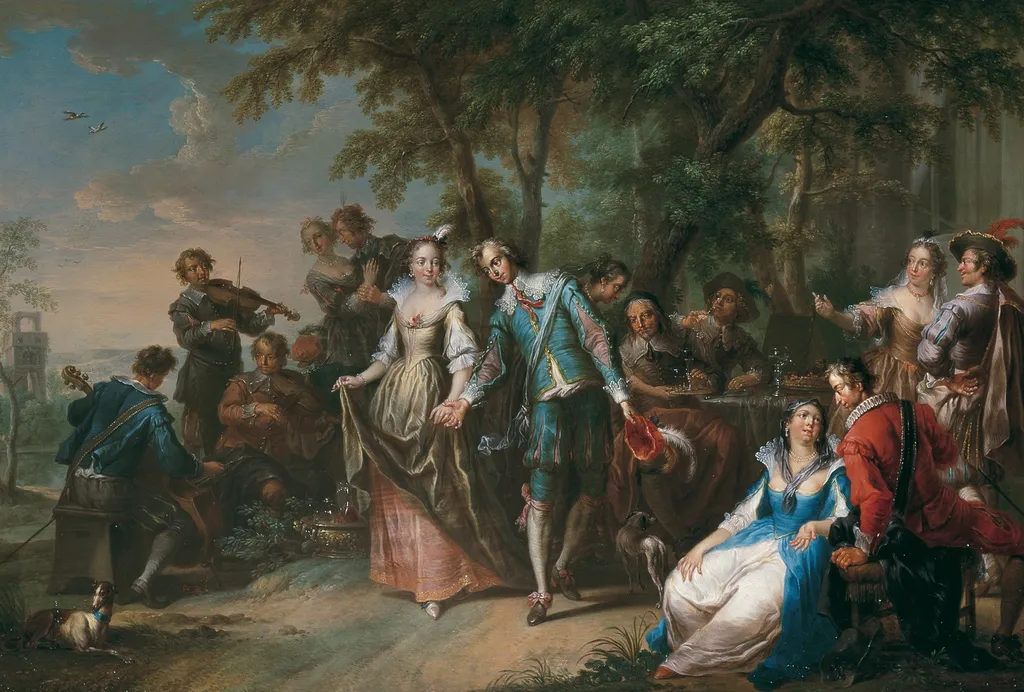
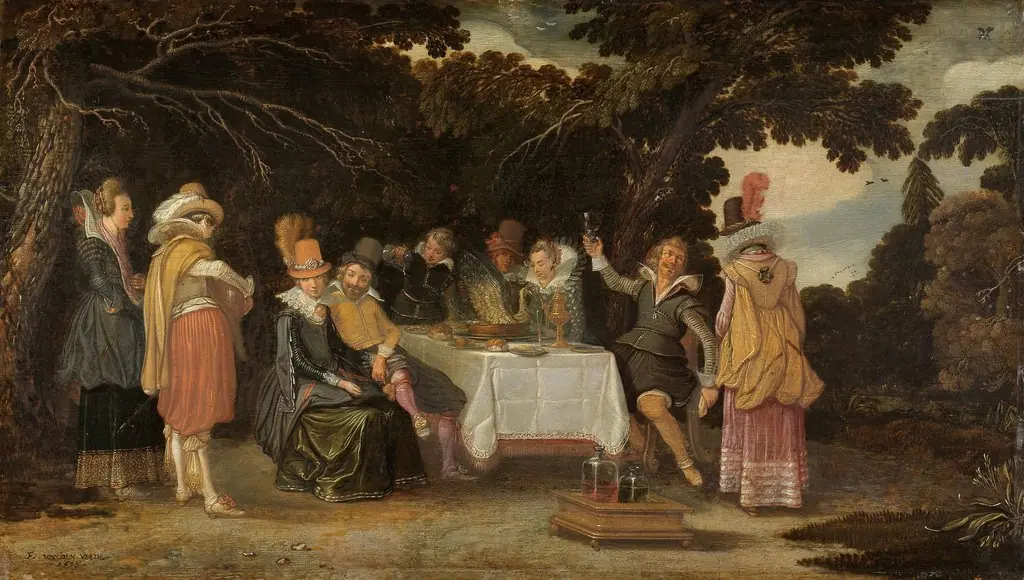
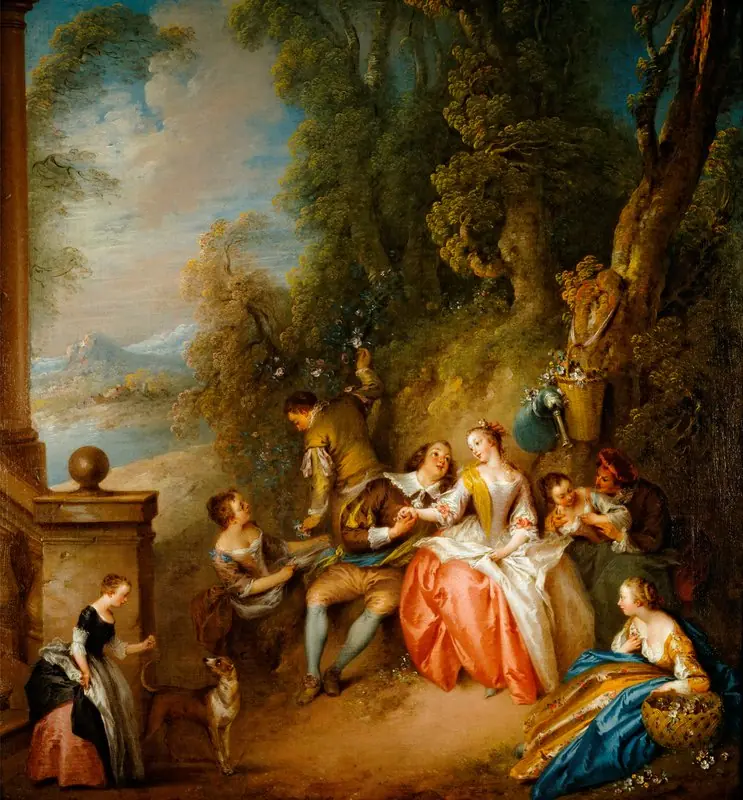
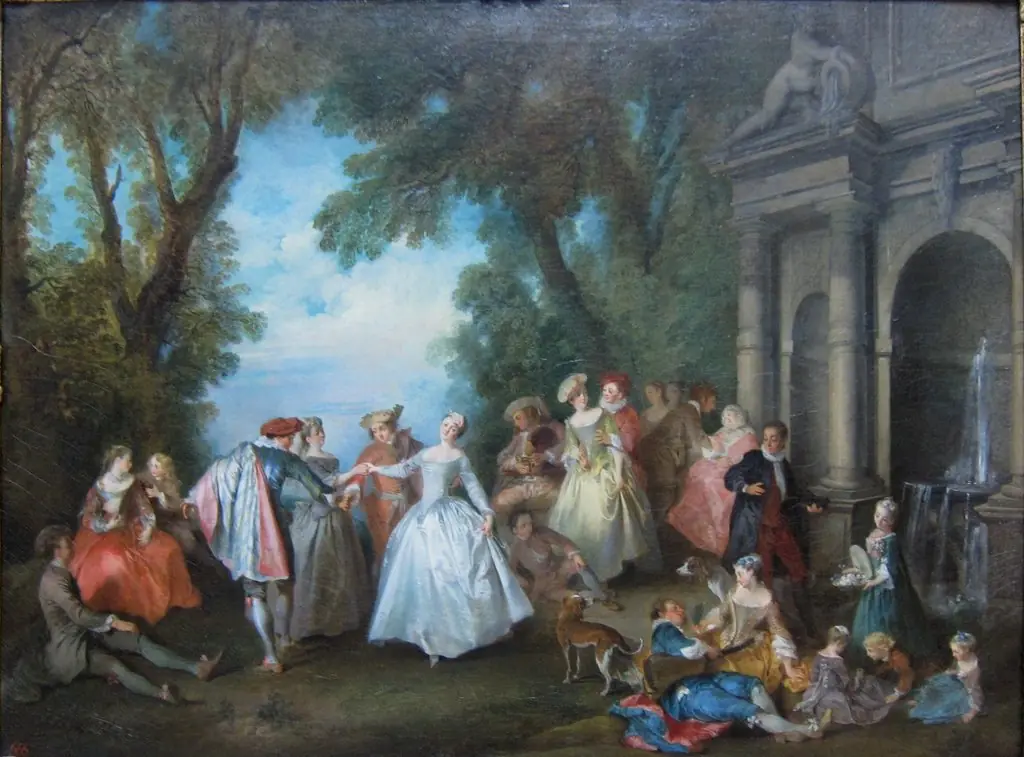
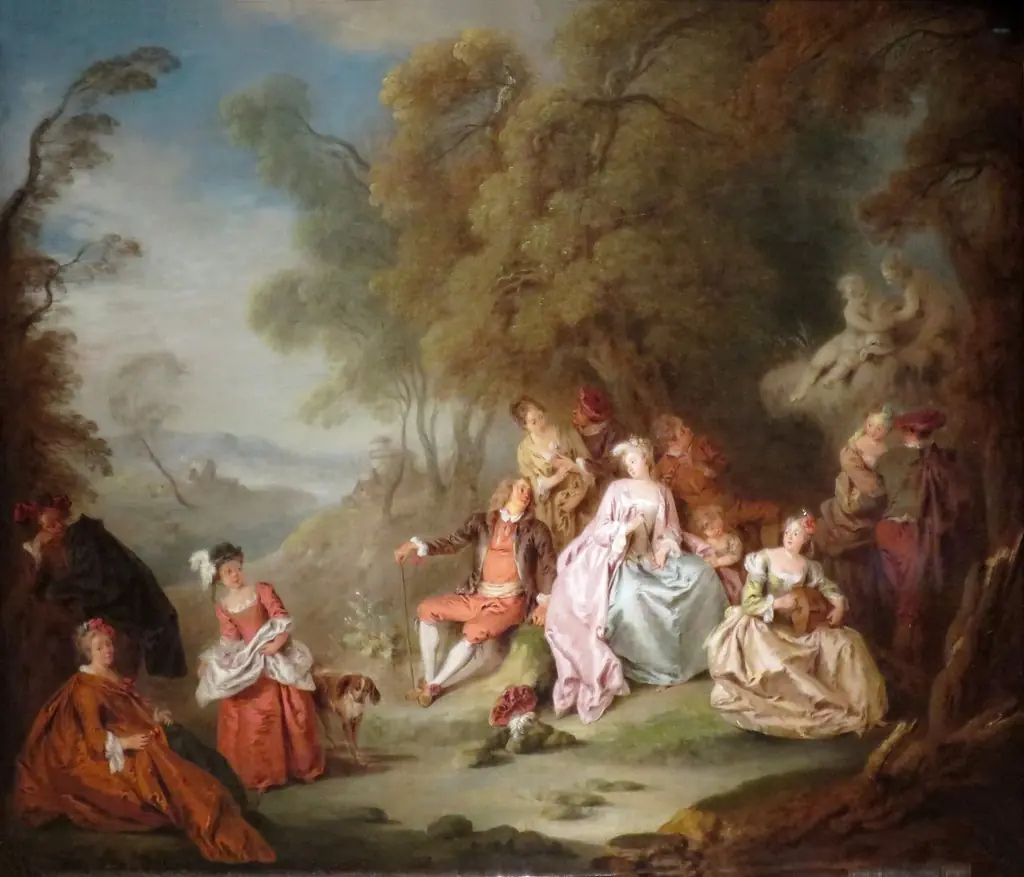
Elegant company dancing and drinking at the edge of a forest is an oil painting by the Rococo painting artist Franz Christoph Janneck. It dates from 1740 and is held in the collection of the Kunsthistorisches Museum.
About this work
Overview
Painted in 1740 by Austrian artist Franz Christoph Janneck, this oil-on-canvas work captures a social gathering at a forest’s edge.
Painted in 1740 by Austrian artist Franz Christoph Janneck, this oil-on-canvas work captures a social gathering at a forest’s edge. Executed in the Rococo style, it reflects the refined leisure of aristocratic life in mid-18th-century Central Europe. The piece resides in the Kunsthistorisches Museum’s collection, where it exemplifies Janneck’s focus on genre scenes blending everyday elegance with subtle theatricality.
Subject & Meaning
The scene portrays a group of well-dressed individuals engaged in dancing, drinking, and conversation beneath the trees. Their attire—elaborate lace, feathered hats, and puffed sleeves—signals wealth and social status. The forest setting, neither wild nor domesticated, serves as a stage for cultivated amusement, suggesting an idealized escape from urban life rather than a literal event.
Technique & Style
Janneck employs soft brushwork and a luminous palette to distinguish fabric textures from foliage. Rich greens and browns ground the composition, while the figures’ vivid silks and satins draw the eye. Light filters through the canopy, creating dappled shadows that enhance spatial depth. The composition is loosely grouped, avoiding rigid symmetry in favor of naturalistic movement.
History & Provenance
Janneck, active in Graz and Vienna, produced numerous genre scenes for private patrons during the Rococo era. This painting likely originated as a commission from a noble household seeking to commemorate social rituals. It entered the Kunsthistorisches Museum’s holdings in the 19th century, where it remains part of its broader collection of Central European decorative arts.
Context
In the 1740s, aristocratic circles in the Habsburg lands favored pastoral entertainments as expressions of refinement. Paintings like this mirrored contemporary fashions in garden parties and outdoor festivals, where mythological allusions and elegant dress signaled cultural sophistication. Janneck’s work aligns with a broader trend of depicting leisure as both pleasure and performance.
Legacy
Though not widely known today, Janneck’s genre scenes offer insight into the visual culture of provincial aristocracy in Baroque Austria. His blending of portraiture, landscape, and social narrative influenced later regional painters. This painting endures as a quiet record of how elite identity was performed in intimate, natural settings.
Own this work as a print
Artist & collection
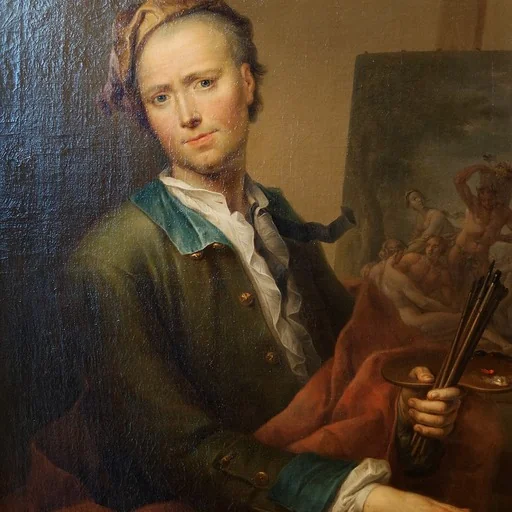
Artist
Franz Christoph Janneck (3 October 1703, Graz - 13 January 1761, Vienna) was an Austrian painter in the Baroque style.