Artwork
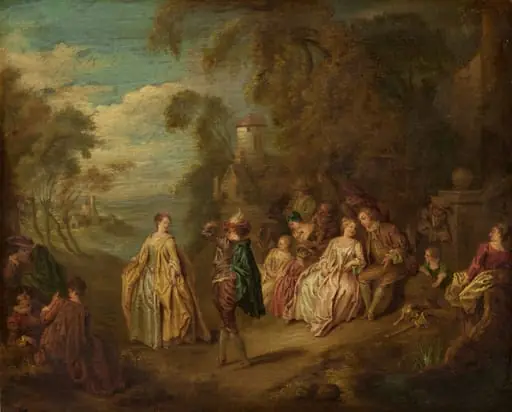
Fête champêtre
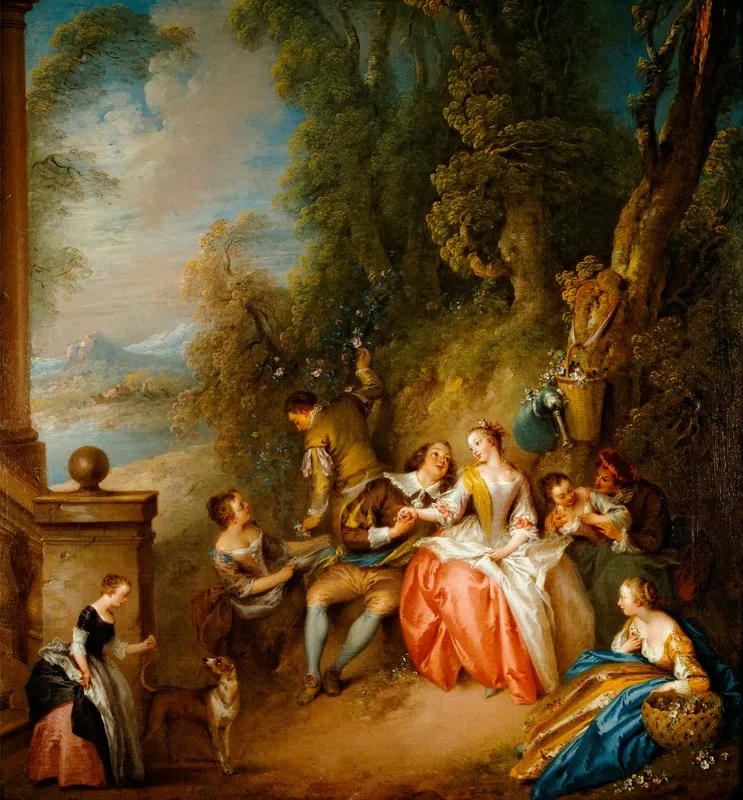
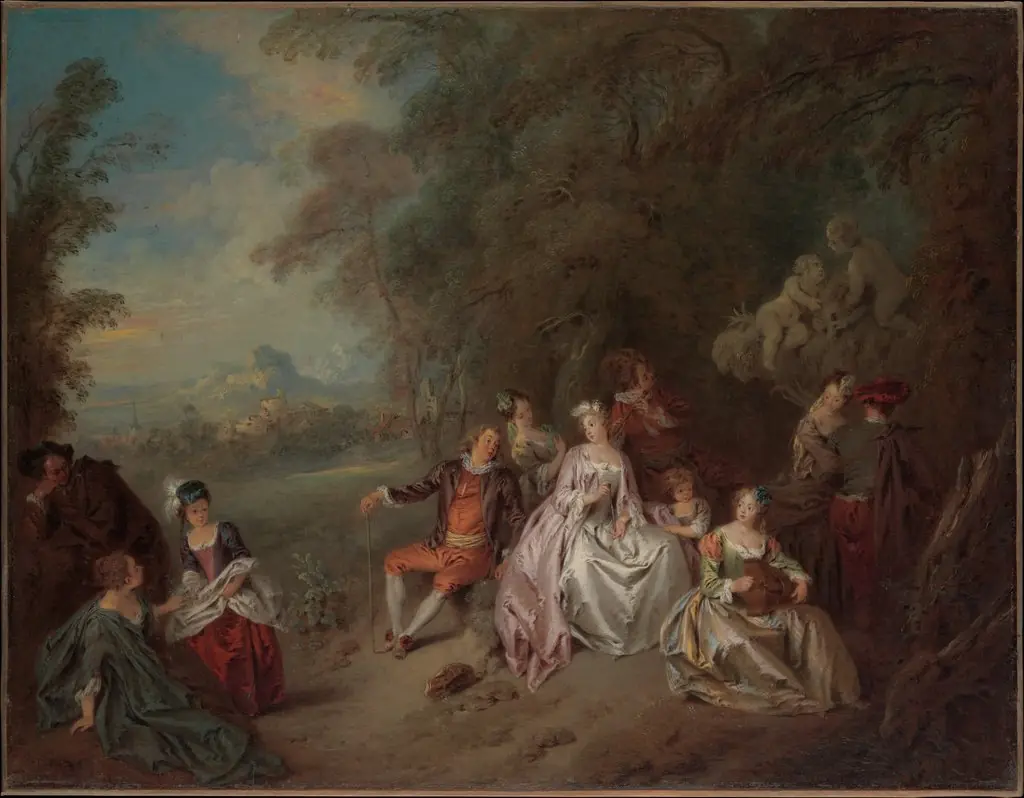
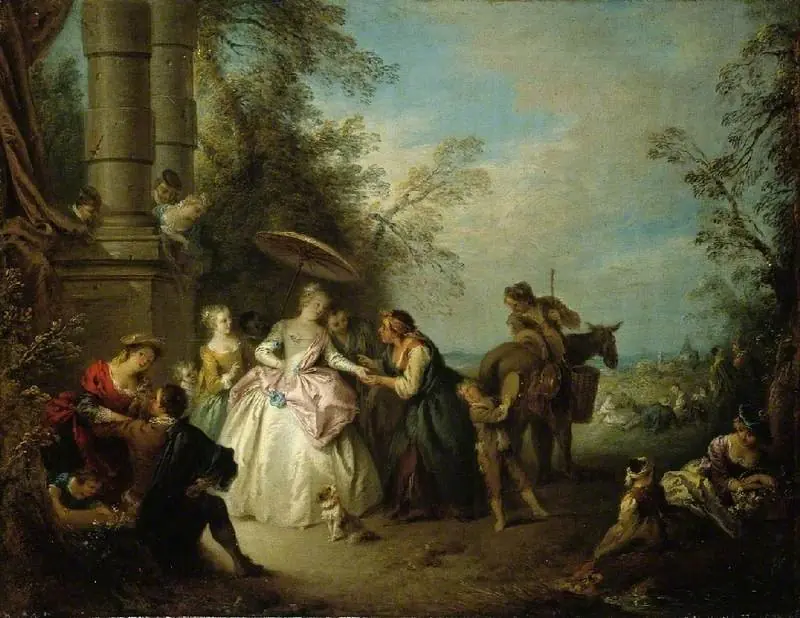
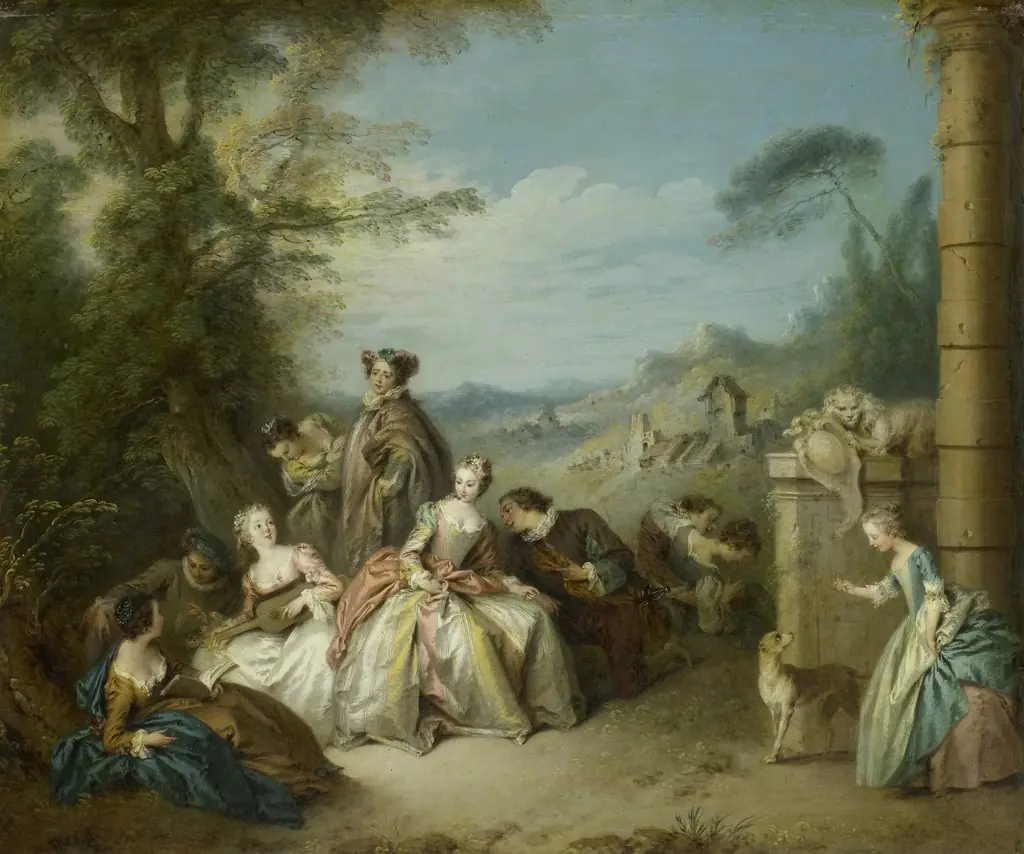
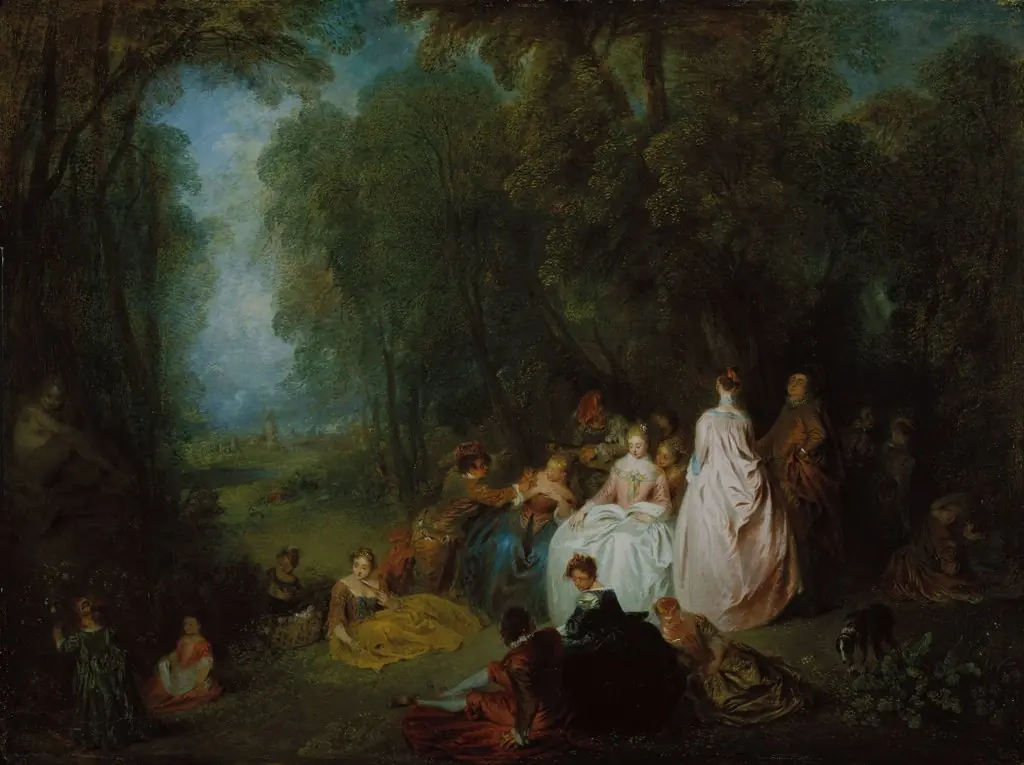
Fête champêtre is an oil painting by the Rococo painting artist Jean-Baptiste Pater. It dates from 1730 and is held in the collection of the Victoria and Albert Museum.
About this work
Overview
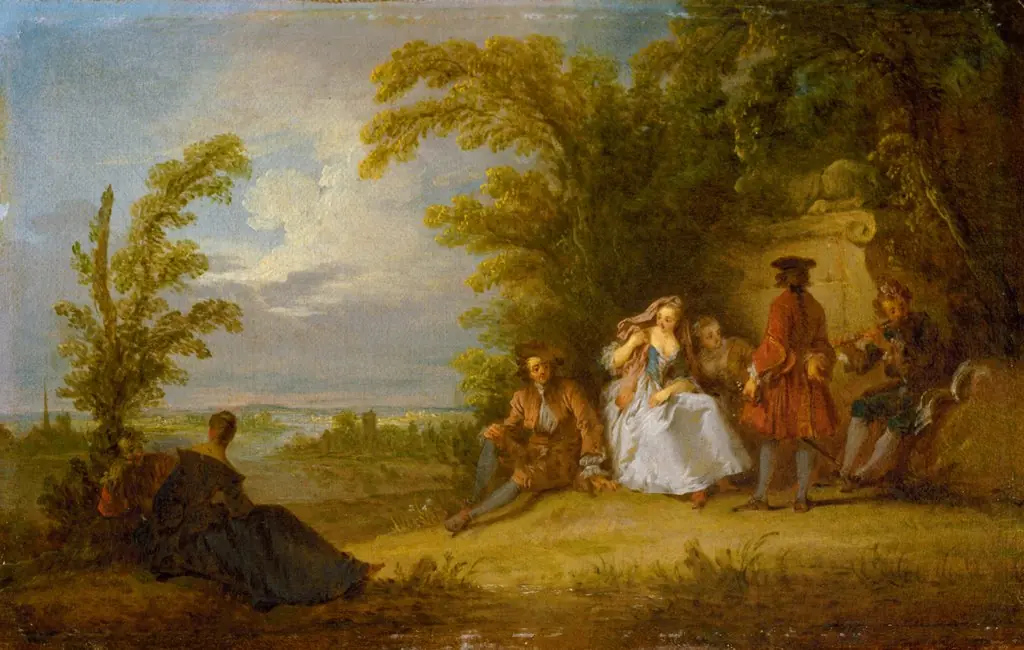
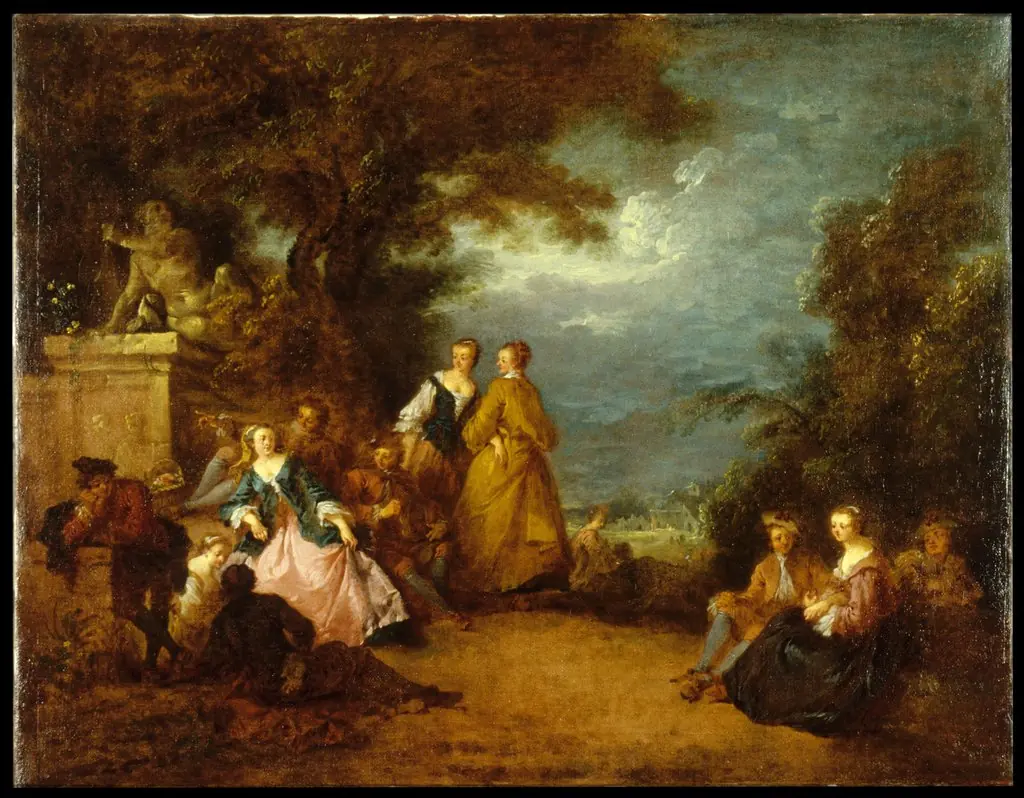
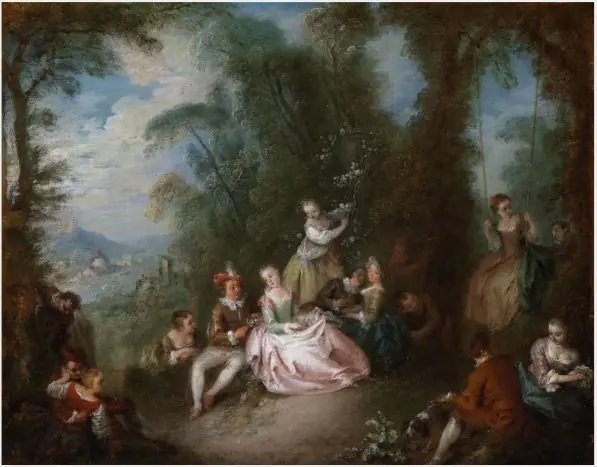
Jean-Baptiste Pater’s *Fête champêtre* (1730) is an oil painting that exemplifies the light‑hearted spirit of the French Rococo. Executed when the artist was in his mid‑thirties, the work presents a convivial gathering set in a wooded landscape, rendered with a palette of warm hues that convey a relaxed atmosphere.
Subject & Meaning
The attire and setting reflect the 18th‑century aristocratic pastime of pastoral picnics, celebrating nature as a backdrop for refined social interaction.
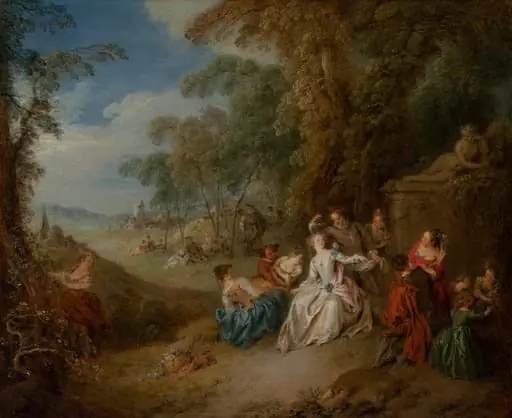
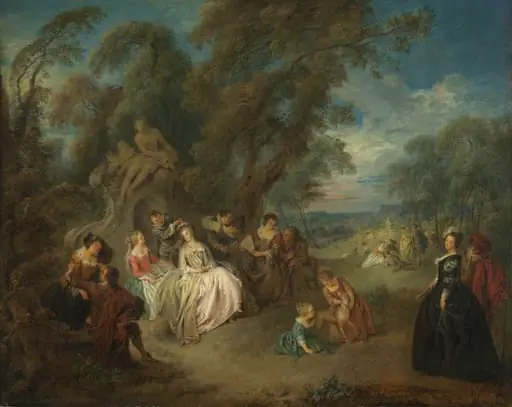
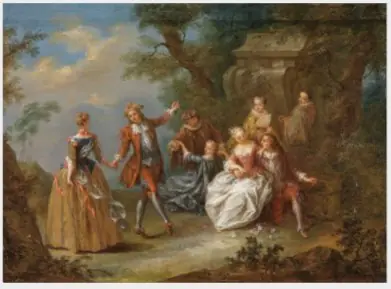
The composition shows a small group of elegantly dressed figures enjoying an outdoor leisure scene. A seated woman on a bench, a standing companion holding a leashed dog, and a man looking toward the viewer suggest a moment of genteel amusement. The attire and setting reflect the 18th‑century aristocratic pastime of pastoral picnics, celebrating nature as a backdrop for refined social interaction.
Technique & Style
Pater employs the delicate brushwork and pastel tonalities typical of Rococo painting. Fine attention to the folds of silk and linen, as well as the nuanced facial expressions, creates a sense of immediacy. The warm colour scheme, combined with soft modeling of light across the foliage and sky, enhances the intimate, inviting mood of the scene.
History & Provenance
Born in Valenciennes in 1695, Pater trained under his sculptor father before studying with Jean‑Baptiste Guide and later Antoine Watteau, whose aesthetic left a lasting imprint on his work. *Fête champêtre* entered the collection of the Victoria and Albert Museum, where it remains part of the museum’s holdings of 18th‑century French painting.
Artist & collection
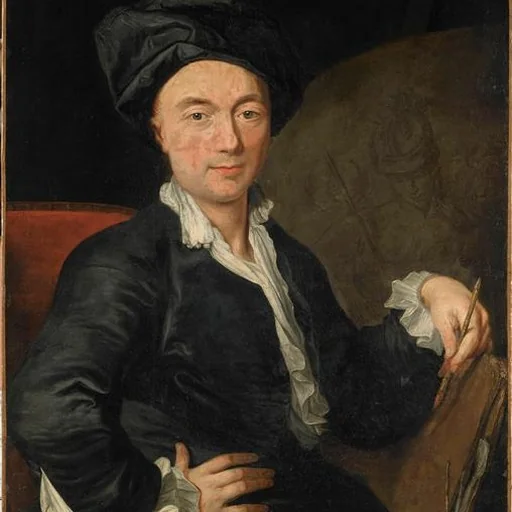
Artist
Jean-Baptiste Pater (December 29, 1695 – July 25, 1736) was a French rococo painter.