Artwork
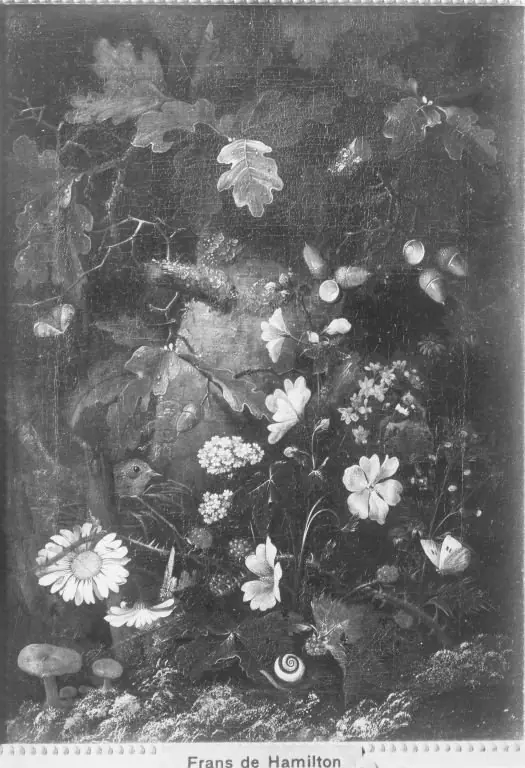
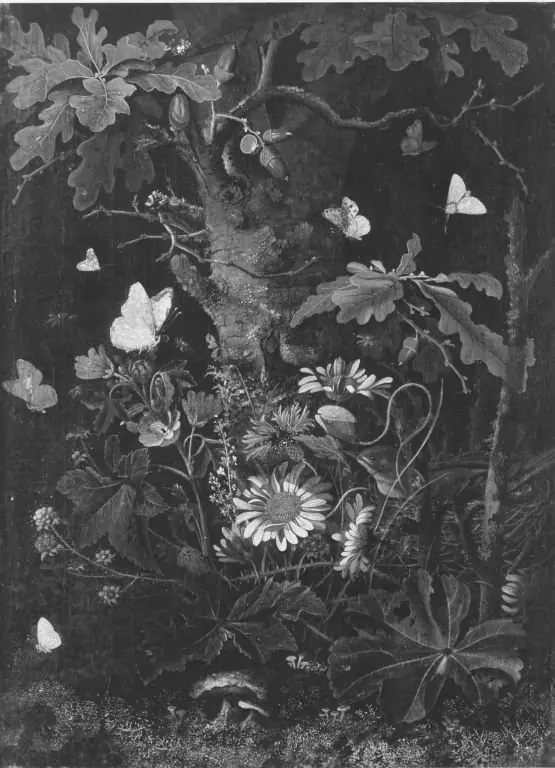
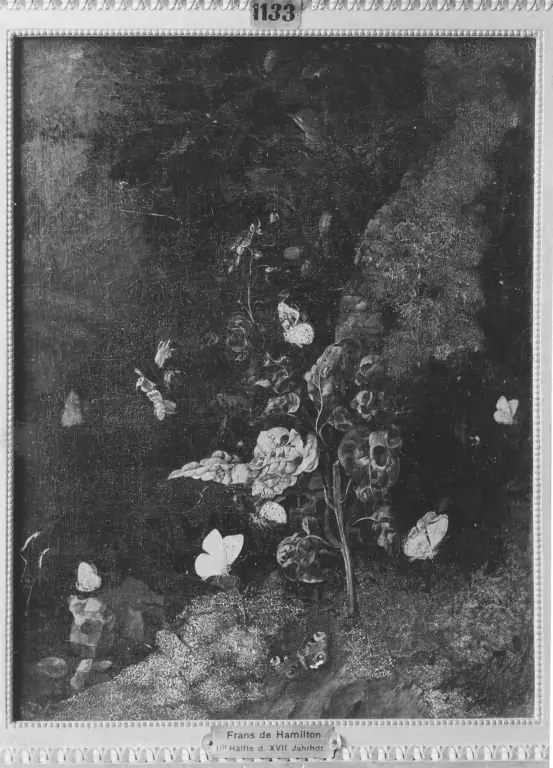
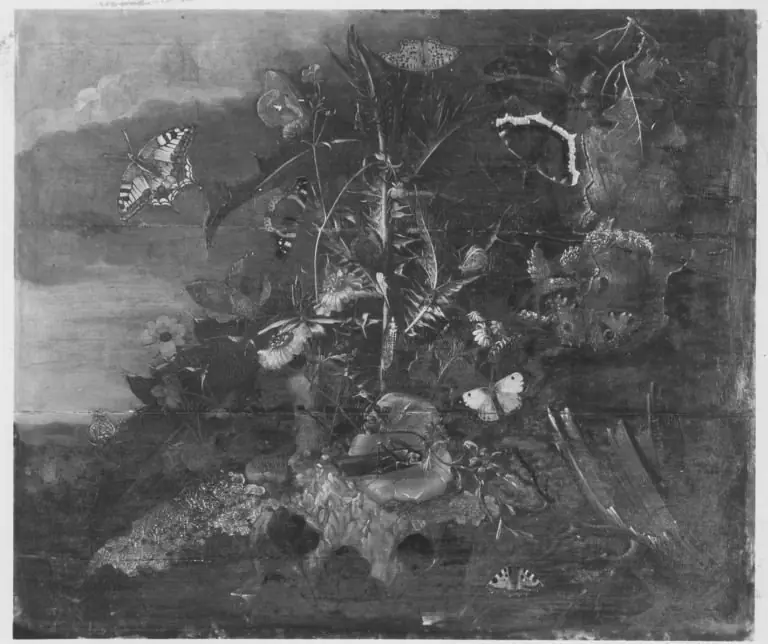
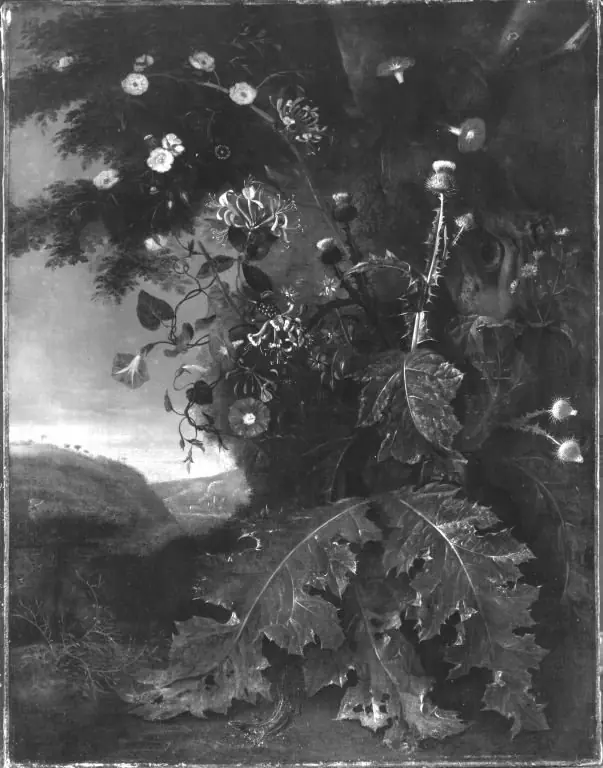
Stillleben: Waldboden mit Heuschrecke
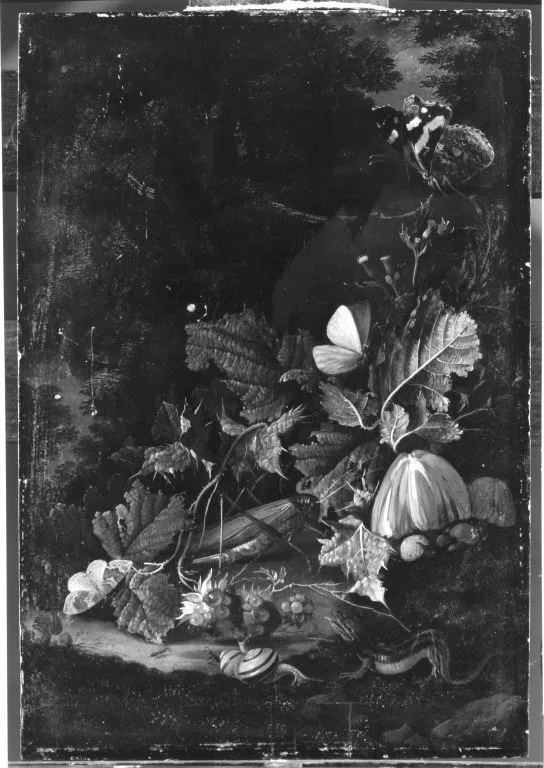
Stillleben: Waldboden mit Heuschrecke is an unspecified painting by the Dutch Golden Age artist Franz de Hamilton. It dates from 1690 and is held in the collection of the Bavarian State Painting Collections.
About this work
Overview
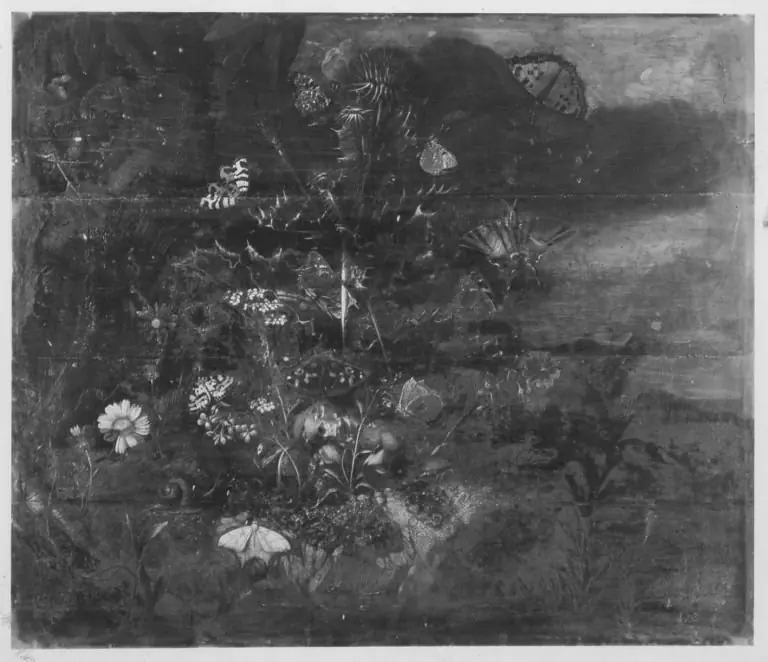
Franz de Hamilton’s still‑life painting, dated 1690, presents a compact arrangement of autumnal produce and forest detritus against a deep, muted backdrop. The composition includes a pumpkin, clusters of grapes, assorted mushrooms, and scattered leaves, interspersed with insects such as butterflies and beetles. The work is part of the collection of the Alte Pinakothek in Munich.
Subject & Meaning
The tableau gathers elements of the forest floor, juxtaposing cultivated fruit with wild flora and fauna. By placing insects among the produce, the artist underscores the interdependence of cultivated and natural worlds, hinting at the transitory nature of abundance and the inevitable return of organic matter to the earth.
Technique & Style
Hamilton employs a pronounced contrast between the dark ground and the illuminated objects, creating a sense of depth through chiaroscuro. The rendering of textures—smooth skin of the pumpkin, the translucence of grape skins, the delicate wings of insects—demonstrates careful observation and a meticulous brushwork that balances realism with compositional drama.
History & Provenance
Created at the close of the 17th century, the painting entered the holdings of the Alte Pinakothek, where it remains on display. Its attribution to Franz de Hamilton, a Flemish artist active in Germany, aligns with his known oeuvre of detailed still‑life subjects that often incorporate naturalistic details.
Artist & collection
Artist
Franz de Hamilton (1640–1695) was an artist, born in Brussels metropolitan area.