Artwork
Untitled
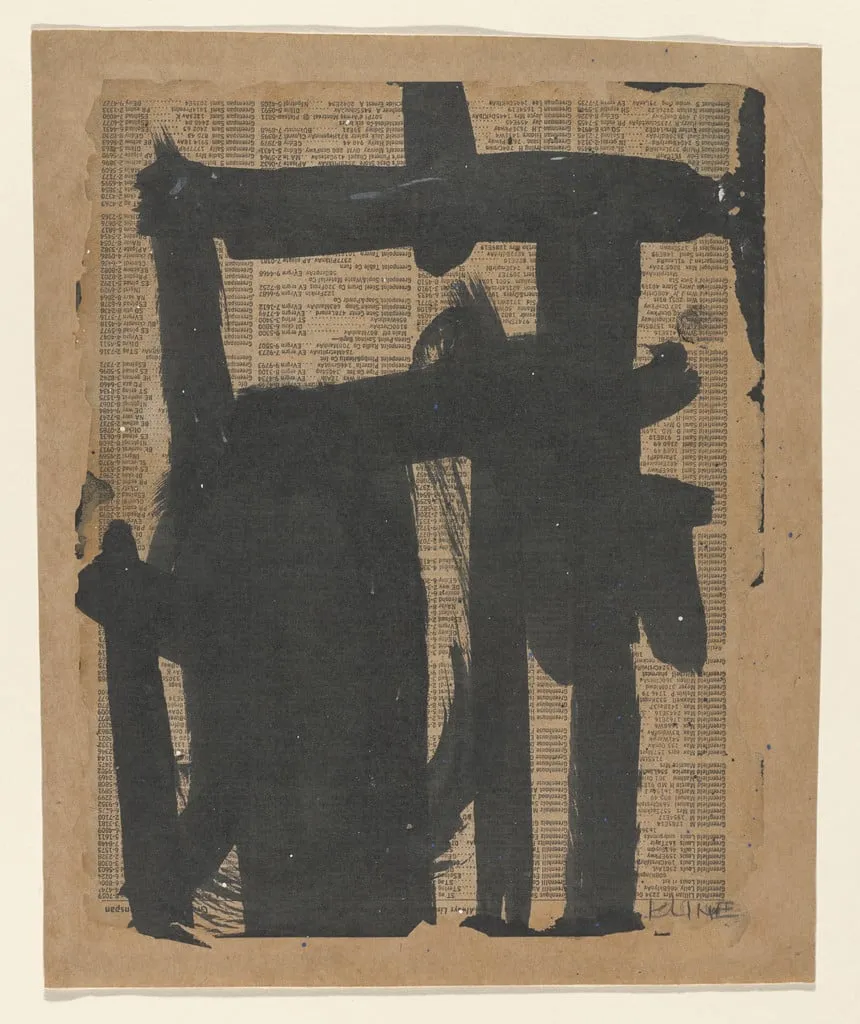
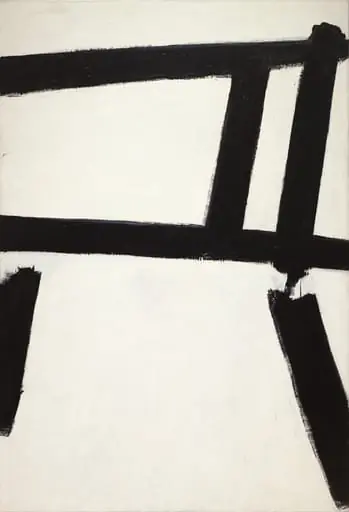
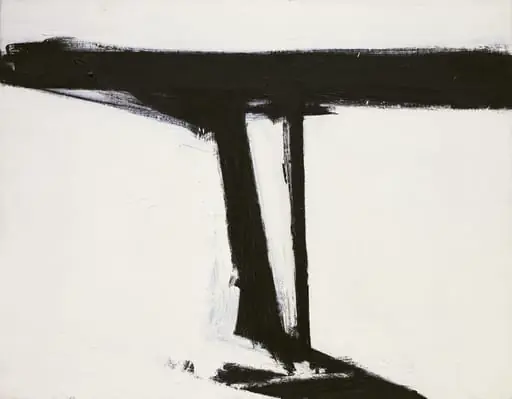
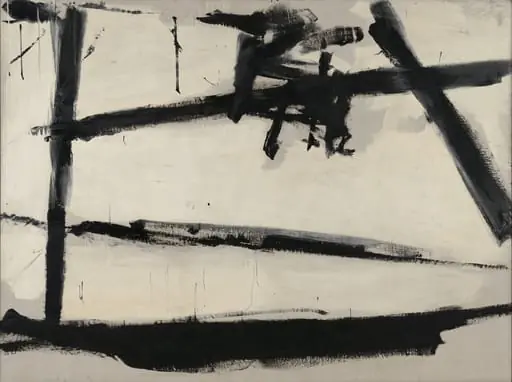
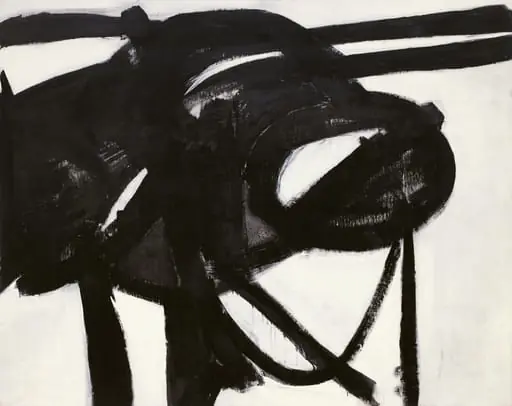
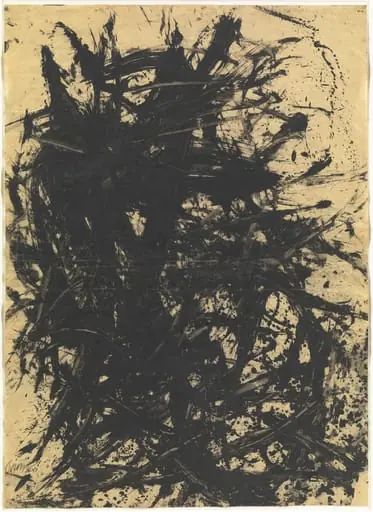
Untitled is an ink drawing by Franz Kline. It dates from 1951 and is held in the collection of the Museum of Modern Art.
About this work
Overview
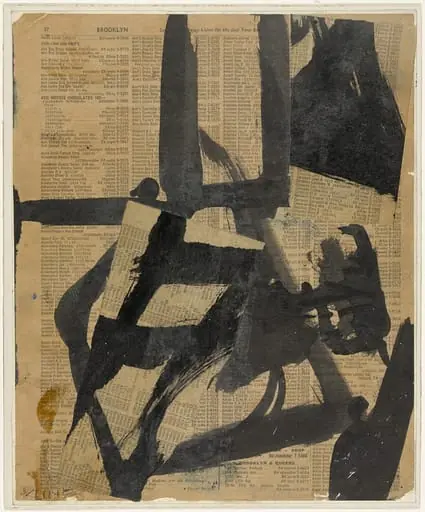
Created in 1951, this drawing by Franz Kline consists of ink applied to a page from a telephone book, mounted on a rigid support.
Created in 1951, this drawing by Franz Kline consists of ink applied to a page from a telephone book, mounted on a rigid support. The composition features a stark, abstract form rendered in dense black strokes, contrasting with the textured, partially visible surface of the underlying paper. The work exemplifies Kline’s shift toward large-scale, gestural abstraction during this period, using everyday materials to challenge traditional artistic supports.
Subject & Meaning
The figure-like shape lacks literal representation, instead evoking a sense of presence through forceful, vertical strokes. Raised arms suggest motion or gesture, but no narrative or identity is implied. The work prioritizes physicality and rhythm over symbolism, inviting perception of energy rather than depiction of form. The torn, layered paper beneath hints at fragmentation and impermanence, reinforcing the immediacy of the artist’s action.
Technique & Style
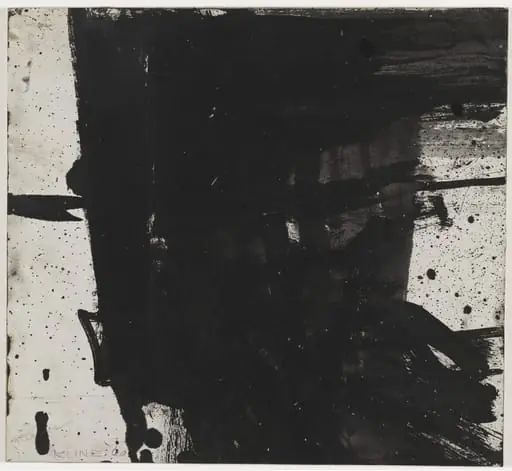
Kline applied ink with broad, sweeping motions, creating thick, uneven lines that appear slashed rather than painted. The ink bleeds and pools slightly, emphasizing spontaneity. The telephone book page, glued to board, retains its original texture and creases, becoming an active element of the composition. The contrast between the opaque black marks and the faint, weathered print beneath underscores a dialogue between intervention and found material.
History & Provenance
This work entered the collection of The Museum of Modern Art in the 1950s, during a period when Kline’s abstract drawings gained recognition alongside his larger canvases. Its use of a mundane, mass-produced surface reflects the artist’s interest in elevating ordinary materials. The piece remained relatively unaltered since its creation, preserving the original adhesive and paper condition as evidence of its making.
Context
In the early 1950s, Kline moved away from figurative work toward abstraction, influenced by the energy of urban life and the spontaneity of jazz. His use of telephone book pages aligned with contemporaneous experiments by Abstract Expressionists who embraced non-traditional supports. The scale and directness of this piece reflect a broader postwar interest in art as an act of personal expression, not mere representation.
Legacy
This work contributes to the understanding of Kline’s process as one of reduction and physical engagement. By using discarded paper, he expanded the possibilities of drawing beyond conventional supports. The piece remains a quiet but significant example of how everyday materials could carry the weight of abstract expression, influencing later artists who prioritized process over polish.
Artist & collection

Artist
Franz Kline was an American painter. He is associated with the Abstract Expressionist movement of the 1940s and 1950s. Kline, along with other action painters like Jackson Pollock, Willem de Kooning, Robert Motherwell,…