Artwork
Stone Base with Flowers and Fruit
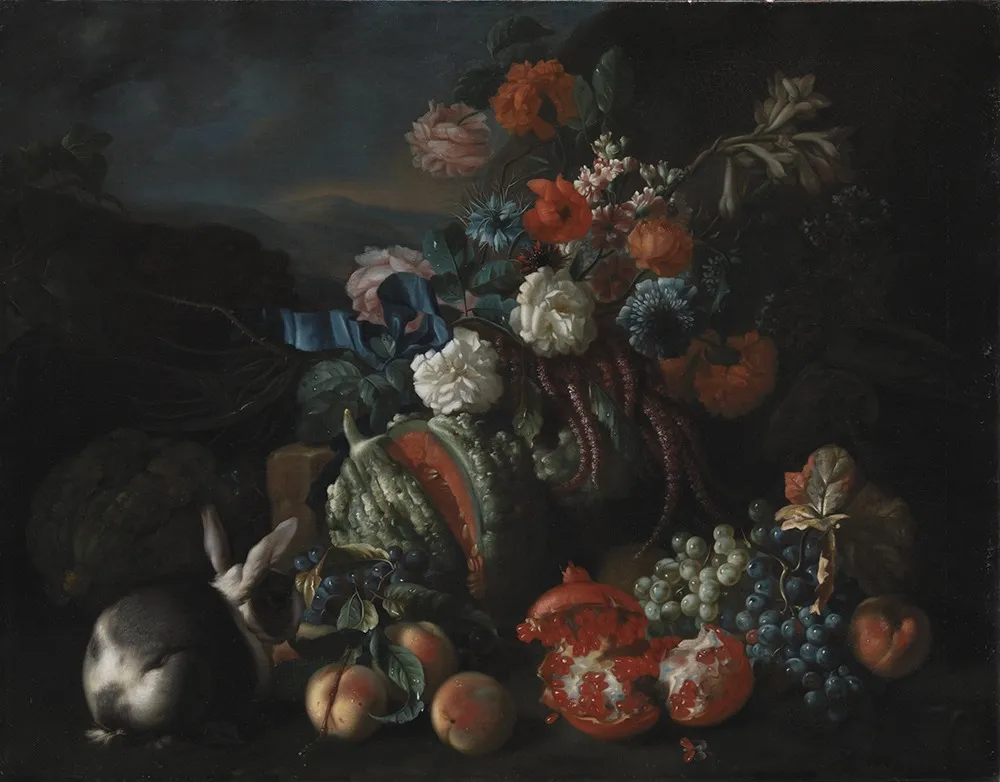
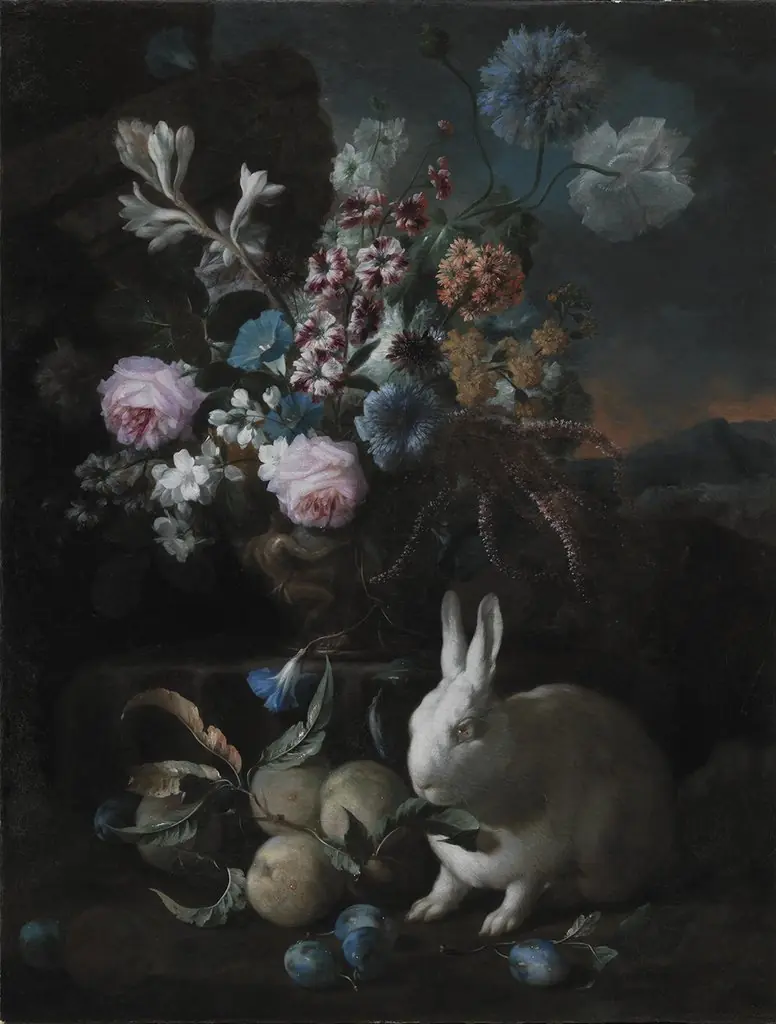
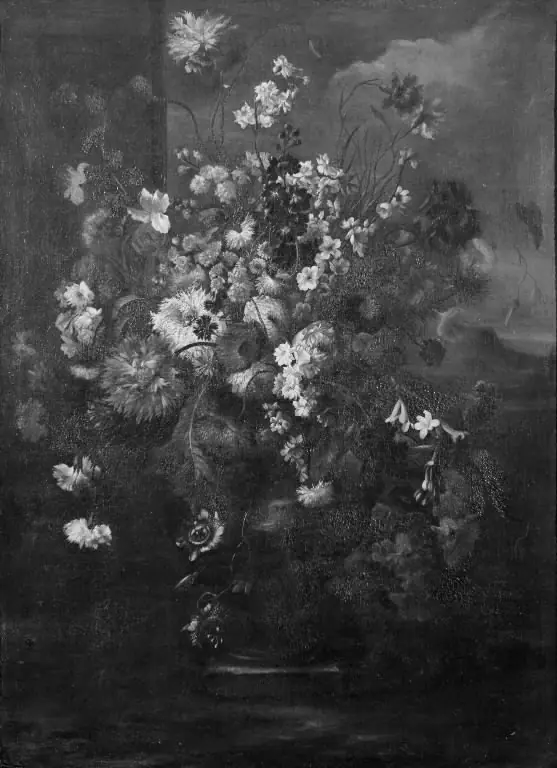
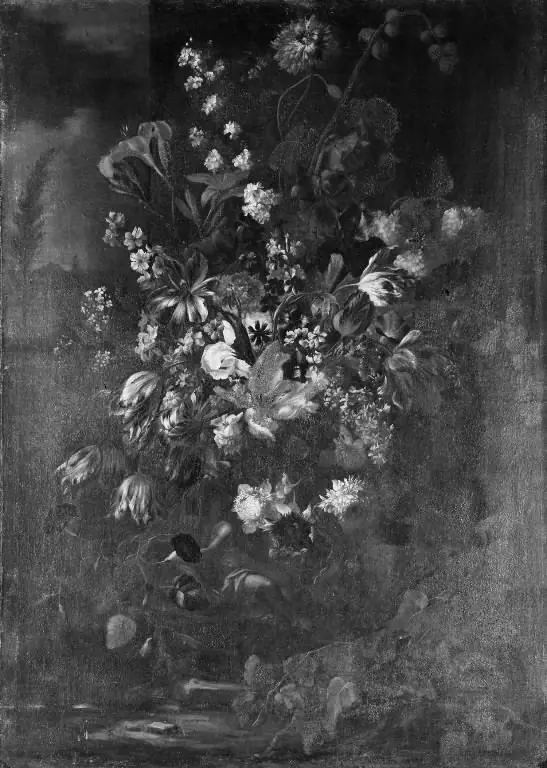
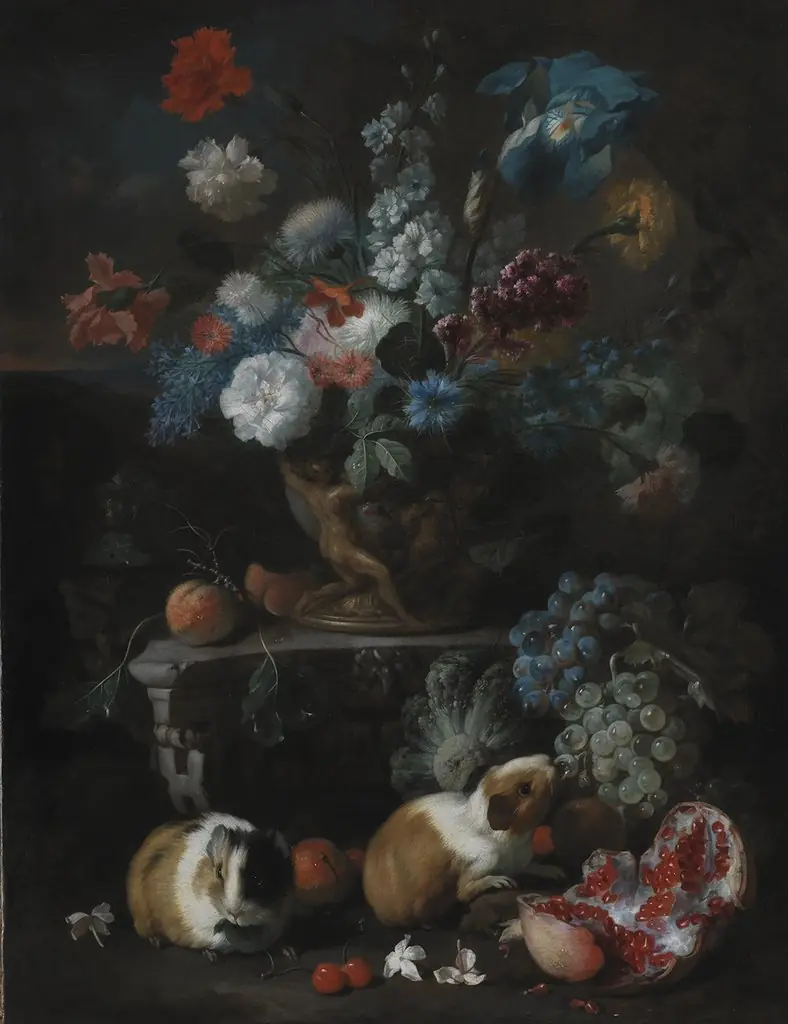
Stone Base with Flowers and Fruit is an oil painting by the Flemish Baroque painting artist Franz Werner Tamm. It dates from 1700 and is held in the collection of the Statens Museum for Kunst.
About this work
Overview
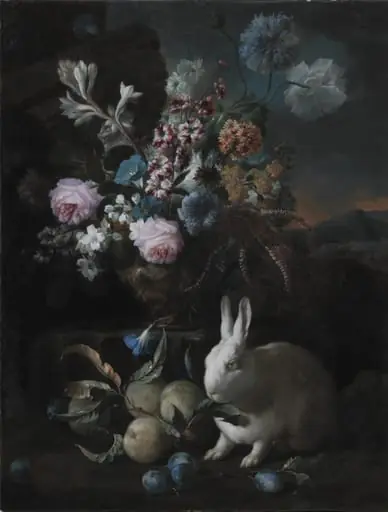
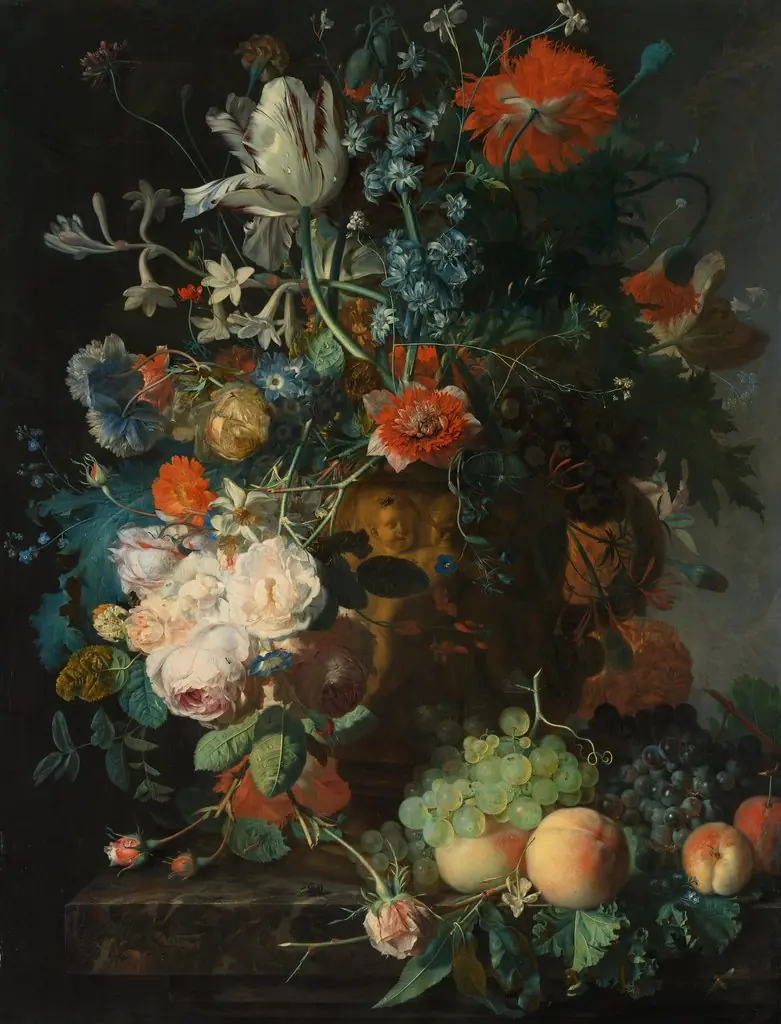
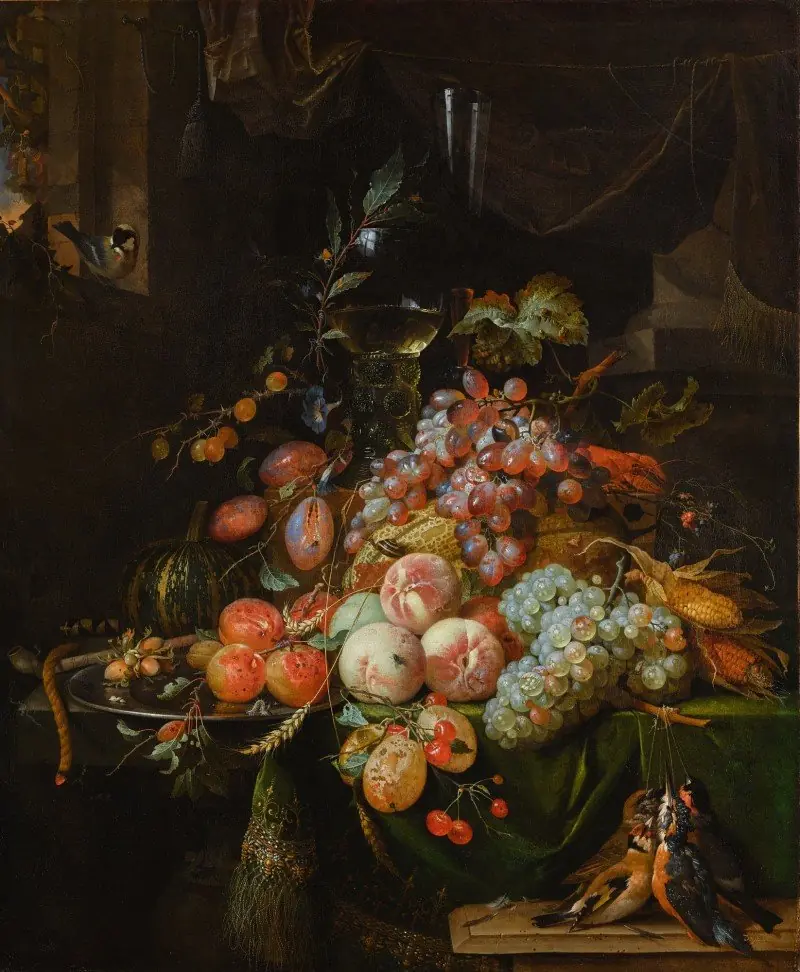
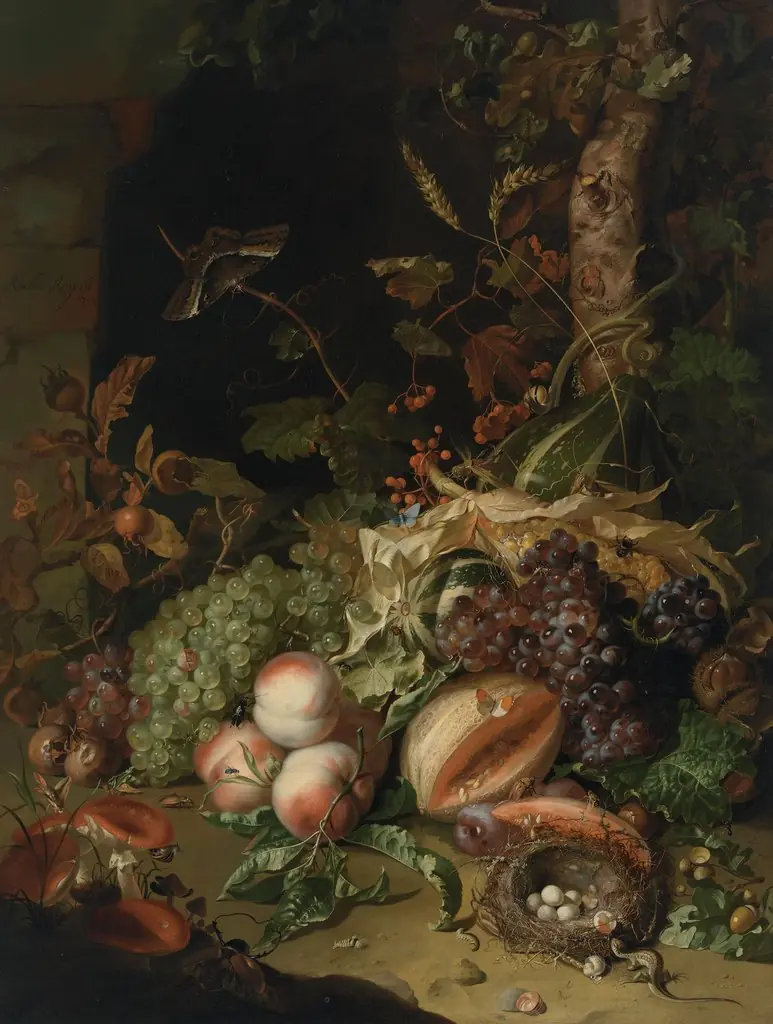
Painted in 1700 by Franz Werner Tamm, this oil-on-canvas work presents a still life arranged on a stone ledge. It features an assortment of seasonal produce and blossoms, rendered with careful attention to texture and form. The composition is grounded by a dark, unbroken background that enhances the vibrancy of the objects, creating a quiet sense of presence rather than theatrical display.
Subject & Meaning
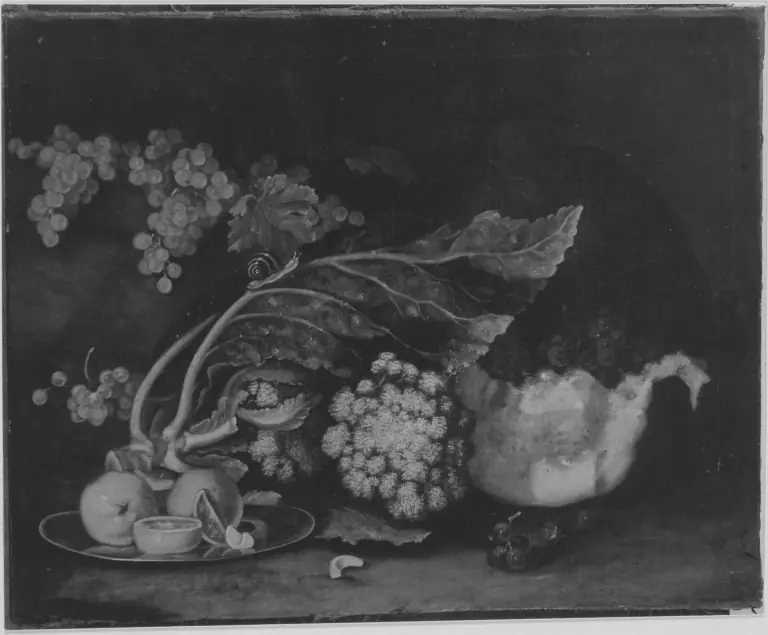
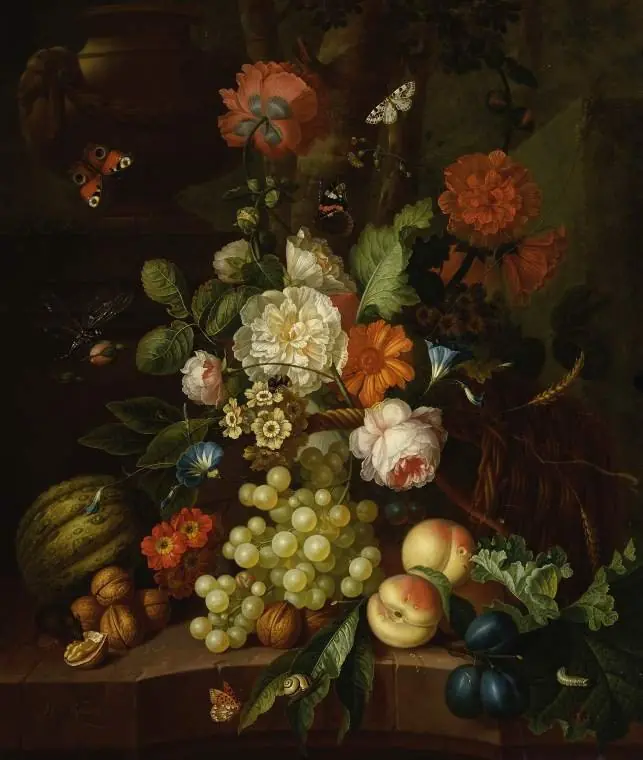
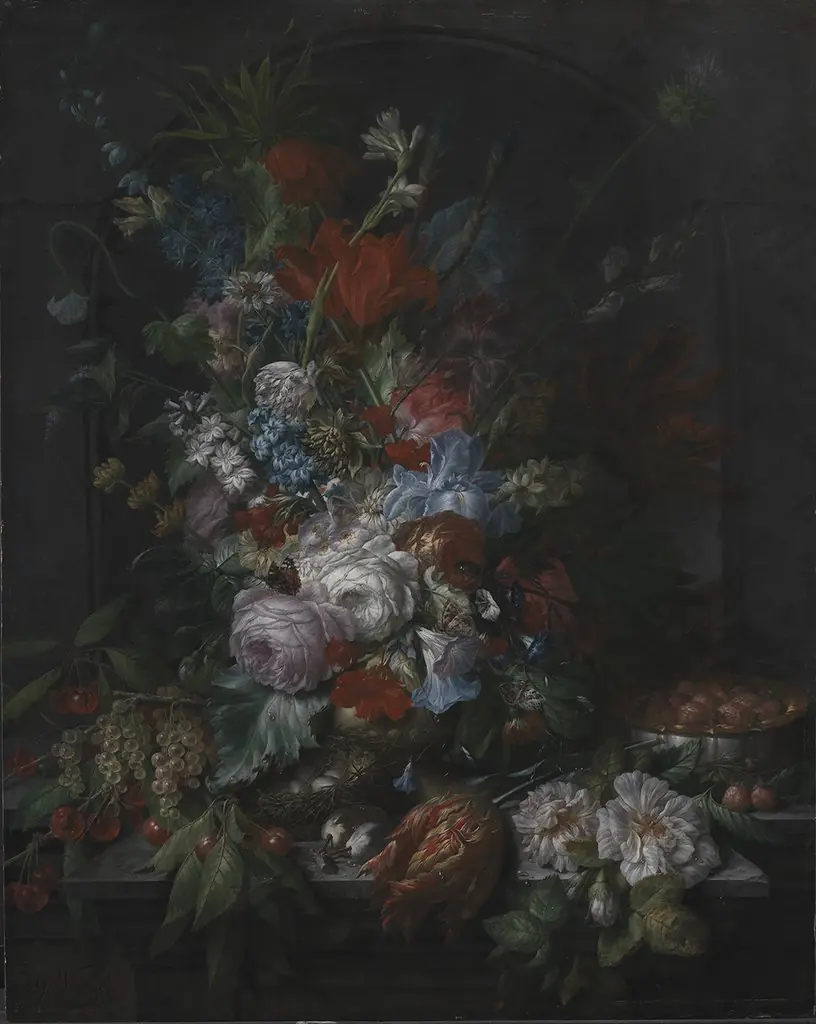
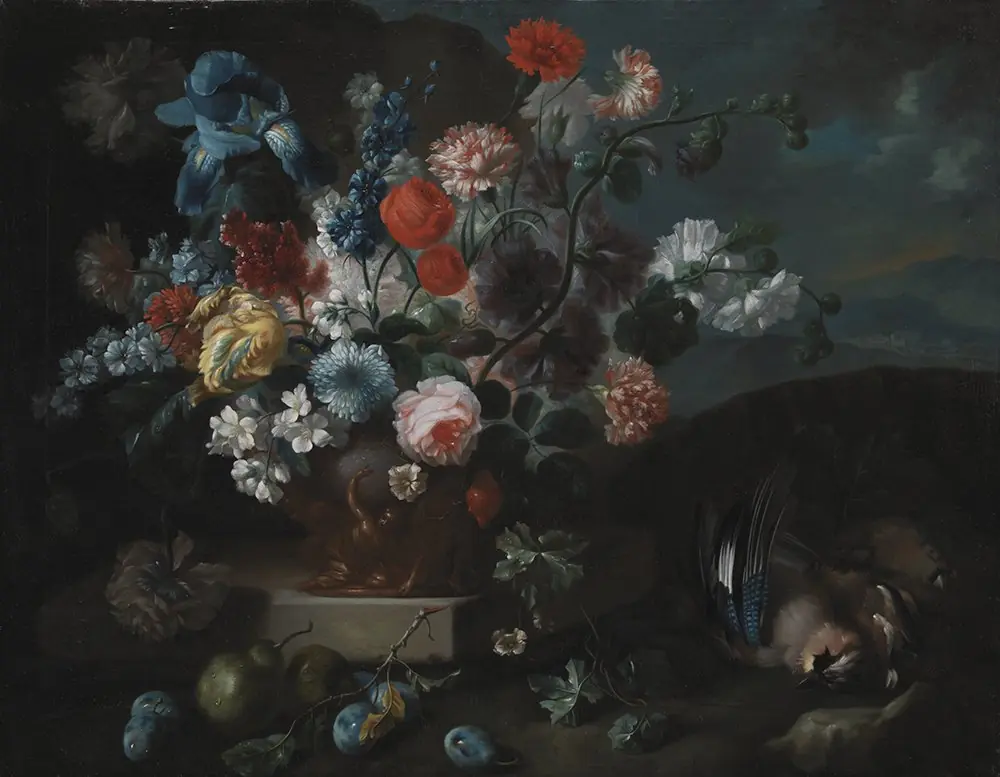
The painting includes peaches, pomegranates, grapes, and a variety of blooming flowers, alongside a single rabbit resting at the edge.
The painting includes peaches, pomegranates, grapes, and a variety of blooming flowers, alongside a single rabbit resting at the edge. These elements suggest themes of fertility, transience, and the bounty of nature. The rabbit, often a symbol of vitality or modest abundance in Dutch and Flemish still lifes, adds a subtle narrative layer without disrupting the calm, observational tone of the scene.
Technique & Style
Tamm employs a restrained palette and precise brushwork to capture the sheen of fruit skin, the delicate petals of flowers, and the soft fur of the rabbit. The dark background isolates each object, emphasizing their physical presence. Light falls evenly across the composition, avoiding dramatic contrasts, which lends the scene a quiet, meditative quality characteristic of early 18th-century Northern European still life traditions.
History & Provenance
The painting has been part of the collection at Statens Museum for Kunst since its acquisition in the 19th century. Little is documented about its early ownership, but its style aligns with the Danish and German still life practices of the period. It was likely created for a private patron interested in naturalistic depictions of the natural world, common among educated collectors of the time.
Context
In the early 1700s, still life painting in Northern Europe remained popular among bourgeois and aristocratic patrons, often reflecting scientific curiosity and aesthetic refinement. Tamm’s work fits within this tradition, drawing from Dutch and Flemish precedents while maintaining a more subdued, localized sensibility. The inclusion of native flora and fauna suggests an interest in regional botany and natural history.
Legacy
Though Franz Werner Tamm is not widely known outside Scandinavian art circles, this painting exemplifies the quiet precision of lesser-documented Northern European still life artists. It contributes to the understanding of regional variations within a broader European genre, offering insight into how natural observation was cultivated in Denmark and neighboring regions during the early 18th century.
Artist & collection