Artwork
Basket of flowers with fruit
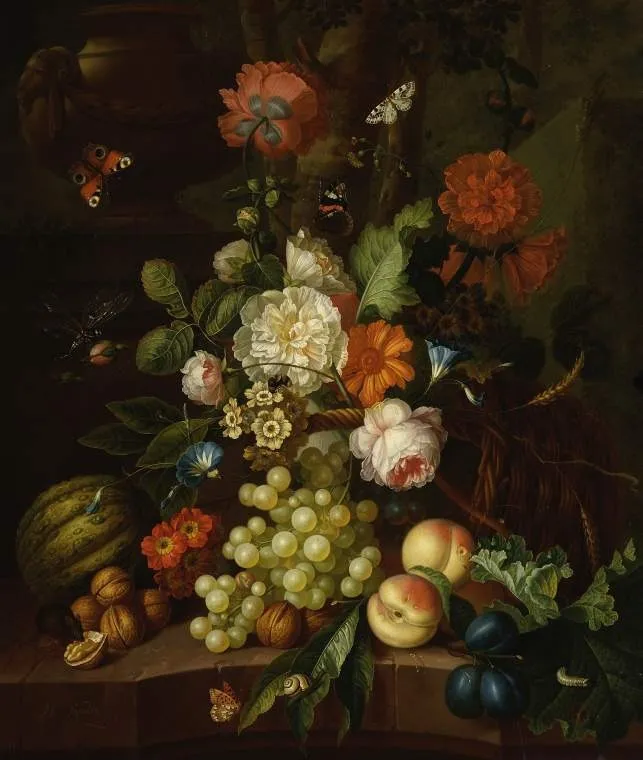
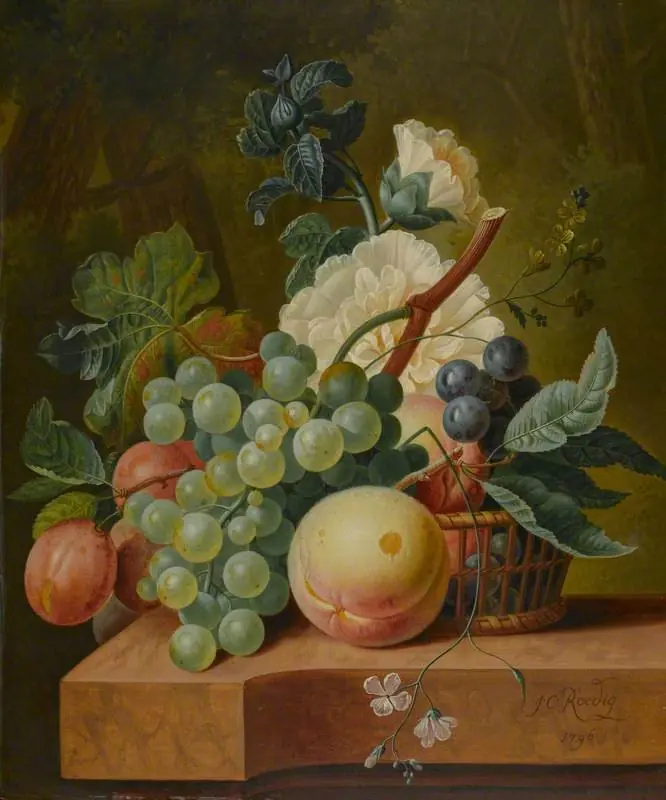
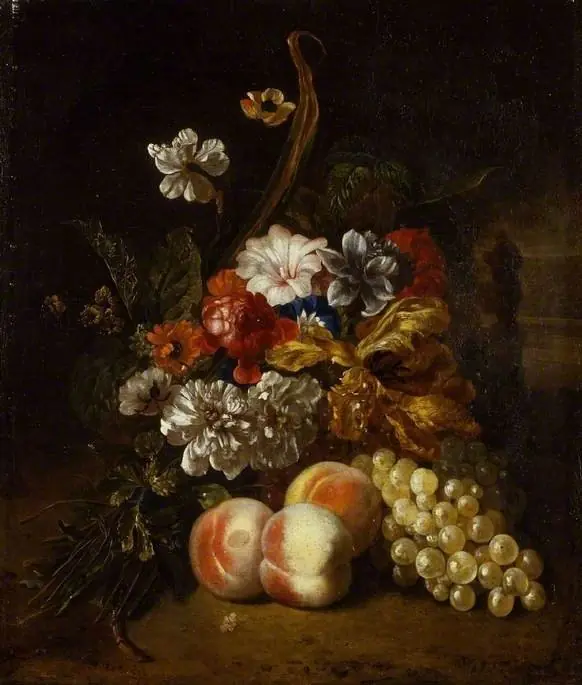
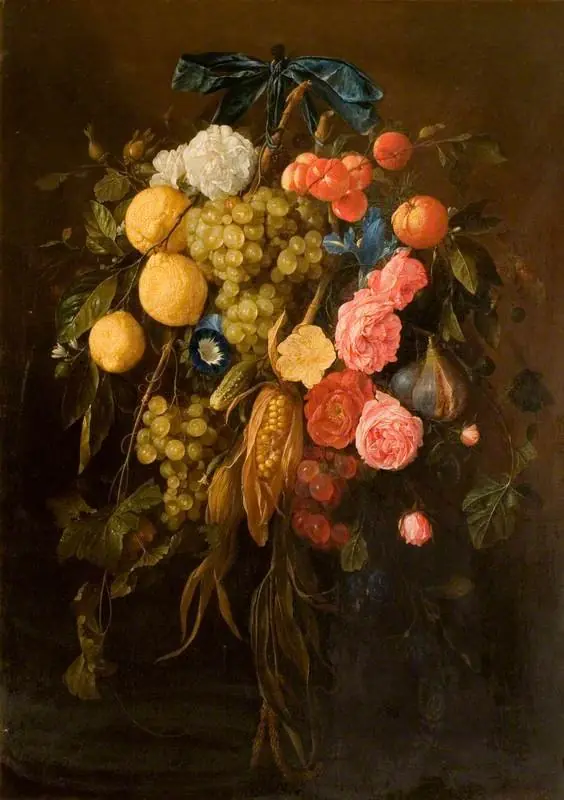
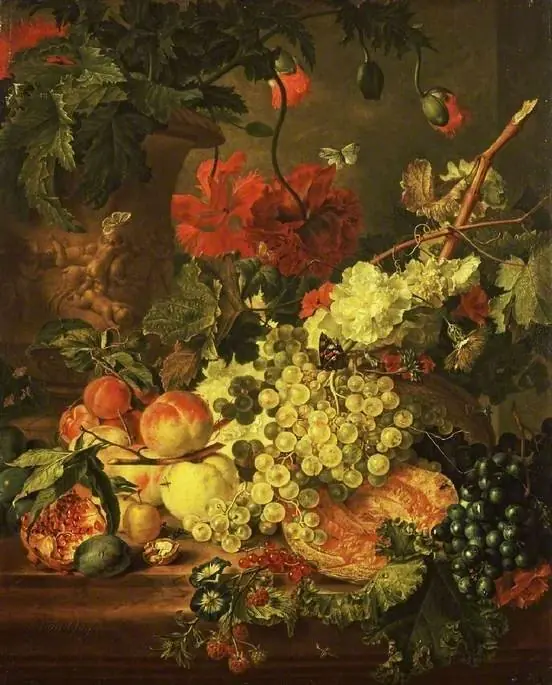
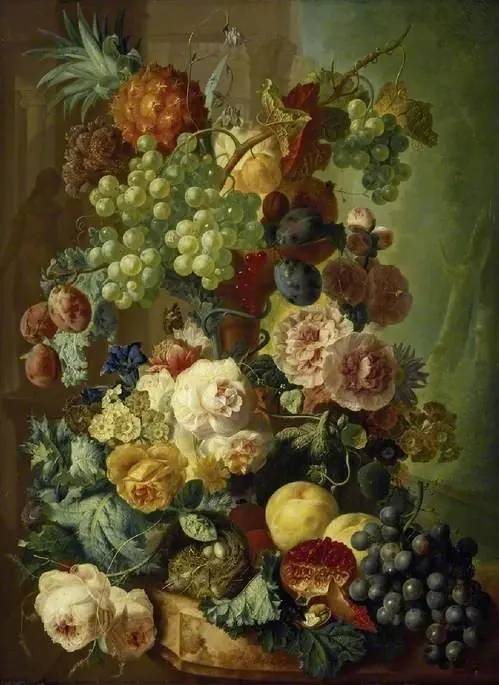
Basket of flowers with fruit is an oil painting by the Biedermeier artist Johannes Christianus Roedig. It dates from 1796 and is held in the collection of the Fitzwilliam Museum.
About this work
Overview
It is part of the Fitzwilliam Museum’s collection in Cambridge.
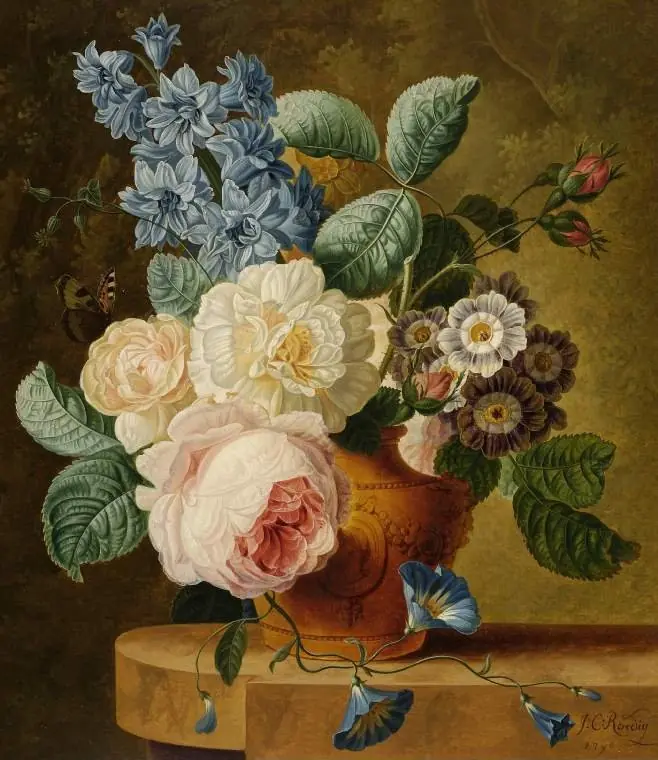
Painted in 1796, this oil-on-canvas still life by Johannes Christianus Roedig depicts a overflowing basket of flowers and fruit, accompanied by small creatures like butterflies and a snail. The composition balances natural abundance with quiet stillness, reflecting the 18th-century Dutch and Flemish tradition of detailed botanical and fruit studies. It is part of the Fitzwilliam Museum’s collection in Cambridge.
Subject & Meaning
The arrangement centers on seasonal abundance, with peaches, plums, and grapes spilling from a woven basket among blooming flowers and lush foliage. The inclusion of insects and a slow-moving snail suggests the passage of time and the cycle of life. Rather than symbolizing transience, the scene emphasizes quiet fertility and the quiet dignity of nature’s bounty.
Technique & Style
Roedig employs soft, blended brushwork to render textures of petals, skin, and leaves with subtle variation. The palette is restrained—dominated by olive greens, ochres, and muted yellows—creating a harmonious, earth-toned atmosphere. Light falls gently across the forms, modeling volume without dramatic contrast, reinforcing the calm, observational tone of the work.
History & Provenance
The painting was completed in 1796 and entered the Fitzwilliam Museum’s collection in the 19th century. Its early provenance is not fully documented, but its style aligns with regional still-life traditions in the Low Countries during the late Enlightenment. It has remained in institutional hands since acquisition, with no known public exhibitions prior to the 20th century.
Context
In late 18th-century Europe, still-life painting remained popular among collectors seeking depictions of nature’s order and beauty. Roedig’s work fits within a broader trend of botanical precision and restrained elegance, distinct from the flamboyant Baroque still lifes of earlier centuries. His focus on quiet realism reflects Enlightenment values of observation and natural harmony.
Legacy
Roedig’s oeuvre is modest in scale, and this painting is among the better-documented examples of his output. While not widely known outside academic circles, it contributes to the understanding of regional still-life practices in the decades before Romanticism shifted artistic priorities. Its preservation allows continued study of late 18th-century Dutch-influenced technique.
Artist & collection
Artist
Johannes Christianus Roedig (1750–1802) was an artist, born in The Hague.