Artwork
Bouquet of flowers in a niche
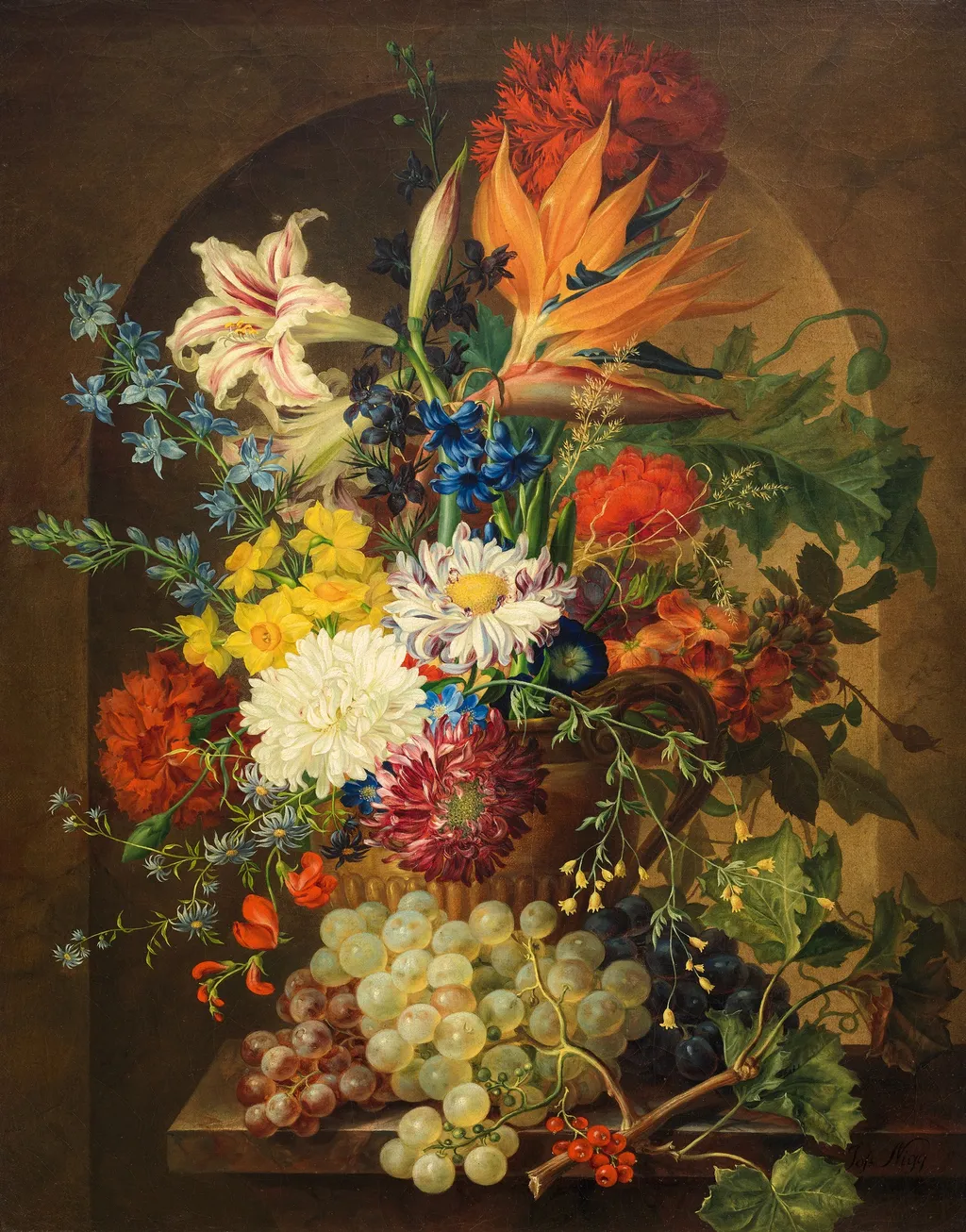
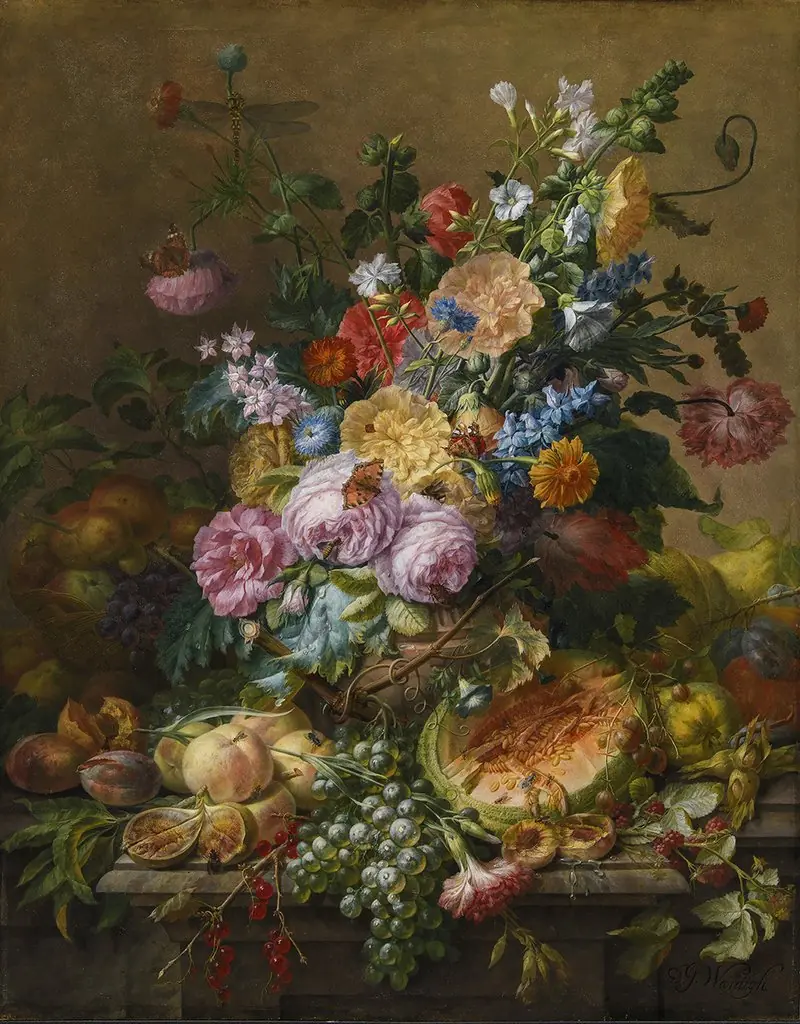
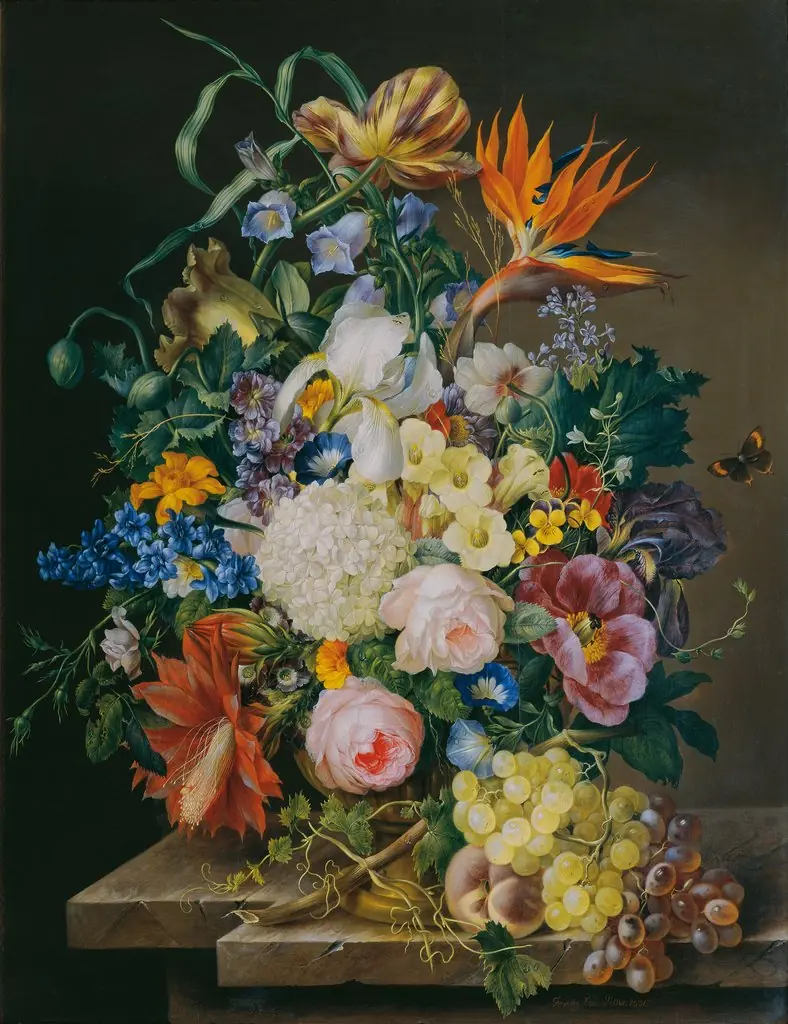
Bouquet of flowers in a niche is an oil painting by the Biedermeier artist Joseph Nigg. It dates from 1836 and is held in the collection of the Kunsthistorisches Museum.
About this work
Overview
The work exemplifies the quiet precision favored in early 19th-century Viennese art, balancing naturalism with restrained composition.
Painted in 1836 by Austrian artist Joseph Nigg, this oil on canvas still life depicts a lush arrangement of flowers and fruit confined within a shallow, dark niche. Nigg, trained at the Academy of Fine Arts Vienna, focused on botanical subjects and later applied his skills to porcelain decoration. The work exemplifies the quiet precision favored in early 19th-century Viennese art, balancing naturalism with restrained composition.
Subject & Meaning
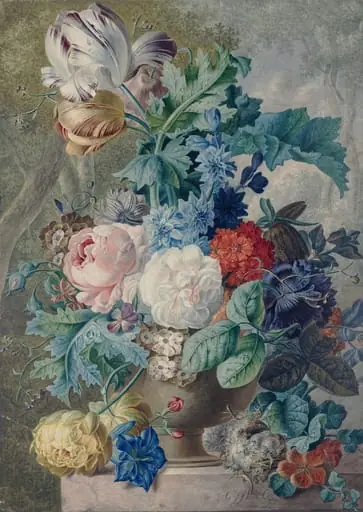
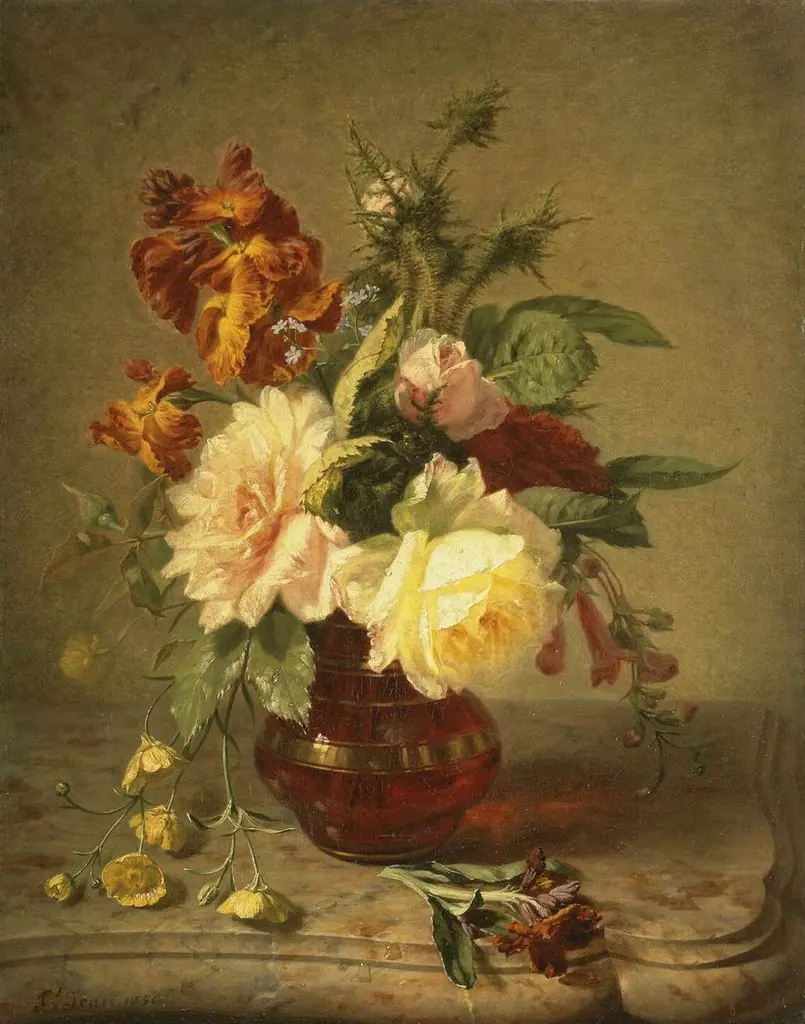
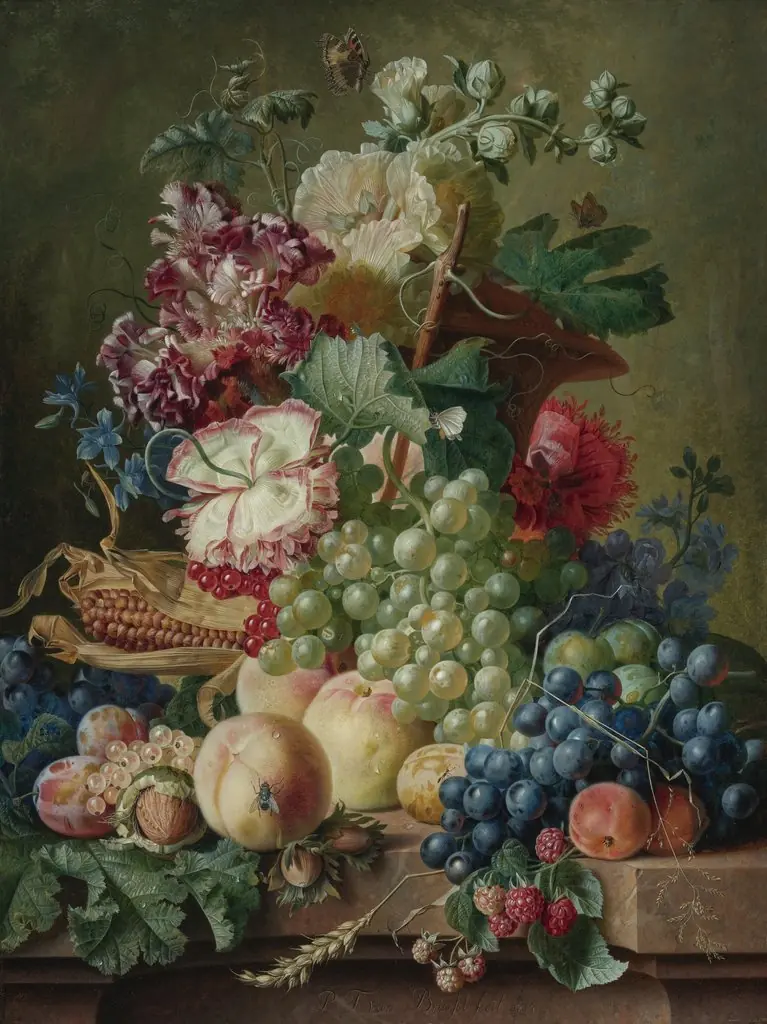
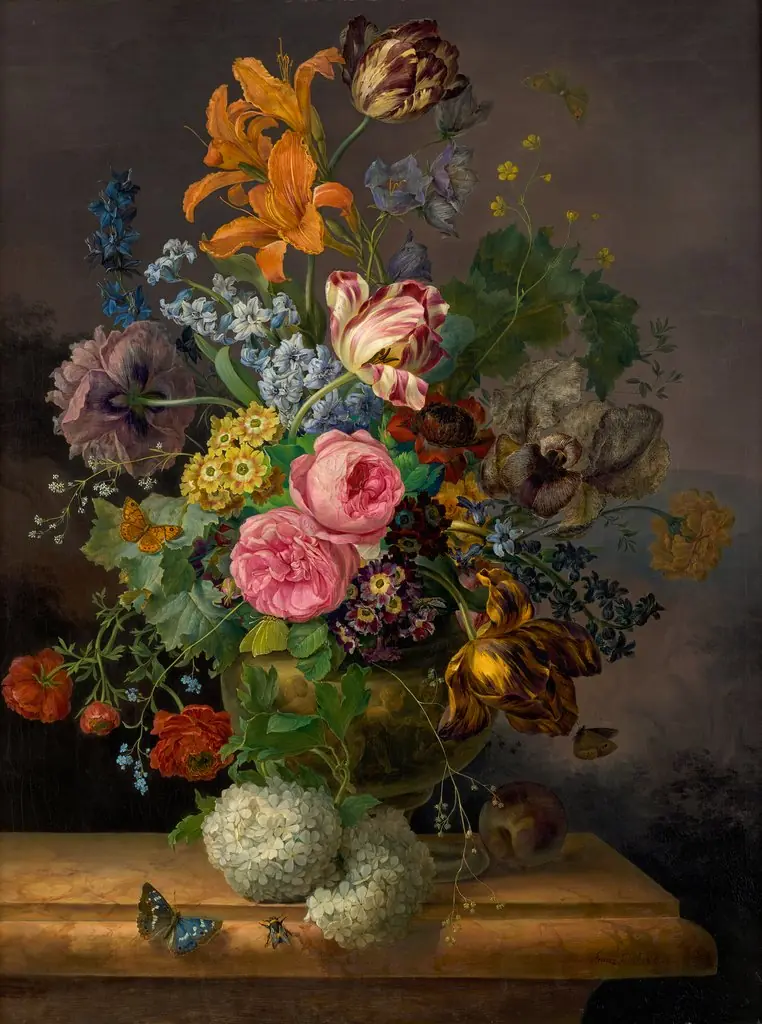
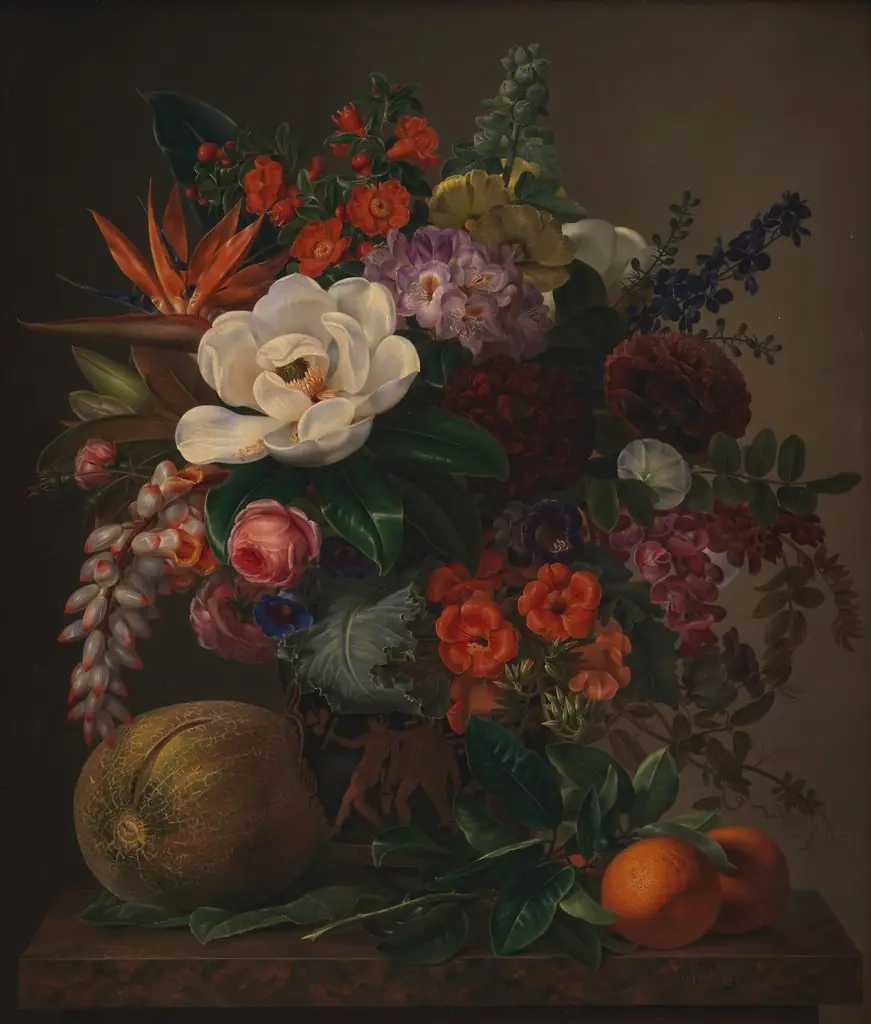
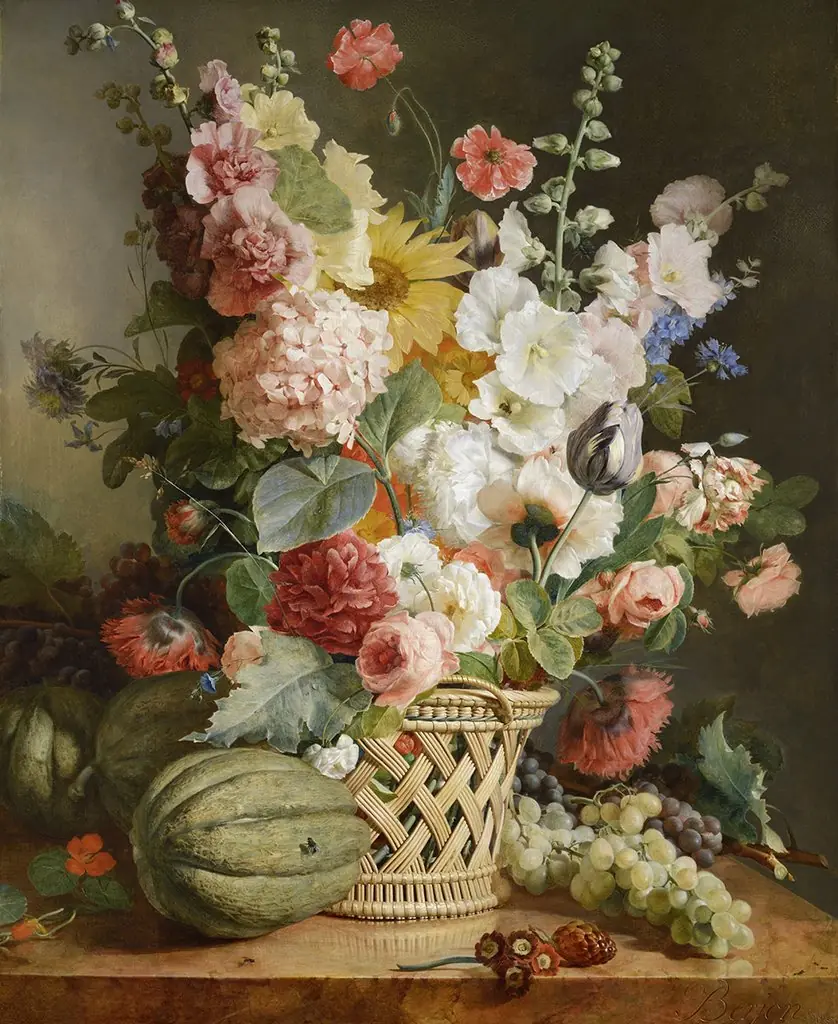
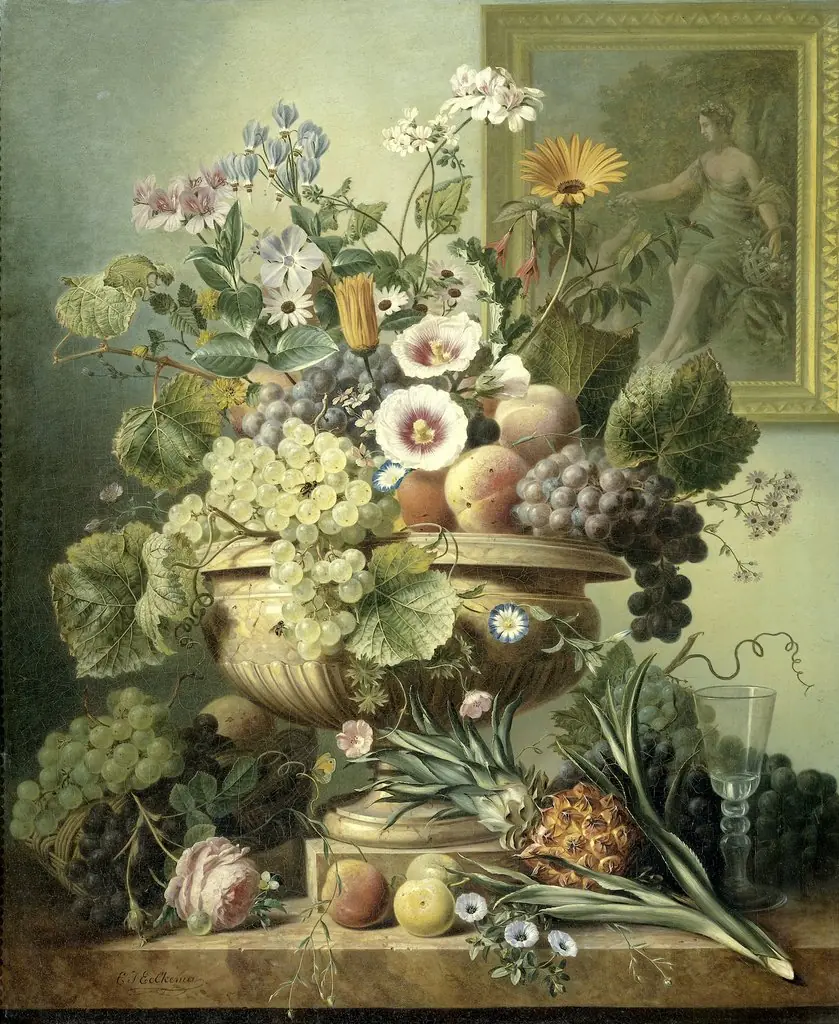
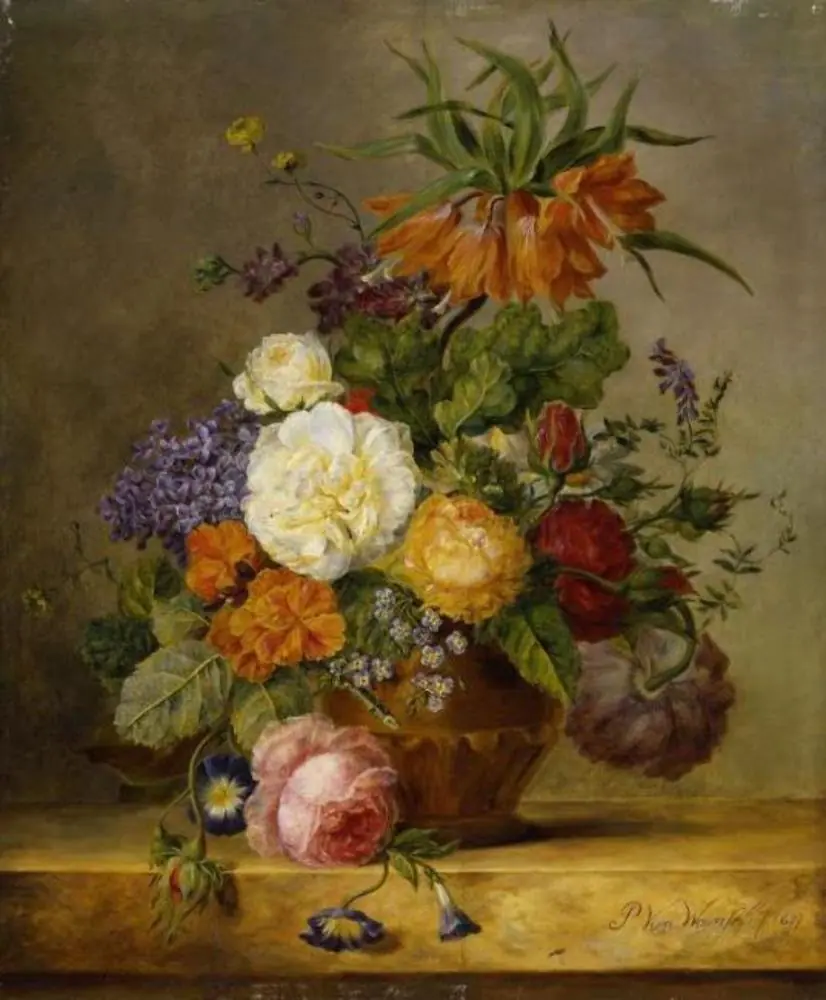
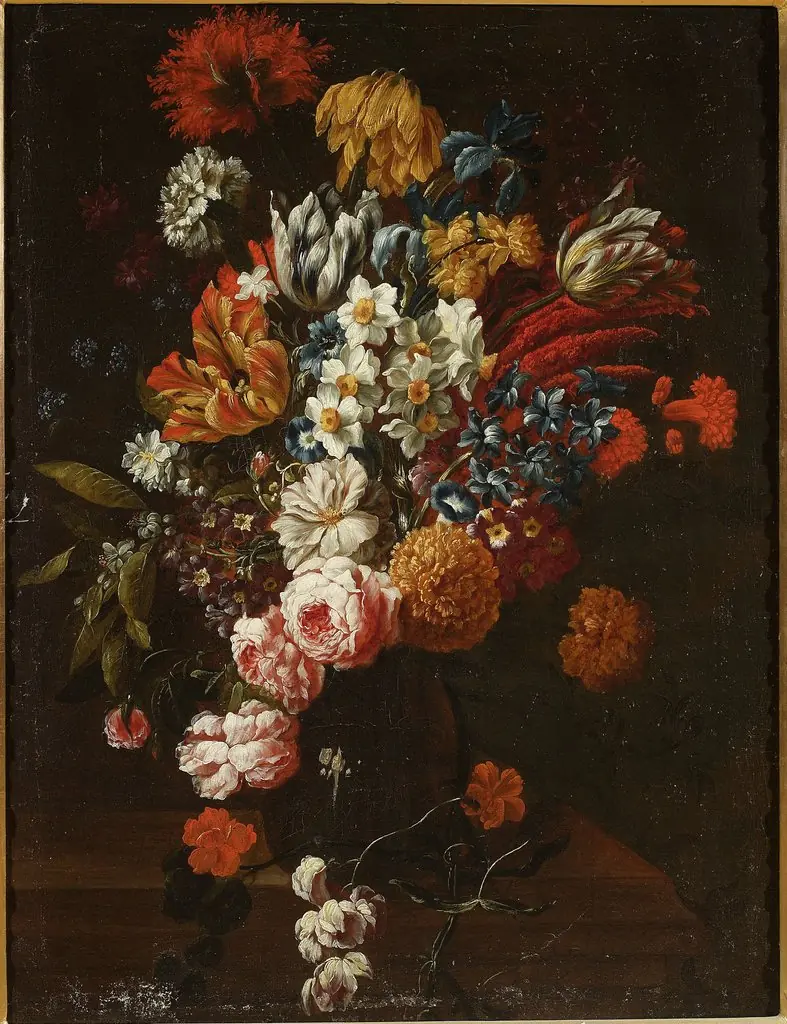
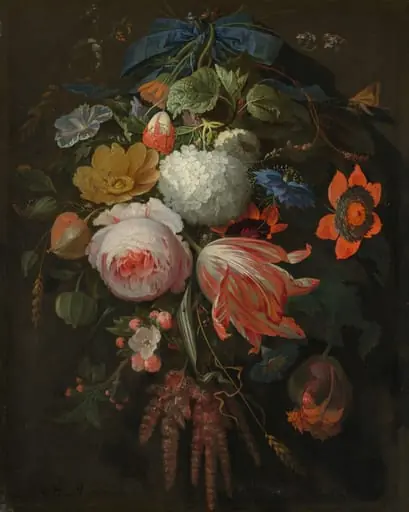
The painting presents a dense cluster of blooms—white lilies, red poppies, yellow daisies, and blue hyacinths—alongside clusters of green and purple grapes and scattered red berries. The overflowing arrangement suggests abundance, while the niche frames the scene as a contained, private moment. No symbolic narrative is overt; instead, the work celebrates the transient beauty of seasonal flora, a common theme in Biedermeier still lifes.
Technique & Style
Nigg employs fine brushwork to render individual petals, leaves, and grape skins with meticulous attention to texture and surface. Light falls subtly across the forms, creating soft contrasts that define volume without harsh shadows. The dark background enhances the vibrancy of the colors, a technique rooted in chiaroscuro. The composition’s asymmetry and intimate scale reflect the Biedermeier preference for domestic tranquility over grandeur.
History & Provenance
Created during Nigg’s active period in Vienna, the painting was likely produced for a private collector drawn to the era’s taste for refined domestic art. It entered the collection of the Kunsthistorisches Museum in Vienna, where it remains today. Its preservation reflects the museum’s broader commitment to documenting Austrian artistic production of the Biedermeier era, particularly works tied to decorative arts and natural observation.
Context
In the 1830s, Vienna’s artistic climate favored intimate, detailed scenes over political or historical themes. The Biedermeier movement emphasized domesticity, order, and quiet observation—values mirrored in Nigg’s floral still life. His background in porcelain design influenced his precision and sensitivity to surface, aligning his painting practice with the decorative arts that flourished in middle-class Viennese homes.
Legacy
Nigg’s work contributes to the understanding of how botanical painting bridged fine and decorative arts in 19th-century Austria. While not widely known outside regional circles, his paintings exemplify the technical discipline and restrained aesthetic that defined Biedermeier visual culture. Today, this piece stands as a representative example of how nature was observed and elevated in everyday artistic practice.
Artist & collection
Artist
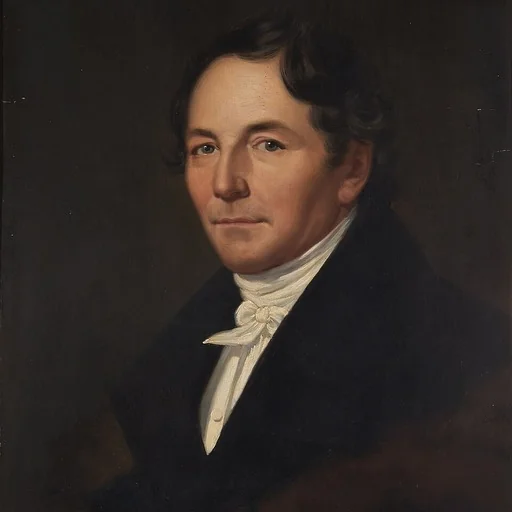
Joseph Nigg (13 October 1782 – 19 September 1863) was an Austrian painter, with painting on porcelain a specialty.