Artwork
La Blanchisseuse
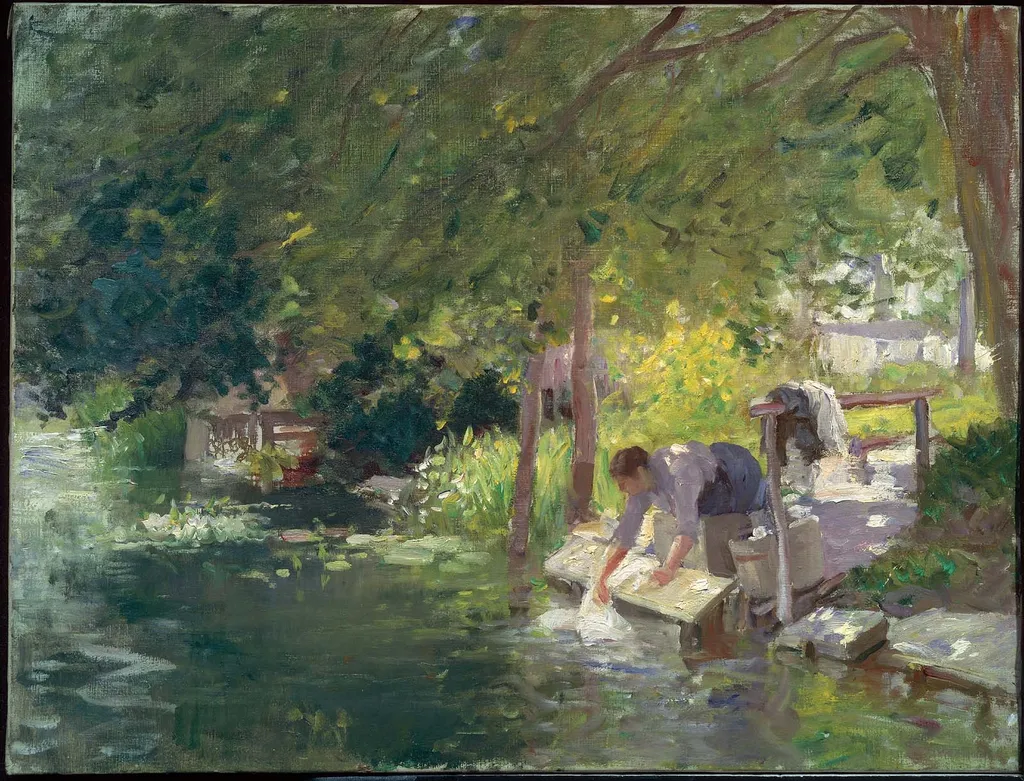
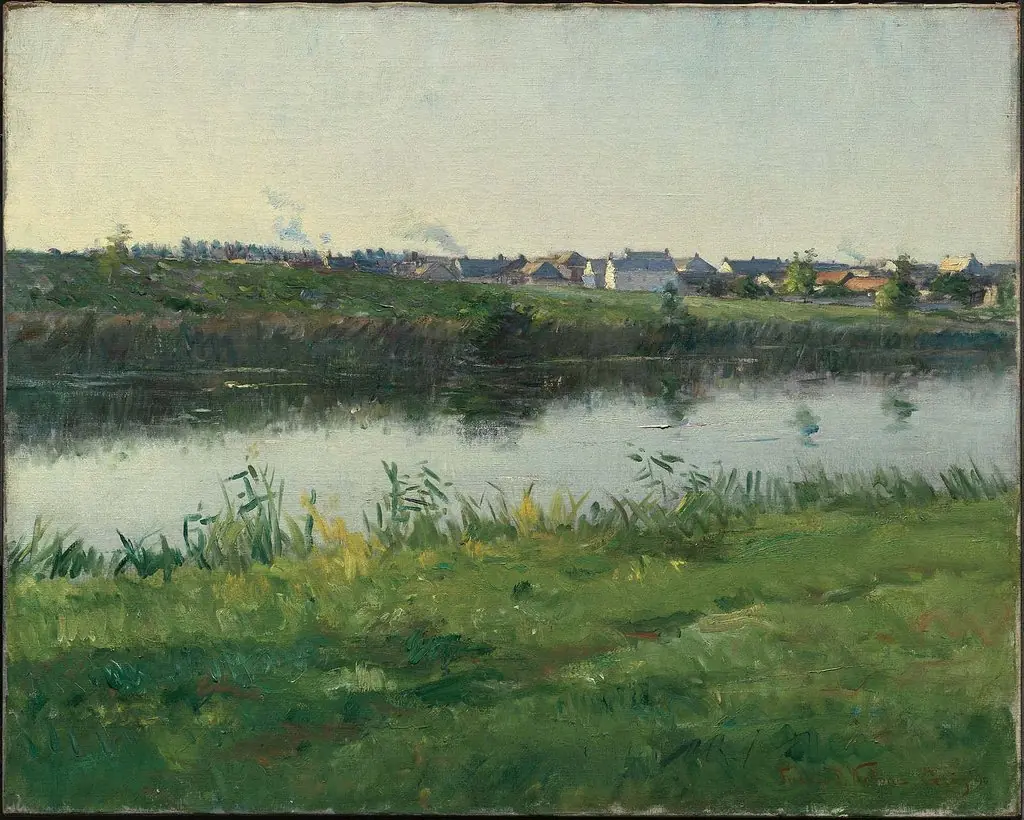
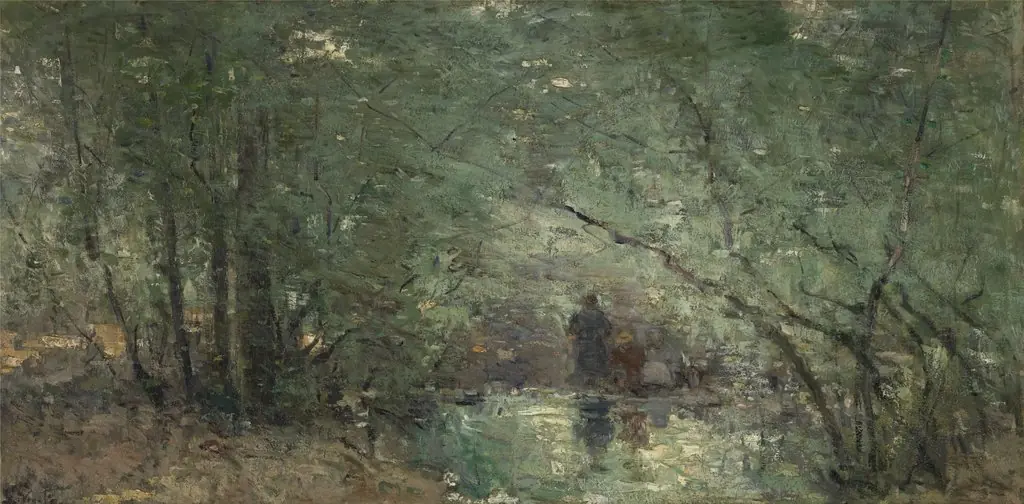
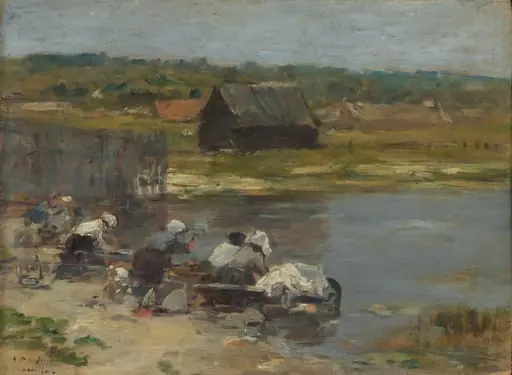
La Blanchisseuse is an oil painting by the American Impressionist artist Frederic Porter Vinton. It dates from 1896 and is held in the collection of the Museum of Fine Arts Boston.
About this work
Overview
The work is part of the permanent collection at the Museum of Fine Arts, Boston, where it is displayed as an example of late 19th-century American realism.
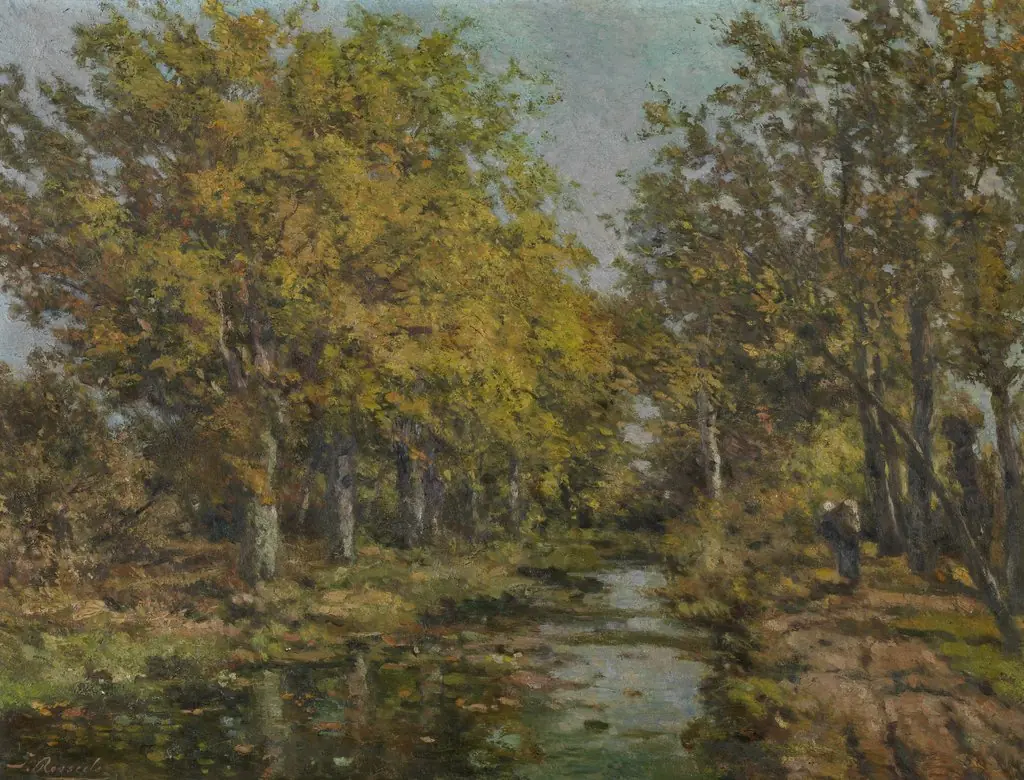
La Blanchisseuse is an 1896 oil painting by American artist Frederic Porter Vinton. It depicts a woman engaged in the daily task of laundering clothes by a quiet river. The work is part of the permanent collection at the Museum of Fine Arts, Boston, where it is displayed as an example of late 19th-century American realism. The composition emphasizes quiet labor and natural surroundings, avoiding dramatic narrative in favor of observed detail.
Subject & Meaning
The painting portrays a working-class woman immersed in the physical act of washing garments. Her posture—bent over the washboard—suggests endurance rather than hardship. The absence of other figures and the secluded riverside setting invite contemplation of solitude in routine labor. The white fabric she scrubs contrasts with her dark clothing, subtly highlighting the labor’s visibility and invisibility within domestic economies.
Technique & Style
Vinton employs careful observation and controlled chiaroscuro to model form and space. Light falls diagonally across the woman’s figure and the water’s surface, defining folds in fabric and ripples in the river with precision. Brushwork is restrained, favoring smooth transitions over visible strokes. The background trees and sky are rendered with soft edges, enhancing the foreground’s tactile clarity without distracting from the central figure.
History & Provenance
Painted in 1896, La Blanchisseuse entered the Museum of Fine Arts, Boston’s collection shortly after its completion. It was likely acquired during a period when American institutions were expanding their holdings of contemporary realist works. There is no record of public exhibition prior to its acquisition, suggesting it may have been shown privately or sold directly from the artist’s studio.
Context
In the late 19th century, American artists increasingly turned to scenes of ordinary life, influenced by European realism and the rise of social documentation. Vinton’s focus on labor, though devoid of political commentary, aligns with broader cultural interest in the dignity of manual work. The painting reflects a moment when urbanization and industrialization made rural and domestic labor subjects of quiet reverence in art.
Legacy
La Blanchisseuse remains a modest but enduring example of American academic realism. It has not been widely reproduced or studied in major scholarly texts, yet it continues to be exhibited as a representative work of Vinton’s output. Its quiet composition offers a counterpoint to more dramatic narratives of the era, preserving a sense of unadorned daily life through attentive observation.
Artist & collection