Artwork
Slave Market
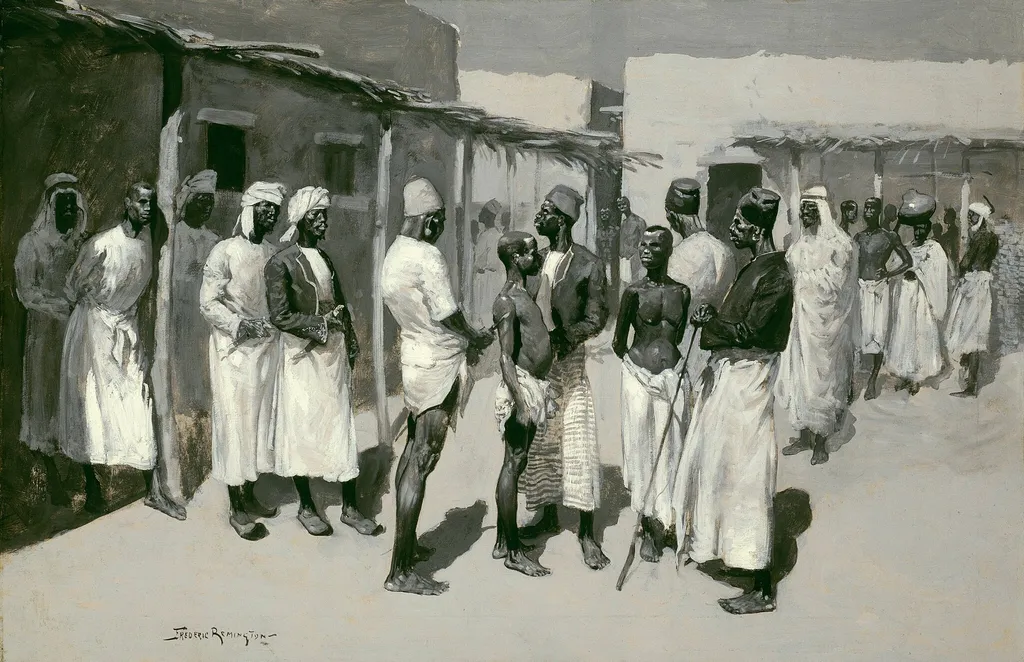
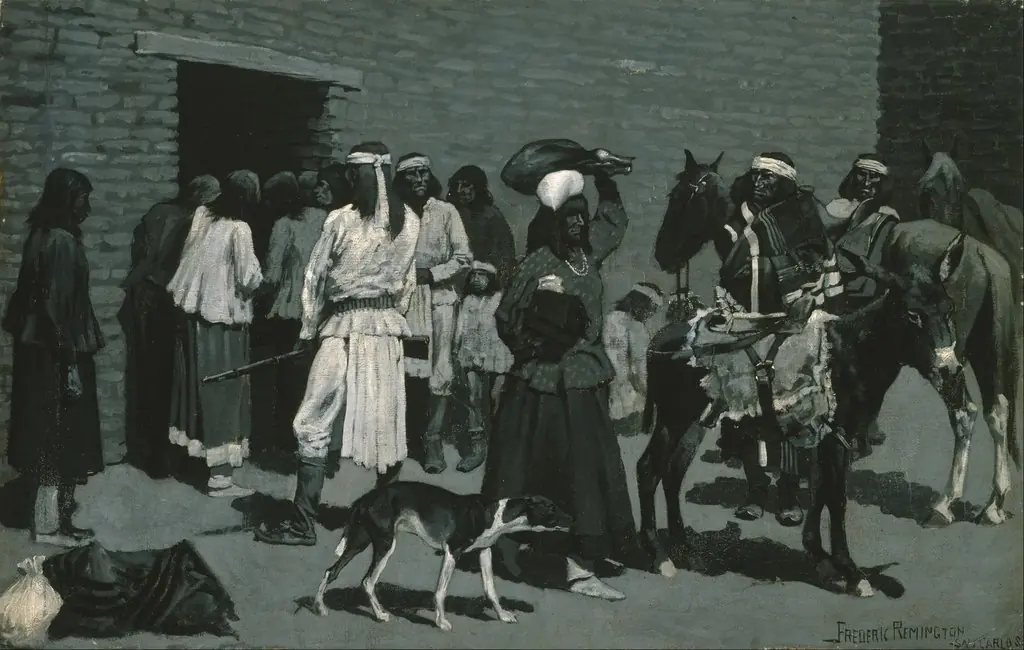
Slave Market is an oil painting by the American Impressionist artist Frederic Remington. It dates from 1893 and is held in the collection of the Art Institute of Chicago.
About this work
For more of this gritty, on-the-spot style, look up impasto—thick paint that makes scenes feel alive.
You see a dim, crowded room where men in hats inspect a group of people lined up against a wall. The figures are blurred, but the tension is clear—hands grip arms, faces stay hidden.
Remington painted this in 1893, when the U.S. was still debating slavery’s legacy. He wasn’t an activist, but the scene feels raw, like a snapshot of something he witnessed. The brushwork is loose, almost hurried, as if he didn’t want to linger on the moment.
For more of this gritty, on-the-spot style, look up impasto—thick paint that makes scenes feel alive.
Overview
Painted in 1893, Slave Market is an oil on canvas work by Frederic Remington, currently in the collection of the Art Institute of Chicago. It depicts an interior scene of human beings being examined by male onlookers in a dim, confined space. The composition avoids theatricality, favoring a sense of immediacy and unease, as if capturing a fleeting, unguarded moment.
Subject & Meaning
The painting portrays a group of individuals lined against a wall, their identities obscured, while men in hats scrutinize them with detached interest. Though Remington did not engage in political activism, the scene evokes the lingering social trauma of slavery in post-Civil War America. The lack of clear narrative or emotional expression invites viewers to confront the dehumanization inherent in such transactions.
Technique & Style
Remington employed loose, energetic brushwork and thick impasto to convey urgency and emotional weight. The figures are rendered with blurred edges, suggesting motion and avoidance of detail. The palette is muted, dominated by grays and browns, reinforcing the somber atmosphere. This approach prioritizes sensory impact over precision, aligning with his interest in capturing transient, real-world moments.
History & Provenance
Created in 1893, the painting entered the Art Institute of Chicago’s collection shortly after its completion. It was not widely exhibited during Remington’s lifetime and remained relatively obscure until later 20th-century reassessments of his work. Its acquisition by the museum reflects a growing interest in his lesser-known, socially charged subjects beyond his Western frontier imagery.
Context
In the 1890s, the United States was grappling with the aftermath of slavery, Reconstruction’s collapse, and the rise of Jim Crow. While Remington was not known for overt commentary, this work stands apart from his typical cowboy and military scenes. Its subject suggests a deliberate, if ambiguous, engagement with national memory and moral ambiguity during a period of racial tension.
Legacy
Slave Market remains one of Remington’s few paintings to directly address human bondage, distinguishing it from his more celebrated Western themes. Art historians note its rawness as an anomaly in his oeuvre, revealing a capacity for psychological depth rarely seen in his other works. It continues to prompt discussion about the role of visual art in confronting uncomfortable histories.
Own this work as a print
Artist & collection

Artist
Frederic Sackrider Remington was an American painter, illustrator, sculptor, and writer who specialized in the genre of Western American Art.