Artwork
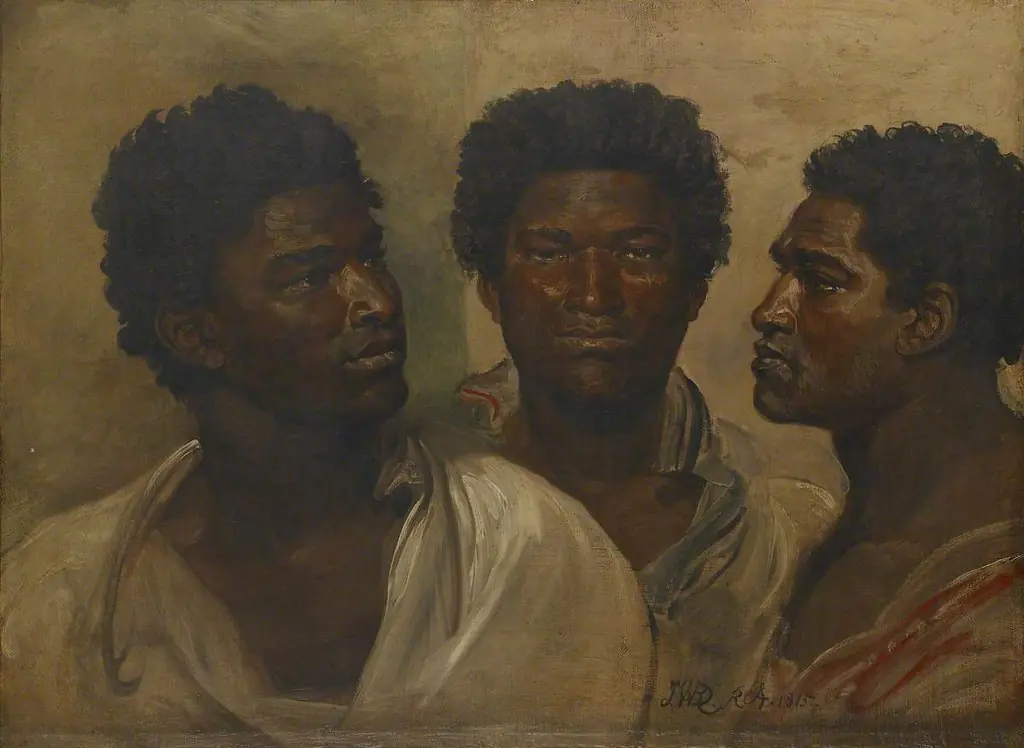
Study of three heads (Arabs)
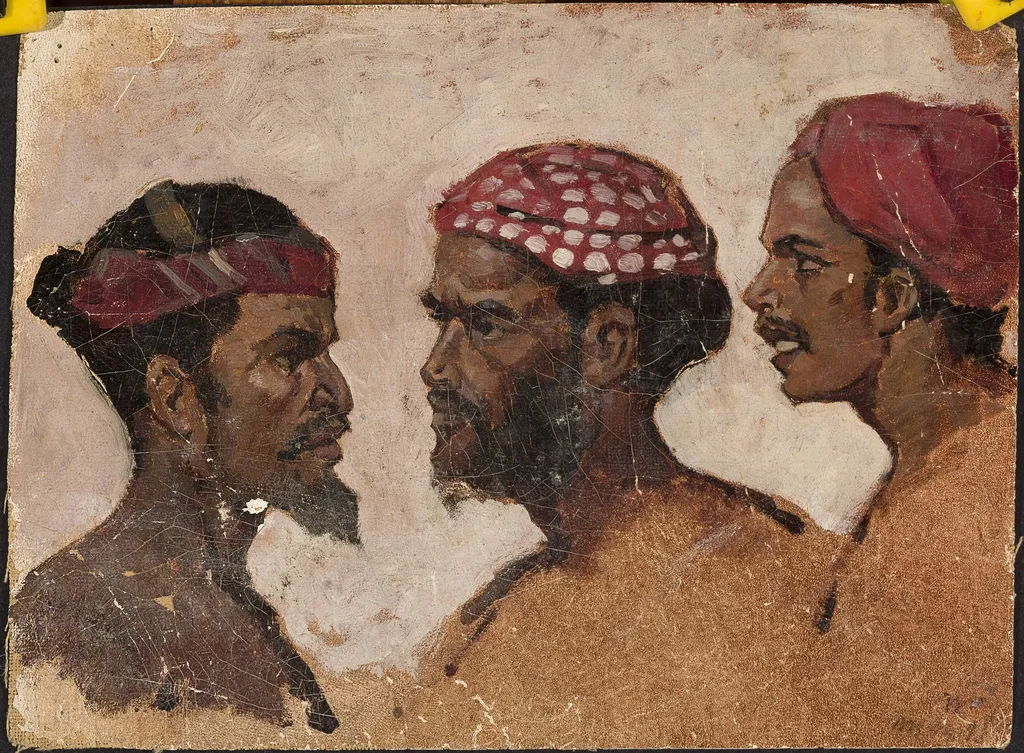
Study of three heads (Arabs) is an oil painting by Jean Lulves. It dates from 1871 and is held in the collection of the National Museum in Warsaw.
About this work
Overview
Though small in scale, it demonstrates his attention to detail in costume and facial structure, executed with the tonal richness characteristic of oil painting.
Painted around 1871 by Jean Lulvès, a Franco-German artist active in genre and decorative subjects, this oil study presents three male figures in profile. The work is part of the National Museum in Warsaw’s collection and reflects Lulvès’s interest in historical and ethnographic portraiture. Though small in scale, it demonstrates his attention to detail in costume and facial structure, executed with the tonal richness characteristic of oil painting.
Subject & Meaning
The three figures, identified by their headwear as men from Arab or North African contexts, are rendered in profile, facing one another as if in quiet conversation. Their attire—red bandanas and a polka-dot scarf—suggests regional dress, though no specific narrative or event is depicted. The study appears to focus on visual documentation rather than storytelling, emphasizing cultural observation over symbolic meaning.
Technique & Style
Lulvès employed oil paint to build subtle variations in skin tone and fabric texture, using layered glazes to achieve depth without harsh outlines. The neutral brown background isolates the heads, directing focus to the interplay of light on cloth and skin. The brushwork is controlled yet expressive, particularly in the rendering of folds and knots in the headscarves, revealing an interest in material realism over idealized form.
History & Provenance
The painting entered the National Museum in Warsaw’s collection in the late 19th or early 20th century, likely through acquisition or donation. Its origin as a preparatory study suggests it was not commissioned but rather an independent exercise in observation. No record of exhibition or public display prior to its inclusion in the museum’s holdings is documented, indicating a quiet, scholarly provenance.
Context
Created during a period of heightened European interest in Orientalist themes, the work aligns with broader artistic trends that sought to depict non-European subjects through a lens of ethnographic curiosity. Lulvès, though not a traveler to the Middle East, drew from published imagery and studio models, reflecting the era’s reliance on secondhand sources to construct imagined cultural identities.
Legacy
While not widely reproduced or studied, the painting remains a quiet example of 19th-century genre portraiture that prioritizes visual accuracy over narrative. It contributes to the museum’s collection of works that reflect European engagement with non-Western subjects during the age of colonial expansion, offering insight into how cultural difference was visually recorded rather than interpreted.
Artist & collection
Artist
Jean Lulvès (26 November 1833, Mulhouse, Alsace – 8 January 1889, Berlin was a Franco-German painter, specializing in genre painting and decorative works for large rooms such as the Coronation Hall in the Kremlin and…