Artwork
The Interpreter Waved at the Youth
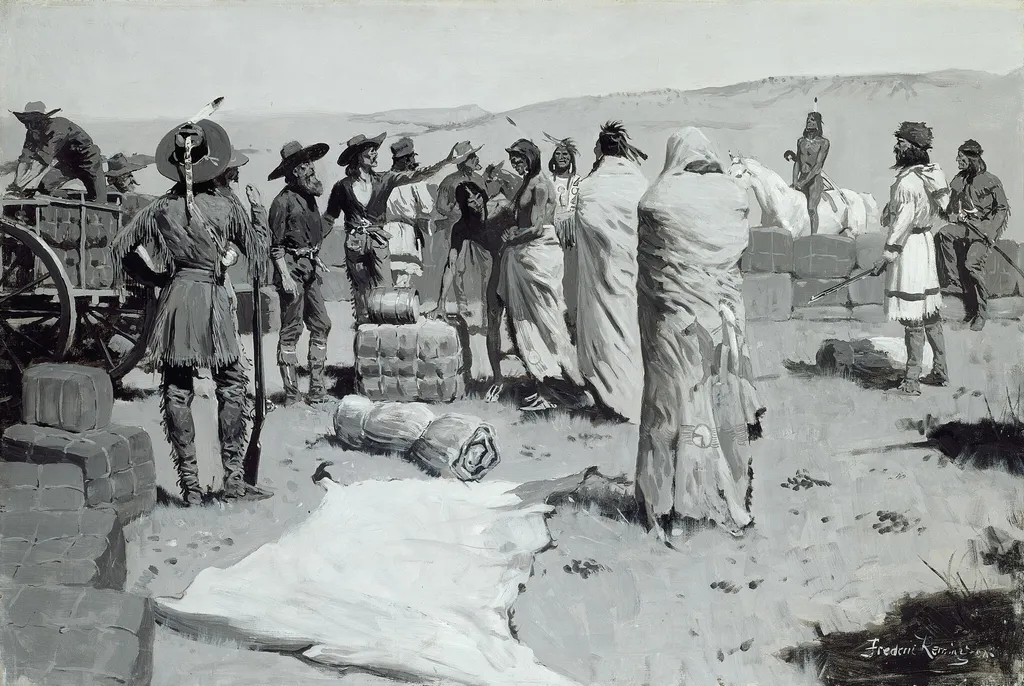
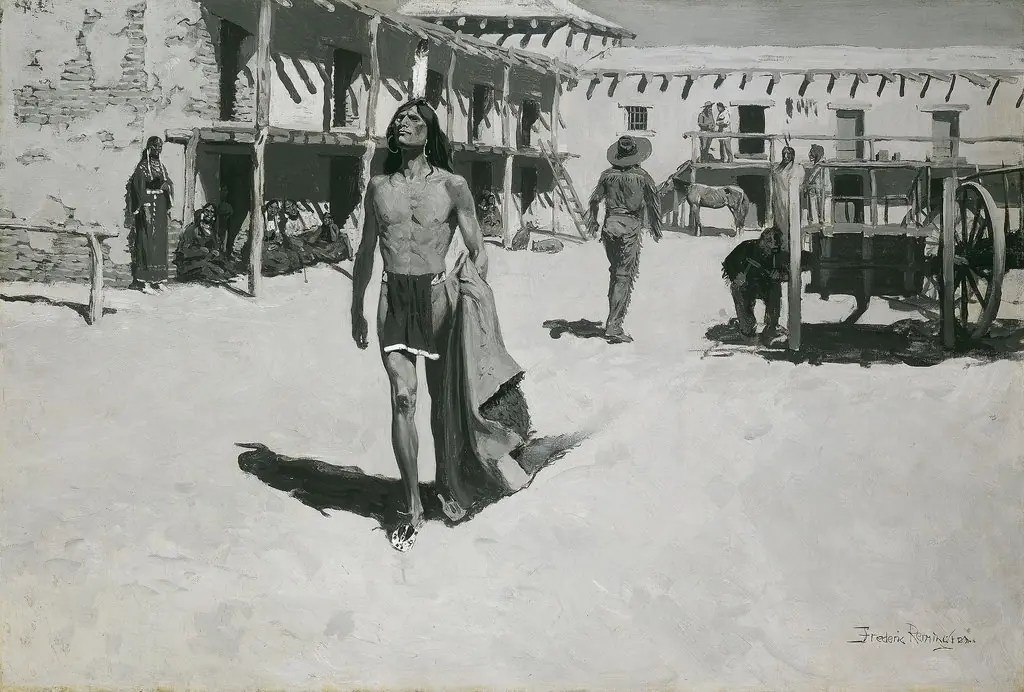
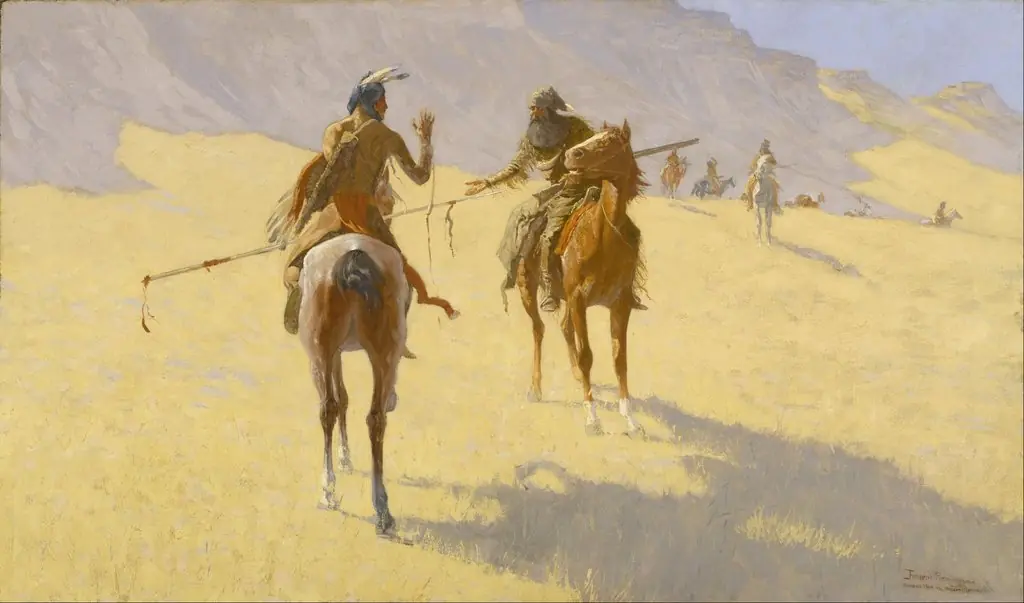
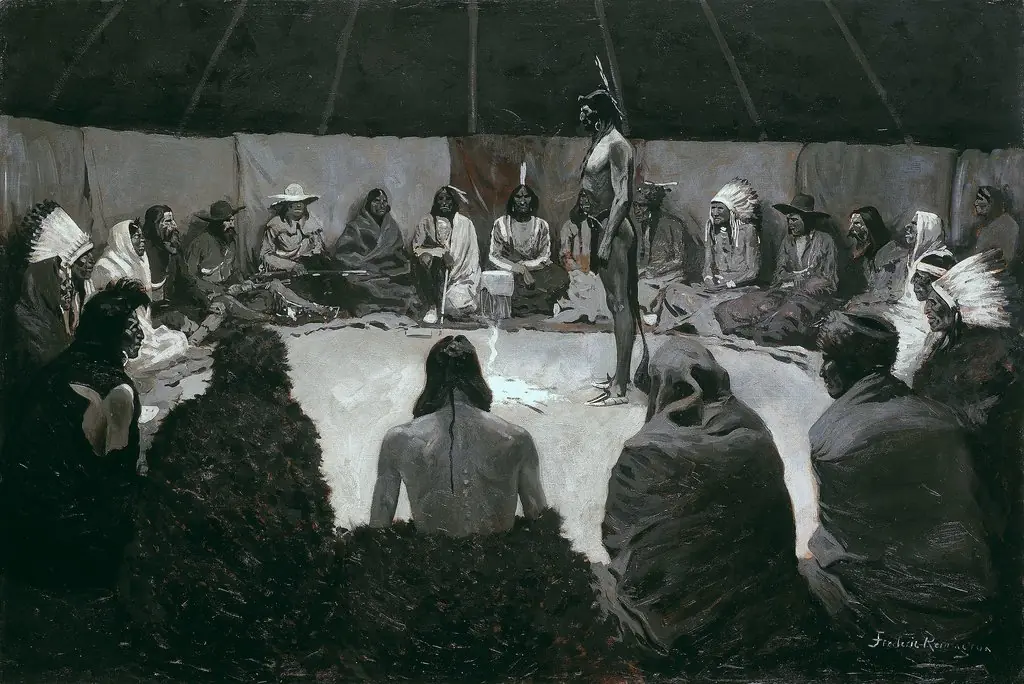
The Interpreter Waved at the Youth is an oil painting by the American Impressionist artist Frederic Remington. It dates from 1900 and is held in the collection of the Art Institute of Chicago.
About this work
Overview
Painted around 1900, The Interpreter Waved at the Youth is an oil-on-canvas genre scene by Frederic Remington.
Painted around 1900, The Interpreter Waved at the Youth is an oil-on-canvas genre scene by Frederic Remington. It depicts a lone rider on horseback, gesturing toward an unseen figure. The work is part of the permanent collection at the Art Institute of Chicago. Remington created it after sketching outdoors at night, then completing the painting in his studio under artificial light, resulting in a dramatic interplay of shadow and illumination.
Subject & Meaning
The painting captures a moment of silent communication between a young rider and an off-canvas figure, possibly an Indigenous interpreter or guide. The gesture suggests a transient connection across cultural or generational lines, typical of Remington’s interest in frontier interactions. The absence of the recipient emphasizes isolation and the ambiguity of cross-cultural encounters in the American West.
Technique & Style
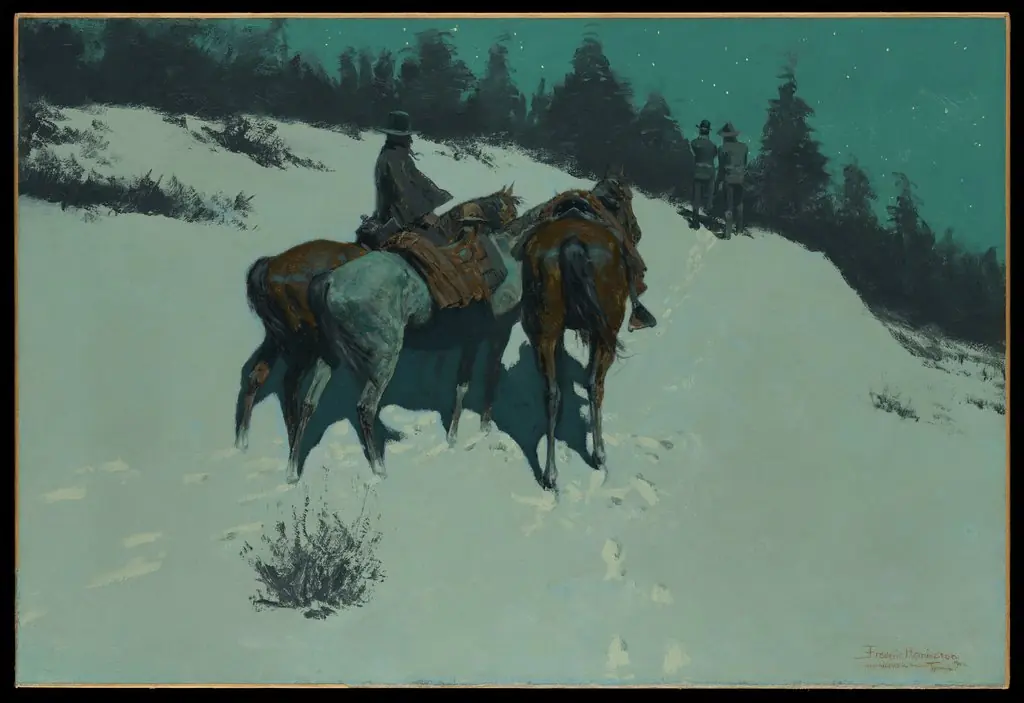
Remington employed chiaroscuro to heighten the scene’s tension, using a single lantern’s glow to cast deep, angular shadows across the rider’s face and the swirling dust beneath the horse. The contrast between light and dark was achieved by painting at night under artificial illumination, a method that intensified the sense of immediacy and atmosphere. Brushwork remains controlled yet evocative, balancing realism with emotional resonance.
History & Provenance
Created around 1900, the painting was completed in Remington’s studio following on-site sketches made under lantern light. It entered the Art Institute of Chicago’s collection in the early 20th century and has remained there since. Its provenance reflects Remington’s growing reputation as a chronicler of Western life, though the work was never widely exhibited during his lifetime.
Context
At the turn of the century, Remington was among artists shaping public perceptions of the American West through narrative imagery. This painting reflects a shift from grand historical scenes to intimate, quiet moments—emphasizing solitude and unspoken exchange. The use of artificial lighting in nocturnal settings was unusual for Western art at the time, signaling Remington’s experimentation with mood over spectacle.
Legacy
The Interpreter Waved at the Youth stands as an example of Remington’s quieter, more introspective work, contrasting with his more famous action scenes. Its emphasis on atmosphere and psychological ambiguity influenced later realist painters interested in nocturnal lighting and emotional restraint. Though less celebrated than his cavalry depictions, it remains a key study in his evolving approach to narrative and light.
Own this work as a print
Artist & collection

Artist
Frederic Sackrider Remington was an American painter, illustrator, sculptor, and writer who specialized in the genre of Western American Art.