Artwork
Le Pouldu Landscape
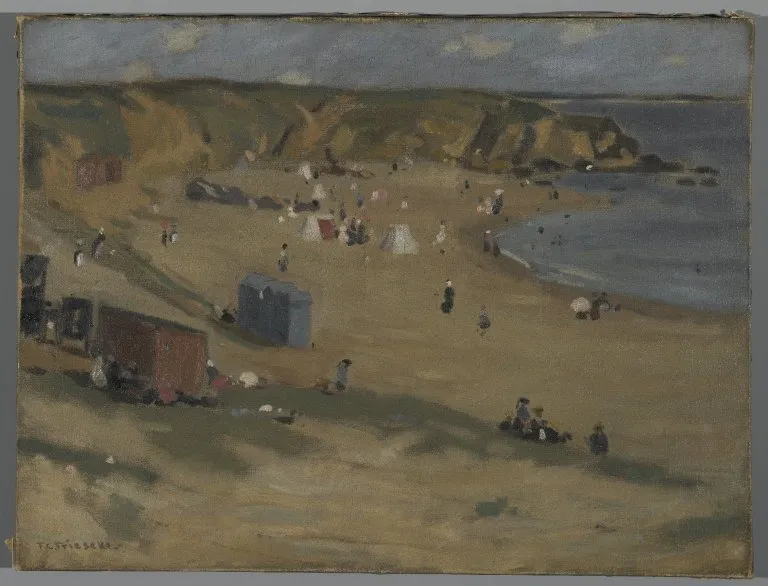
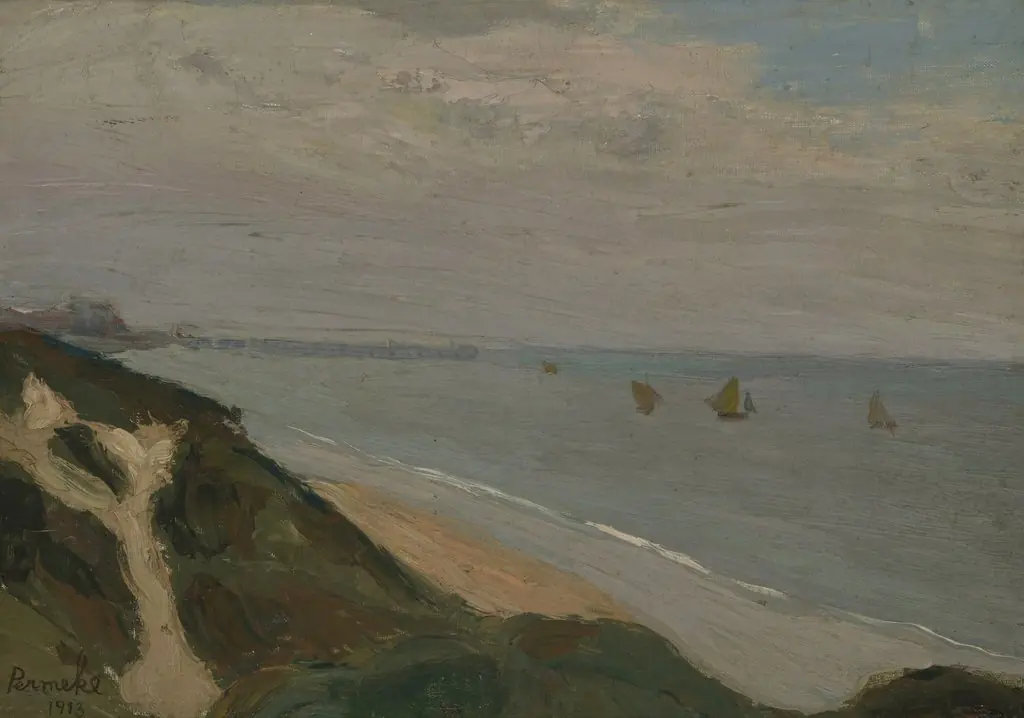
Le Pouldu Landscape is an oil painting by the American Impressionist artist Frederick Carl Frieseke. It dates from 1901 and is held in the collection of the Brooklyn Museum.
About this work
Overview
Frederick Carl Frieseke painted *Le Pouldu Landscape* in 1901 during his time in France, where he settled after studying in the United States.
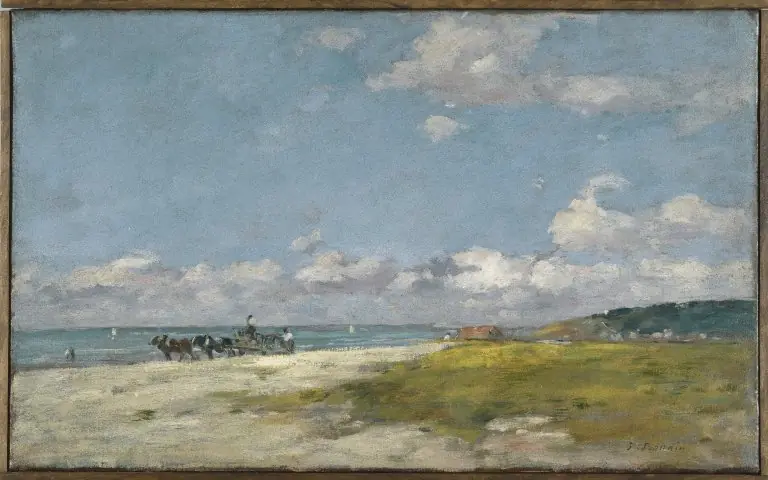
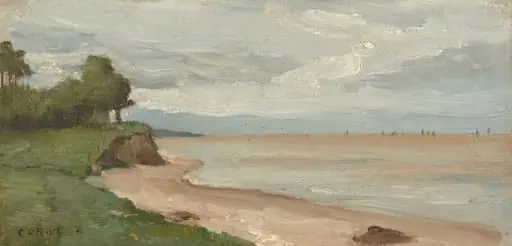
Frederick Carl Frieseke painted *Le Pouldu Landscape* in 1901 during his time in France, where he settled after studying in the United States. Executed in oil on canvas, the work reflects his engagement with the Impressionist tradition, particularly the study of natural light. It belongs to a series of coastal scenes he produced in Brittany, capturing quiet moments of daily life with a focus on atmospheric conditions rather than narrative detail.
Subject & Meaning
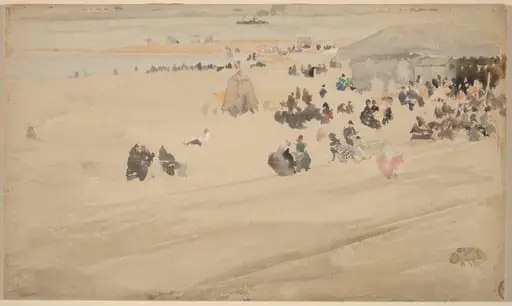
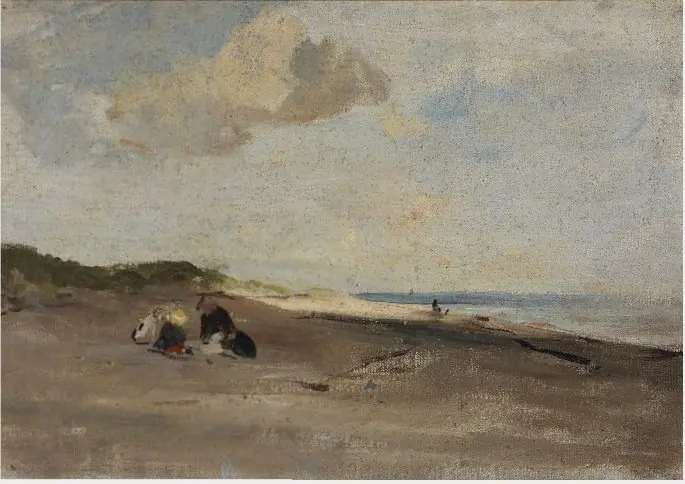
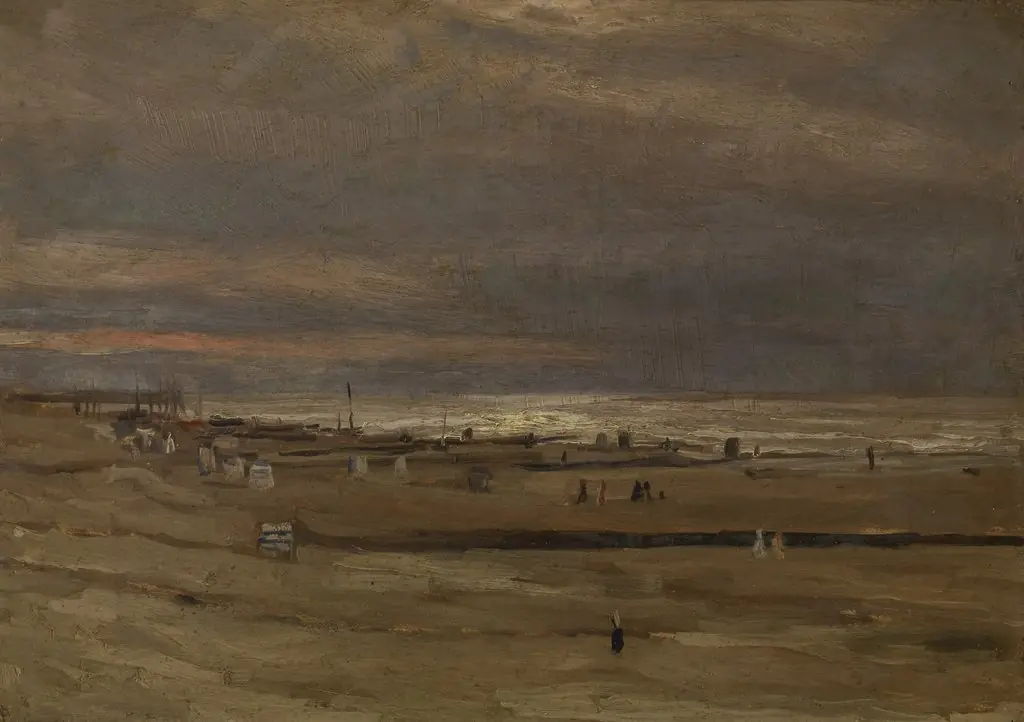
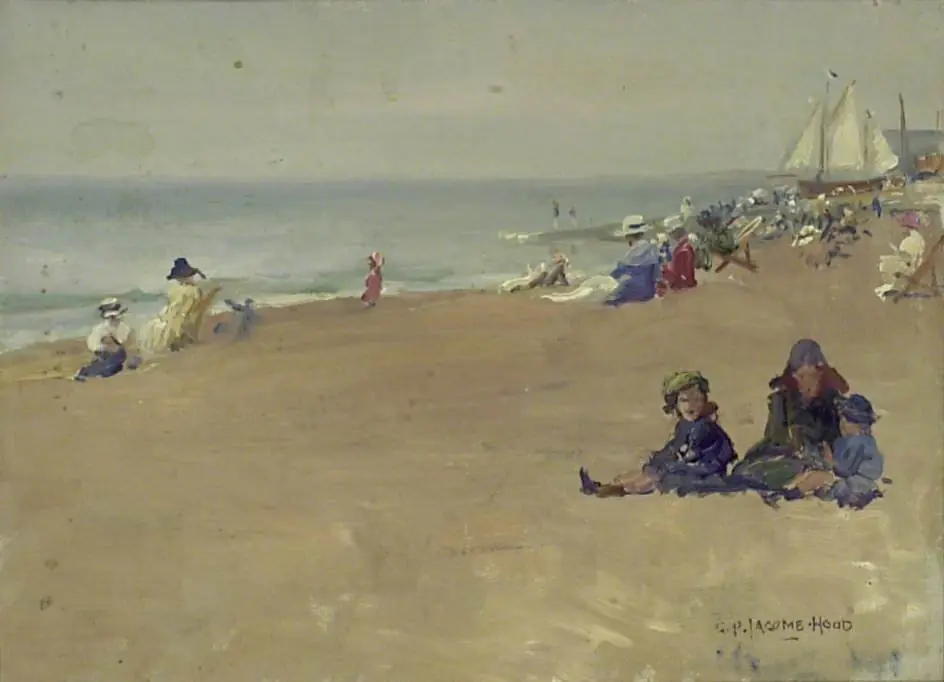
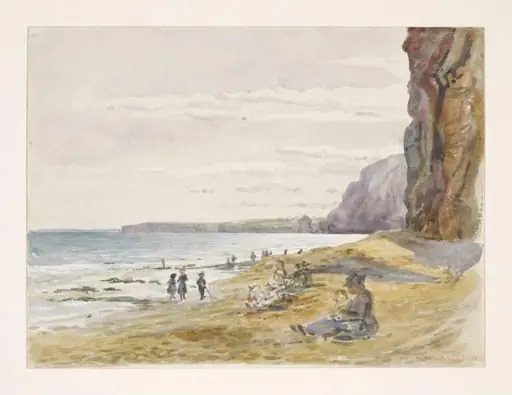
The painting portrays a tranquil stretch of shoreline near Le Pouldu, with figures positioned along the water’s edge—some seated, others standing—engaged in unremarkable, contemplative activities. There is no dramatic event or symbolic intent; instead, the composition emphasizes the quiet rhythm of human presence within a natural setting. The subdued figures blend into the landscape, reinforcing a sense of harmony between people and environment.
Technique & Style
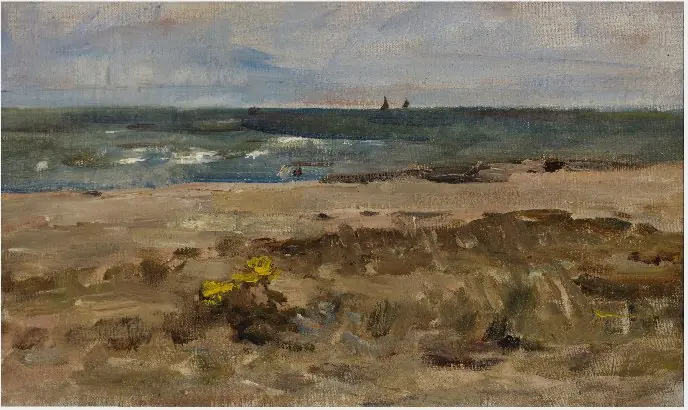
Frieseke employed loose, broken brushwork to convey the texture of sand and the shimmer of light on water. His palette is restrained, dominated by earthy grays, browns, and soft ochres, avoiding the brighter hues typical of French Impressionism. The handling of light is subtle, achieved through tonal shifts rather than vivid contrast, creating a quiet luminosity that suggests the diffuse glow of an overcast day.
History & Provenance
Created during Frieseke’s years in the artist colony of Giverny, the painting was later acquired by the Brooklyn Museum, where it remains in the permanent collection. It reflects his transition from academic training to a more personal, light-focused approach influenced by French Impressionists. While not widely exhibited at the time of its creation, it has since become representative of American artists working abroad in the early 20th century.
Context
Frieseke’s work emerged alongside other American painters who sought to adapt French Impressionist methods to their own observations. Unlike their European counterparts, many Americans, including Frieseke, favored quieter, more intimate scenes over urban or social themes. *Le Pouldu Landscape* aligns with this tendency, reflecting a preference for solitude and naturalism over spectacle, characteristic of the American branch of the movement.
Legacy
The painting contributes to the understanding of how American artists interpreted Impressionism outside Paris, emphasizing atmosphere over bold color or movement. Frieseke’s restrained approach influenced later generations interested in tonal harmony and subtle light effects. While not as widely recognized as some contemporaries, his work remains a quiet but significant voice in the history of American Impressionism.
Artist & collection
Artist
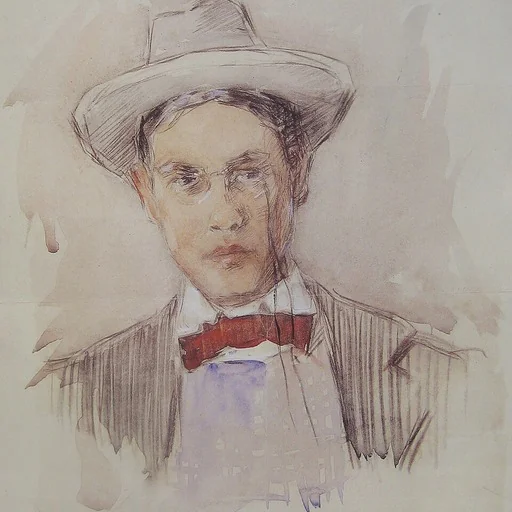
Frederick Carl Frieseke (April 7, 1874 – August 24, 1939) was an American Impressionist painter who spent most of his life as an expatriate in France.