Artwork
The Drinking Trough: A Scene in Brittany
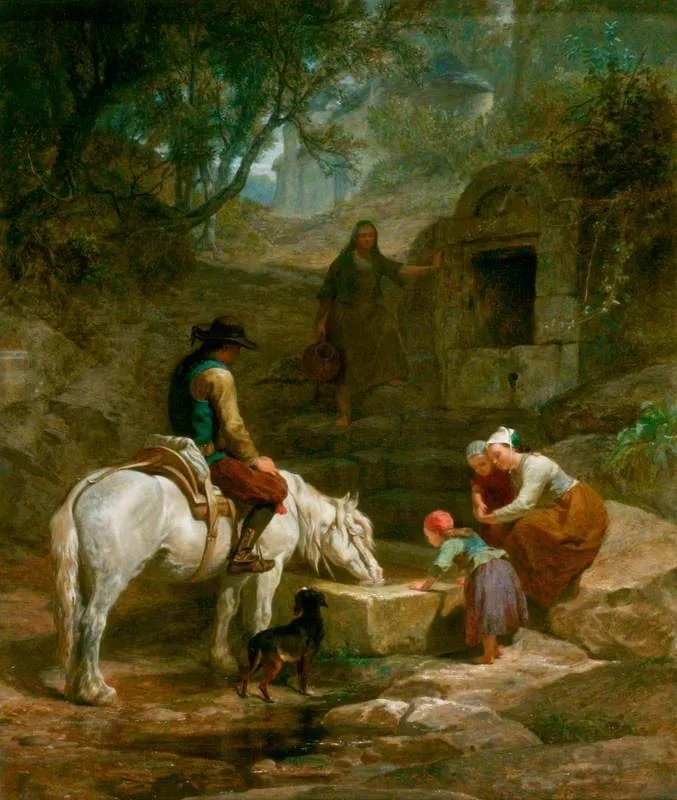
The Drinking Trough: A Scene in Brittany is an oil painting by the British Romanticist artist Frederick Goodall. It dates from 1857 and is held in the collection of the Victoria and Albert Museum.
About this work
Overview
Goodall, known for detailed genre scenes, captured an ordinary act—animals drinking at a stone trough—with careful attention to light and composition.
Painted in 1857 by English artist Frederick Goodall, this oil on canvas depicts a quiet rural moment in Brittany. Goodall, known for detailed genre scenes, captured an ordinary act—animals drinking at a stone trough—with careful attention to light and composition. The work reflects his early focus on everyday life before his later travels influenced his subject matter. It remains part of the Victoria and Albert Museum’s collection.
Subject & Meaning
The scene centers on a woman kneeling beside a stone drinking trough, with two children and a small dog nearby. A white horse drinks calmly, its presence grounding the composition. No dramatic event occurs; instead, the painting emphasizes stillness and routine. The figures’ quiet interaction suggests a rhythm of daily labor, valuing simplicity over spectacle. The absence of narrative tension invites contemplation of rural life’s quiet dignity.
Technique & Style
Goodall employed a restrained palette and soft, naturalistic lighting to enhance the scene’s serenity. Brushwork is precise but unobtrusive, allowing textures—worn stone, woolen fabric, horsehair—to emerge subtly. The composition is balanced, with the horse’s form anchoring the foreground and the distant wall and trees framing the space. His approach aligns with British Romanticism’s interest in authentic, unidealized observation rather than theatricality.
History & Provenance
Created during Goodall’s early career, the painting was likely exhibited shortly after completion, as he regularly showed at the Royal Academy. He became an Associate in 1852 and a full Academician in 1863, indicating rising professional standing. The work entered the Victoria and Albert Museum’s collection at an early date, suggesting immediate institutional recognition. Its preservation reflects its value as an example of mid-19th-century British genre painting.
Context
In the 1850s, British artists increasingly turned to rural and foreign scenes as alternatives to urban industrial life. Brittany, then a region perceived as culturally distinct and archaic, offered a romanticized vision of timeless tradition. Goodall’s depiction aligns with this trend, presenting peasant life not as poverty but as harmonious and enduring. His choice of subject reflects broader Victorian interests in authenticity and moral simplicity.
Legacy
Though Goodall later gained fame for Egyptian themes, this early work remains a representative example of his commitment to observational realism. It contributes to the understanding of how British artists engaged with continental rural life without overt sentimentality. The painting’s quiet presence in the V&A underscores its role as a document of 19th-century visual culture, valued for its restraint and sincerity rather than its novelty.
Artist & collection
Artist
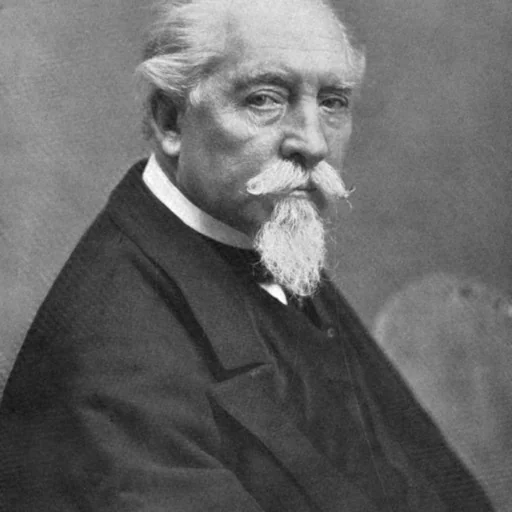
Frederick Goodall (17 September 1822 – 29 July 1904) was an English painter, normally of figure subjects, often on large scale.

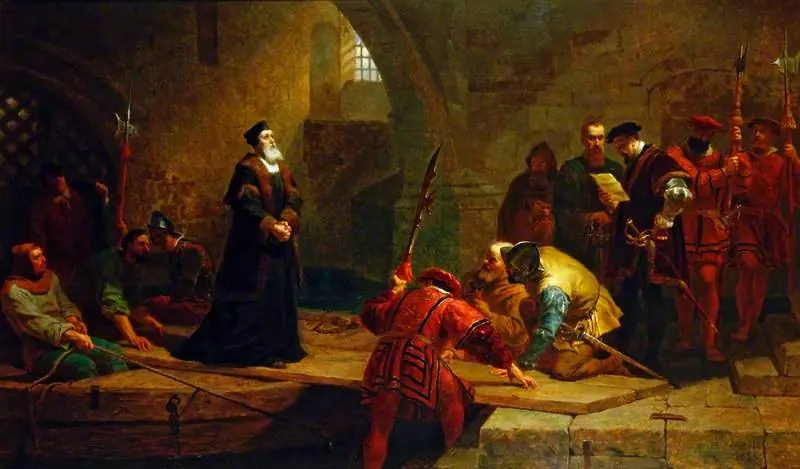
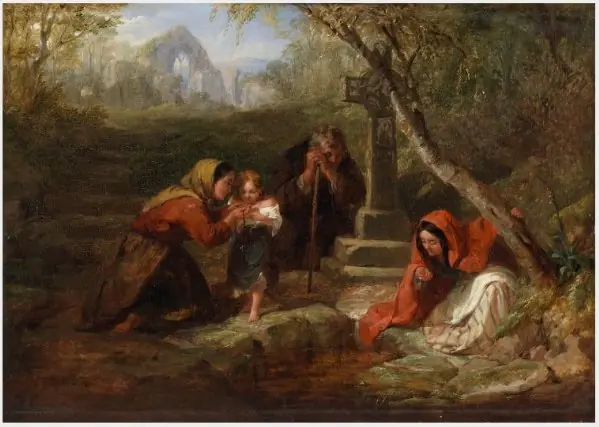
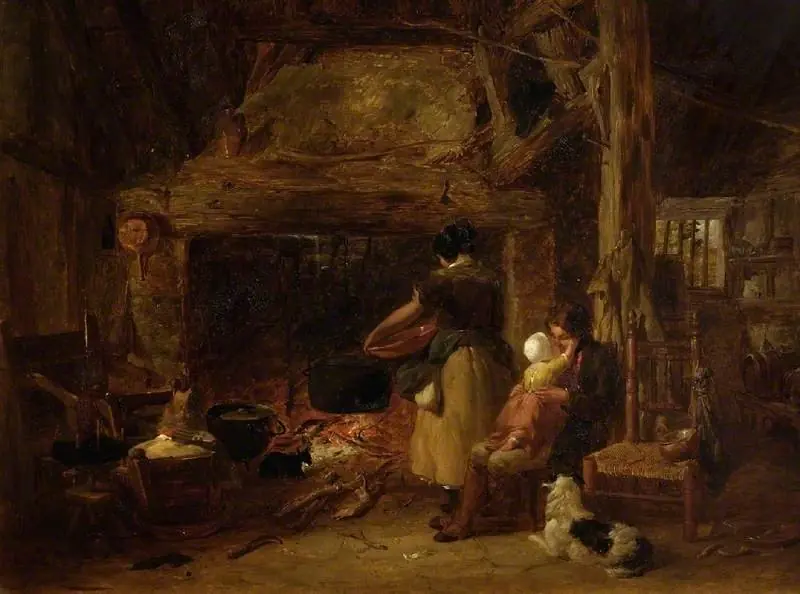
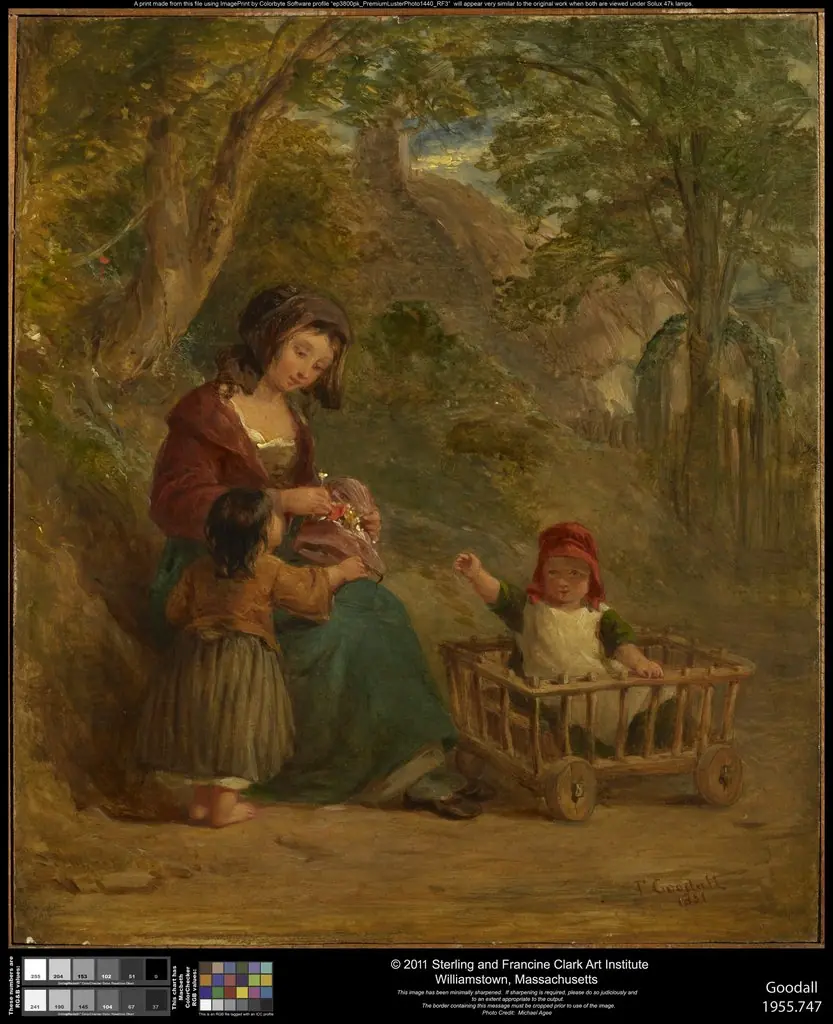
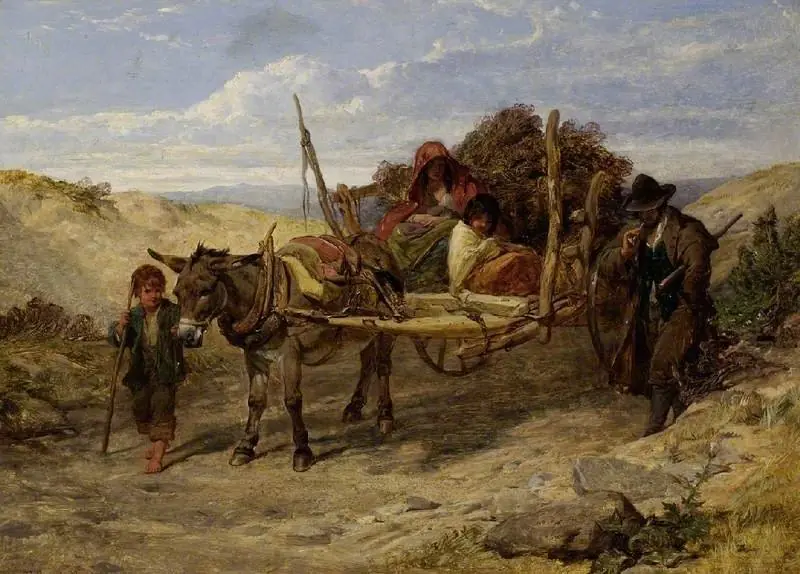
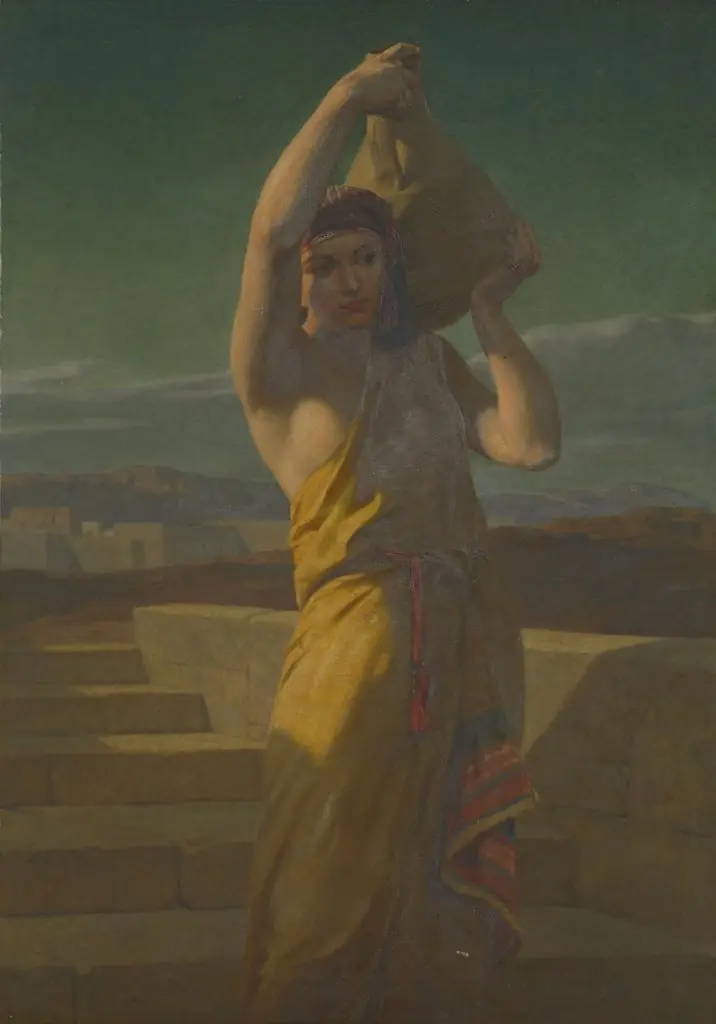
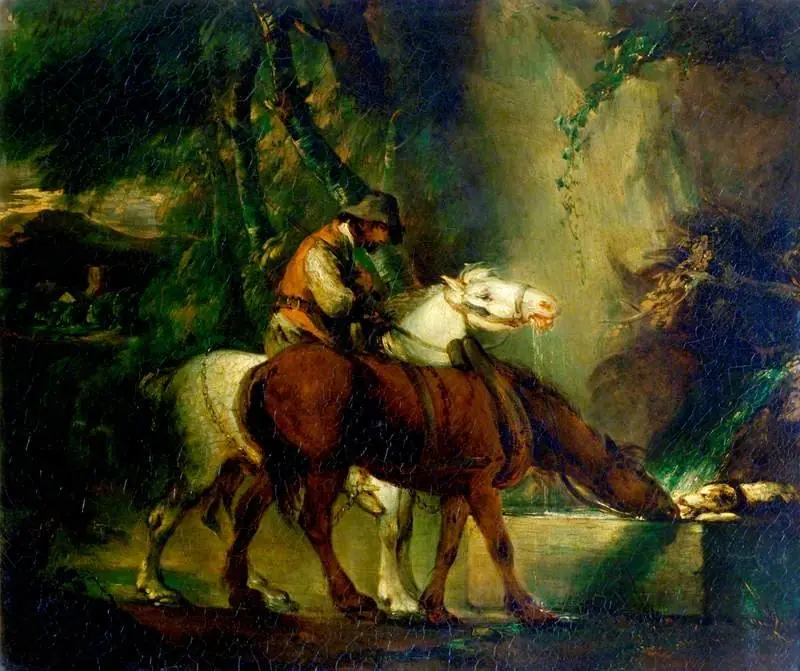 Cart Horses at a Drinking Trough
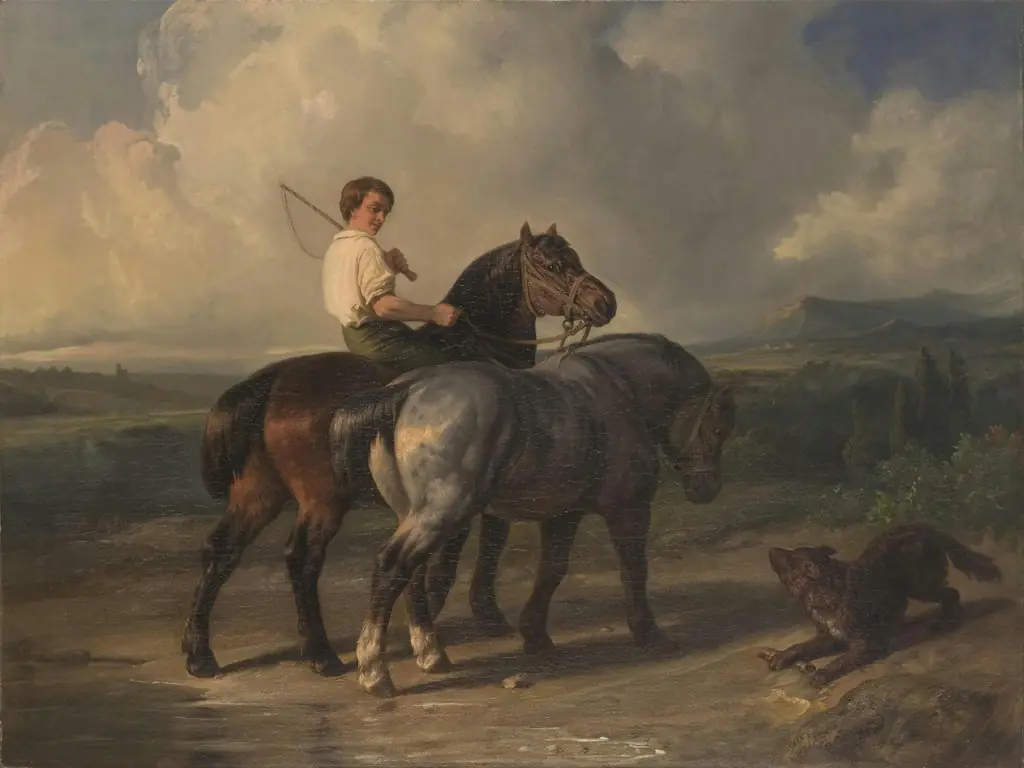 Two Horses
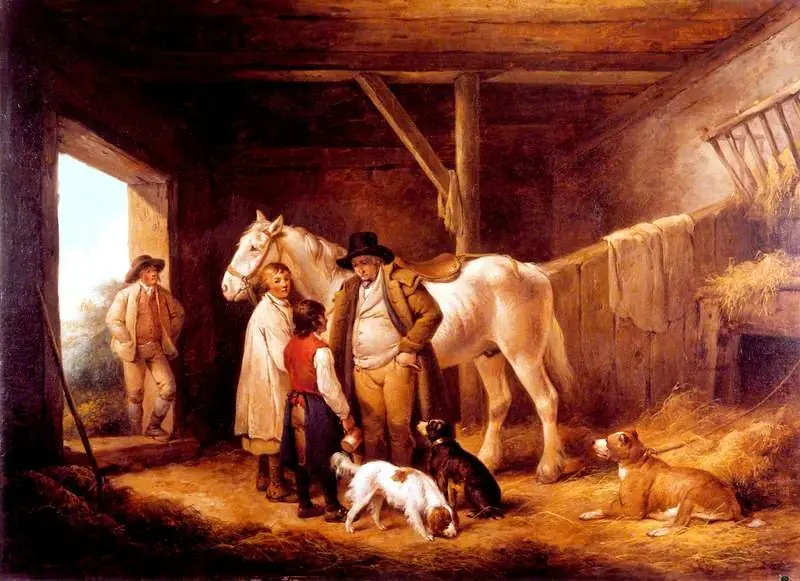 The Reckoning: A Farmer Paying the Ostler and Pot-Boy of an Inn
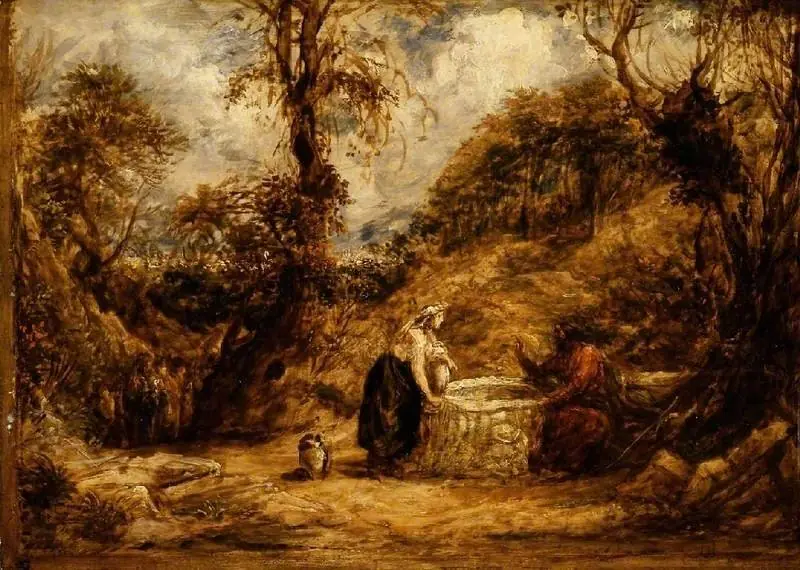 Christ and the woman of Samaria at Jacob's well
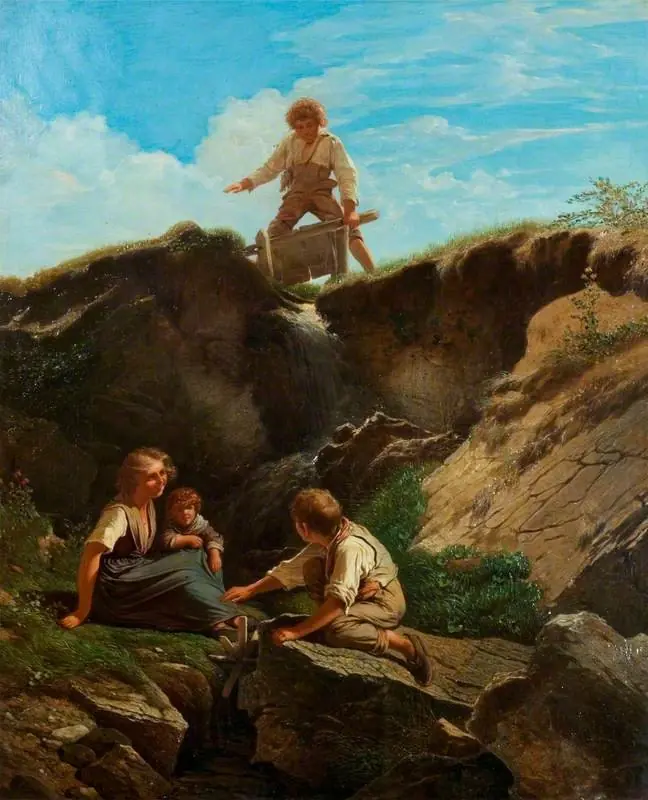 The Dam
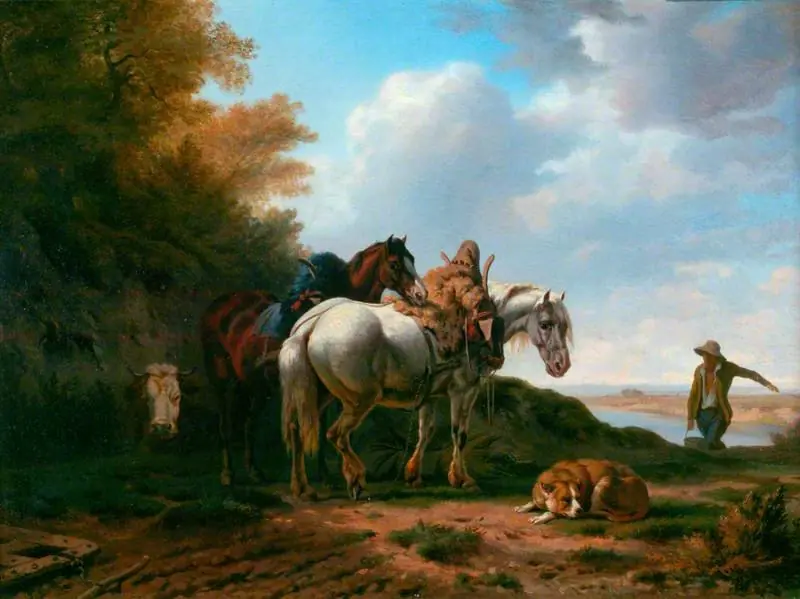 Horses at Plough
 Baptism of the Eunuch of Queen Candace
 The Spring
 Landscape with Cattle
 Rast am Brunnen
 The Rider's Halting Place
 Un hombre a caballo junto a tienda de campaña