Artwork
Rast am Brunnen

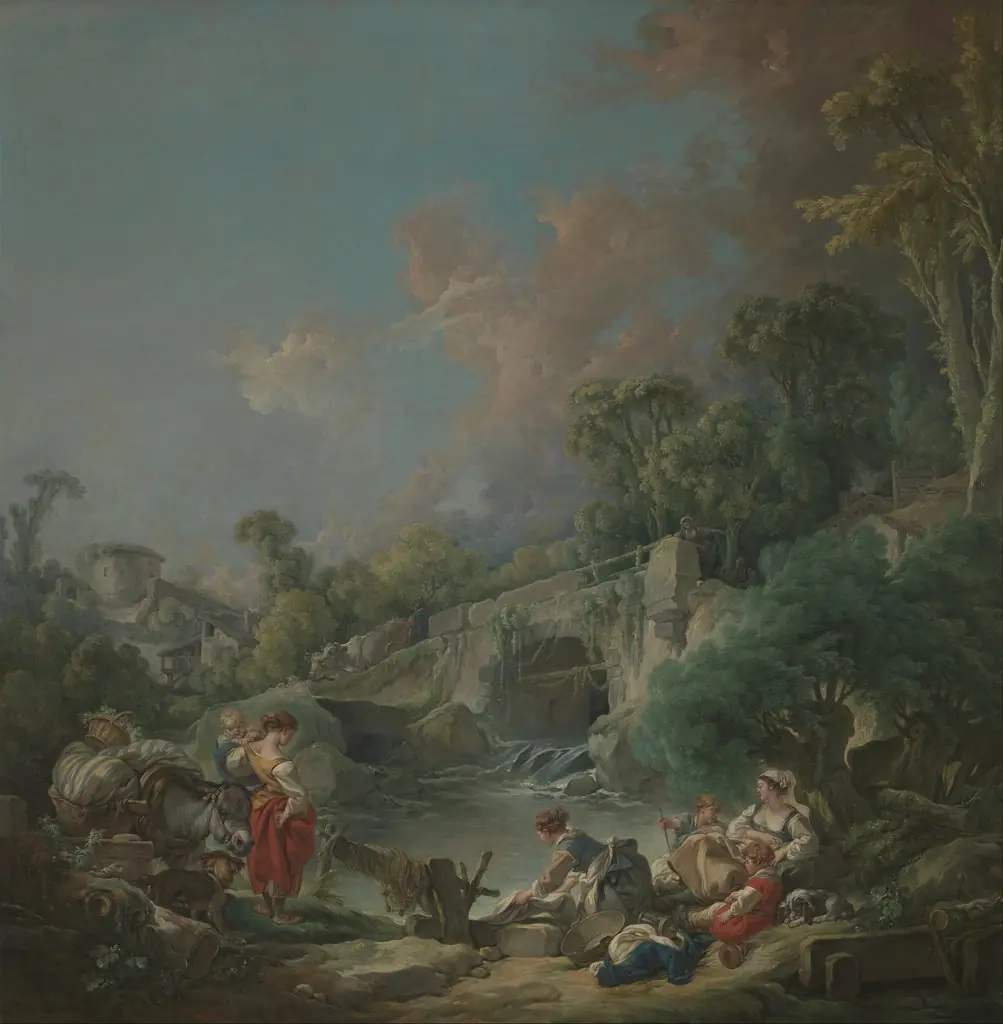
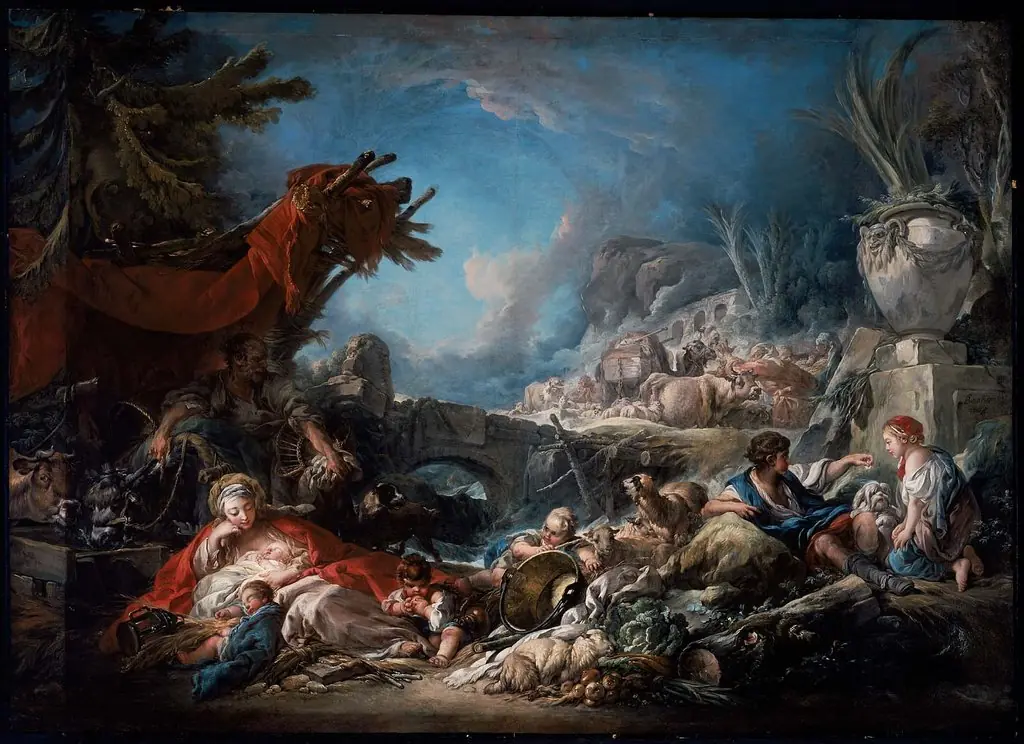
Rast am Brunnen is an unspecified painting by the Rococo painting artist François Boucher. It dates from 1730 and is held in the collection of the Bavarian State Painting Collections.
About this work
Overview
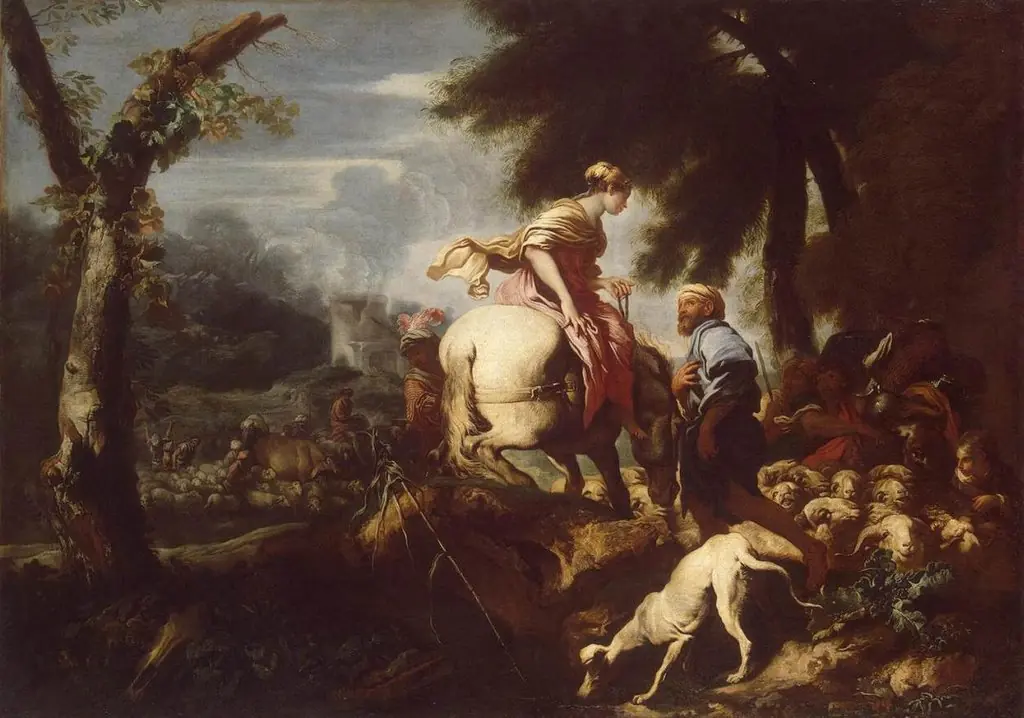
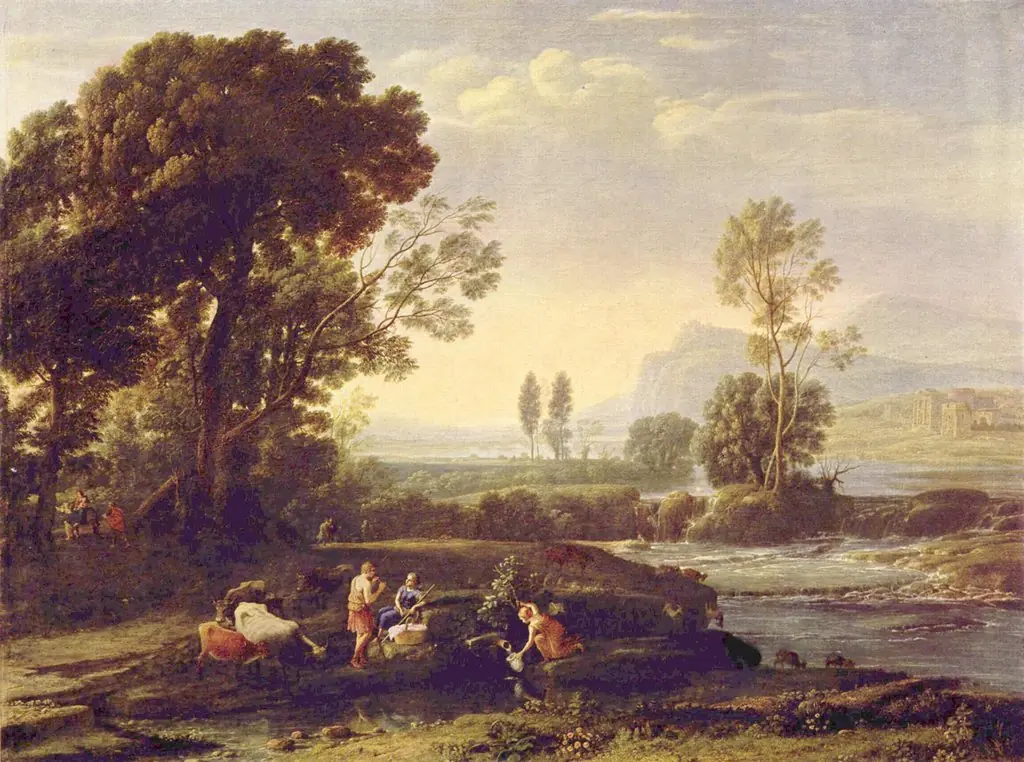
Created in 1730 by the French artist François Boucher, this oil painting titled "Rast am Brunnen" is part of the collection of Munich’s Alte Pinakothek. The work presents a quiet, pastoral tableau that combines human figures with a natural landscape, reflecting the Rococo fascination with idyllic leisure.
Subject & Meaning
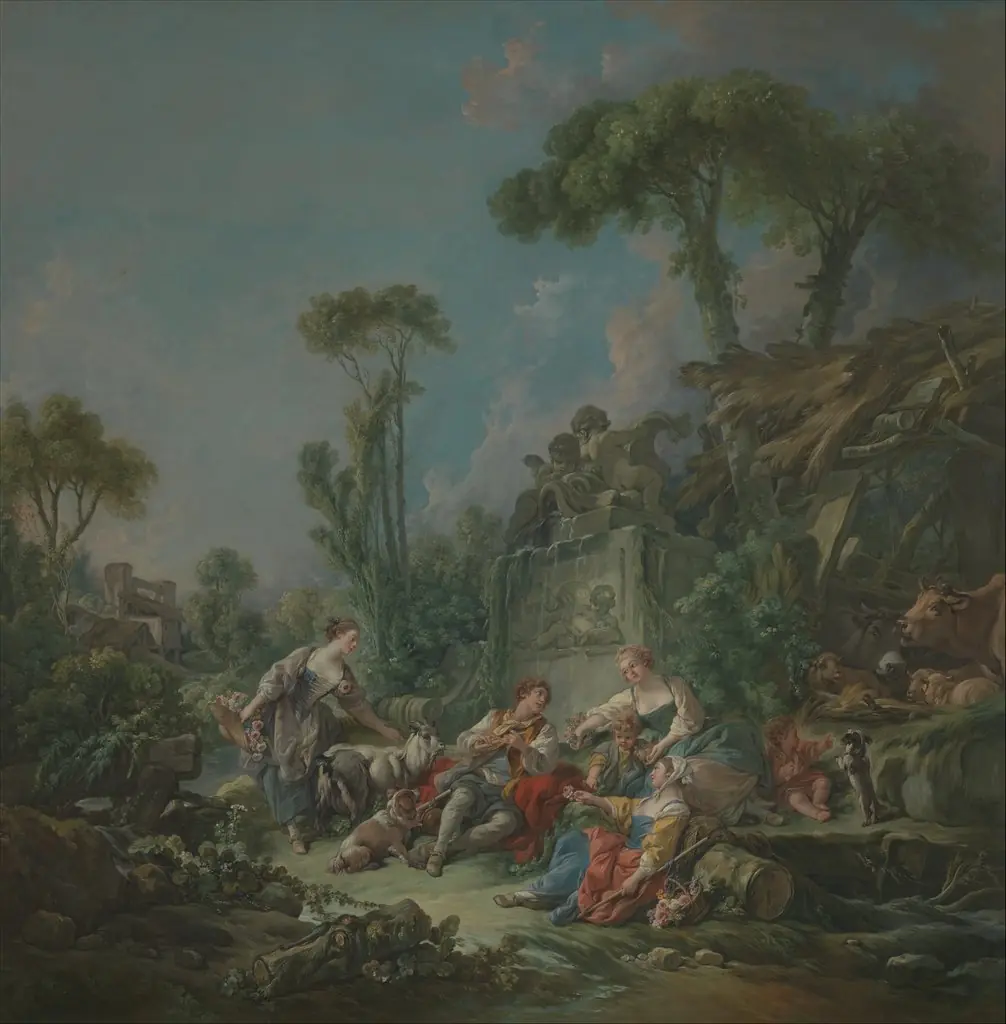
The composition centers on three individuals gathered on a rocky ledge beside a cascading stream, accompanied by a white‑coated goat. The figures, dressed in contrasting robes of blue, red and brown, engage in quiet interaction, suggesting a moment of rest and conversation amid nature. The goat adds a rustic element, reinforcing the theme of simple, contemplative respite.
Technique & Style
Boucher employs a soft, luminous palette typical of his early Rococo period, using delicate brushwork to render the foliage, water, and distant village. The rendering of light on the figures and the shimmering surface of the waterfall demonstrates his skill in creating atmospheric depth while maintaining a graceful, decorative quality.
History & Provenance
After its execution in the early 1730s, the painting entered various private collections before being acquired by the Alte Pinakothek, where it remains on display. Its presence in the museum underscores the institution’s commitment to representing French Rococo art alongside its Germanic holdings.
Context
The work reflects the 18th‑century French taste for pastoral scenes that idealized rural life, a motif often employed by Boucher in his mythological and genre paintings. By situating the figures near a water source, the artist evokes classical notions of the fountain as a place of refreshment and reflection.
Own this work as a print
Artist & collection

Artist
François Boucher was a French painter, draughtsman and etcher, who worked in the Rococo style.