Artwork
The Holy Well
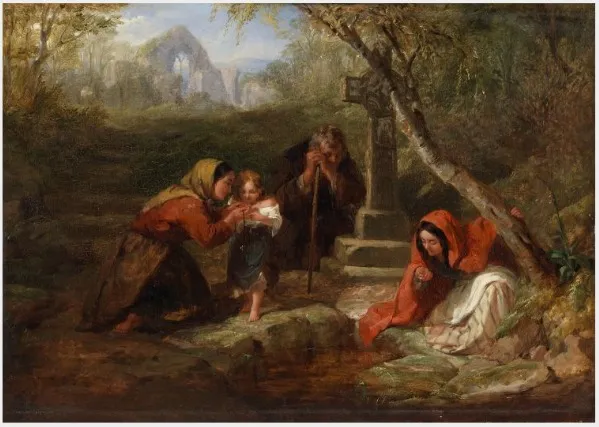
The Holy Well is an oil painting by the Realist artist Frederick Goodall. It dates from 1843 and is held in the collection of the National Gallery of Ireland.
About this work
Overview
Frederick Goodall’s 1843 oil painting *The Holy Well* presents a tranquil outdoor gathering centered on a stone well. A woman in a vivid red cloak kneels at the water’s edge, while several onlookers stand nearby, absorbed in quiet observation. The composition is set amid trees, creating a natural enclosure that emphasizes the contemplative atmosphere of the scene.
Subject & Meaning
The work captures a moment of devotional pause, with the red‑cloaked figure appearing to pray or meditate before the well, a traditional symbol of purification and renewal. The surrounding figures, engaged in various subtle actions, reinforce a communal sense of reverence, suggesting a shared ritual or personal reflection within a rural setting.
Technique & Style
Executed in oil, Goodall employs a restrained palette that balances the bright red garment against muted earth tones, enhancing depth through layered brushwork. The careful modeling of light across foliage and stone conveys atmospheric perspective, while the composition’s gentle diagonal lines guide the viewer’s eye toward the central well, reflecting the realist attention to everyday detail.
History & Provenance
Created during the height of the Realist movement, the painting was shown frequently at the Royal Academy, where Goodall later attained full academician status. Although his later oeuvre fell out of critical favor, *The Holy Well* entered the National Gallery of Ireland’s collection, where it remains part of the institution’s 19th‑century British holdings.
Artist & collection
Artist
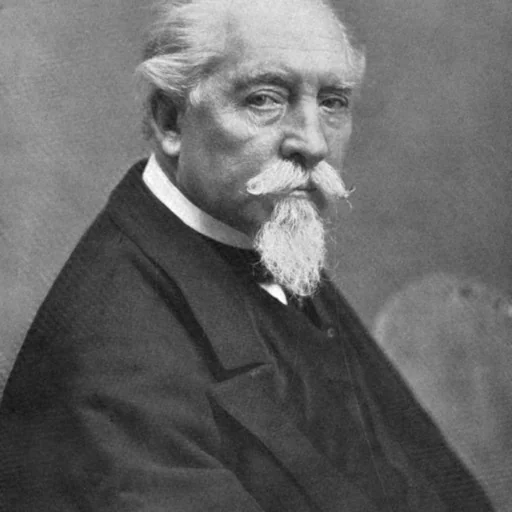
Frederick Goodall (17 September 1822 – 29 July 1904) was an English painter, normally of figure subjects, often on large scale.

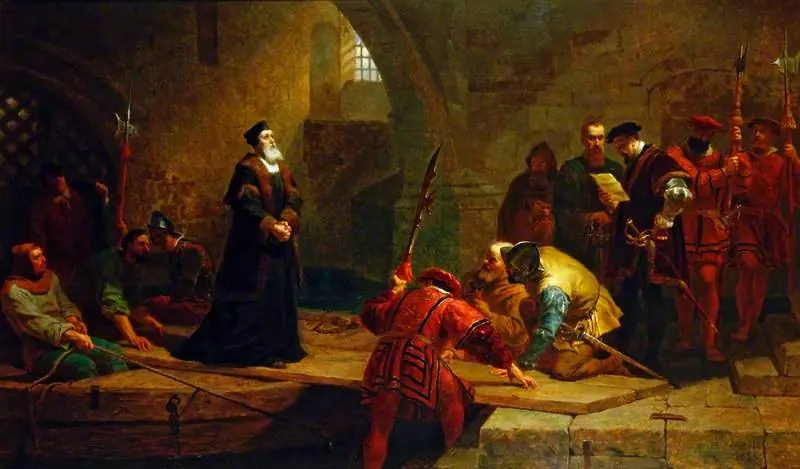
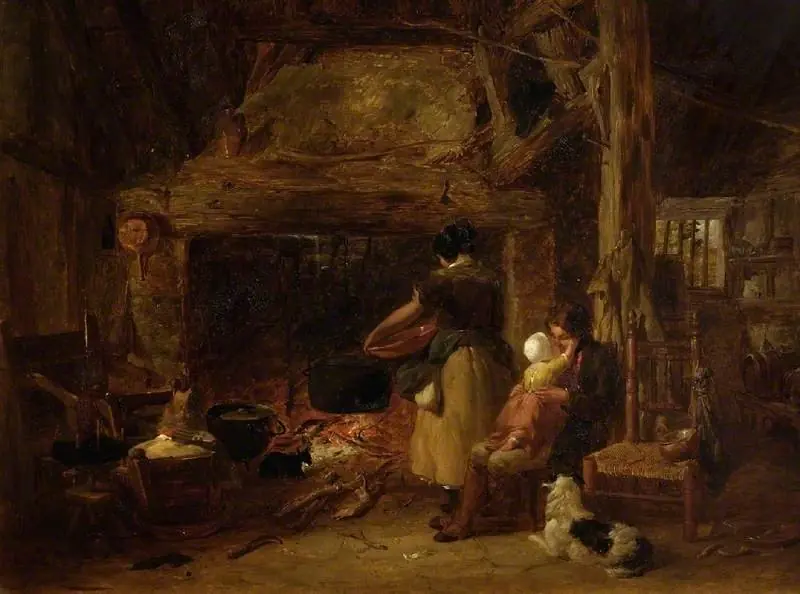
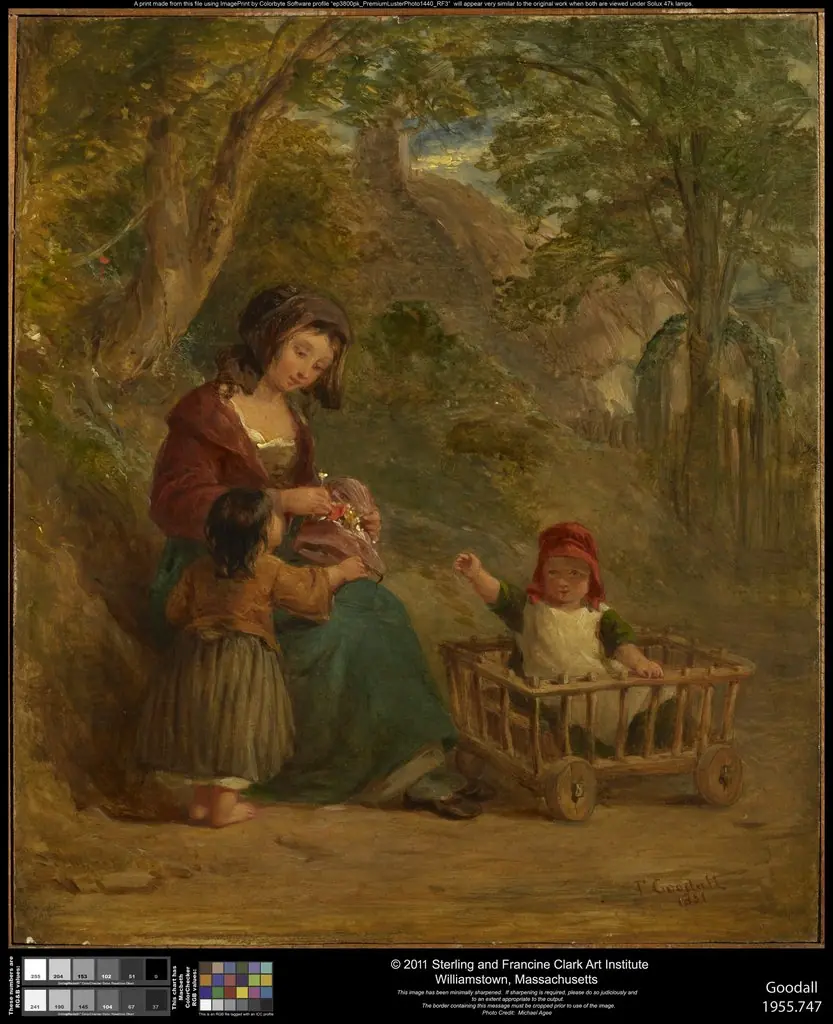
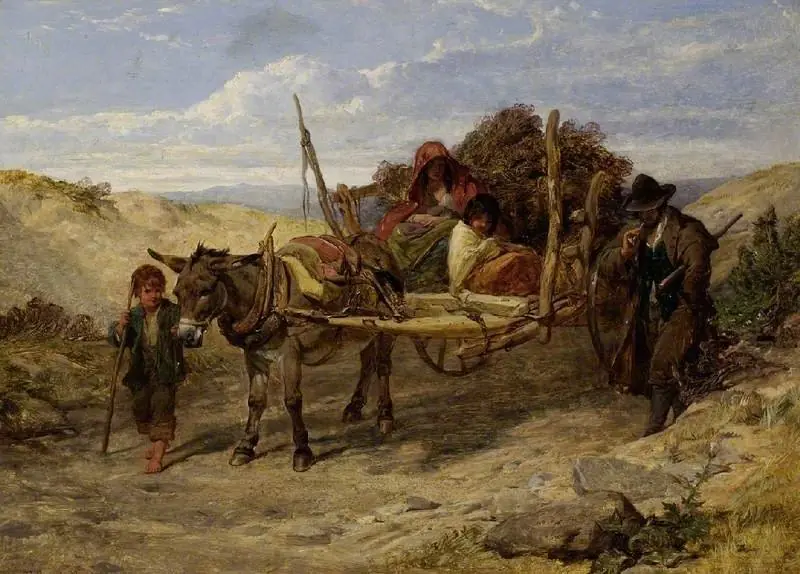
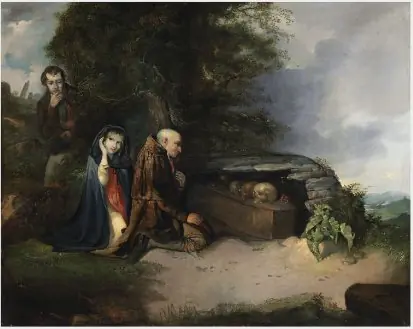 Figures by a Coffin - a Scene from 'The Collegians'
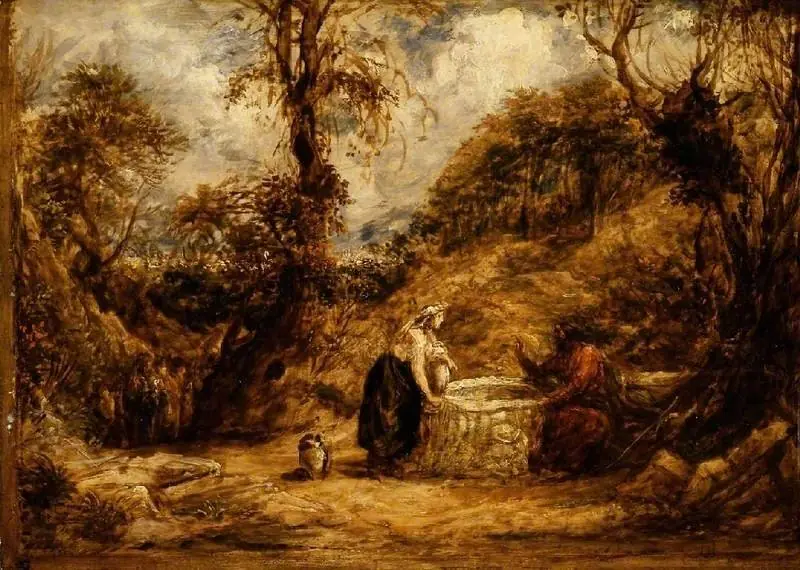 Christ and the woman of Samaria at Jacob's well
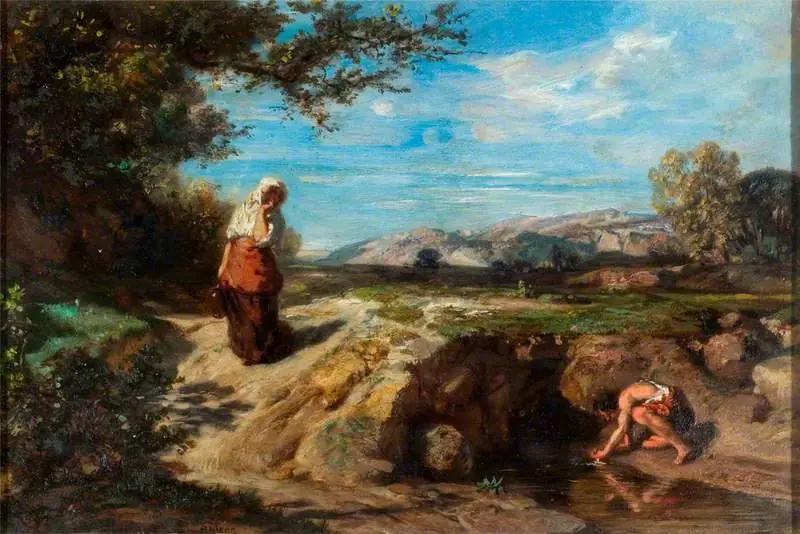 The Spring
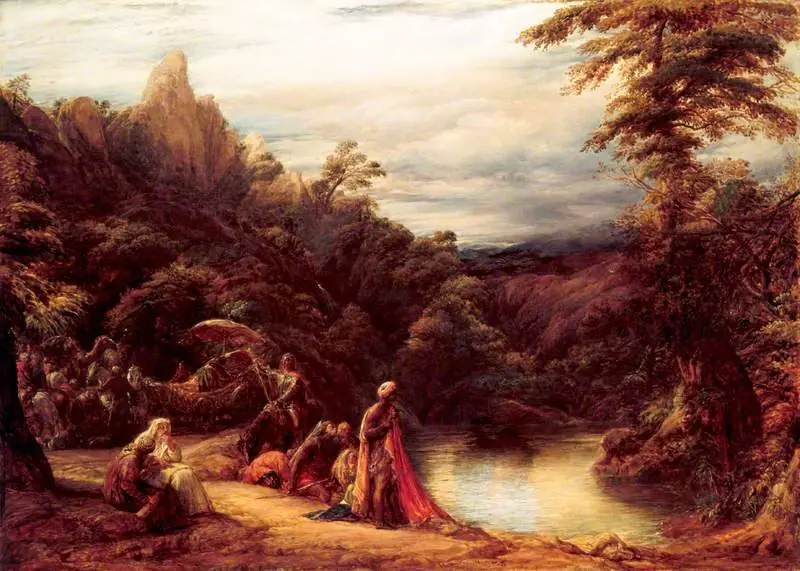 Halt by the Jordan
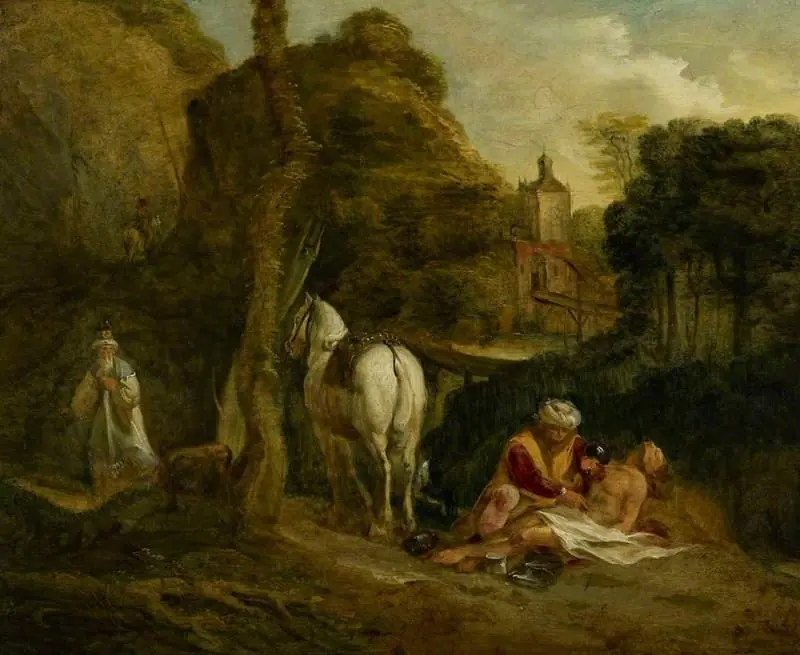 The Good Samaritan
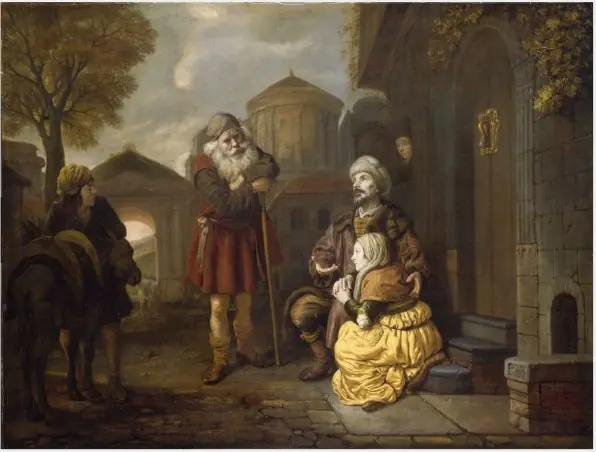 The Levite and his Concubine at Gibeah
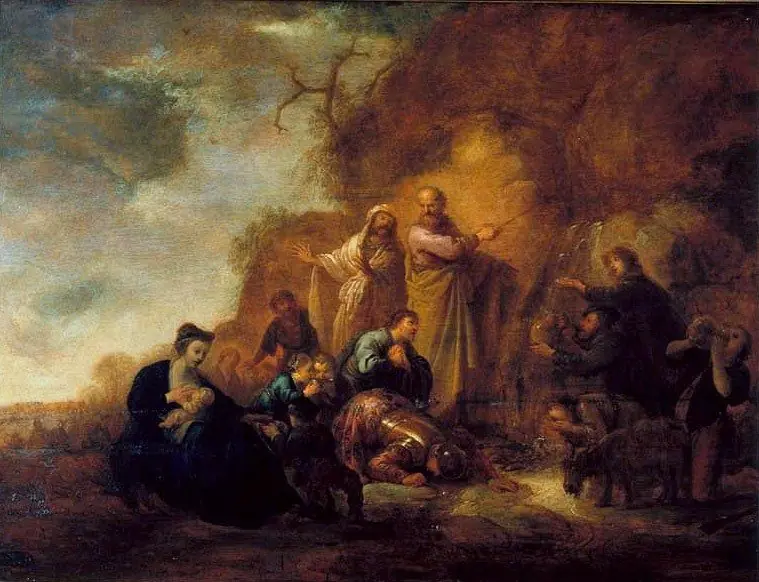 Moisés no Rochedo de Horeb
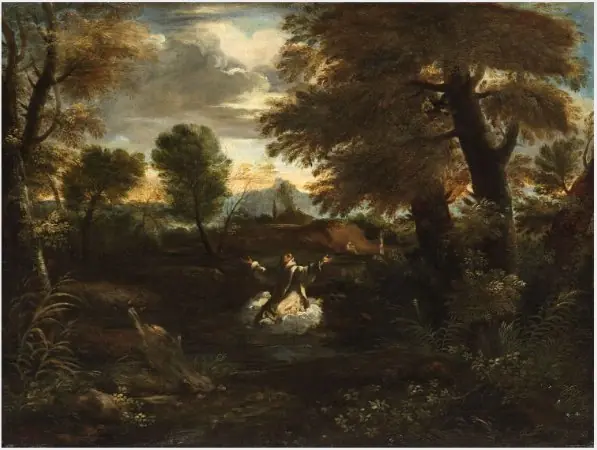 Landscape with Saint Bruno in Ecstasy
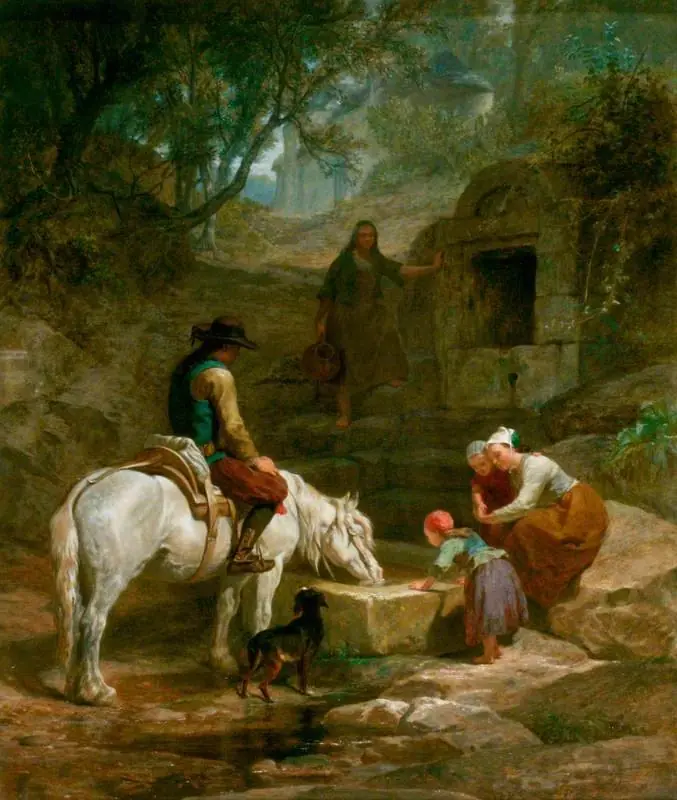 The Drinking Trough: A Scene in Brittany
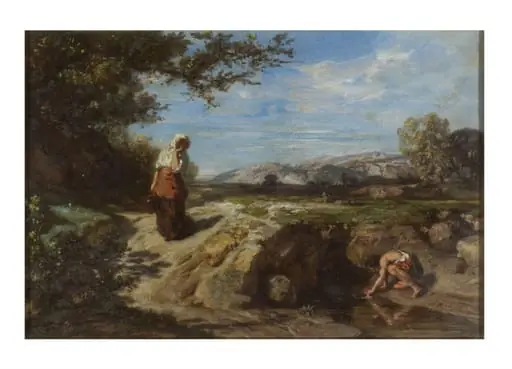 The Spring
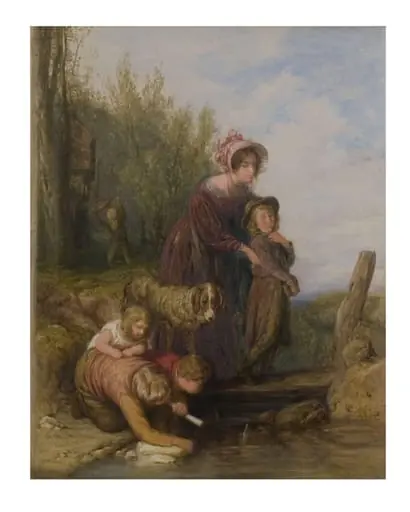 A Sailing Match
 The Education of the Virgin