Artwork
Ragdale Hall
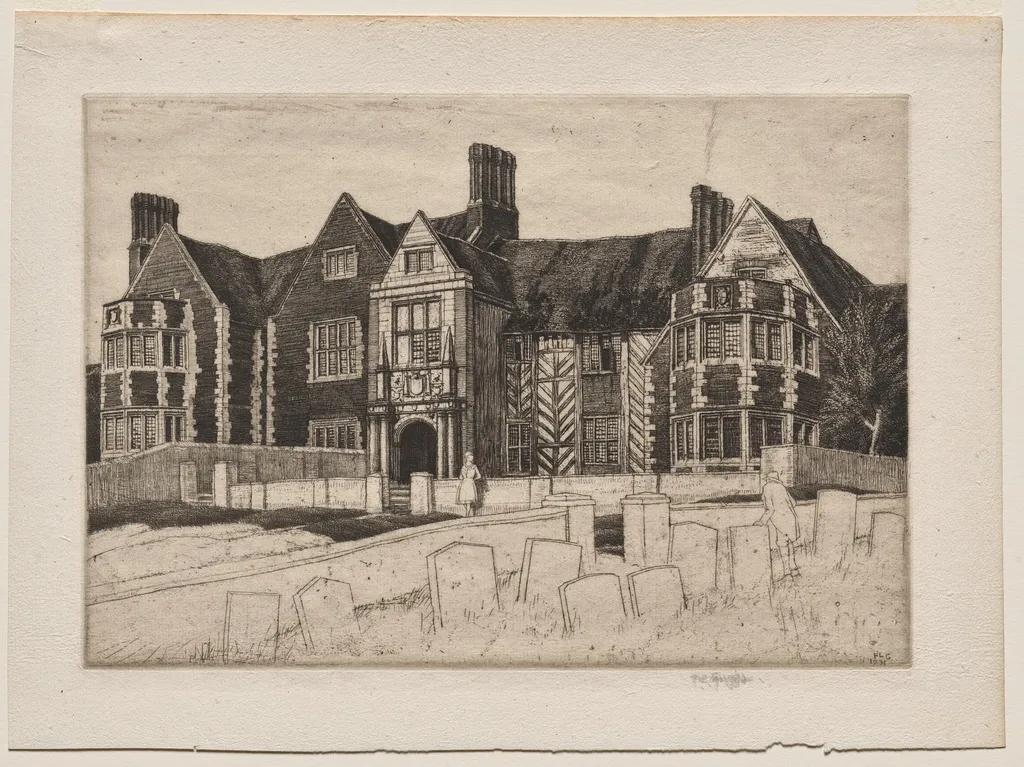
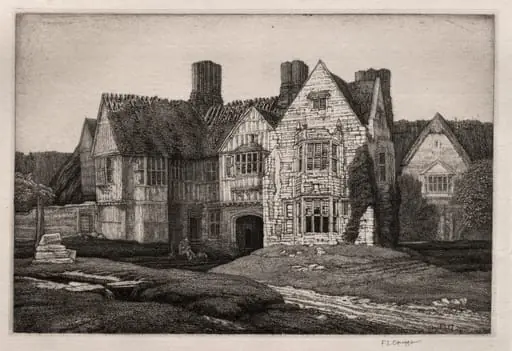
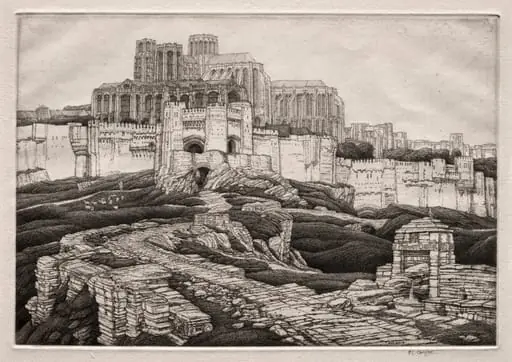
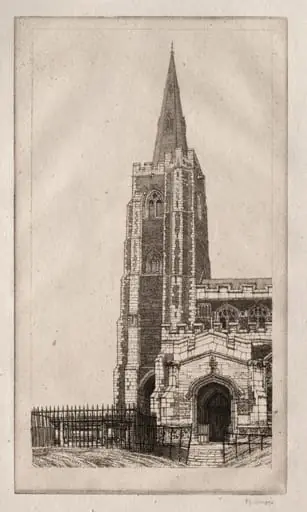
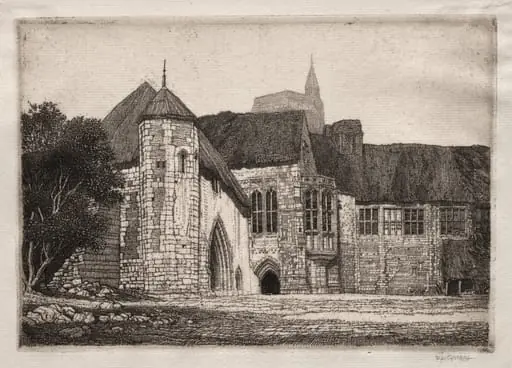
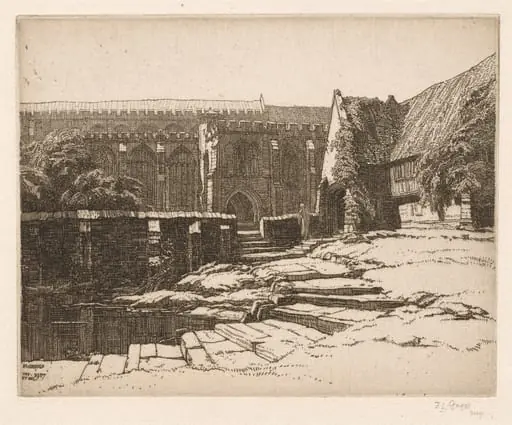
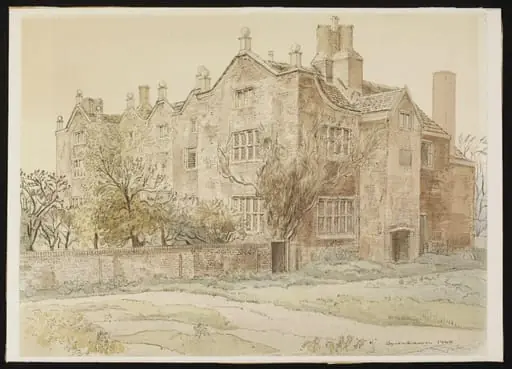
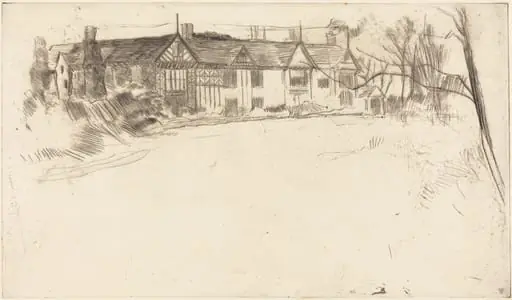
Ragdale Hall is a print by Frederick Landseer Maur Griggs. It dates from 1937 and is held in the collection of the Cleveland Museum of Art.
About this work
The headstones in the graveyard are weathered, suggesting they have been there for a long time.
This image depicts a large, multi-story building with a dark roof and light-colored walls. The building has several chimneys and a large arched doorway. In front of the building, there are several headstones in a graveyard.
The building appears to be old, with intricate details on its facade. The headstones in the graveyard are weathered, suggesting they have been there for a long time.
The artist of this piece is Frederick Landseer Maur Griggs (British, 1876–1938).
Overview
Ragdale Hall, created in 1937 by British artist Frederick Landseer Maur Griggs, is a detailed print depicting a historic English manor house surrounded by an ancient graveyard. The work is part of the collection at The Cleveland Museum of Art and reflects Griggs’s interest in architectural heritage and the passage of time. Rendered in fine line and tonal contrast, the image captures the quiet solemnity of a decaying estate.
Subject & Meaning
The subject is Ragdale Hall, a real country house in Leicestershire, shown in a state of quiet neglect. The inclusion of weathered headstones in the foreground suggests themes of memory, mortality, and the erosion of legacy. Griggs presents the building not as a monument of grandeur, but as a silent witness to time’s passage, blending domestic architecture with the permanence of the dead.
Technique & Style
Griggs employed drypoint etching to achieve intricate linework and rich tonal depth. The dark roof and light walls create strong visual contrast, while the textured surfaces of stone and weathered gravestones are rendered with meticulous detail. The composition is tightly framed, drawing attention to architectural elements and the somber atmosphere, characteristic of Griggs’s late work in architectural printmaking.
History & Provenance
The print was made in 1937, near the end of Griggs’s life, during a period when he focused on documenting historic English buildings. It entered The Cleveland Museum of Art’s collection through a gift or acquisition shortly after his death in 1938. The work’s provenance remains tied to British print circles and posthumous recognition of his contributions to topographical art.
Context
Griggs worked during a time of growing interest in preserving England’s architectural past, amid industrialization and wartime uncertainty. His prints often focused on neglected or crumbling structures, reflecting a broader cultural concern with heritage. Ragdale Hall aligns with this movement, offering a quiet meditation on decay rather than a celebratory record.
Legacy
Though not widely known outside specialist circles, Griggs’s prints, including Ragdale Hall, are valued for their technical precision and emotional restraint. His work influenced later generations of British printmakers interested in architectural and topographical subjects. The print endures as a subtle record of a place shaped by time, not by fame.
Artist & collection
Artist
Frederick Landseer Maur Griggs
Frederick Landseer Maur Griggs was an English etcher, architectural draughtsman, illustrator, and early conservationist, associated with the late flowering of the Arts and Crafts movement in the Cotswolds, centred in Chipping Campden.