Artwork
Palace Farm
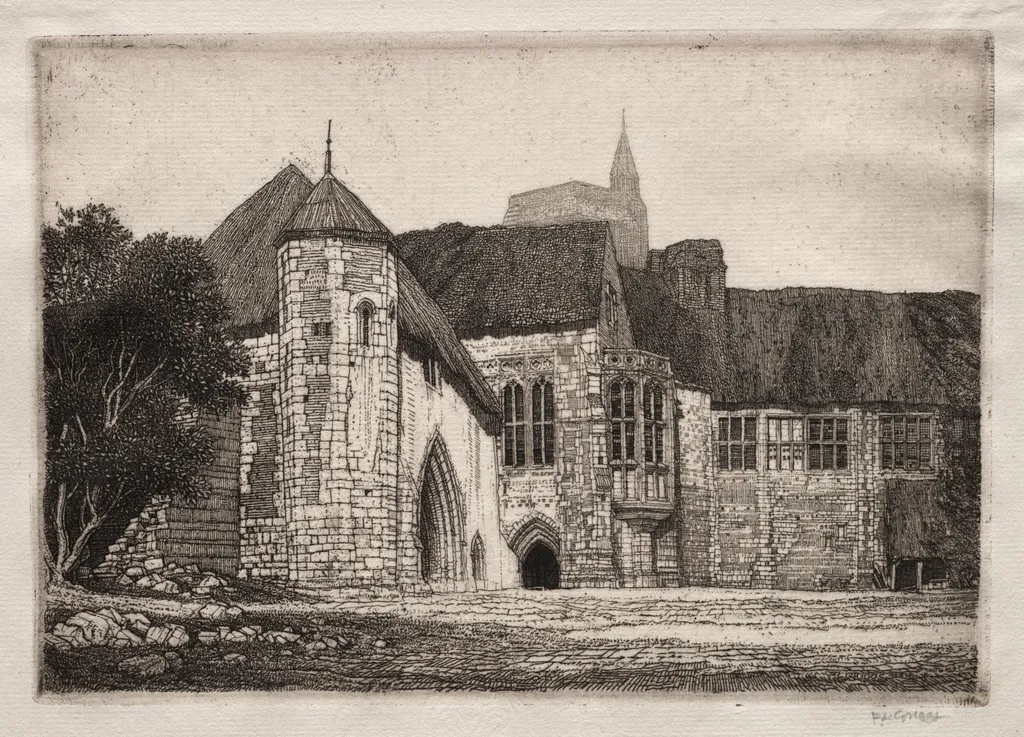
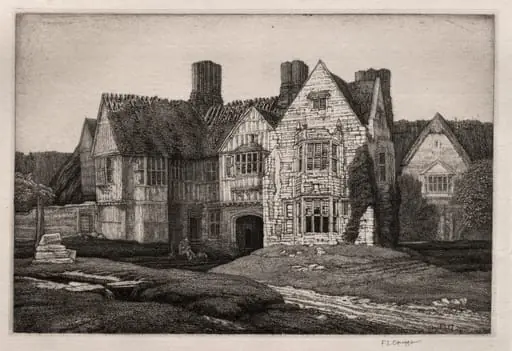
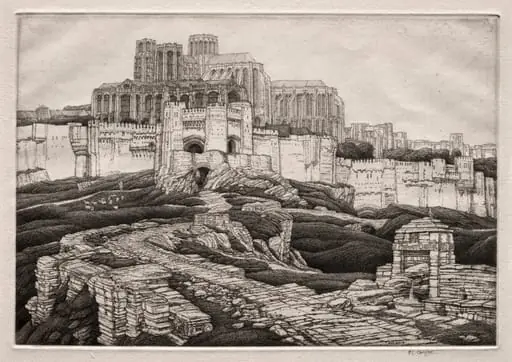
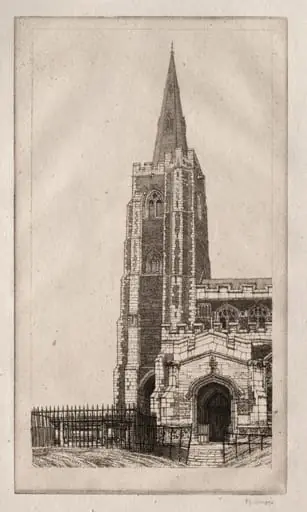
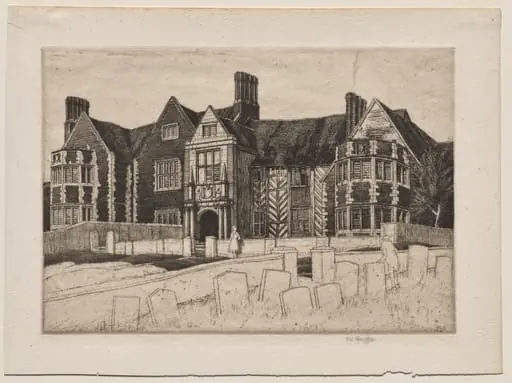
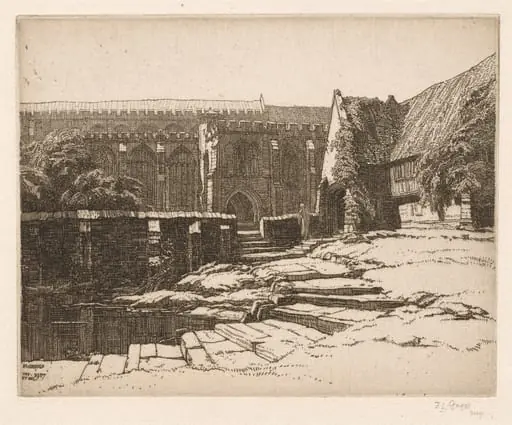
Palace Farm is a print by Frederick Landseer Maur Griggs. It dates from 1917 and is held in the collection of the Cleveland Museum of Art.
About this work
Overview
The work belongs to the collection of The Cleveland Museum of Art, where it is preserved as an example of early 20th-century British printmaking.
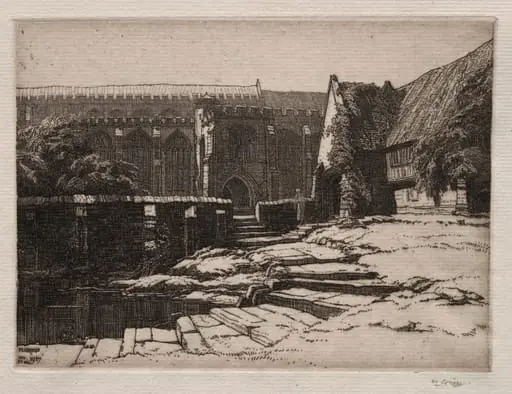
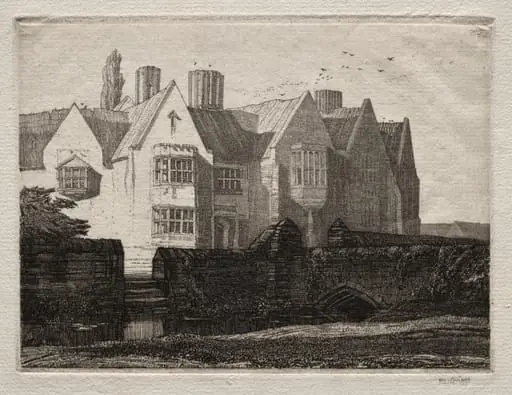
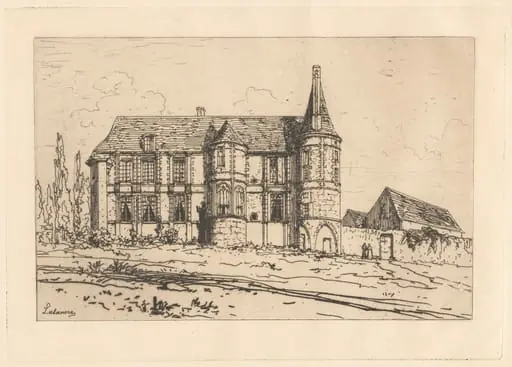
Palace Farm is a print made around 1917 by the British artist Frederick Landseer Maur Griggs. It presents a quiet rural structure, rendered with careful line work and muted tones. The composition centers on a substantial stone edifice, its form softened by atmospheric perspective. The work belongs to the collection of The Cleveland Museum of Art, where it is preserved as an example of early 20th-century British printmaking.
Subject & Meaning
The subject is a solitary agricultural building, likely a farmhouse or manor, surrounded by elements of the English countryside. The archway, tower, and distant steeple suggest historical continuity, while the empty path and sparse vegetation evoke stillness. There is no human presence, reinforcing a sense of timelessness and solitude. The image invites contemplation rather than narrative, emphasizing the quiet endurance of rural architecture.
Technique & Style
Griggs employed drypoint etching, a technique that allows for rich, velvety lines and subtle tonal gradations. The texture of stone, foliage, and earth is suggested through delicate, incised marks rather than detailed rendering. Soft contrasts between light and shadow, along with restrained use of ink, contribute to a meditative mood. The composition is balanced yet asymmetrical, guiding the eye toward the building’s central archway.
History & Provenance
Created during World War I, the print reflects Griggs’s interest in England’s architectural heritage at a time of national upheaval. It was acquired by The Cleveland Museum of Art in the 20th century as part of its growing collection of British prints. The work has remained in the museum’s holdings since, with no record of significant public exhibition prior to its inclusion in their permanent display.
Context
Griggs was part of a generation of artists revisiting traditional English landscapes with renewed attention to detail and mood. His work emerged alongside the Arts and Crafts movement’s reverence for vernacular architecture and rural life. Unlike urban-focused modernists, Griggs turned to isolated structures as symbols of continuity, offering a quiet counterpoint to the industrial and wartime changes of his era.
Legacy
Palace Farm exemplifies Griggs’s contribution to the revival of etching as a serious artistic medium in Britain. While not widely known outside specialist circles, his prints influenced later generations of printmakers interested in atmospheric landscape and historical subject matter. The work remains a quiet testament to the aesthetic value found in unadorned, enduring structures.
Artist & collection
Artist
Frederick Landseer Maur Griggs
Frederick Landseer Maur Griggs was an English etcher, architectural draughtsman, illustrator, and early conservationist, associated with the late flowering of the Arts and Crafts movement in the Cotswolds, centred in Chipping Campden.