Artwork
The South Doorway of Malmesbury Abbey Church
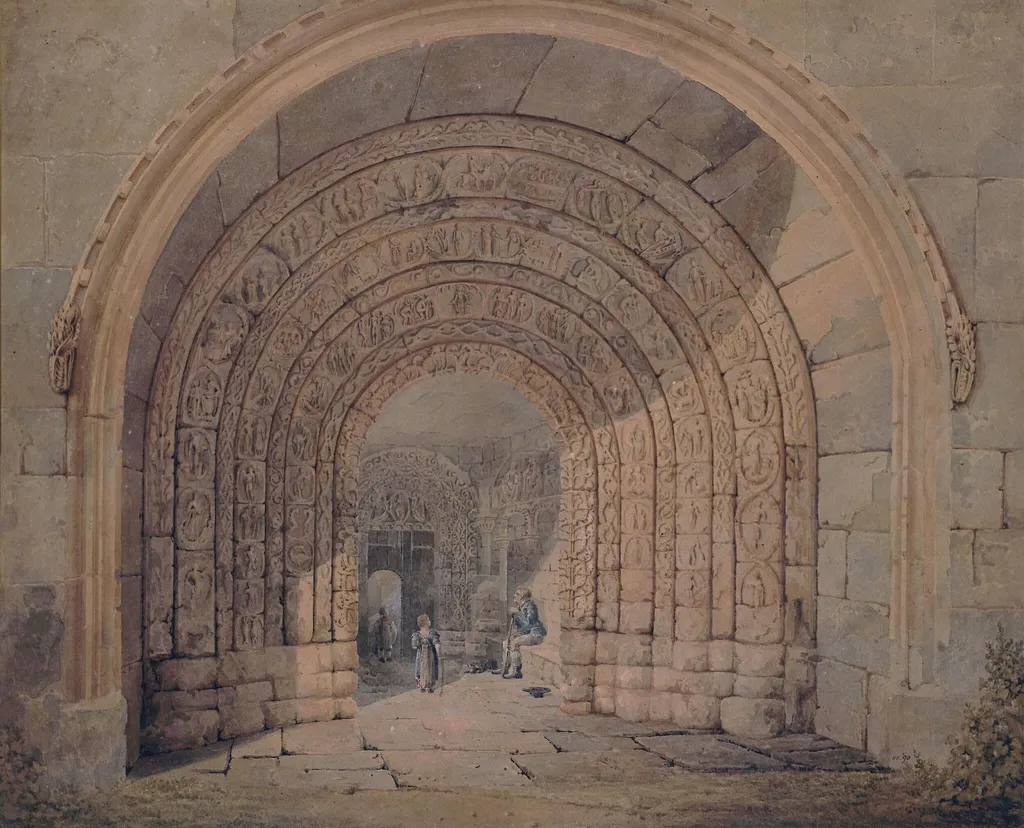
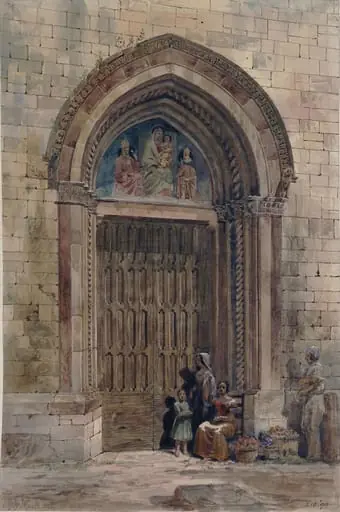
The South Doorway of Malmesbury Abbey Church is a watercolor work on paper by the British Romanticist artist Frederick Mackenzie. It dates from 1805 and is held in the collection of the Victoria and Albert Museum.
About this work
Overview
Frederick Mackenzie’s watercolour presents the south portal of Malmesbury Abbey Church. The composition isolates the stone doorway, emphasizing its richly carved arch and the three human figures positioned within the opening. Rendered against an unadorned background, the work draws the viewer’s eye to the intricate stonework and the subtle interaction of light and shadow across the surface.
Subject & Meaning
The central focus is the abbey’s south entrance, a medieval architectural element noted for its elaborate mouldings and sculptural detail. The three figures, likely representing clerical or pilgrim presences, are placed within the arch, suggesting a narrative of movement through sacred space. The painting invites contemplation of the doorway as both a physical threshold and a symbolic passage.
Technique & Style
Executed in transparent watercolour, Mackenzie employs fine washes to convey the texture of the stone and the delicacy of the carvings. The limited palette and restrained background enhance the contrast between the illuminated arch and its surroundings, a hallmark of early‑19th‑century Romantic sensibilities that favored atmospheric clarity and emotional resonance.
History & Provenance
Created by the English watercolourist Frederick Mackenzie (1805–1854), the work reflects his interest in architectural subjects during a period of heightened antiquarian enthusiasm. While specific acquisition details are scarce, the piece has been documented in collections of British watercolours that emphasize historic ecclesiastical architecture.
Context
Mackenzie’s rendering aligns with the Romantic movement’s fascination with medieval ruins and the sublime qualities of historic sites. The emphasis on detailed stone carving and the contemplative mood echo contemporary interests in preserving England’s architectural heritage, a concern that grew alongside the early preservation societies of the 19th century.
Artist & collection

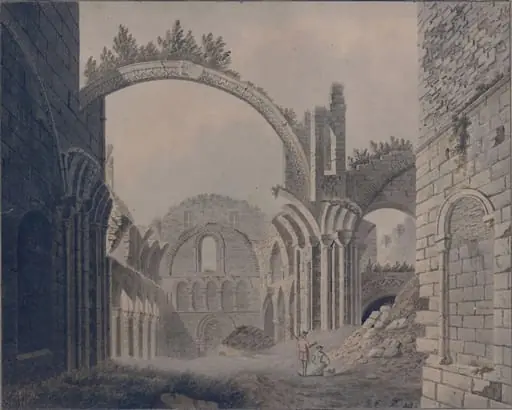 Lindisfarne Abbey, Northumberland
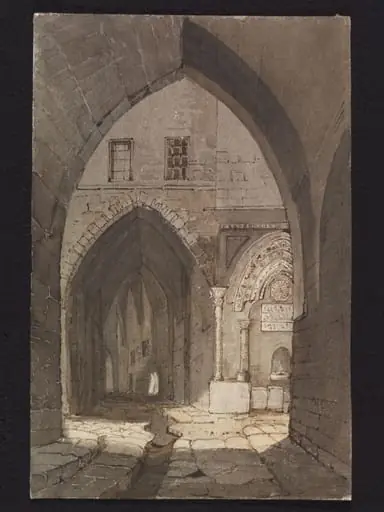 Fountain at Jerusalem near the House of Dives
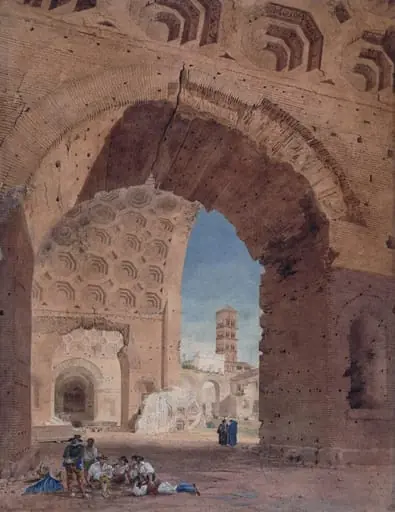 Ruins of the basilica of Constantine, Rome
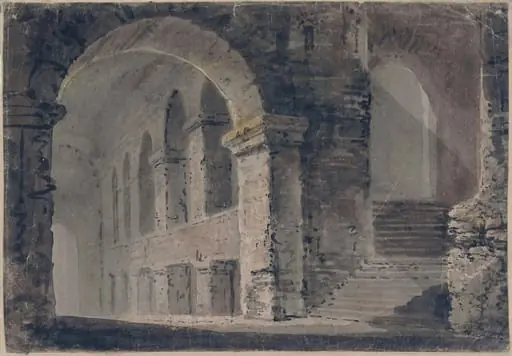 Interior with staircase
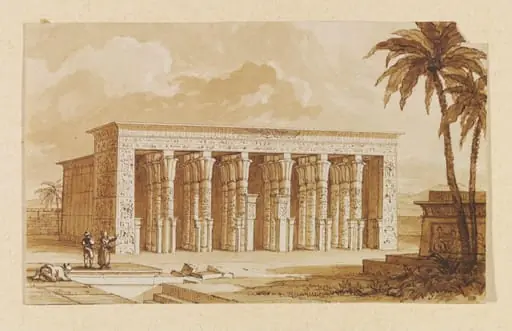 Perspective view of the Temple of Antaeopolis
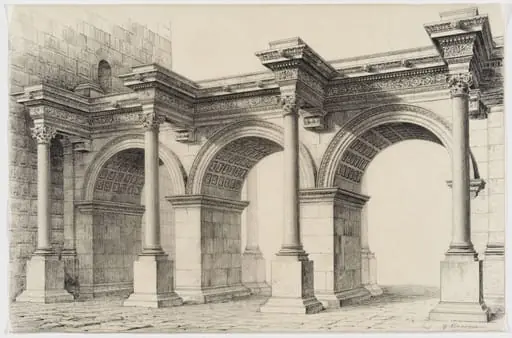 Untitled
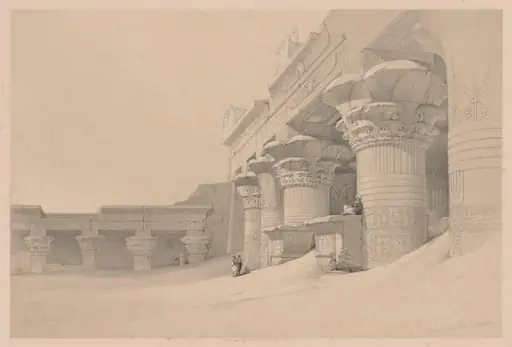 Egypt and Nubia: Volume I - No. 10, Edfou
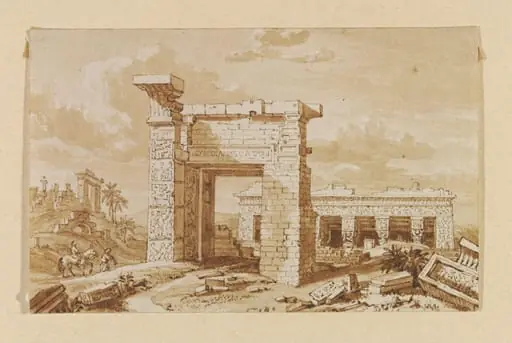 View of the Northern Gate of Dendera or Tentyra
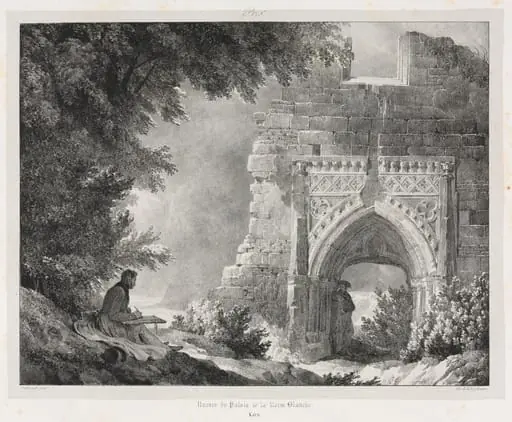 Picturesque and Romantic Journeys in Old France: Ruins of the Palace of the White Queen
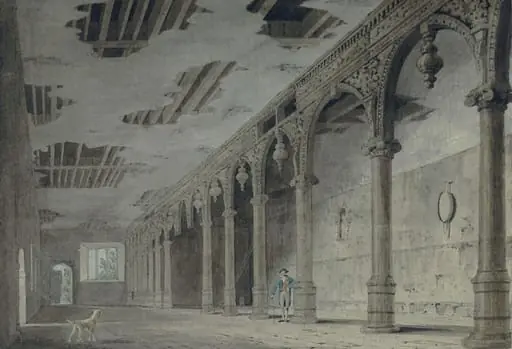 Titchfield House: The Stables
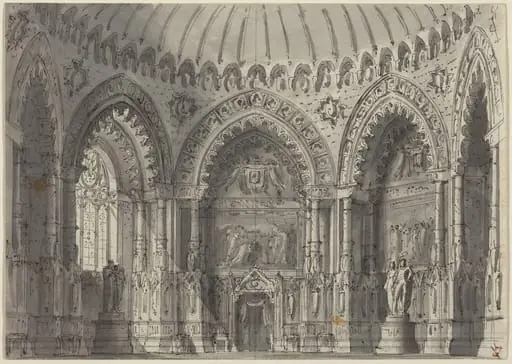 Rotunda in Gothic Style
 Church doorway, Spoleto, Italy