Artwork
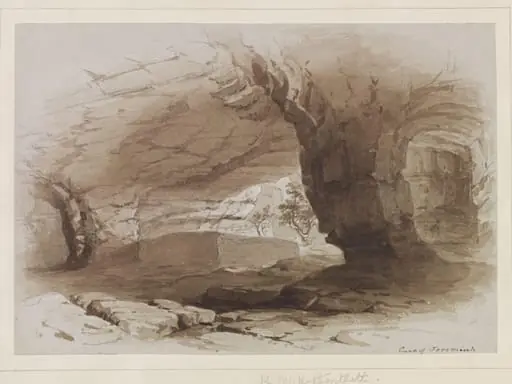
Fountain at Jerusalem near the House of Dives
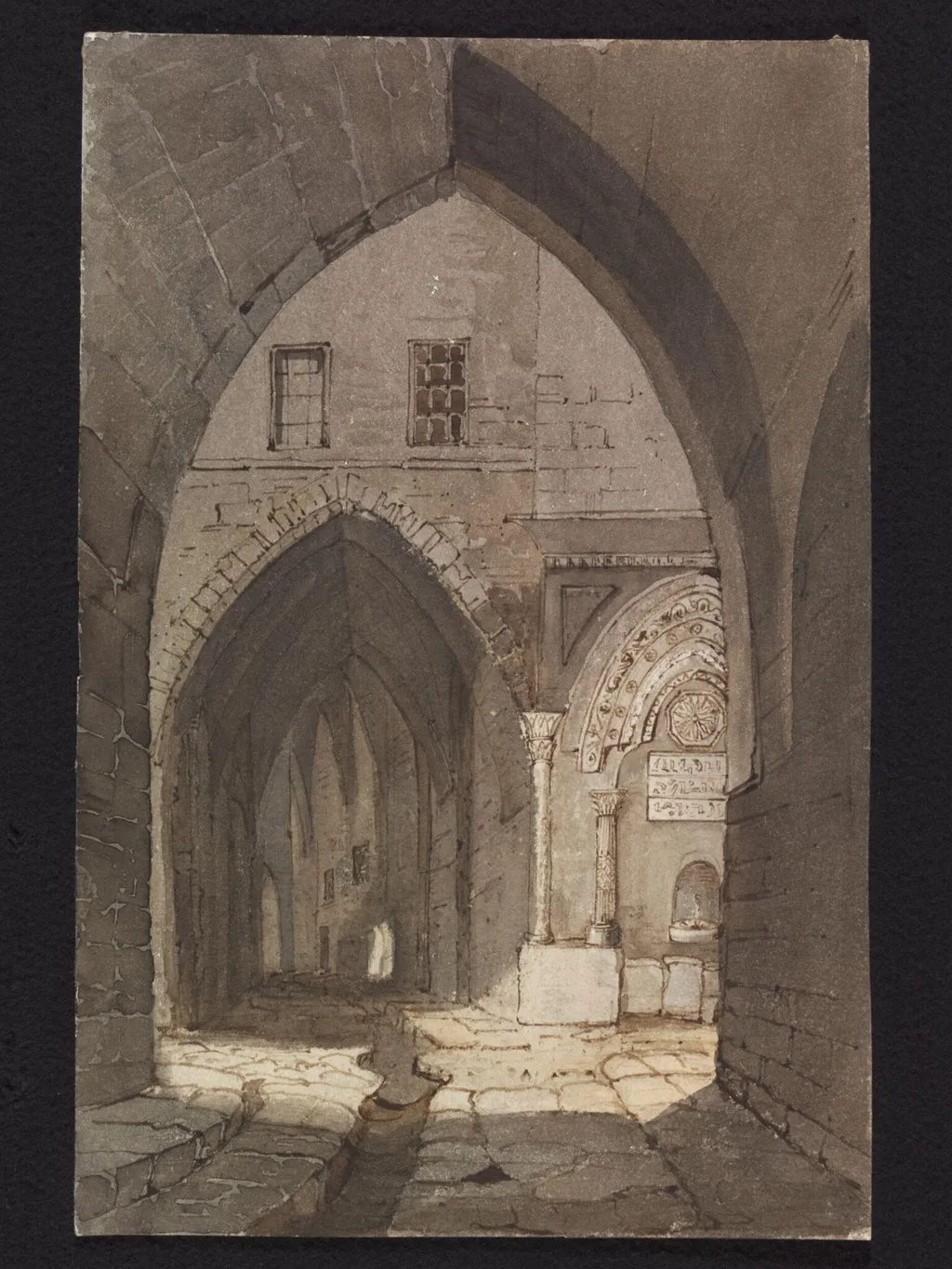
Fountain at Jerusalem near the House of Dives is a watercolor work on paper by the British Romanticist artist Selina Bracebridge. It dates from 1825 and is held in the collection of the Victoria and Albert Museum.
About this work
Overview
Created in 1825 by Selina Bracebridge, this watercolour captures a quiet corner of Jerusalem near the traditional site of the House of Dives.
Created in 1825 by Selina Bracebridge, this watercolour captures a quiet corner of Jerusalem near the traditional site of the House of Dives. Rendered in delicate washes, the scene emphasizes architectural decay and the play of natural light. The work belongs to a tradition of topographical sketches made by European travelers in the Levant during the early 19th century, combining observation with a contemplative mood.
Subject & Meaning
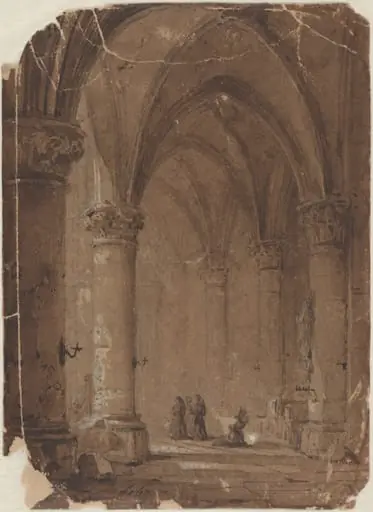
The scene centers on a weathered stone courtyard with arched doorways, a barred window, and a carved niche in the wall. A solitary column rises beside a patch of sunlight on uneven flagstones, suggesting the passage of time and the quiet endurance of sacred spaces. The absence of figures heightens the sense of solitude, aligning the image with spiritual reflection rather than narrative.
Technique & Style
Bracebridge employed transparent watercolour to model form through subtle gradations of tone. Shadows cling to the rough stonework, while a single beam of light defines the ground, creating contrast without sharp lines. The restrained palette and attention to texture reflect a Romantic-era interest in atmospheric effects and the emotional weight of ruins, typical of travel sketches from the period.
History & Provenance
The watercolour entered the V&A’s collection with financial support from The Art Fund, the National Heritage Memorial Fund, Shell International, and the Friends of the V&A. Its acquisition reflects institutional efforts to preserve 19th-century British travel art, particularly works by women artists whose contributions were often overlooked in broader art historical narratives.
Context
Bracebridge’s work emerged during a wave of European travel to the Holy Land, where artists documented sites of biblical significance. Her focus on architectural detail and light, rather than grandeur, aligns with a quieter, more personal mode of pilgrimage imagery. Such works were often intended as private records, later circulated among intellectual circles as visual testimony.
Legacy
Though not widely exhibited during her lifetime, Bracebridge’s watercolour contributes to a growing recognition of female travelers’ roles in shaping Western visual understanding of the Middle East. The piece remains a quiet example of how personal observation, rendered with restraint, can preserve the character of places long altered by history.
Artist & collection
Artist

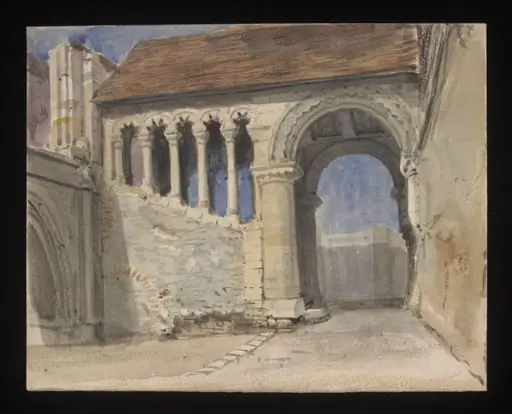 Watercolour drawing by the Grieve family, probably by Thomas Grieve, showing a Norman building at Canterbury
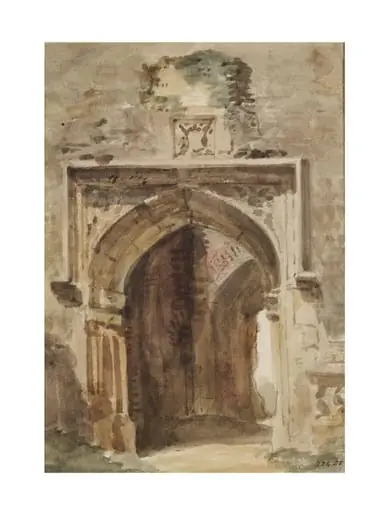 East Bergholt Church: south archway of the ruined tower
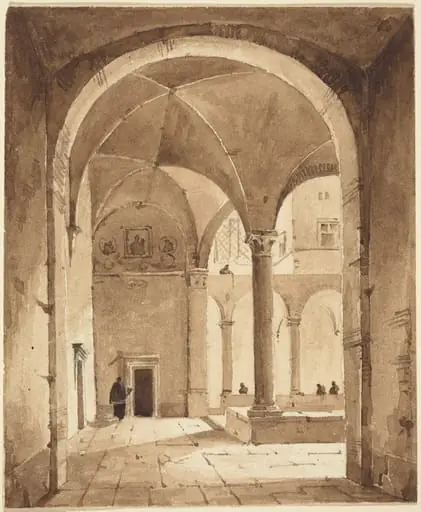 A Cloister
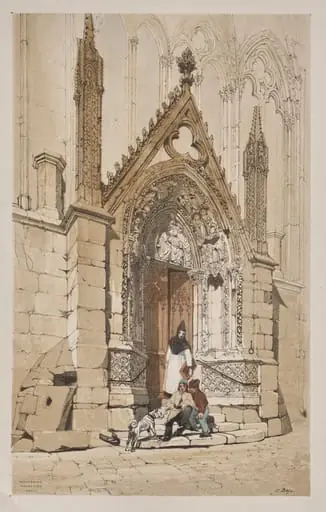 Picturesque Architecture in Paris, Ghent, Antwerp, Rouen: Porte Rouge, Nôtre Dame, Paris
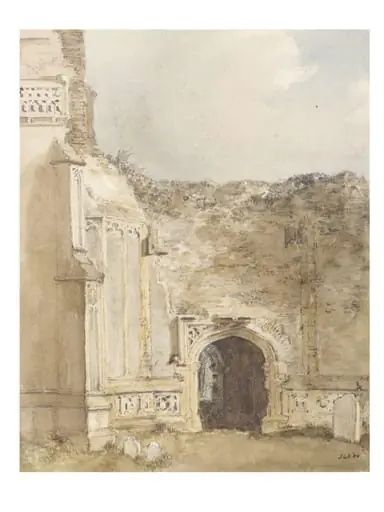 East Bergholt Church: north archway of the ruined tower
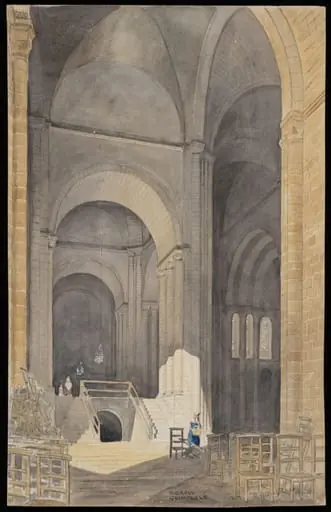 Interior of church at St. Croix, Quimperle
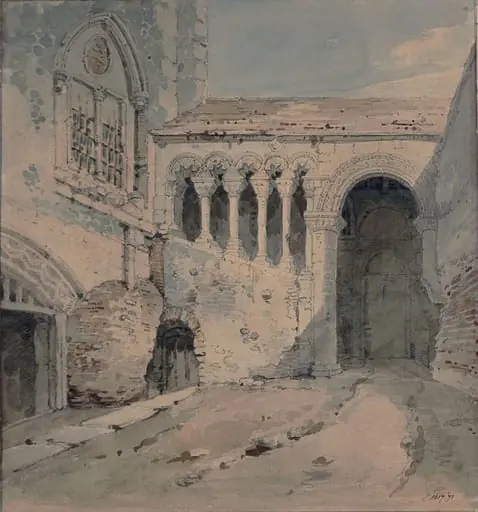 The Square at Canterbury
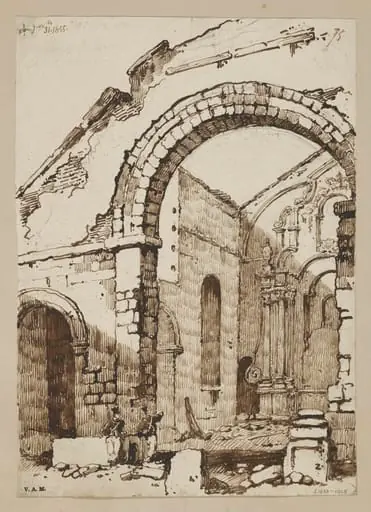 The ruins of St Paul's church, Macau, after the fire of 26 January 1835
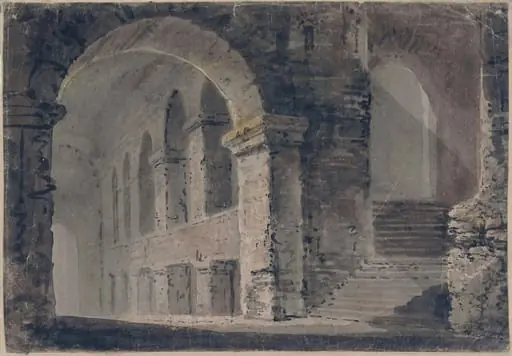 Interior with staircase
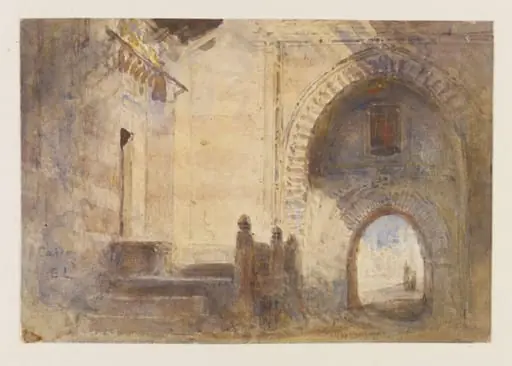 A Gateway in Cairo
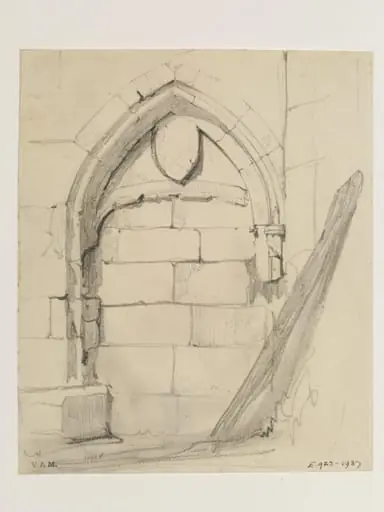 Drawings of architectural details in the abbey at Royaumont
 Monks in a Cathedral