Artwork
Landscape with a Ruined Tower and Figures
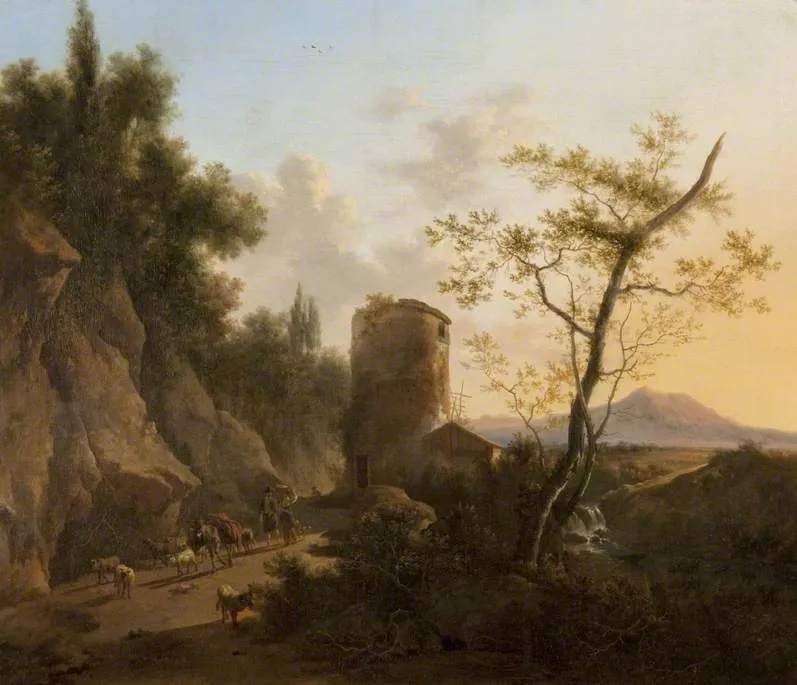
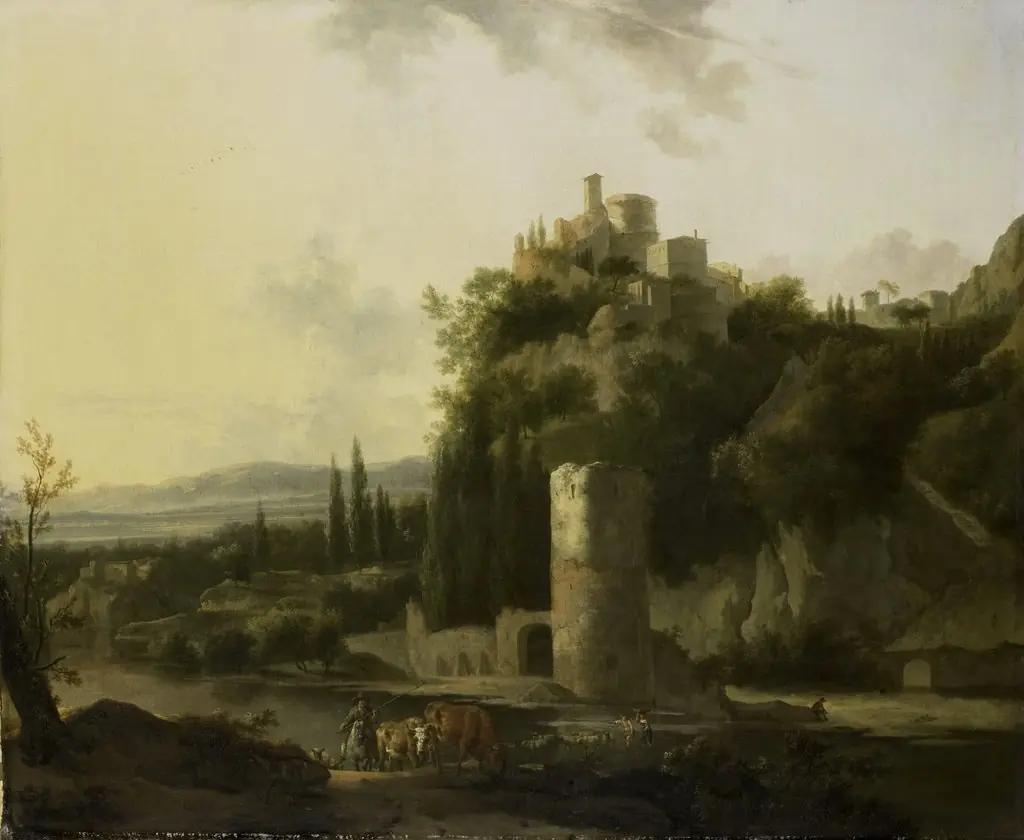
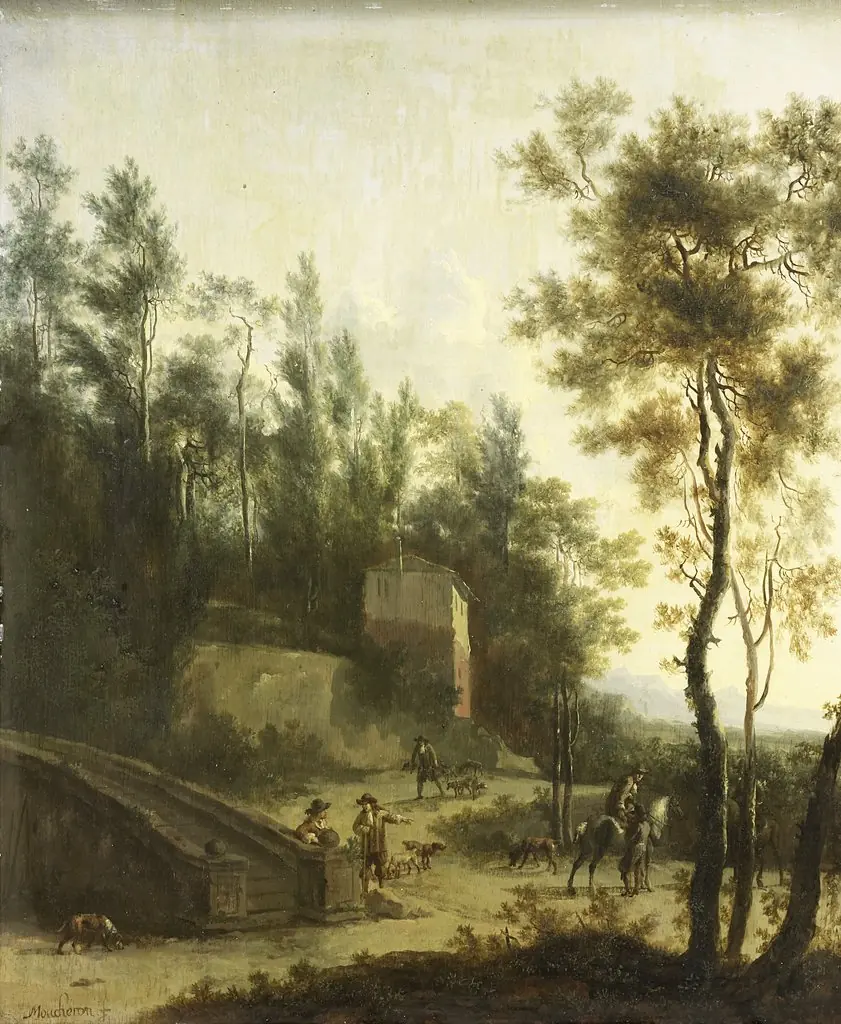
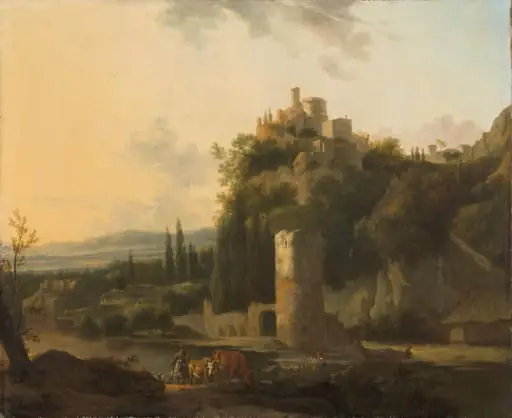
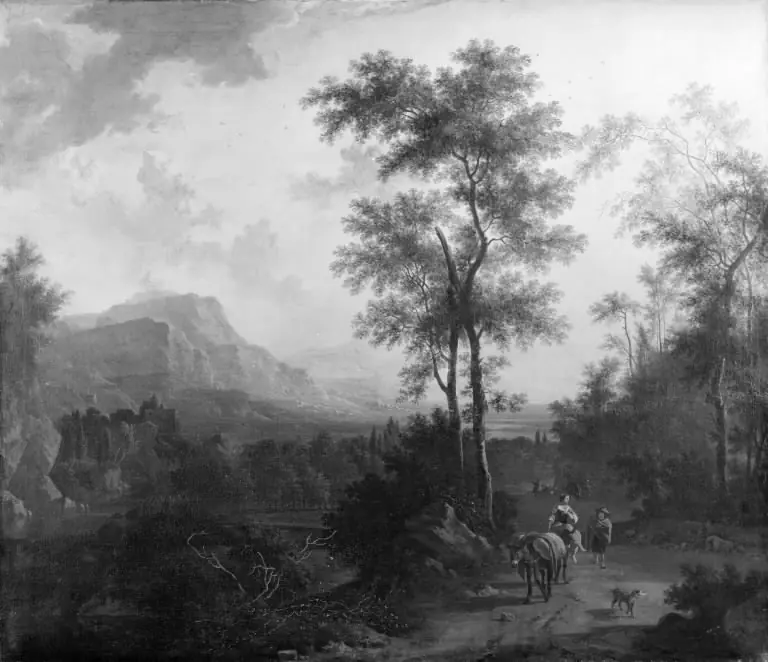
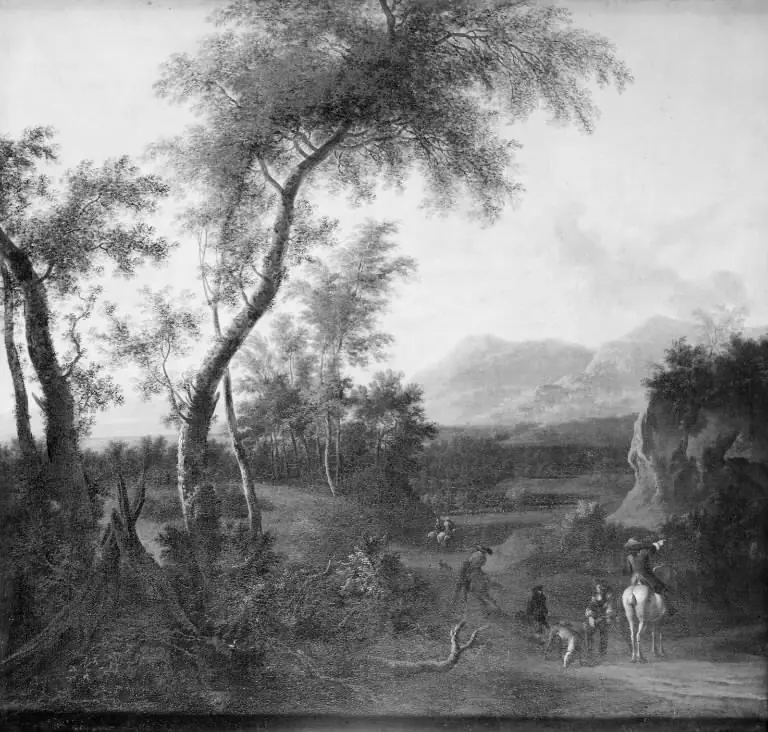
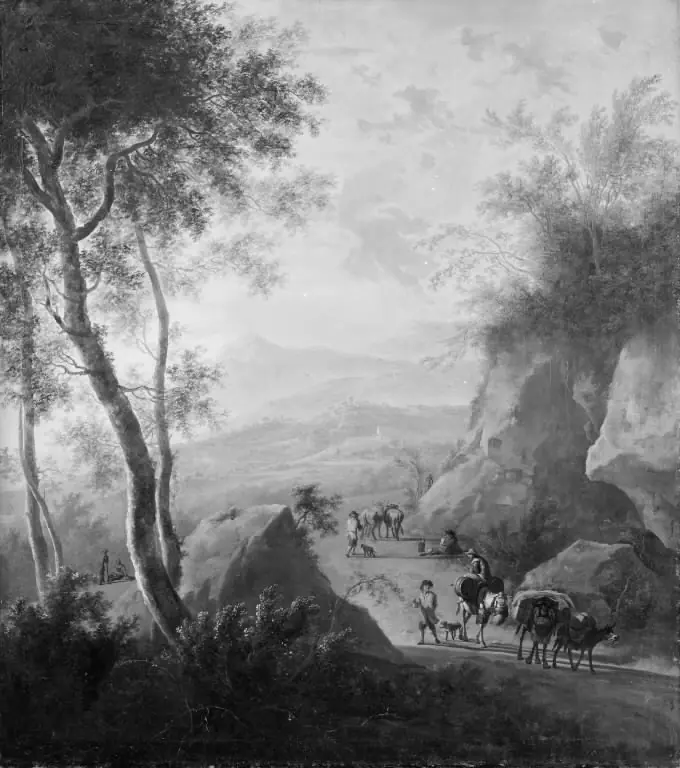
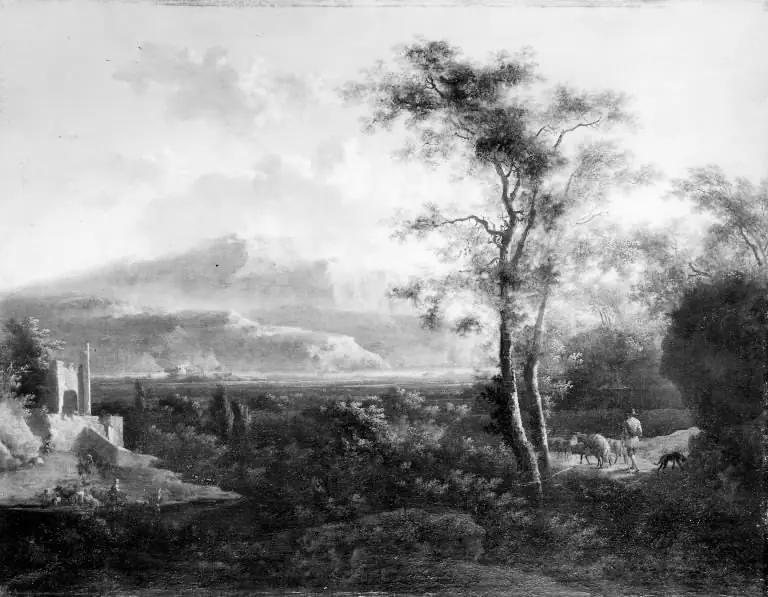
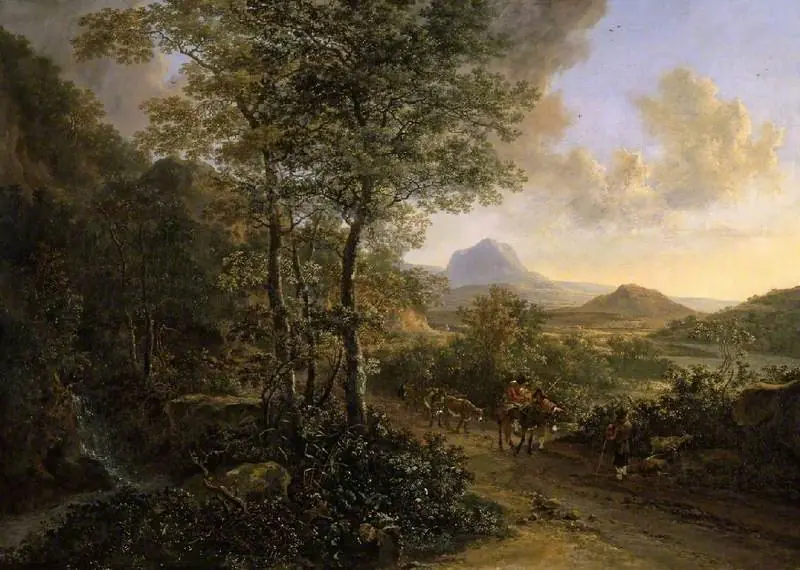
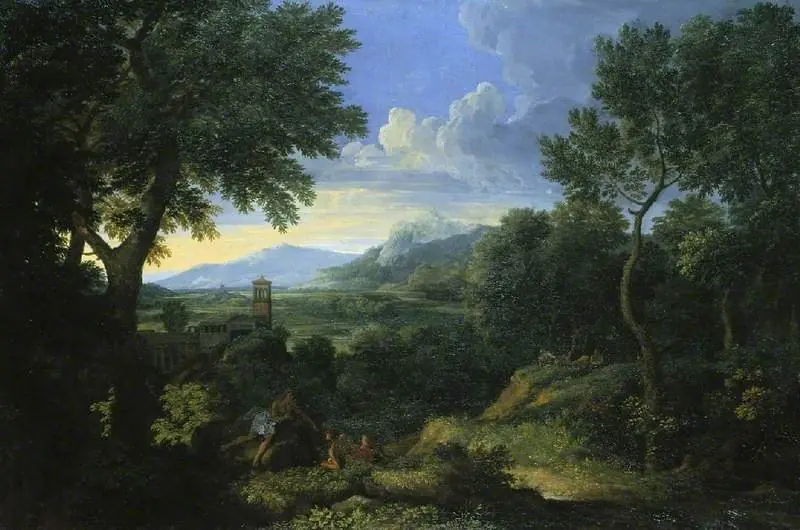
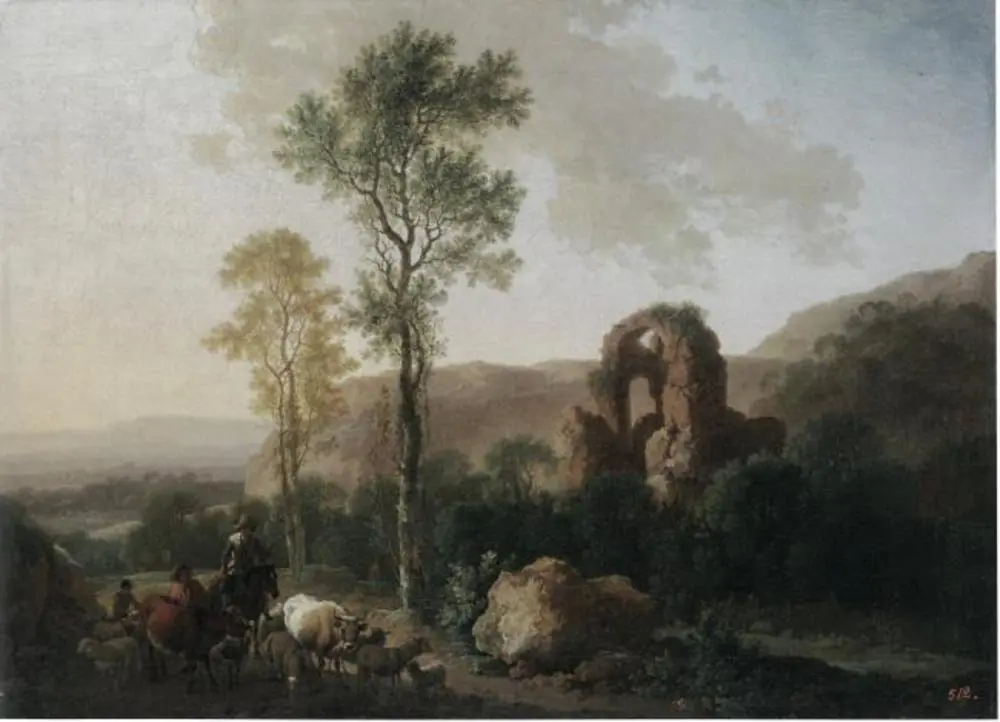
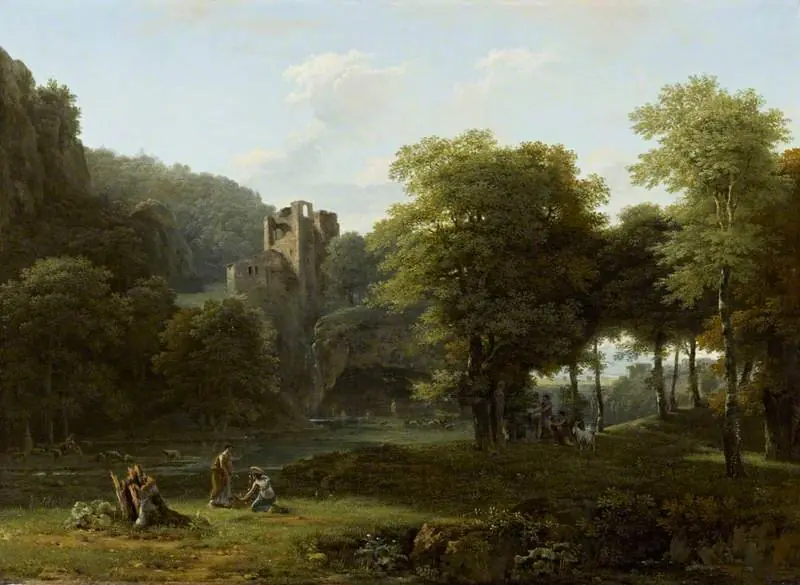
Landscape with a Ruined Tower and Figures is an oil painting by the Dutch Golden Age artist Frederik de Moucheron. It dates from 1665 and is held in the collection of the Kelvingrove Art Gallery and Museum.
About this work
Overview
De Moucheron, known for his Italianate settings, typically focused on topography, leaving the inclusion of figures to collaborators.
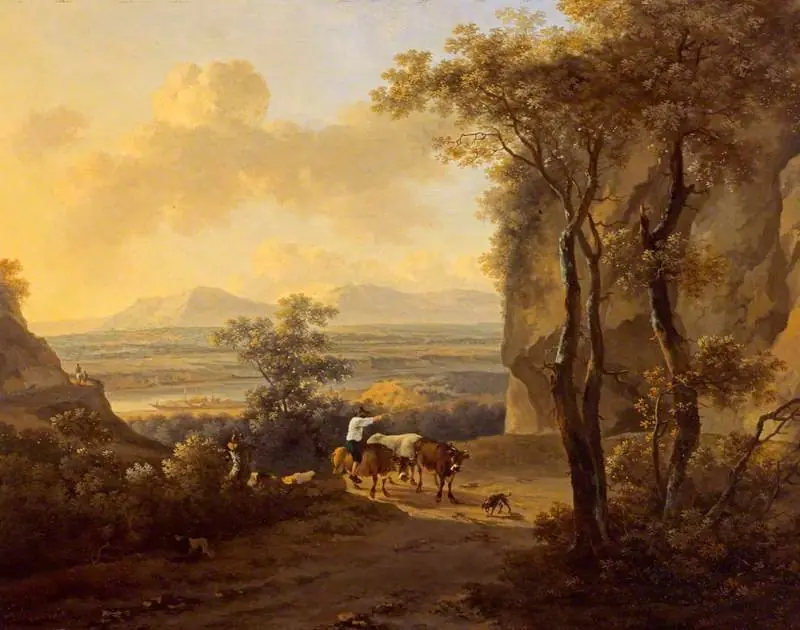
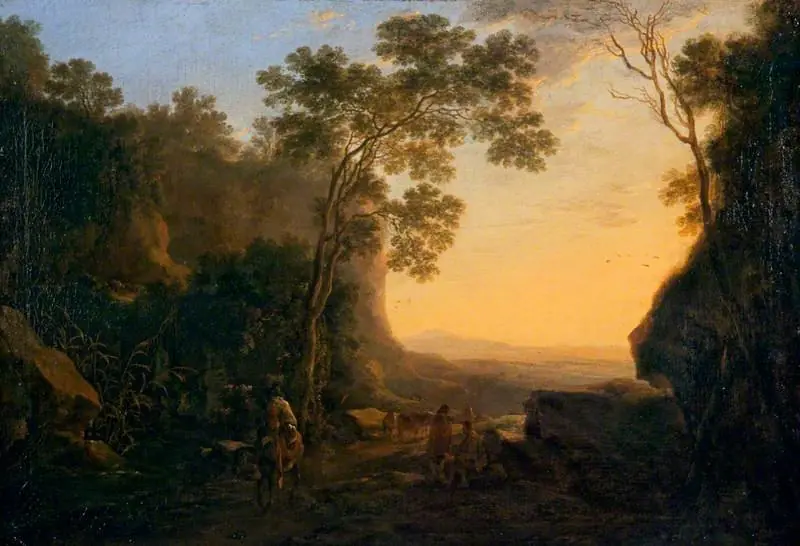
Painted in 1665 by Frederik de Moucheron, this oil-on-canvas work exemplifies Dutch Golden Age landscape painting. It presents a rural scene centered on a crumbling tower, framed by natural elements and populated by small figures and animals. De Moucheron, known for his Italianate settings, typically focused on topography, leaving the inclusion of figures to collaborators. The painting resides in the Kelvingrove Art Gallery and Museum, Glasgow.
Subject & Meaning
The ruined tower, partially overgrown and weathered, suggests the passage of time and the decline of human endeavor. Figures on foot, accompanied by livestock, imply quiet movement through the landscape—perhaps travelers or shepherds. The absence of narrative detail invites contemplation rather than storytelling, aligning with the Dutch preference for subdued, reflective scenes over dramatic events.
Technique & Style
De Moucheron employed subtle chiaroscuro to model forms and suggest depth, particularly in the tower’s stonework and the rolling terrain. The sky, rendered in soft, diffused clouds, modulates light across the scene without dramatic contrast. Brushwork is restrained, favoring atmospheric harmony over detail, with distant mountains blurred to enhance spatial recession, a hallmark of Italianate landscape conventions.
History & Provenance
Created during the height of the Dutch Golden Age, the painting reflects the period’s demand for landscapes that evoked tranquility and natural order. Though de Moucheron’s collaborations with figure painters were common, this work’s attribution remains firmly to him. It entered the Kelvingrove collection in the 20th century, likely through a broader acquisition of Dutch and Flemish works.
Context
In mid-17th-century Holland, landscape painting flourished as a genre independent of religious or mythological themes. Artists like de Moucheron drew inspiration from Italian scenery, often imagined rather than observed, blending northern realism with southern topography. These works catered to urban patrons seeking idealized, serene visions of the natural world.
Legacy
De Moucheron’s contributions helped define the Dutch Italianate landscape tradition, influencing later generations who prioritized mood and composition over narrative. While not widely celebrated today, his works remain important for understanding how Dutch artists synthesized foreign influences into a distinct, contemplative visual language rooted in everyday observation.
Artist & collection
Artist
Frederik de Moucheron (1633 – 5 January 1686) was a Dutch Golden Age landscape painter and draughtsman. He mainly produced (Italianate) landscapes that were furnished with human and animal figures by various colleagues.