Artwork
Landscape with the Temple of Clitumnus, near Spoleto
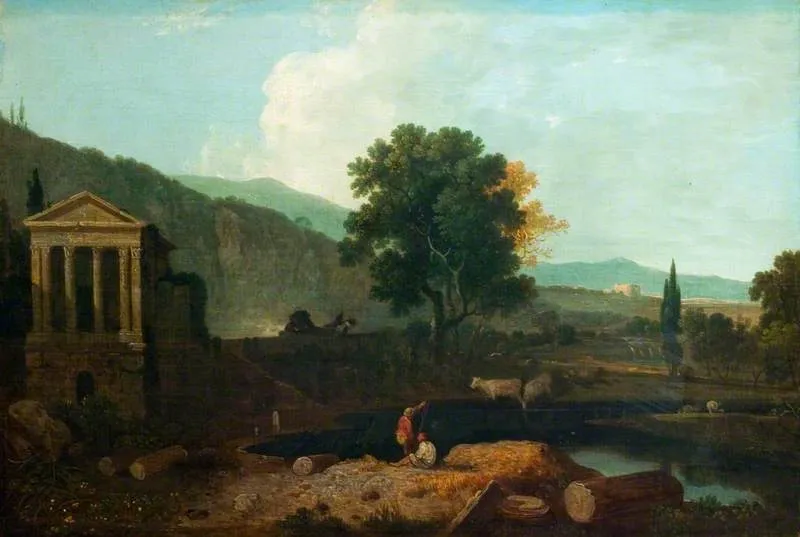
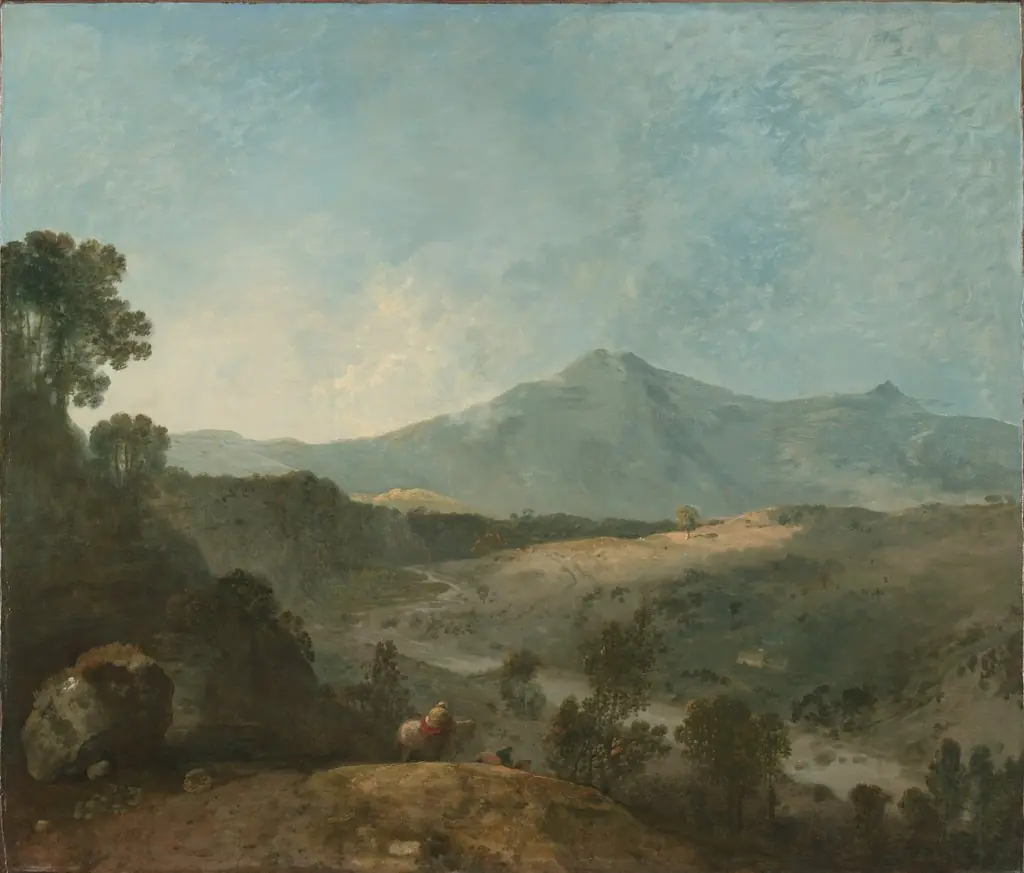
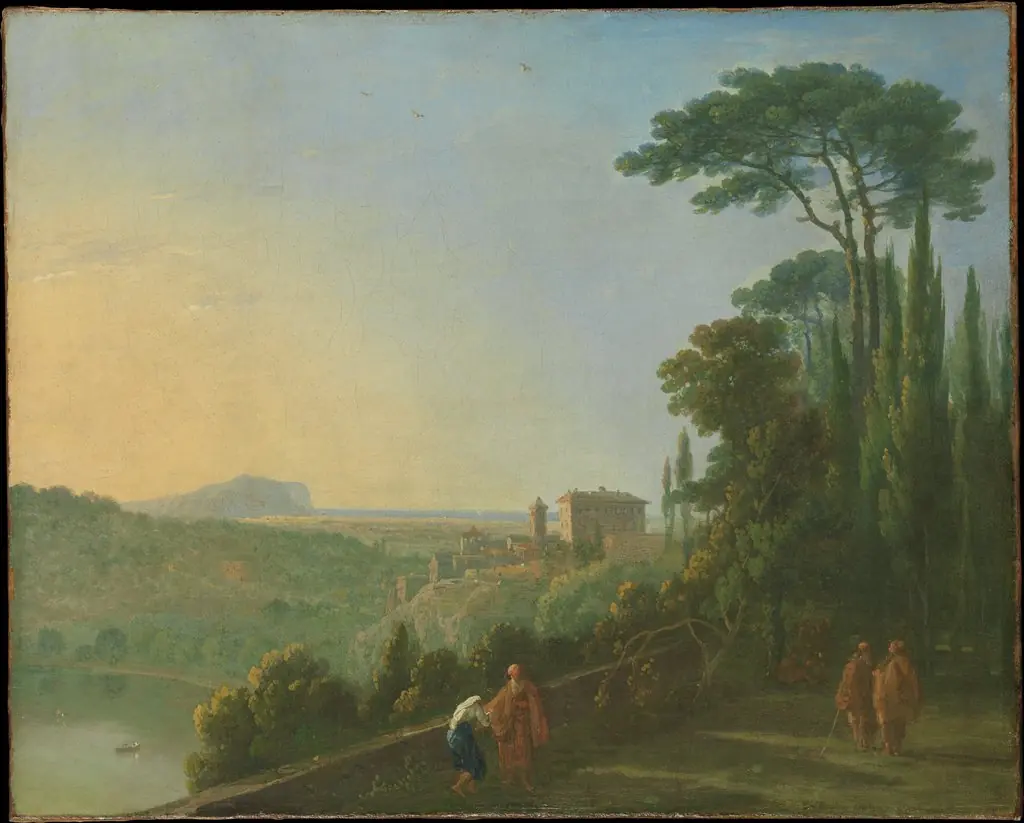
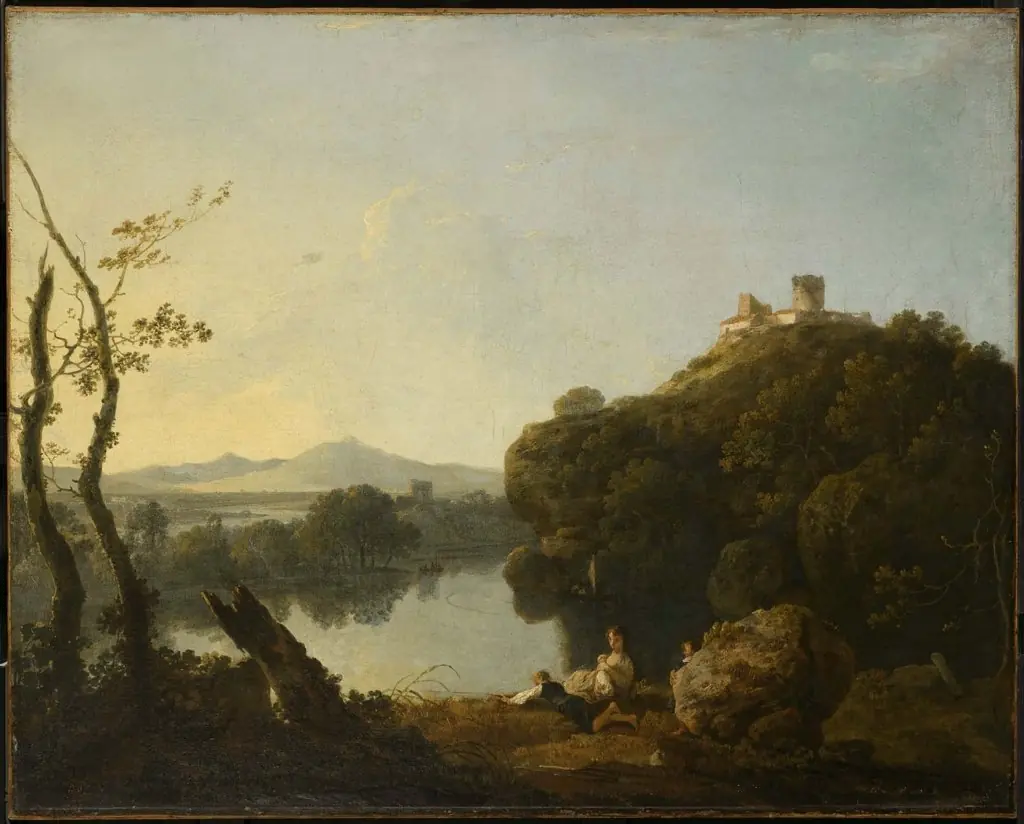
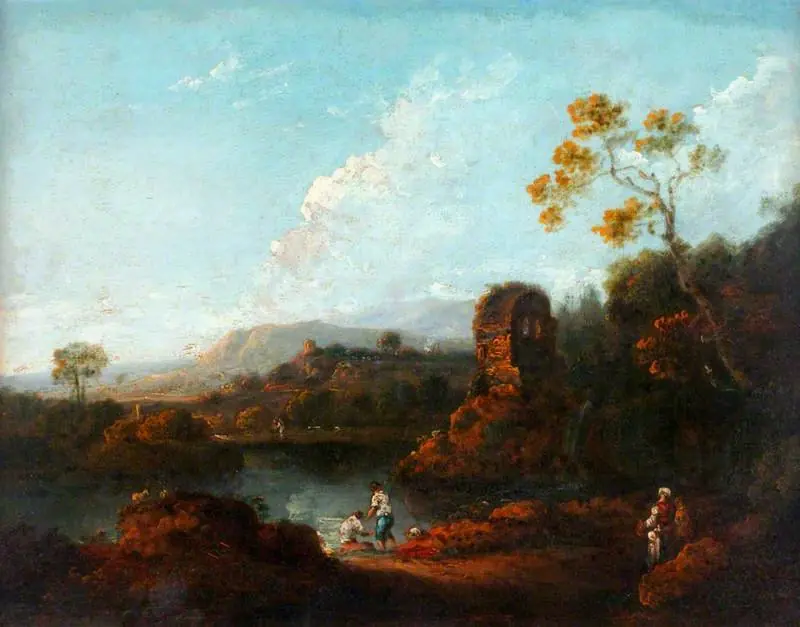
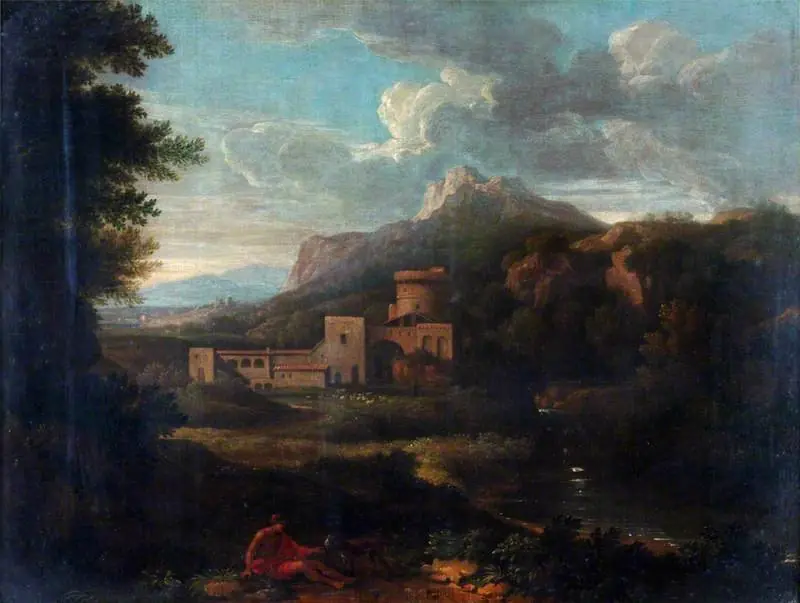
Landscape with the Temple of Clitumnus, near Spoleto is an oil painting by the Neoclassicist artist Richard Wilson. It dates from 1757 and is held in the collection of the Victoria and Albert Museum.
About this work
Overview
Wilson, who spent formative years in Italy, synthesized classical ruins with natural topography to create a composed, contemplative scene.
Painted around 1757 by Welsh artist Richard Wilson, this oil on canvas depicts a quiet Italian landscape near Spoleto. Wilson, who spent formative years in Italy, synthesized classical ruins with natural topography to create a composed, contemplative scene. The work is part of the Victoria and Albert Museum’s collection and exemplifies his contribution to the development of British landscape painting as a serious artistic pursuit.
Subject & Meaning
The painting centers on the ancient Temple of Clitumnus, a Roman-era structure nestled among rolling hills and dense foliage. Its placement in the distance, framed by trees and reflected in a still pool, evokes a sense of timeless harmony between human architecture and the natural world. The absence of figures reinforces a mood of quiet reverence, suggesting contemplation of antiquity rather than narrative action.
Technique & Style
Wilson employed a restrained palette of muted greens, browns, and soft blues to unify the composition. Subtle chiaroscuro models the forms of rocks, water, and temple, lending volume and spatial depth without dramatic contrast. The brushwork is deliberate yet unobtrusive, favoring atmospheric cohesion over detail, aligning with the ideals of neoclassical landscape painting that valued order and serene balance.
History & Provenance
Wilson painted this work after returning from Italy, where he studied classical ruins and Italian landscapes. It was likely created in Britain as part of a series of idealized views inspired by his travels. The painting entered the Victoria and Albert Museum’s collection in the 19th century, where it remains as a representative example of 18th-century British landscape art rooted in continental tradition.
Context
In mid-18th-century Britain, landscape painting was gaining legitimacy as a genre beyond mere topographical record. Wilson’s work responded to growing interest in classical antiquity and the Grand Tour. His depictions of Italian ruins, rendered with poetic restraint, offered viewers an idealized vision of the past, aligning with Enlightenment values of reason, order, and aesthetic contemplation.
Legacy
Wilson’s approach influenced later British landscape painters by demonstrating how natural scenery could convey moral and aesthetic depth. Though less celebrated today than his contemporaries, his integration of classical motifs with subtle tonal harmony helped shape the trajectory of British landscape art, bridging Italian tradition and emerging national sensibilities.
Artist & collection

Artist
Richard Wilson (1 August 1714 – 15 May 1782) was a Welsh painter who specialised in landscape art and worked in Britain and Italy.