Artwork
Crucifixion
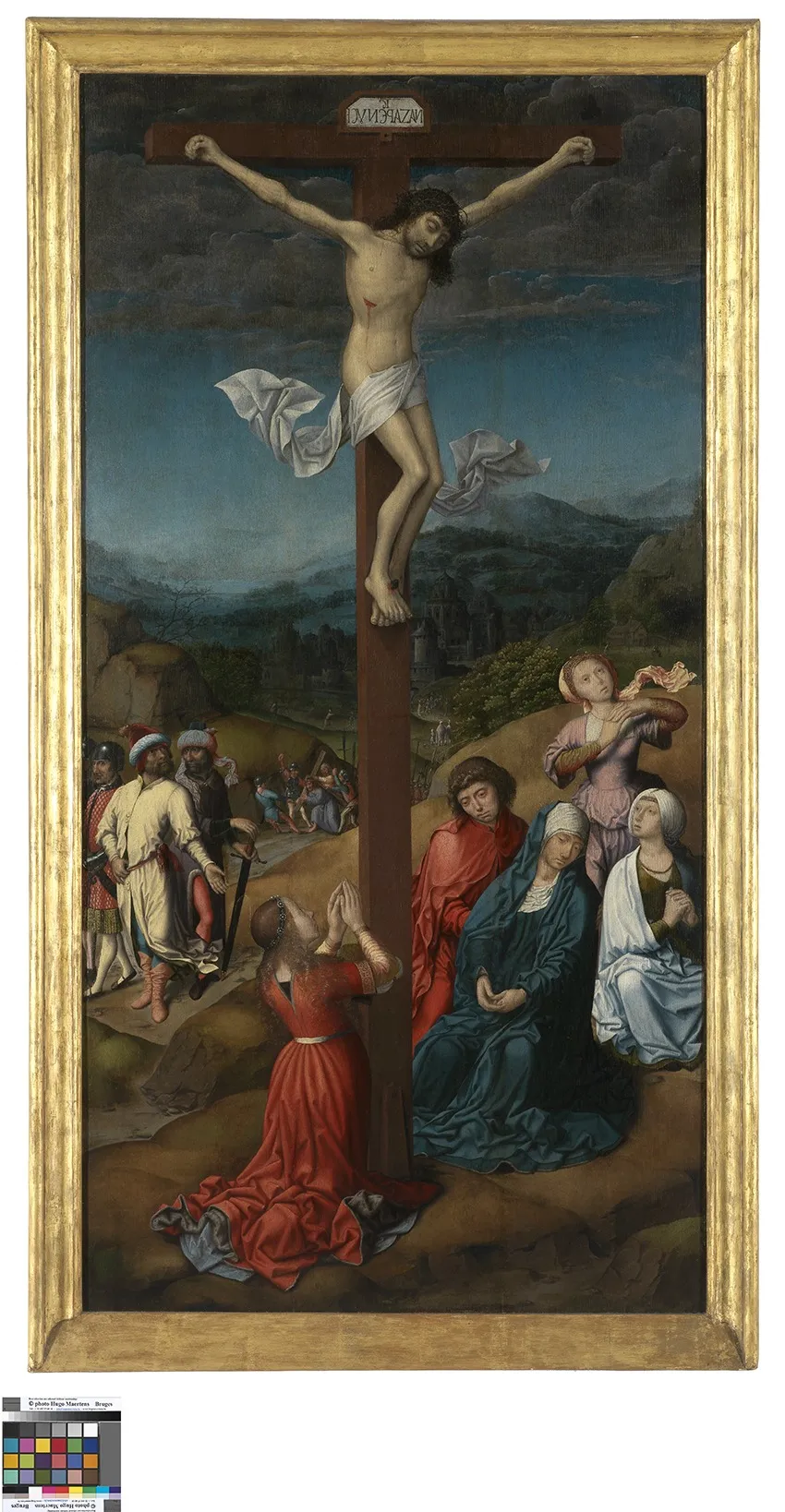
Crucifixion is an oil painting by the Early Baroque Italian artist Frei Carlos. It dates from 1520 and is held in the collection of the Groeningemuseum.
About this work
Overview
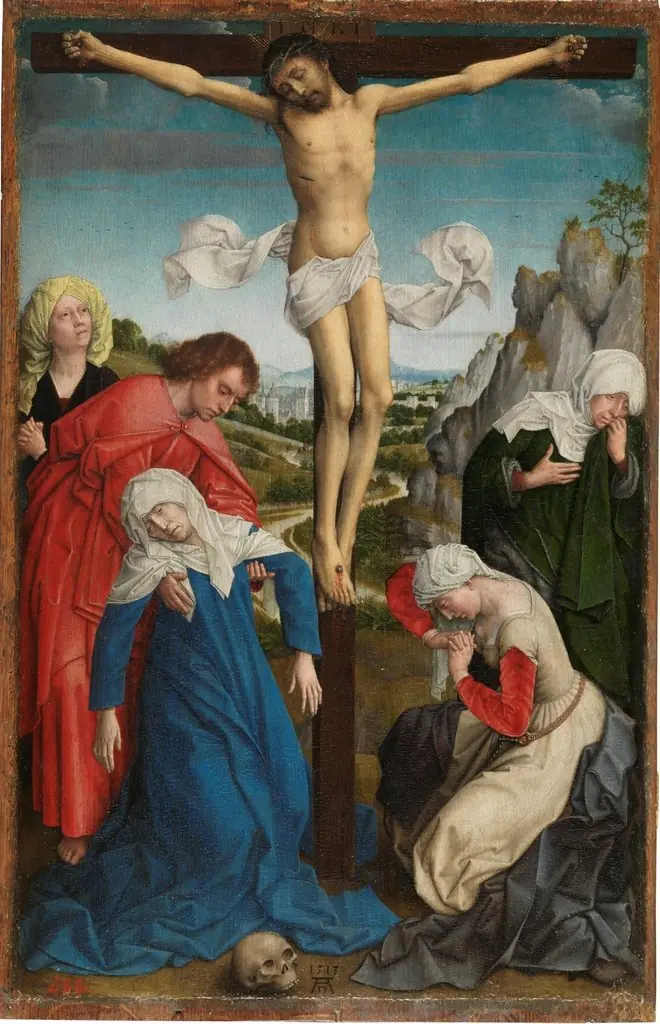
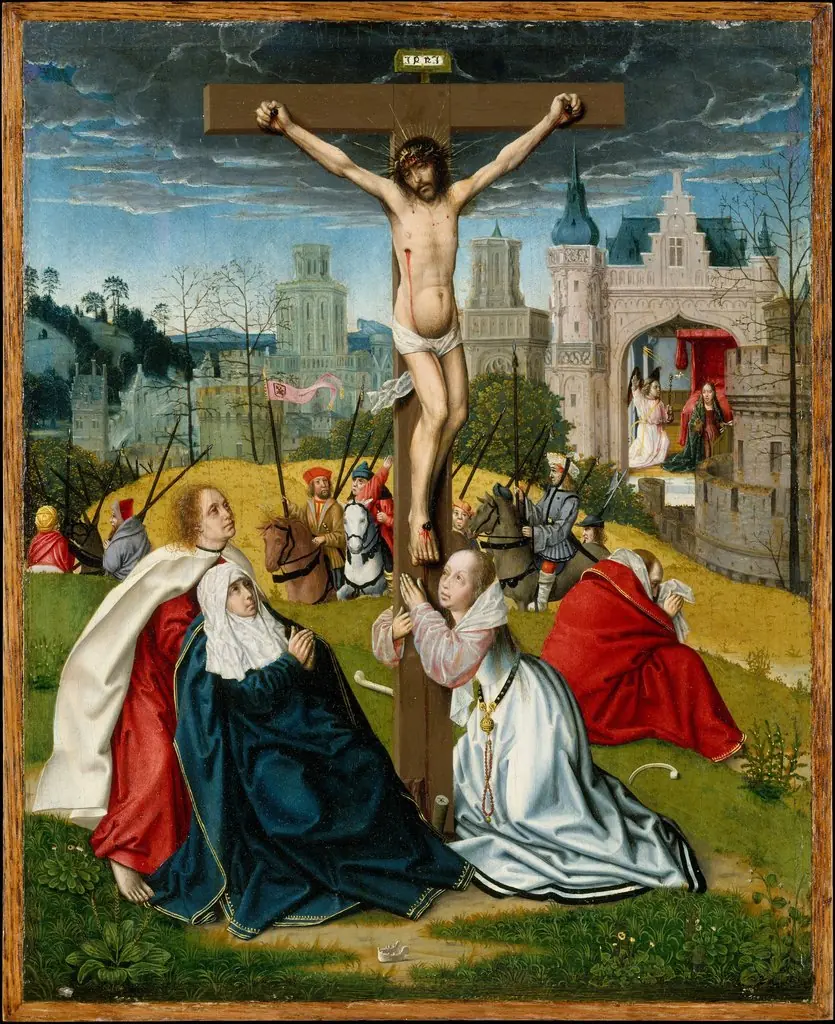
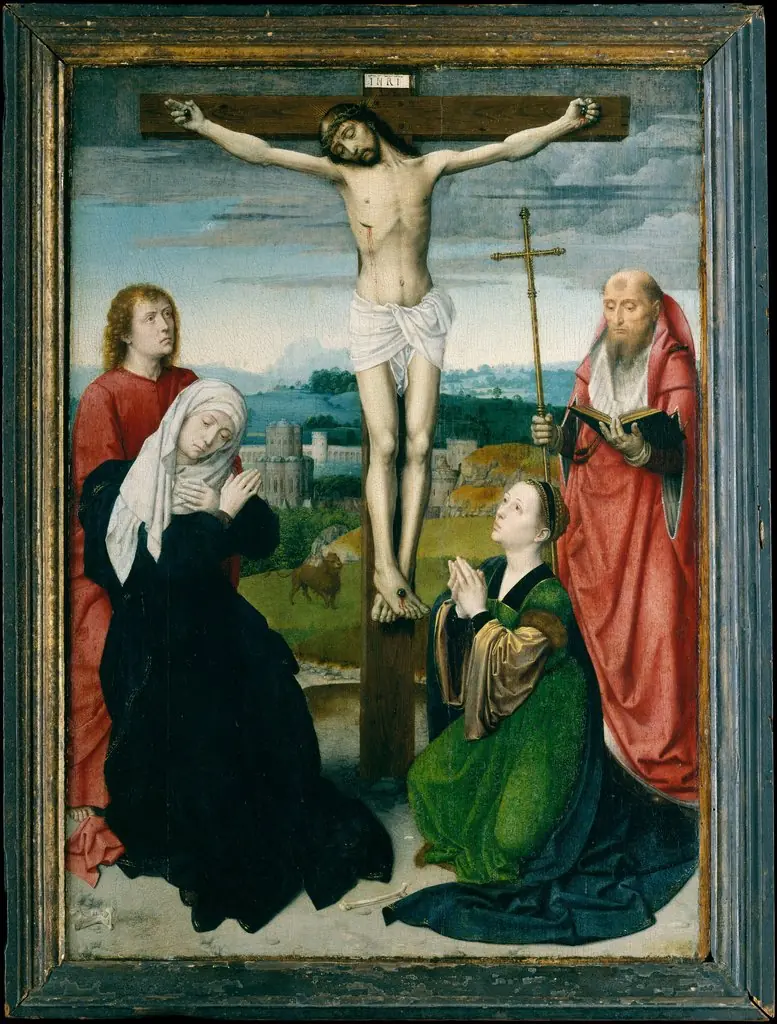
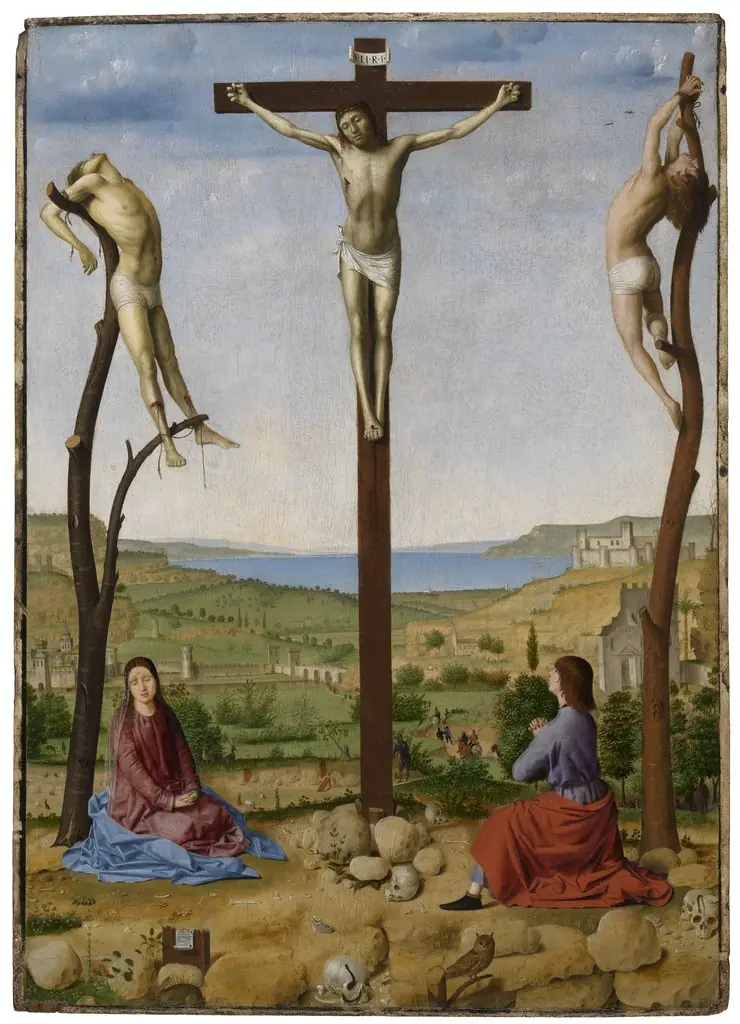
Created in 1520 by the Portuguese monk and painter Frei Carlos, the panel painting titled Crucifixion presents a conventional biblical scene now part of the collection of the Groeningemuseum. The work measures a modest size typical of devotional panels and is executed in tempera on wood, a common medium for early sixteenth‑century religious art.
Subject & Meaning
A small group of onlookers—two women and a child—observe the event, while a celestial angel hovers above, holding a cloth that suggests the veil of mourning.
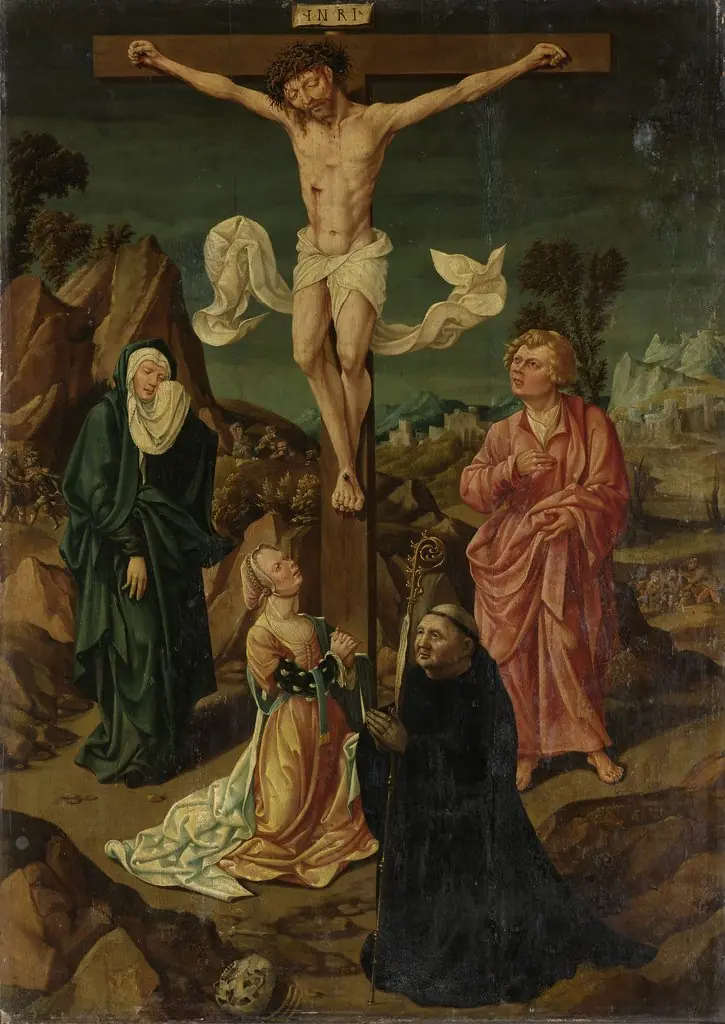
At the composition’s centre, the crucified Christ hangs with arms outstretched, embodying the moment of sacrifice. Adjacent figures include the Virgin Mary, rendered in a red garment and kneeling in prayer, and John the Baptist, identifiable by his ascetic appearance. A small group of onlookers—two women and a child—observe the event, while a celestial angel hovers above, holding a cloth that suggests the veil of mourning.
Technique & Style
The painter employs a chiaroscuro effect, allowing light to strike the flesh of the crucified figure and the luminous folds of the women's robes, creating a subtle glow that separates the foreground from a muted landscape. The use of bright, patterned clothing on the soldiers on the left adds a decorative contrast to the solemn central drama.
History & Provenance
After its creation, the panel entered private devotional contexts before being acquired by the Groeningemuseum in the early twentieth century, where it has remained on display. Documentation traces its attribution to Frei Carlos through stylistic comparison with other works signed by the monk.
Context
The painting reflects the devotional practices of early sixteenth‑century Iberian monastic communities, emphasizing personal piety through intimate, narrative scenes. Its inclusion of both biblical figures and a contemporary crowd mirrors the period’s interest in connecting the Passion to everyday believers.
Legacy
Although not widely reproduced, the Crucifixion panel serves as a reference point for scholars studying the diffusion of Portuguese religious art into the Low Countries, illustrating how Iberian iconography was received and preserved within Northern European museum collections.
Artist & collection