Artwork
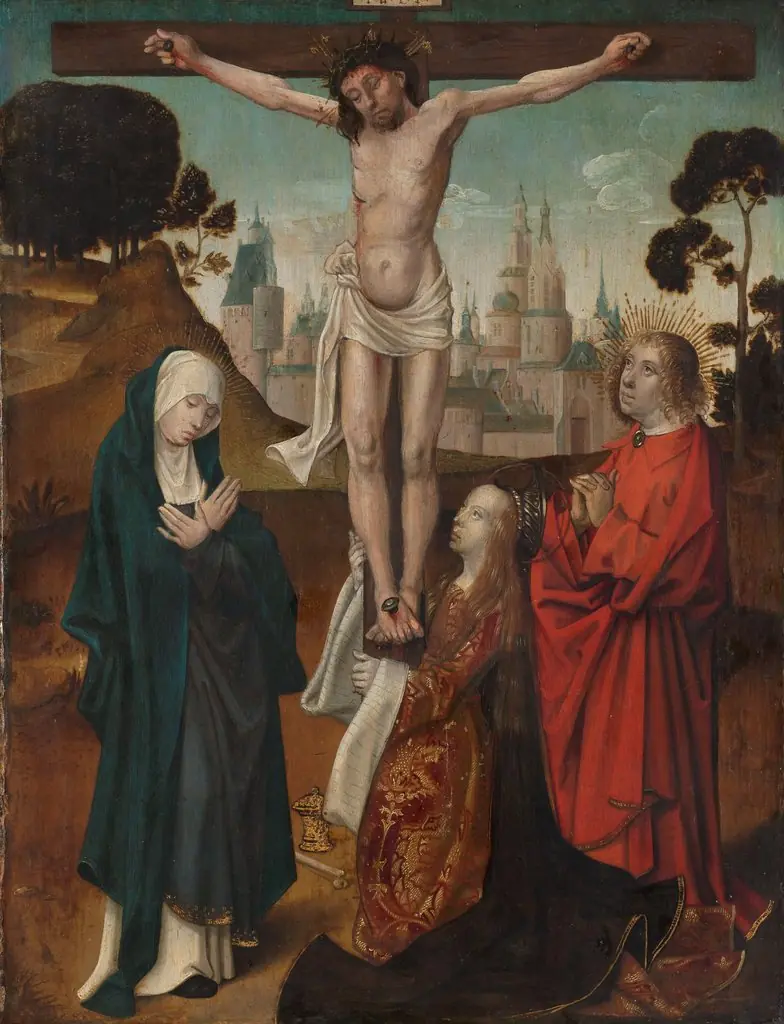
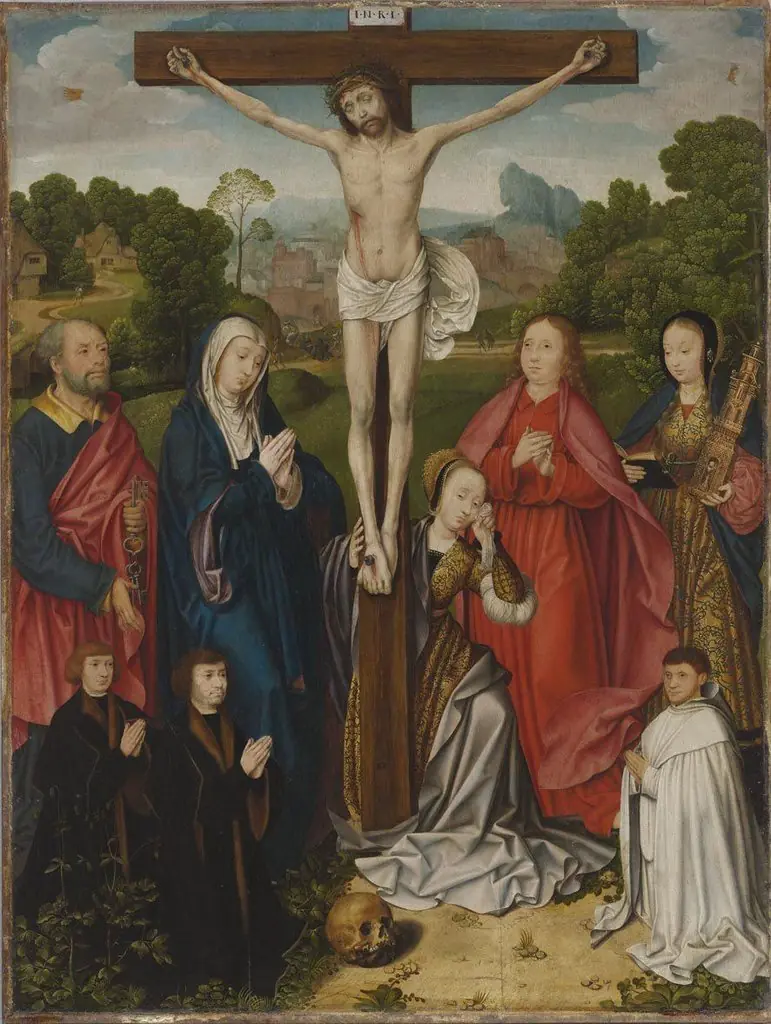
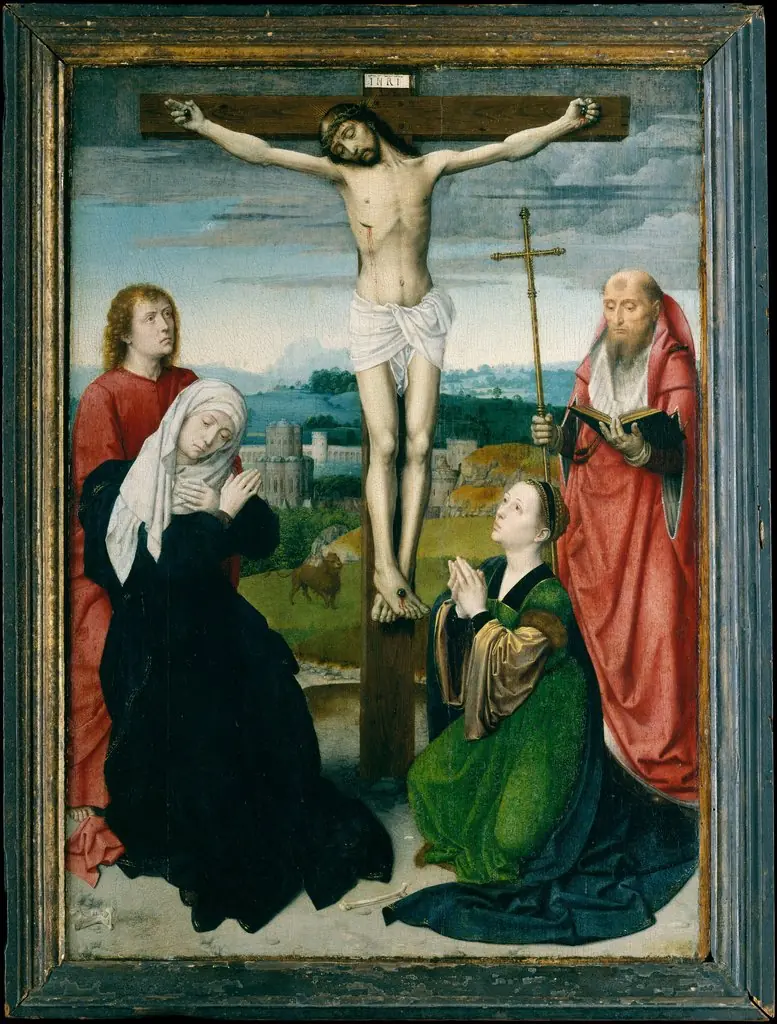
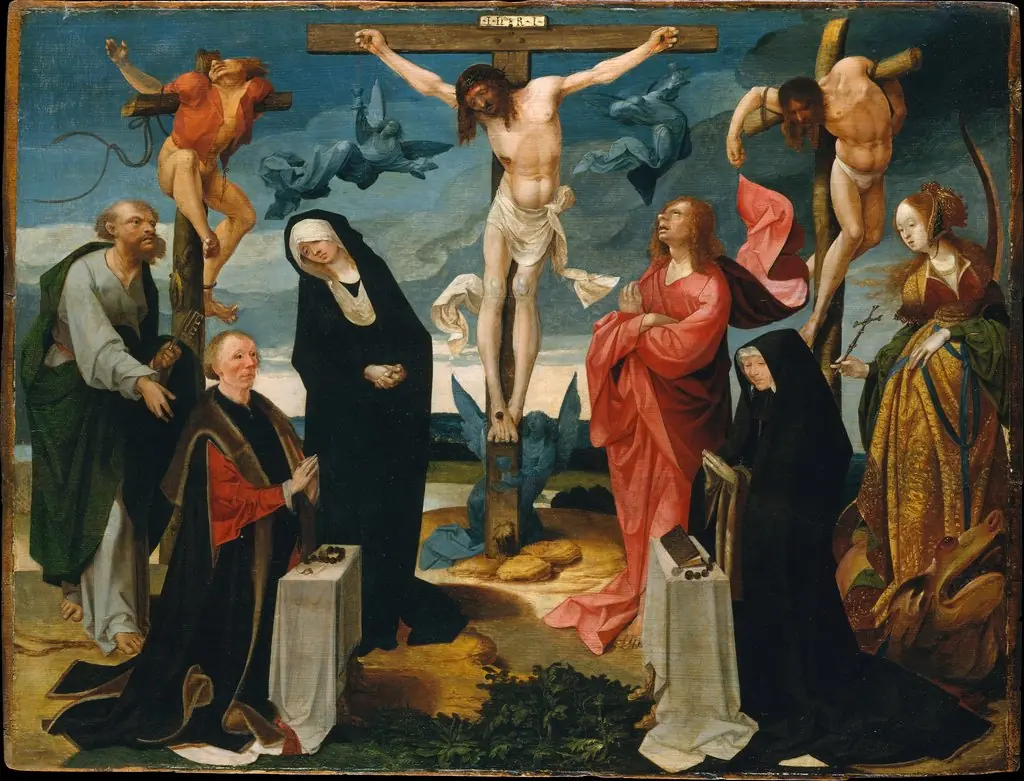
Crucifixion with the Virgin, Saint John, Mary Magdalene, a Donor
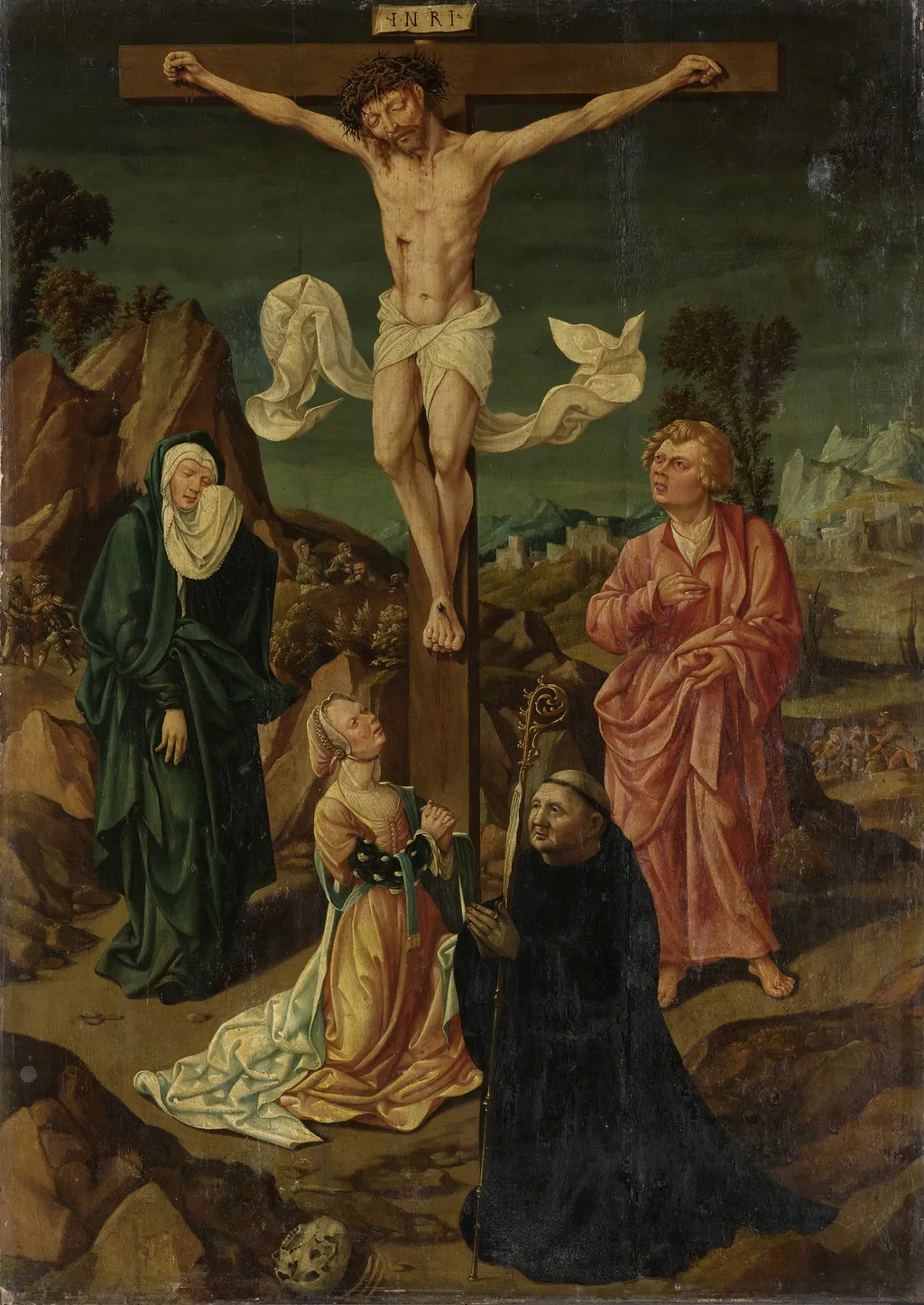
Crucifixion with the Virgin, Saint John, Mary Magdalene, a Donor is an oil painting. It dates from 1515 and is held in the collection of the Rijksmuseum.
About this work
Overview
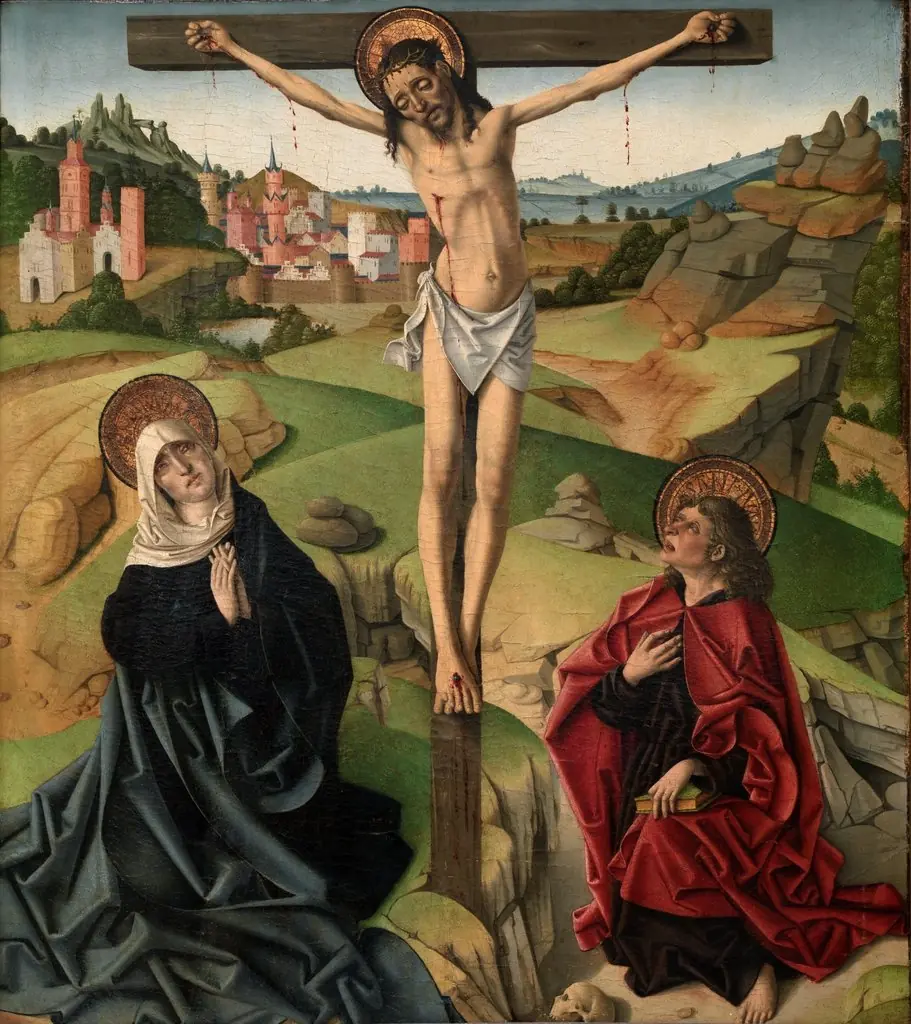
The landscape behind them features rugged hills, a distant town, and a skull at the foreground base.
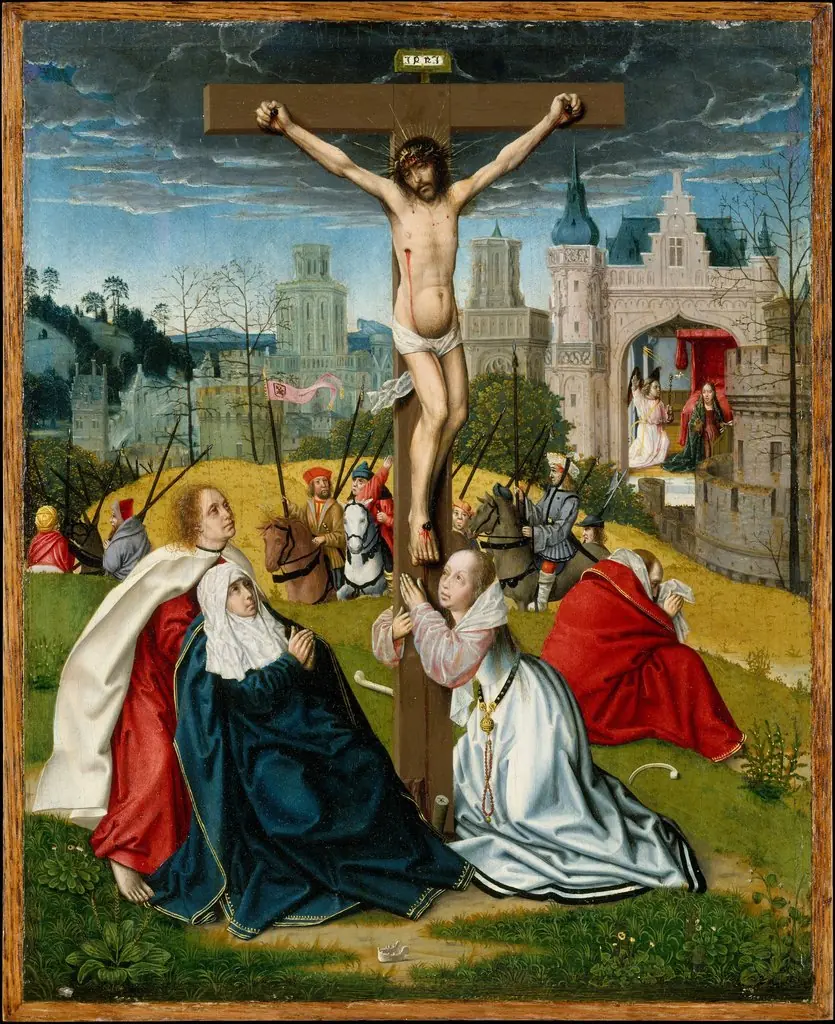
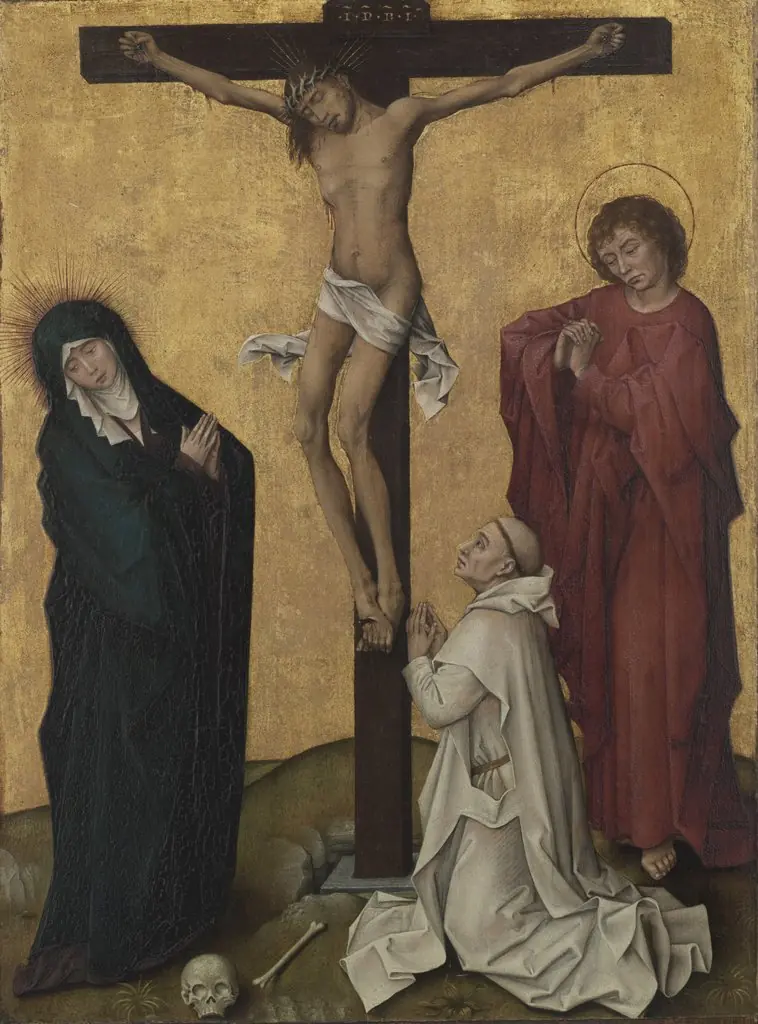
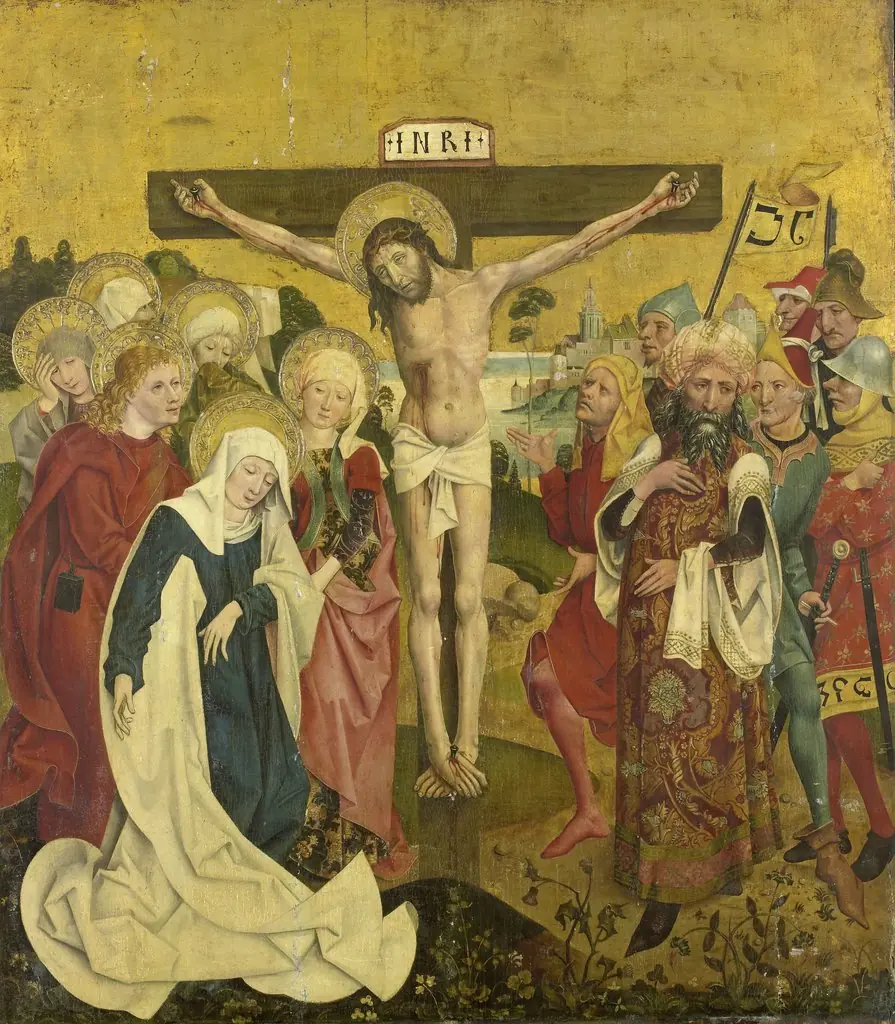
The oil painting depicts the crucifixion scene, with the central figure of a man on the cross bearing a crown of thorns and the inscription “INRI” above his head. Flanking the cross are two women—one in green kneeling with clasped hands, the other in yellow clutching a red cloth—while a man in red robes stands to the right with his hands together, and a bald figure in dark attire holds a golden staff. The landscape behind them features rugged hills, a distant town, and a skull at the foreground base.
Subject & Meaning
The composition presents the biblical narrative of Christ’s crucifixion, emphasizing themes of suffering and devotion. The kneeling female figures likely represent the Virgin Mary and Mary Magdalene, embodying grief and piety, while the standing male figures may symbolize Saint John and a donor patron, the latter identified by the staff and solemn posture.
Technique & Style
The work employs a pronounced chiaroscuro, contrasting deep shadows with illuminated forms to give the figures a three‑dimensional presence against a dark backdrop. The artist’s handling of oil paint renders delicate flesh tones and the texture of the wooden cross, while the bright garments of the women draw the eye forward.
History & Provenance
The painting is titled “Crucifixion with the Virgin, Saint John, Mary Magdalene, a Donor,” indicating it was likely commissioned for a private devotional setting. No specific dates or artist attribution are provided, but the inclusion of a donor figure suggests a 16th‑century European context where patrons were often depicted within sacred scenes.
Context
Set within a landscape of rocky hills and a small settlement, the background situates the crucifixion within a recognizable earthly realm, a common device in post‑Renaissance religious art to bridge the divine event with contemporary viewers. The skull at the base serves as a memento mori, reminding observers of mortality.
Artist & collection