Artwork
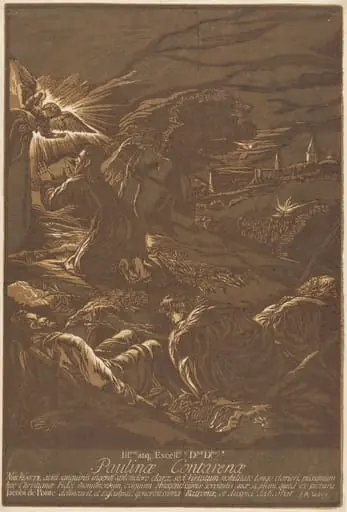
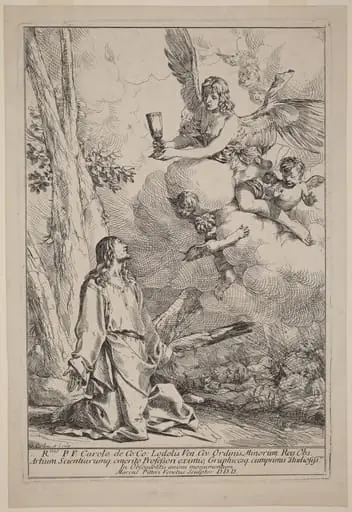
Christ Praying on the Mount of Olives
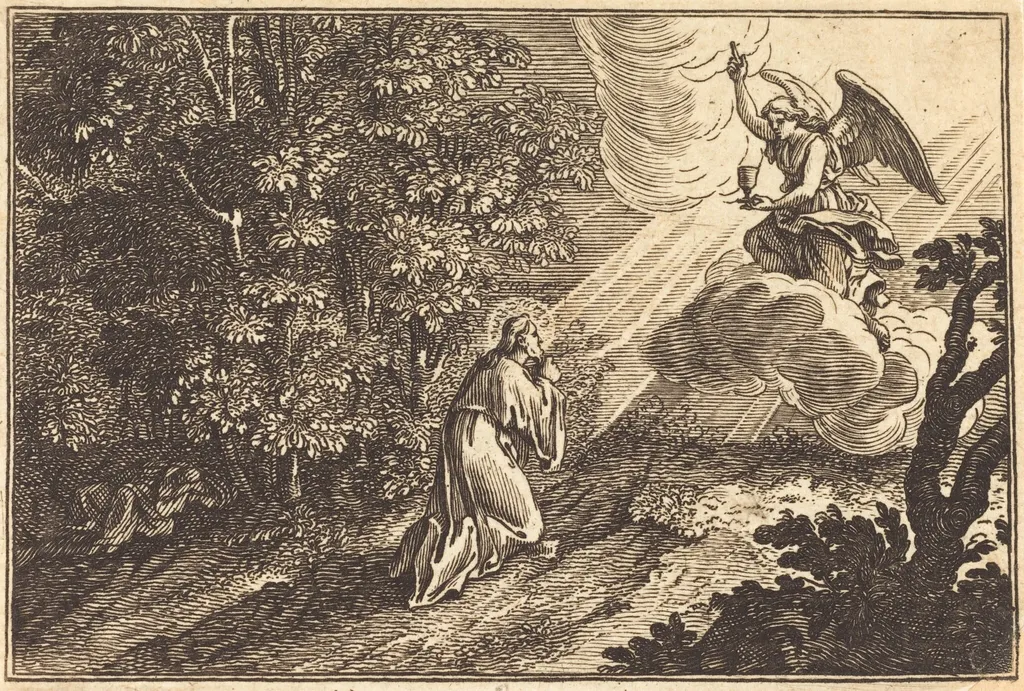
Christ Praying on the Mount of Olives is an ink print by the Baroque artist French 17th Century. It dates from 1650 and is held in the collection of the National Gallery of Art.
About this work
Overview
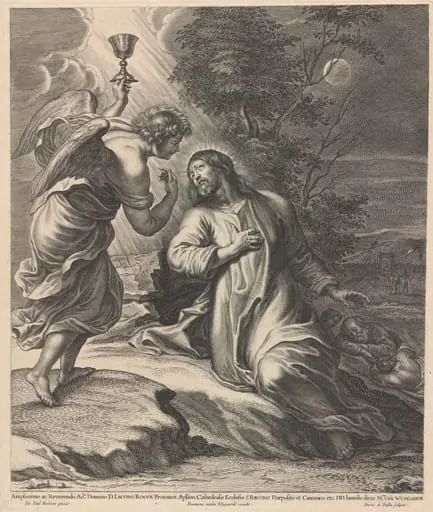
The work is an engraving titled *Christ Praying on the Mount of Olives*. Executed as a black‑and‑white print, it portrays a nocturnal landscape dominated by stark contrasts of light and shadow, achieved through dense, intersecting lines that model the forms.
Subject & Meaning
The composition presents two central figures: a human figure below, clothed in flowing robes with clasped hands, gazing upward, and an ethereal, winged being suspended among clouds, holding an object in one hand. The setting suggests the biblical episode of Christ’s prayer on the Mount of Olives, evoking themes of devotion and divine presence.
Technique & Style
The artist employed traditional engraving methods, incising fine parallel hatching and cross‑hatching to render tonal gradations. This dense line work creates deep chiaroscuro, giving the scene a dramatic, almost theatrical atmosphere, while the crisp outlines define the figures and the rocky, tree‑laden background.
History & Provenance
The print is known as a work on paper, typical of the period’s reproductive practices, though specific details about its date, creator, or ownership lineage are not provided in the source material.
Context
Engravings of religious subjects were common in the era’s devotional art market, serving both as visual aids for contemplation and as affordable reproductions of larger compositions. The Mount of Olives theme appears frequently in Christian iconography, linking this piece to a broader visual tradition.
Artist & collection

Artist
Seventeenth-century French printmakers turned ink into story. Their tools were burin and acid, paper their stage. Look at the Beggar Woman with Rosary (1622), etched on laid paper, her hands folded around faith, or The…