Artwork
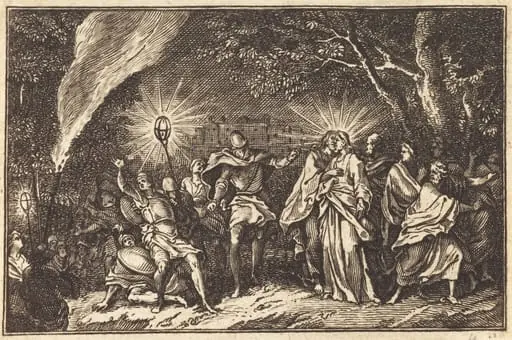
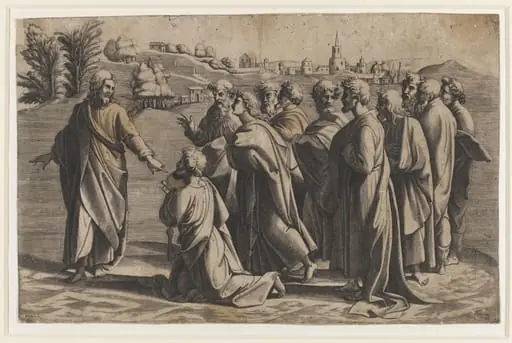
Christ Arrives on the Mount of Olives
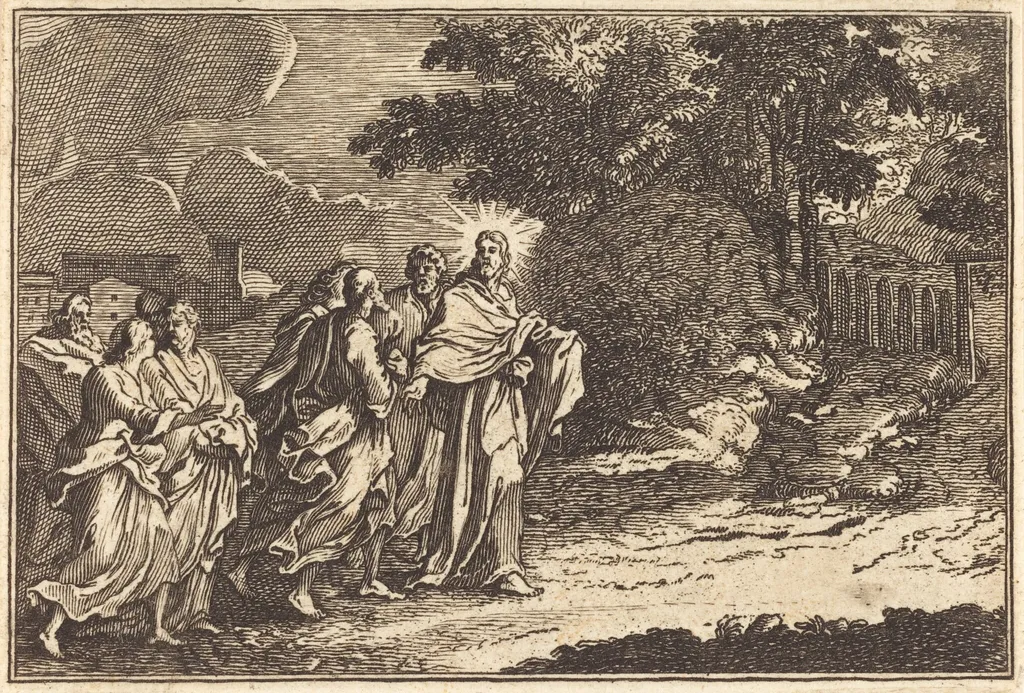
Christ Arrives on the Mount of Olives is an ink print by the Baroque artist French 17th Century. It dates from 1650 and is held in the collection of the National Gallery of Art.
About this work
Overview
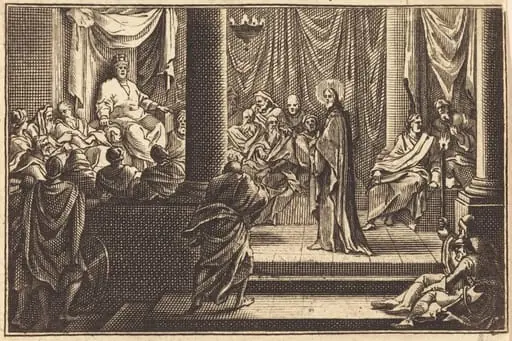
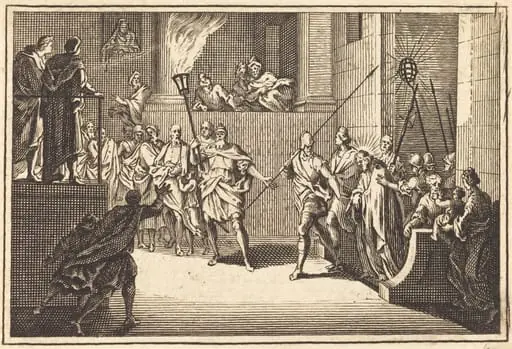
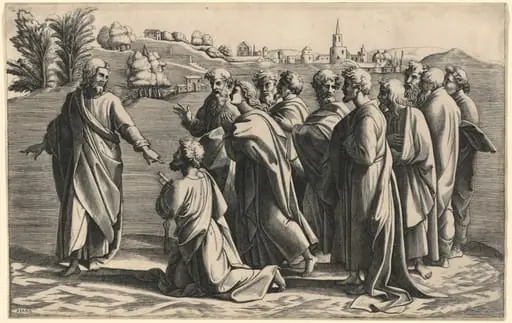
The work is a black‑and‑white engraving depicting a biblical episode in which a haloed figure, clothed in a long robe, stands on a road surrounded by four other robed figures. The composition includes a background of trees and buildings, rendered with fine cross‑hatching that creates texture and a sense of depth, conveying a solemn atmosphere.
Subject & Meaning
The central figure represents Christ, identified by the halo, arriving on the Mount of Olives. The surrounding men appear to be his disciples or followers, attentively observing his arrival, suggesting a moment of reverence and anticipation within the narrative of the Passion.
Technique & Style
Executed through meticulous engraving, the artist employed dense cross‑hatching to model forms and suggest light and shadow. The precision of line work aligns with Baroque sensibilities, emphasizing dramatic contrast and emotional intensity within a monochrome medium.
History & Provenance
The piece is catalogued as a print, though specific details about its creator, date, or collection history are not provided in the source material.
Context
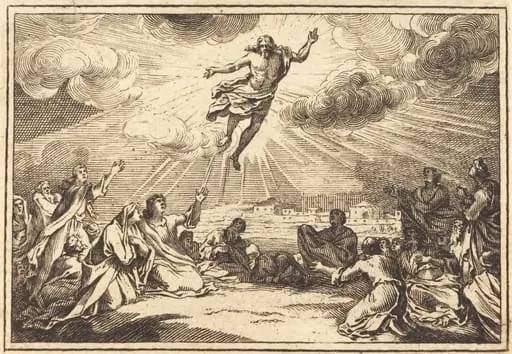
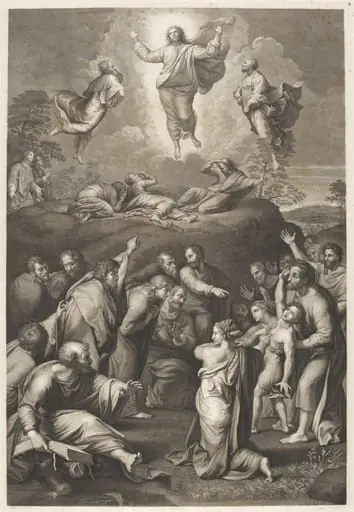
Engravings of biblical scenes were common in the Baroque period, serving both devotional and instructional purposes. This work reflects the era’s focus on vivid storytelling and the use of printmaking to disseminate religious imagery widely.
Artist & collection

Artist
Seventeenth-century French printmakers turned ink into story. Their tools were burin and acid, paper their stage. Look at the Beggar Woman with Rosary (1622), etched on laid paper, her hands folded around faith, or The…