Artwork
Fracischina and Gian Farina
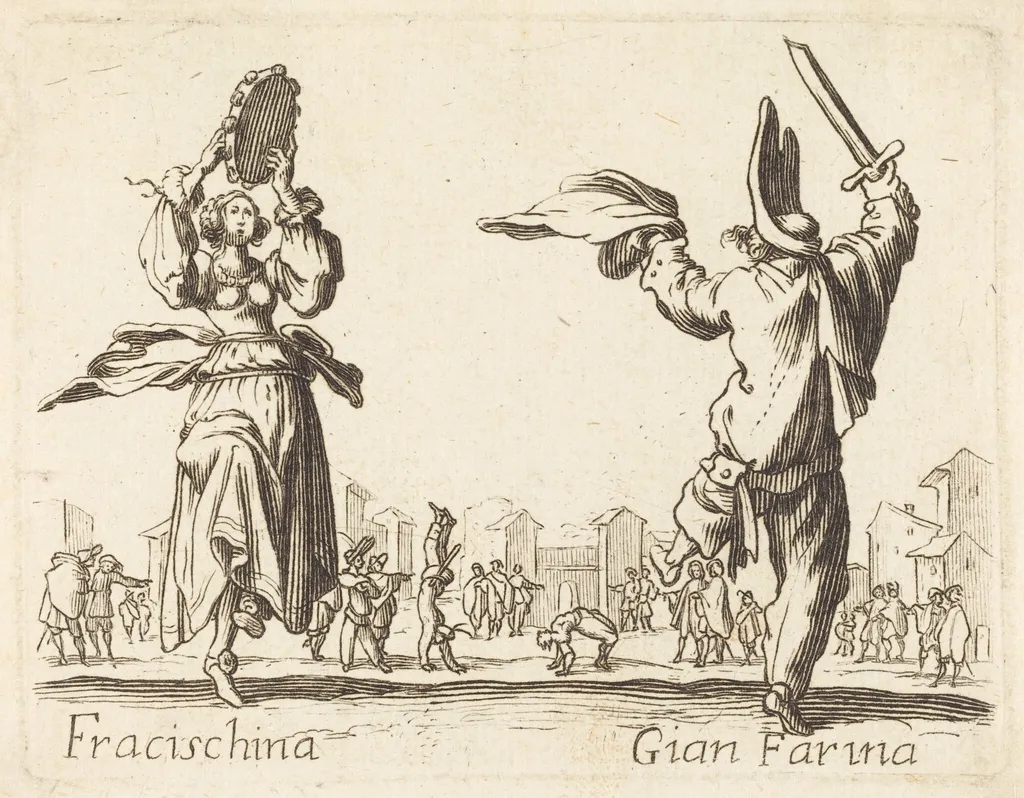
Fracischina and Gian Farina is an ink print by the Baroque artist French 17th Century. It dates from 1622 and is held in the collection of the National Gallery of Art.
About this work
Overview
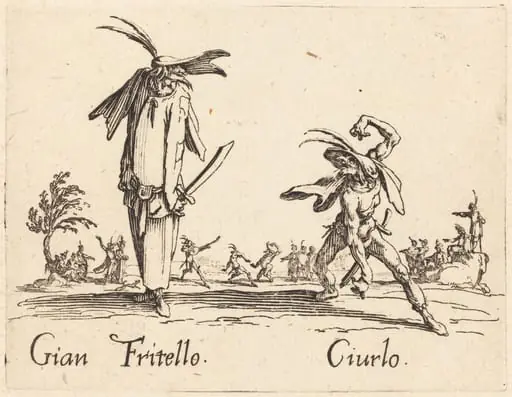
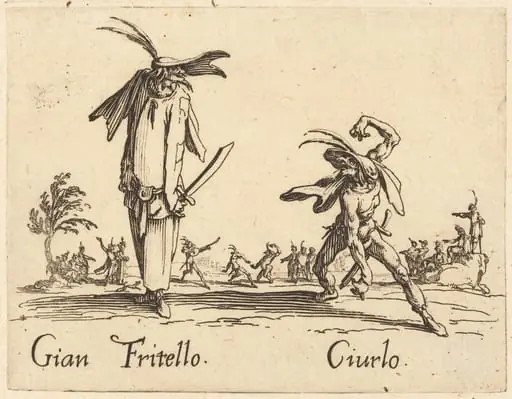
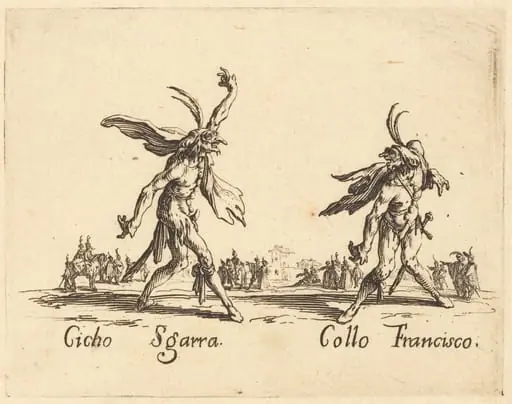
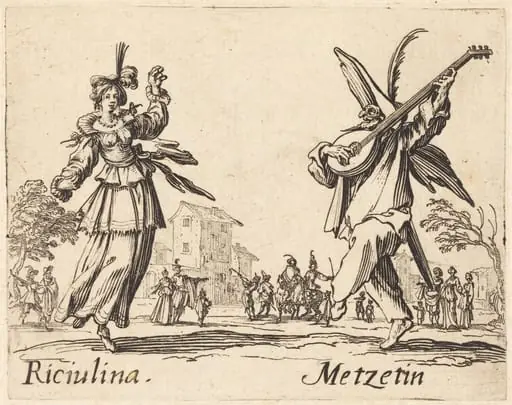
The work is a black‑and‑white etching executed on laid paper, presenting a dramatic scene in which two colossal figures dominate a modest settlement. The left giant clutches an oversized harp and a sack, while the right giant brandishes a sword. Below, diminutive townspeople react with gestures of alarm and curiosity, set against a backdrop of buildings and a river.
Subject & Meaning
The composition juxtaposes the enormity of the two mythic beings with the vulnerability of the ordinary populace, suggesting themes of power, threat, and perhaps the intrusion of the extraordinary into daily life. The harp and sword may symbolize contrasting forces—music or culture versus violence—while the townsfolk’s gestures hint at both fascination and fear.
Technique & Style
Created through etching, the artist incised fine lines into a metal plate, then transferred the inked image onto paper, achieving crisp delineation of the giants’ forms. The use of stark contrasts and precise hatching reflects Baroque sensibilities, emphasizing dramatic scale and tension through linear clarity rather than tonal shading.
Context
The piece aligns with Baroque visual strategies that employ exaggerated perspective and scale to heighten emotional impact. By rendering the giants with sharp, assertive lines, the artist reinforces a sense of dominance, a common device in the period’s narrative prints that sought to engage viewers with vivid storytelling.
Artist & collection

Artist
Seventeenth-century French printmakers turned ink into story. Their tools were burin and acid, paper their stage. Look at the Beggar Woman with Rosary (1622), etched on laid paper, her hands folded around faith, or The…