Artwork
Landscape
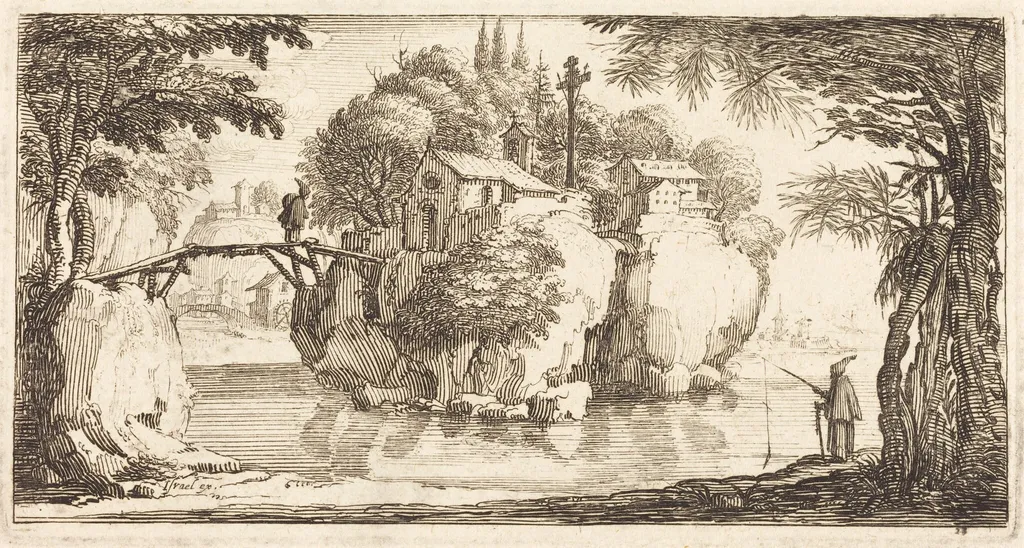
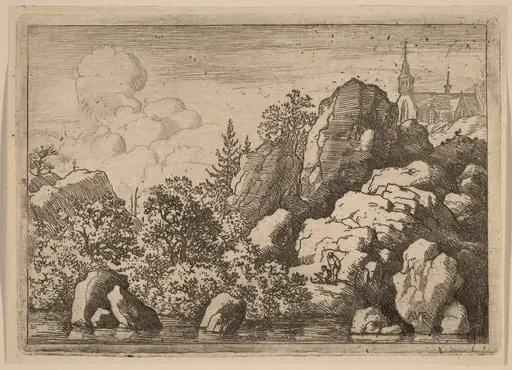
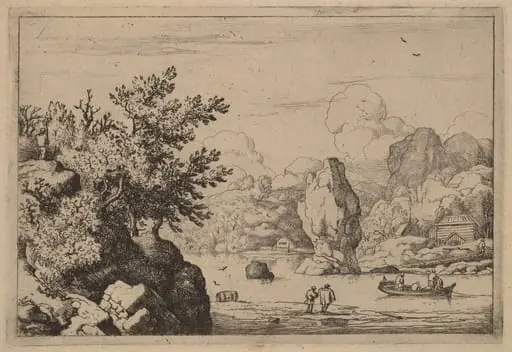
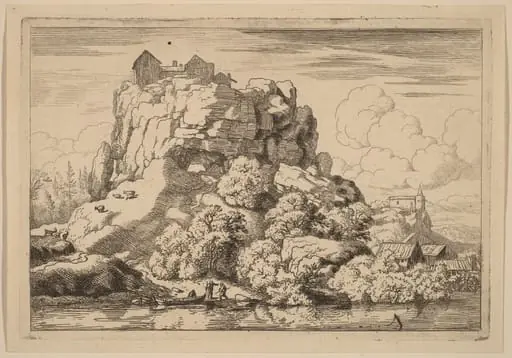
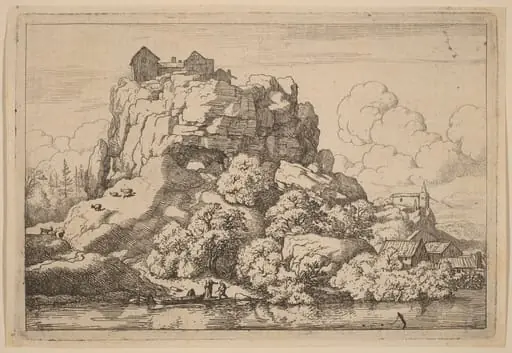
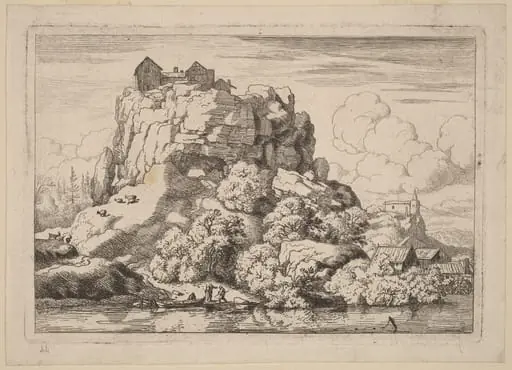
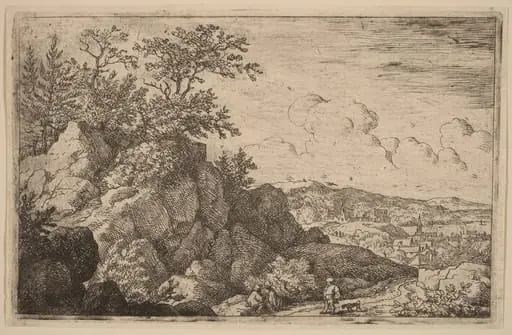
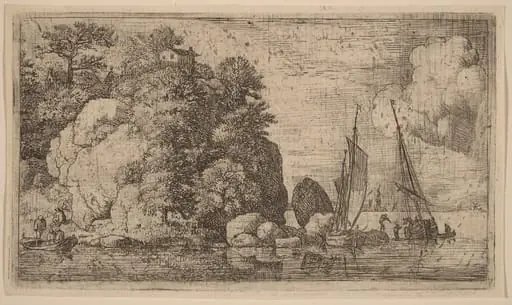
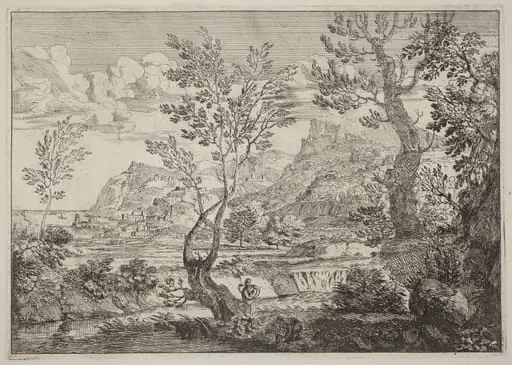
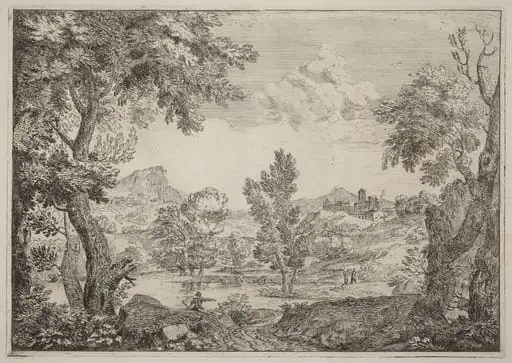
Landscape is an ink print by the Baroque artist French 17th Century. It dates from 1635 and is held in the collection of the National Gallery of Art. The work is an etched print on laid paper that depicts a calm riverside scene.
About this work
Overview
The work is an etched print on laid paper that depicts a calm riverside scene. A solitary figure stands on the bank, gazing across the water toward a distant cluster of buildings framed by trees. The composition balances a massive tree trunk on the left with a smaller tree on the right, creating a harmonious foreground that leads the eye toward the tranquil background.
Subject & Meaning
The image presents a quiet landscape where nature and modest human habitation coexist. The lone observer on the riverbank suggests contemplation of the surrounding environment, while the modest architecture nestled among foliage conveys a sense of peaceful settlement rather than grandiosity. The overall mood is one of serenity and gentle observation of everyday scenery.
Technique & Style
Executed through traditional etching, the artist incises lines into a metal plate and transfers the image onto laid paper, allowing for fine gradations of tone.
Executed through traditional etching, the artist incises lines into a metal plate and transfers the image onto laid paper, allowing for fine gradations of tone. The method produces a textured surface that conveys depth, especially in the rendering of foliage and water. The handling of line and shadow reflects a Baroque sensibility for atmospheric perspective, though the composition remains restrained.
Context
Etching on laid paper was a common medium for landscape prints in the early modern period, offering artists a reproducible means to disseminate scenic views. While the piece does not reference a specific location, its stylistic affinities align with the broader European tradition of depicting pastoral settings for both aesthetic appreciation and moral reflection.
Artist & collection

Artist
Seventeenth-century French printmakers turned ink into story. Their tools were burin and acid, paper their stage. Look at the Beggar Woman with Rosary (1622), etched on laid paper, her hands folded around faith, or The…