Artwork
River at the Foot of a High Rock
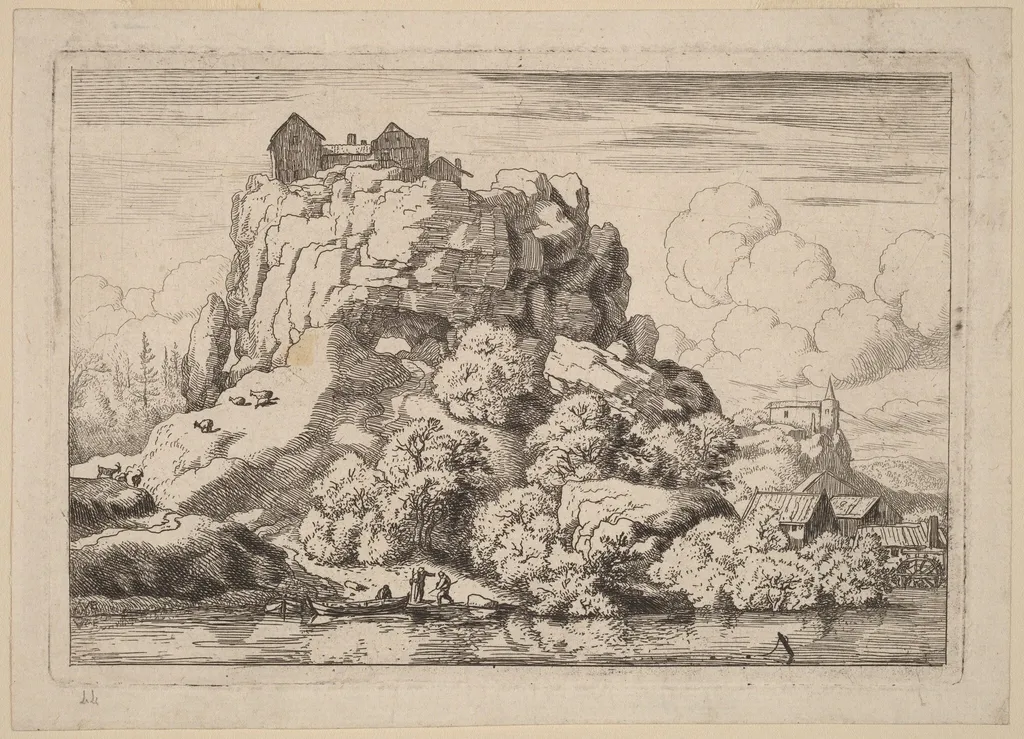
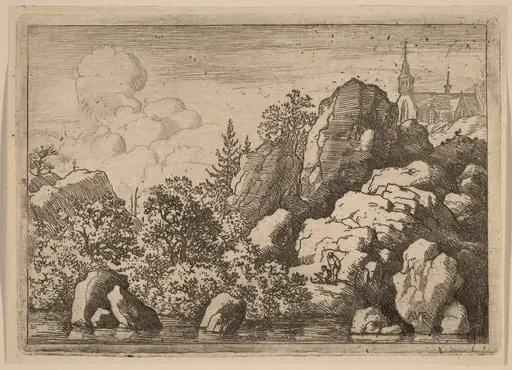
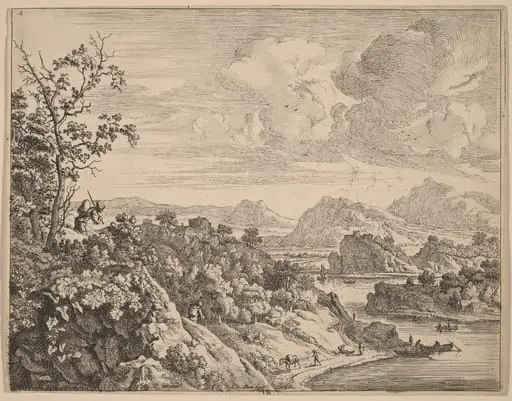
River at the Foot of a High Rock is an ink print by the Baroque artist Allart van Everdingen. It dates from 1650 and is held in the collection of the National Gallery of Art.
About this work
Overview
Created around 1650 by the Dutch artist Allart van Everdingen, this etching captures a tranquil riverside scene beneath a steep, towering rock face.
Created around 1650 by the Dutch artist Allart van Everdingen, this etching captures a tranquil riverside scene beneath a steep, towering rock face. As a printmaker active during the Dutch Golden Age, Everdingen specialized in landscapes rendered through fine-line etching. The work exemplifies his interest in natural topography and atmospheric stillness, using the precision of the etching technique to convey subtle textures and spatial depth.
Subject & Meaning
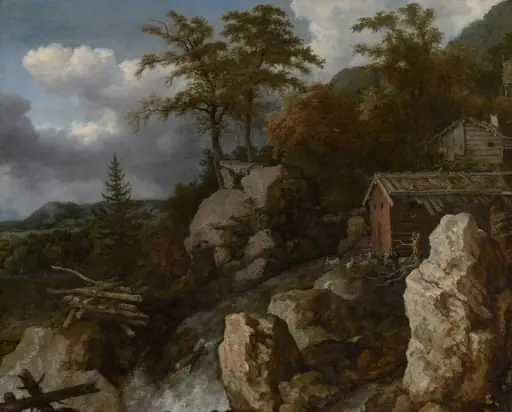
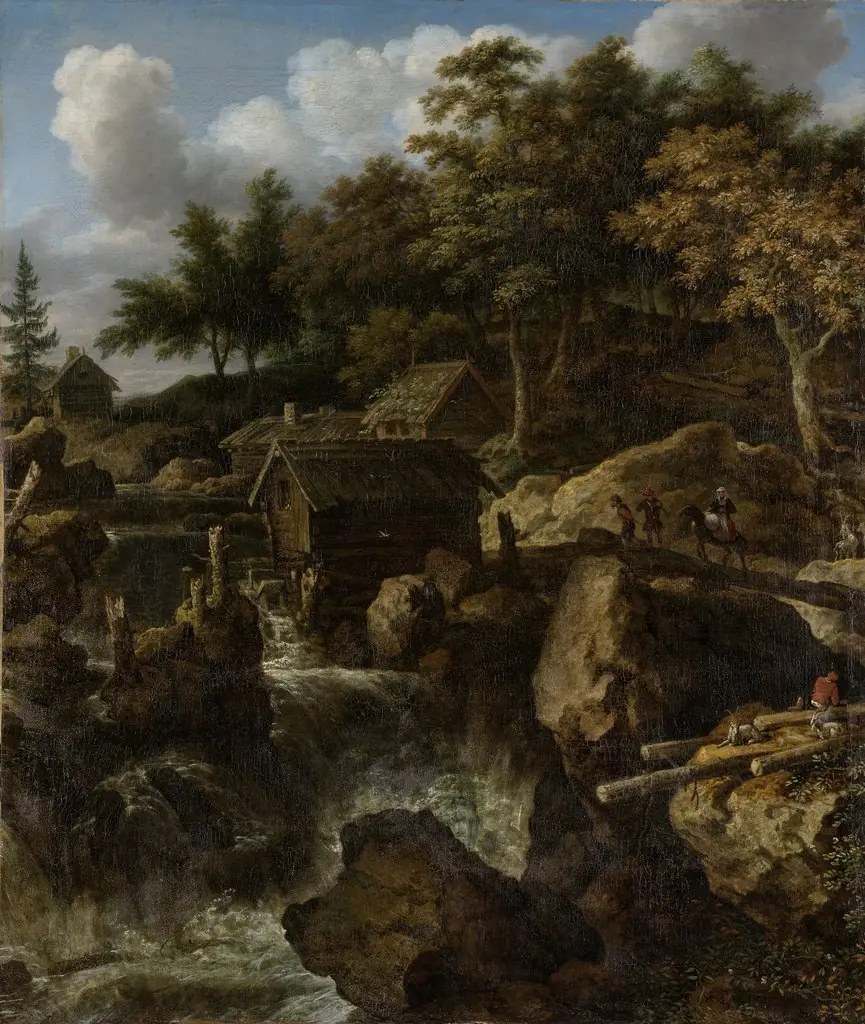
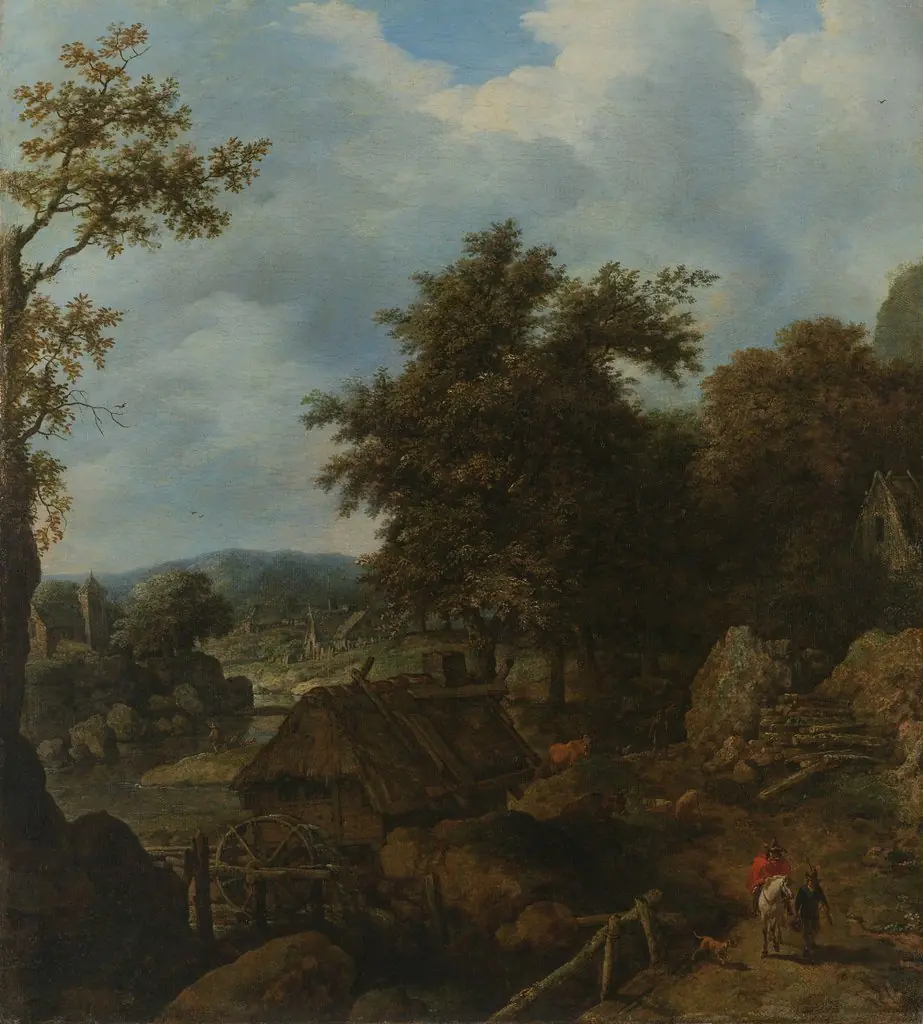
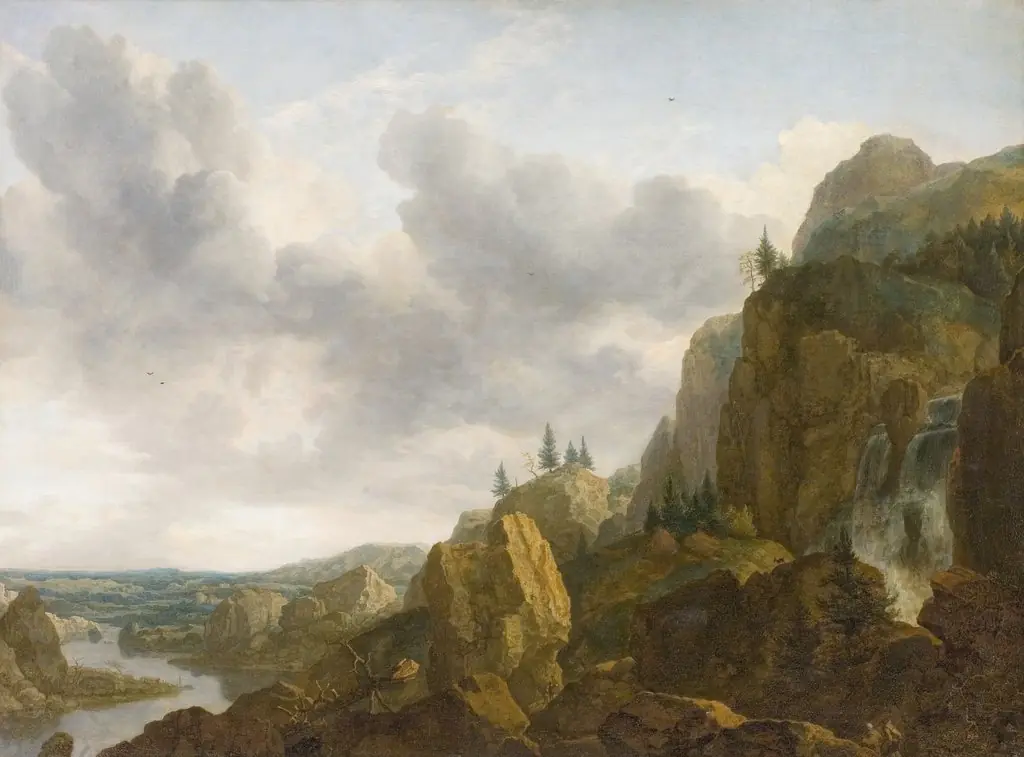
The scene depicts a quiet river winding at the base of a rugged cliff, with modest dwellings and a church perched along the ridge. A small boat, carrying two figures, glides near the bank, suggesting quiet human presence amid nature’s grandeur. The composition avoids dramatic action, instead emphasizing solitude and harmony between settlement and landscape, reflecting a contemplative view of rural life in the Netherlands.
Technique & Style
Everdingen employed fine, controlled etched lines to differentiate surfaces: the roughness of the rock, the smoothness of the water, and the delicate outlines of buildings and trees. The inked lines, pressed from a metal plate, create a tonal range that suggests light and shadow without wash or color. This meticulous approach to line work is characteristic of Dutch etchers of the period, who valued clarity and detail over bold expression.
History & Provenance
The print was made during Everdingen’s mature period, following his travels through Scandinavia, which influenced his interest in dramatic rock formations and northern landscapes. While specific early ownership records are sparse, the work entered broader circulation through Dutch print markets and was later collected by institutions interested in 17th-century Northern European printmaking.
Context
In mid-17th century Holland, landscape prints were widely produced for domestic decoration and scholarly interest. Everdingen’s work aligned with a growing appreciation for natural scenery, distinct from religious or mythological themes. His etchings contributed to a visual culture that valued observation of the environment, reflecting broader scientific and aesthetic shifts in the Dutch Republic.
Legacy
Everdingen’s etchings, including this one, helped define a northern European tradition of landscape printmaking that emphasized geological detail and atmospheric calm. His influence extended to later artists who adopted his compositional restraint and technical precision. Though less celebrated than some contemporaries, his prints remain important for their quiet documentation of the natural world during a period of intense artistic innovation.
Own this work as a print
Artist & collection
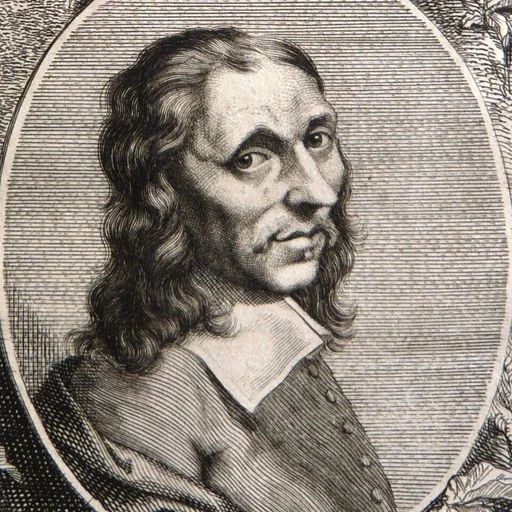
Artist
Allaert van Everdingen (Dutch pronunciation: ; bapt. 18 June 1621 – 8 November 1675 (buried)), was a Dutch Golden Age painter and printmaker in etching and mezzotint.