Artwork
Noble Woman with a Small Hat
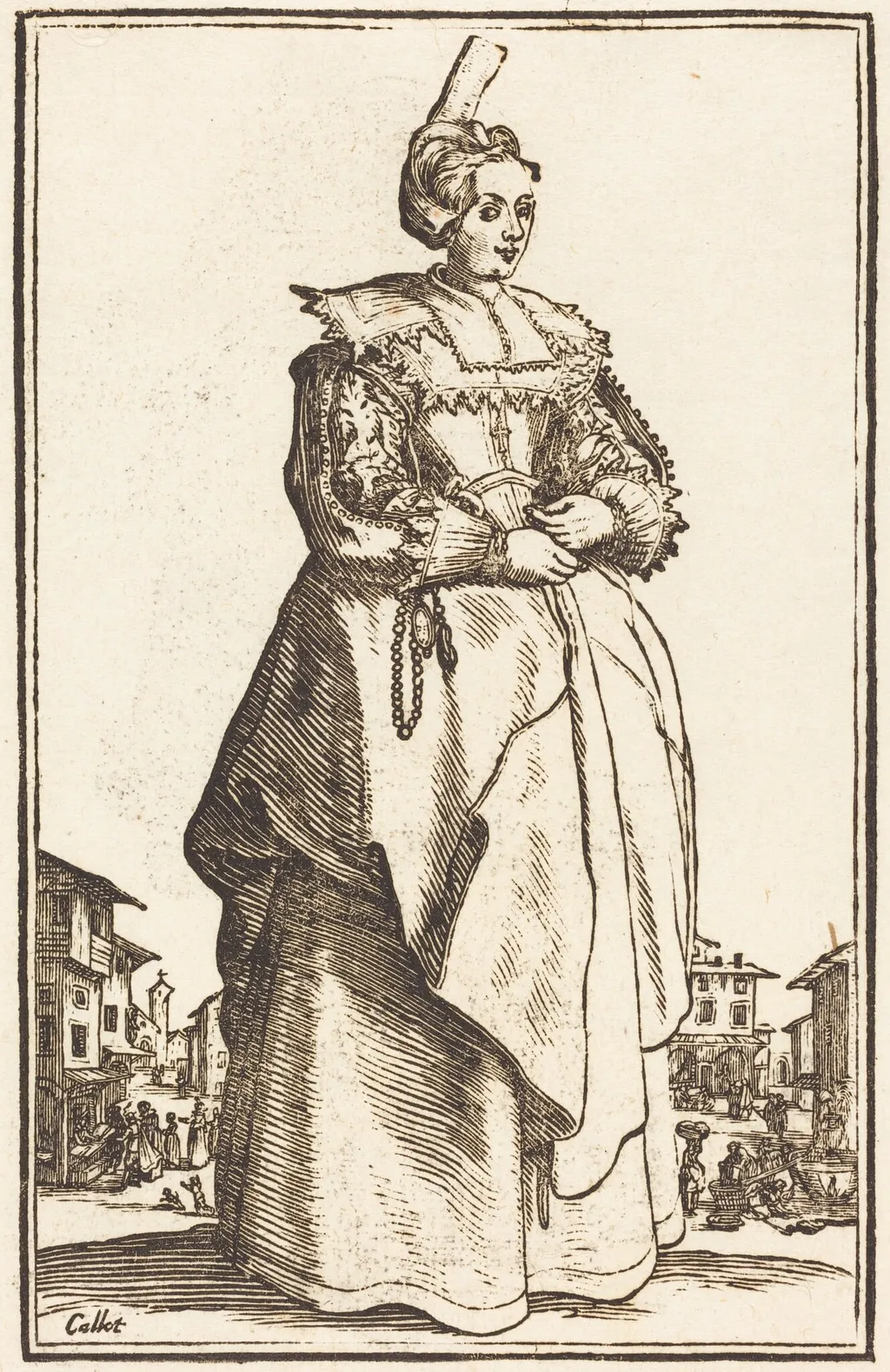
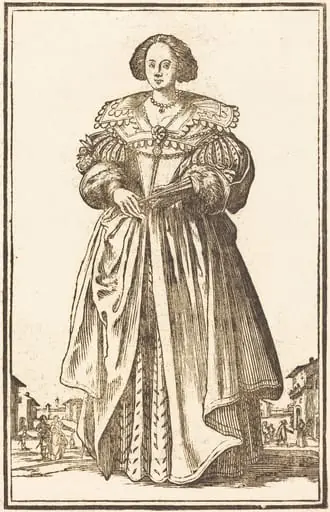
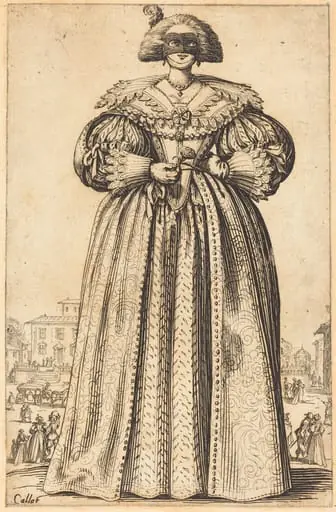
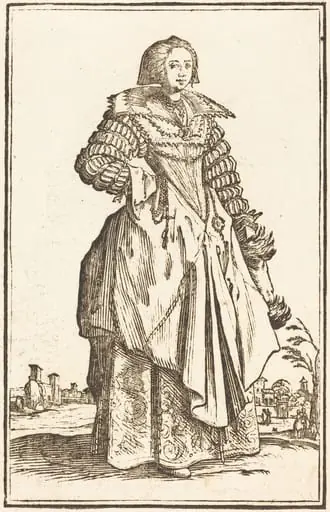
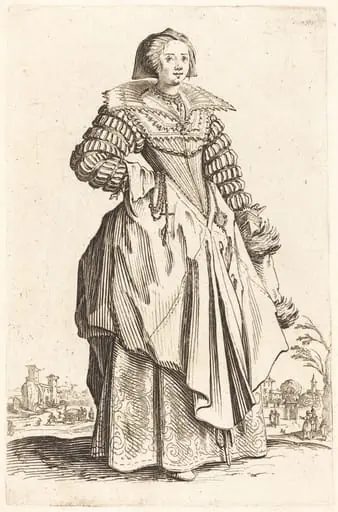
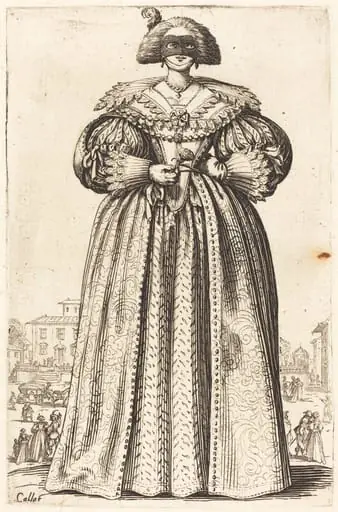
Noble Woman with a Small Hat is an ink print by the Baroque artist French 17th Century. It dates from 1623 and is held in the collection of the National Gallery of Art. This woodcut on laid paper depicts a woman in an elaborate gown with a high neckline, puffed sleeves, and finely rendered lace.
About this work
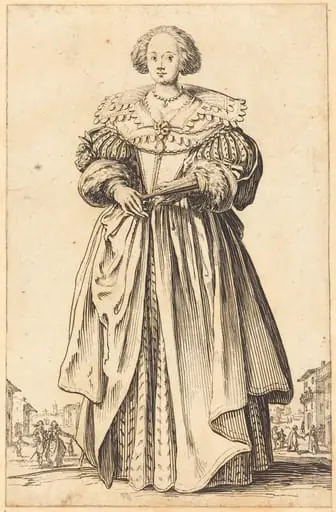
The painting features a woman dressed in a long, flowing gown with a high neckline and puffy sleeves, adorned with intricate lace details.
The painting features a woman dressed in a long, flowing gown with a high neckline and puffy sleeves, adorned with intricate lace details. She wears a small hat on her head, and her hands are clasped together in front of her. The background is a light beige color, with a subtle texture that suggests the use of a woodcut technique.
The woman's attire and hairstyle evoke a sense of elegance and refinement, characteristic of the Baroque period. The level of detail in the lace and fabric suggests a high level of craftsmanship.
For more information on the artist's use of woodcut techniques, explore the work of French 17th Century artists.
Overview
This woodcut on laid paper depicts a woman in an elaborate gown with a high neckline, puffed sleeves, and finely rendered lace. She wears a modest hat and holds her hands together before her chest. The composition is set against a muted beige background, the surface texture revealing the characteristic grain of the woodcut process.
Subject & Meaning
The figure presents an ideal of refined femininity, her attire and poised gesture suggesting a noble status. The careful rendering of lace and fabric conveys attention to social rank and the aesthetic values of the period, while the restrained expression invites contemplation of decorum and inner composure.
Technique & Style
Executed as a woodcut, the image relies on carved lines and cross‑hatching to model light and texture on laid paper. The artist achieves delicate lace patterns and the softness of the gown through fine incision, typical of 17th‑century French printmaking, where the contrast between dark ink and the paper’s warm tone creates depth.
Context
The work aligns with Baroque sensibilities in its emphasis on elegance, rich costume, and dramatic yet controlled presentation. Such prints often served as disseminated images of aristocratic fashion, reflecting contemporary tastes and the growing market for affordable, reproducible art in the early modern period.
Artist & collection

Artist
Seventeenth-century French printmakers turned ink into story. Their tools were burin and acid, paper their stage. Look at the Beggar Woman with Rosary (1622), etched on laid paper, her hands folded around faith, or The…