Artwork
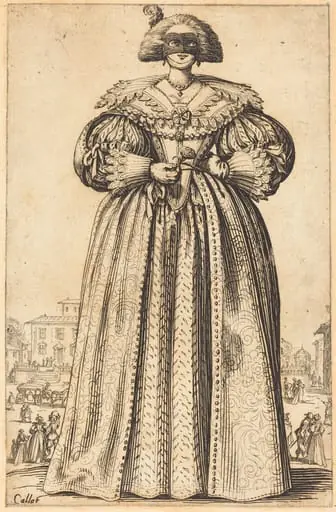
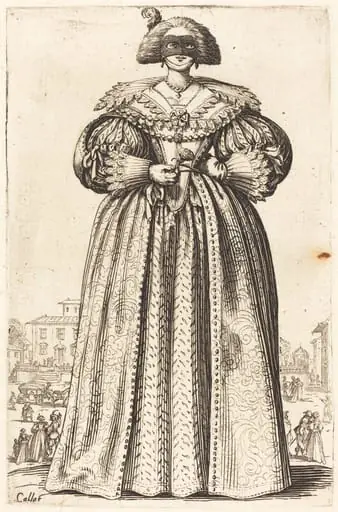
Masked Noble Woman
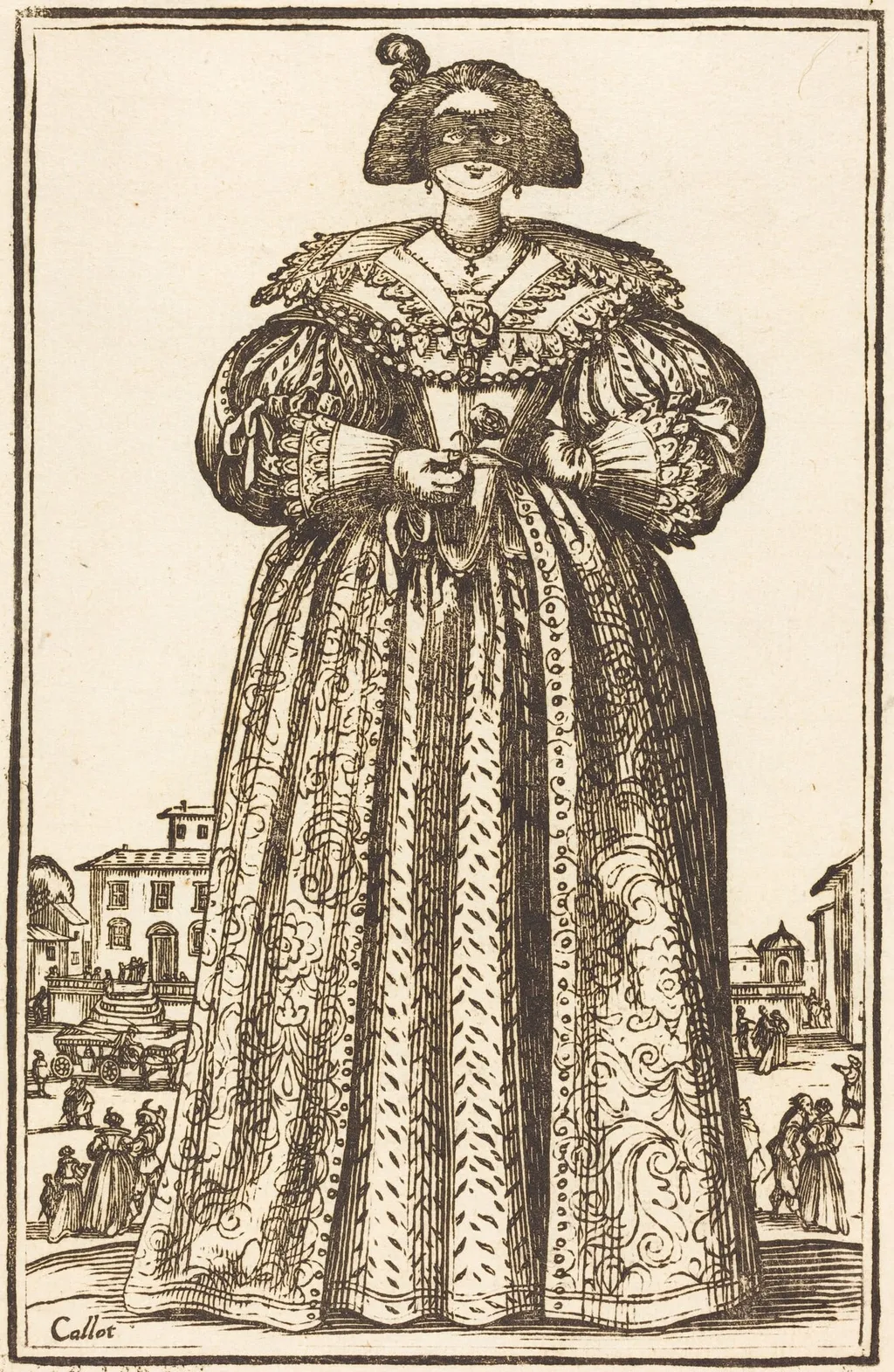
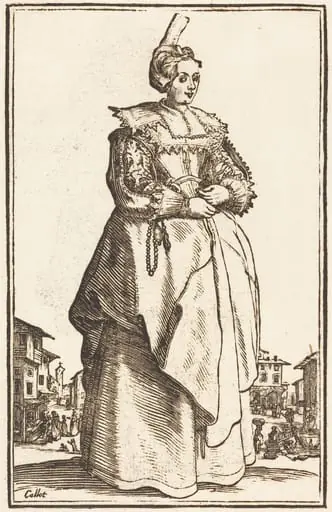
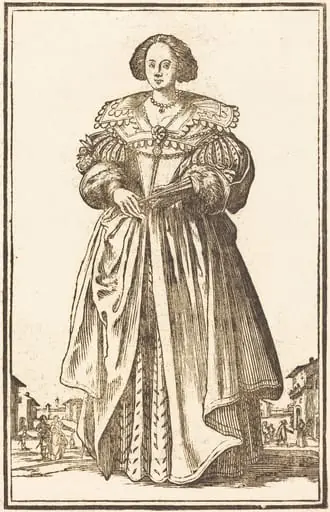
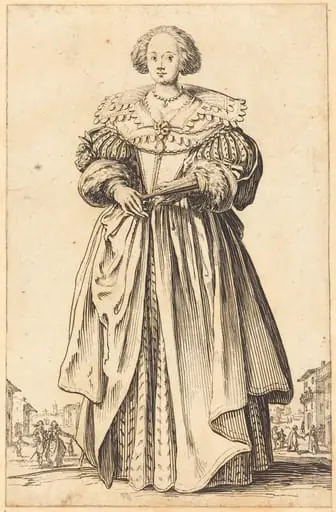
Masked Noble Woman is an ink print by the Baroque artist French 17th Century. It dates from 1623 and is held in the collection of the National Gallery of Art. This black-and-white woodcut depicts a noblewoman in elaborate 17th-century attire, standing before a modest townscape.
About this work
Overview
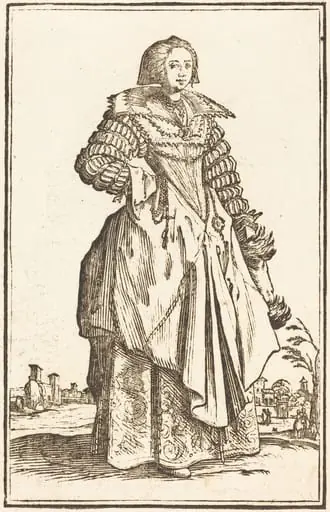
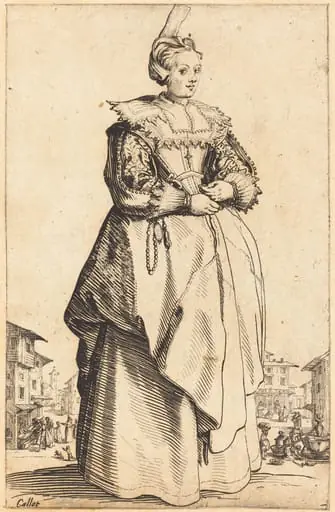
This black-and-white woodcut depicts a noblewoman in elaborate 17th-century attire, standing before a modest townscape.
This black-and-white woodcut depicts a noblewoman in elaborate 17th-century attire, standing before a modest townscape. Executed on laid paper, the print showcases fine linear detail characteristic of the woodcut technique. The composition balances the figure’s ornate presence with a quiet background of architecture and pedestrians, suggesting a moment of public display rather than private intimacy.
Subject & Meaning
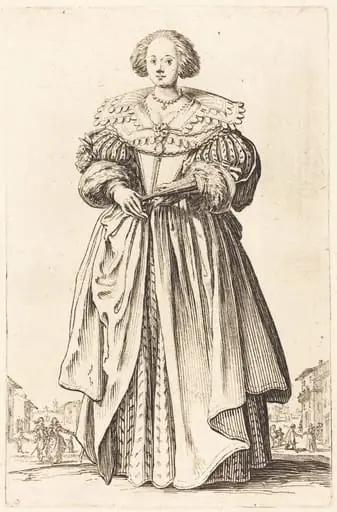
The woman, dressed in a high-collared gown with embroidered front panels and full sleeves, holds a fan—a symbol of refinement and social status. Her poised stance and detailed clothing imply aristocratic identity, while the surrounding town hints at her place within a broader civic context. The image may reflect ideals of noble decorum or serve as a portrait of a specific individual, though no definitive identification exists.
Technique & Style
Crafted using woodcut, the image was carved into a wooden block, with raised areas inked and pressed onto paper. The sharp, clean lines emphasize texture in fabric—ruffles, buttons, and embroidery—while negative space defines form. The method allowed for multiple impressions, making such images accessible beyond elite circles. The style is precise and linear, typical of Northern European printmaking of the period.
History & Provenance
The print originates from the early 1600s, a time when woodcuts were widely used for both religious and secular imagery. Its survival suggests it was valued enough to be preserved, though its original purpose—whether as a portrait, fashion record, or decorative item—remains undocumented. No known artist is attributed, and its early ownership history is lost.
Context
In early modern Europe, printed images of nobility circulated among the urban middle class as symbols of aspiration and social order. Woodcuts like this one bridged the gap between elite portraiture and mass-produced visual culture. The inclusion of a townscape reflects growing interest in civic life and the integration of aristocratic figures within public spaces.
Legacy
This print exemplifies how woodcut technology democratized visual representation in the 17th century. While not the work of a named master, its craftsmanship reflects the skill of anonymous artisans who shaped public imagery. It contributes to the historical record of dress, social hierarchy, and the role of print in shaping perceptions of status during the early modern era.
Artist & collection

Artist
Seventeenth-century French printmakers turned ink into story. Their tools were burin and acid, paper their stage. Look at the Beggar Woman with Rosary (1622), etched on laid paper, her hands folded around faith, or The…