Artwork
Waiting for the Virgin to Give Birth; St. Nemesius; St. Philogonius; St. Thomas
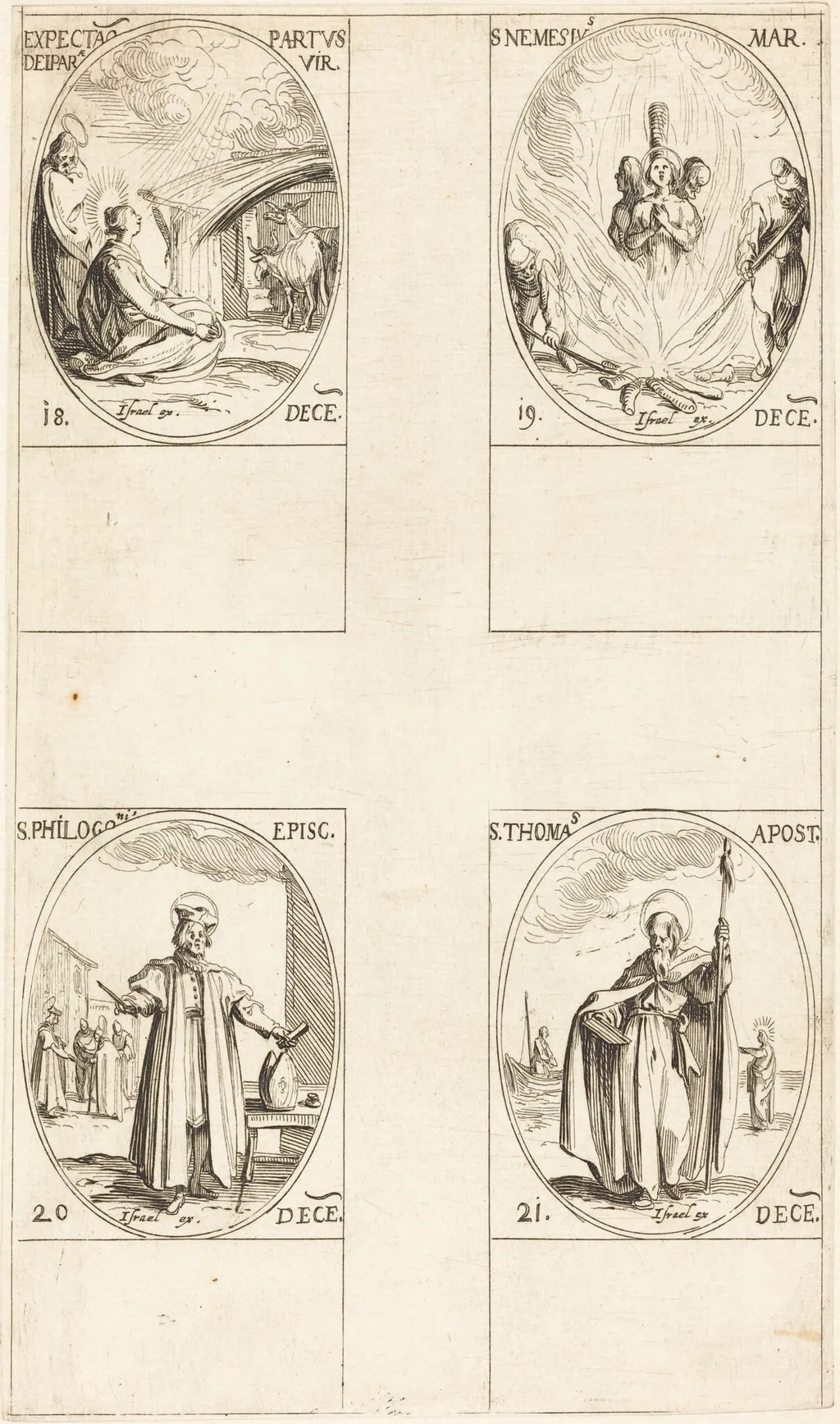
Waiting for the Virgin to Give Birth; St. Nemesius; St. Philogonius; St. Thomas is an ink print by the Baroque artist Jacques Callot. It dates from 1634 and is held in the collection of the National Gallery of Art.
About this work
Overview
Jacques Callot’s early‑17th‑century print series, titled *Waiting for the Virgin to Give Birth; St. Nemesius; St. Philogonius; St. Thomas*, consists of four separate etchings on laid paper. Executed around 1634, the works belong to the French Baroque tradition and demonstrate Callot’s facility with the medium of etching, a technique that allowed him to render fine, precise lines.
Subject & Meaning
One image shows a kneeling woman beside a cow, evoking a humble setting for the Virgin’s anticipation.
Each plate presents a distinct religious tableau. One image shows a kneeling woman beside a cow, evoking a humble setting for the Virgin’s anticipation. Another depicts a man cradling an infant, suggesting the birth of Christ. A third features a figure holding a book and staff, a conventional attribute of a learned saint, while the fourth portrays a man with a spear near water, likely representing Saint Thomas or a martyr’s narrative. Together the scenes explore themes of devotion, prophecy, and sanctity.
Technique & Style
Callot employed traditional copper‑plate etching, incising the design with a needle before acid mordant produced the lines. The crisp, linear quality of the prints reflects his mastery of the medium, while the use of laid paper gives the sheets a subtle texture that enhances the chiaroscuro effect typical of Baroque printmaking.
History & Provenance
The series bears the inscription “Israel ex.”, a signature Callot used on many of his works, indicating his workshop’s involvement. Produced during his prolific period in the Duchy of Lorraine, the prints are part of a larger output of more than 1,400 etchings that documented everything from military camps to religious narratives.
Context
Callot’s output coincided with a flourishing of print culture in early modern Europe, when etchings served both devotional purposes and the dissemination of artistic ideas. By rendering saints and biblical moments in a format accessible to a broad audience, the series reflects the Baroque era’s emphasis on dramatic, emotionally resonant religious imagery.
Artist & collection
Artist
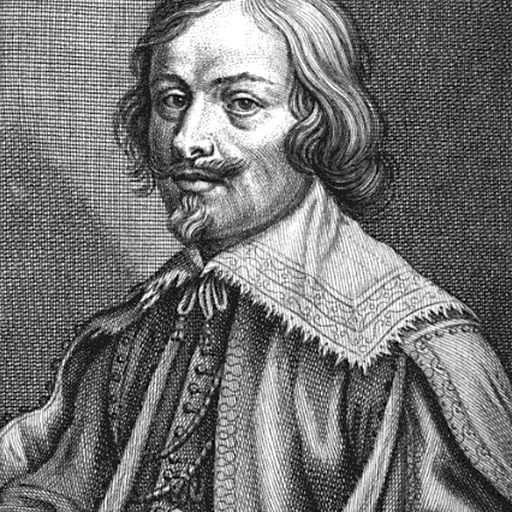
Jacques Callot was a baroque printmaker and draftsman from the Duchy of Lorraine.

 Holy Family at supper
 Restoration of the Aqueduct at Pisa
 Restoration of the Aqueduct at Pisa
 Square in Paris with Many Figures
 Square in Paris with Many Figures
 Horsemen Attacked by Robbers
 HOW WILL A COVERED PART BE CORRECTED?HOW WIKA A COVERED HEART DEED CORRECTED?
![Christ Walking on the Water [second plate], by Jacques Callot](https://artifactworldgallery.com/img/jacques-callot--christ-walking-on-the-water-second-plate--2069f3bfe4cb2126-w320.webp) Christ Walking on the Water [second plate]
Christ Walking on the Water [second plate]
 St. Theodosius; St. Tatiana; St. Hilary; St. Felix
 St. Agnes; The Marriage of the Virgin; St. Ildefonsus; St. Timothy
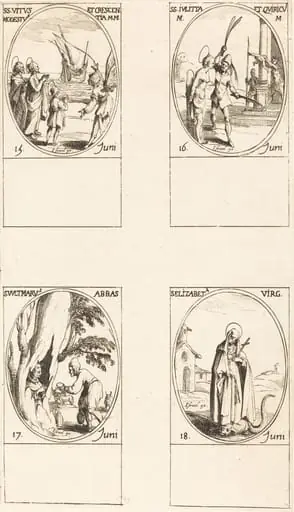 Sts. Vitus, Modestus, & Crescentia; Sts. Julitta & Quiricus; St. Avitus, Abbot; St. Elizabeth, Virgin
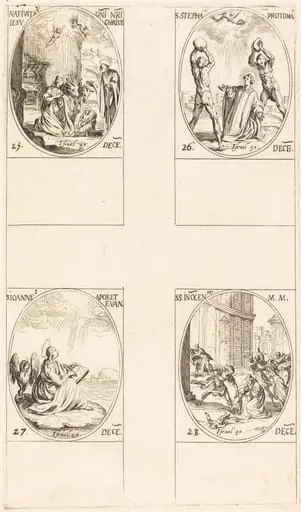 The Nativity; St. Stephen; St. John; Holy Innocents
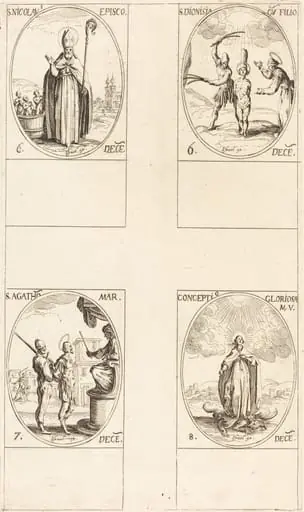 St. Nicholas; St. Dionisia and Son; St. Agatha; Conception of the Virgin
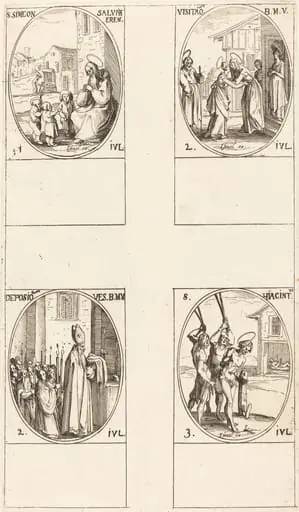 St. Simeon Salus; The Visitation; Deposition of the Virgin's Clothes; St. Hiacintus
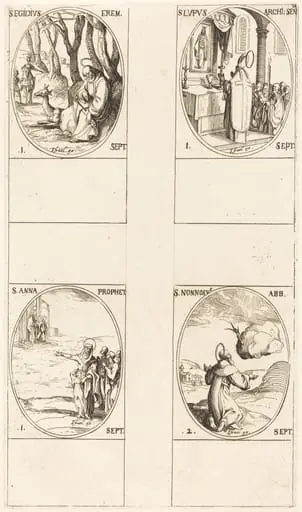 St. Giles; St. Lupus; St. Anne; St. Nonnosus
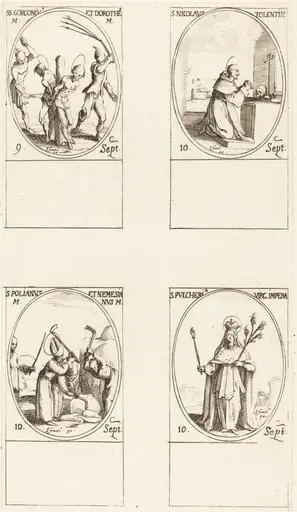 Sts. Gorgonius & Dorothy; St. Nicholas of Tolentino; St. Polianus & Nemesian; St. Pulcheria
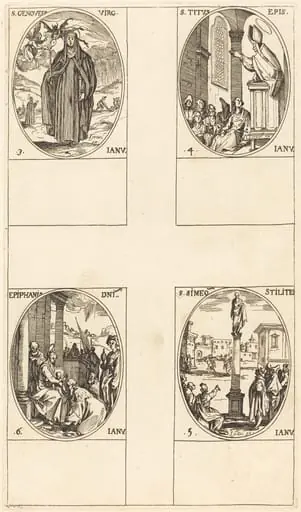 St. Genevieve; St. Titus; St. Simeon Stylites; Epiphany