Artwork
The Catafalque of the Emperor Mathias
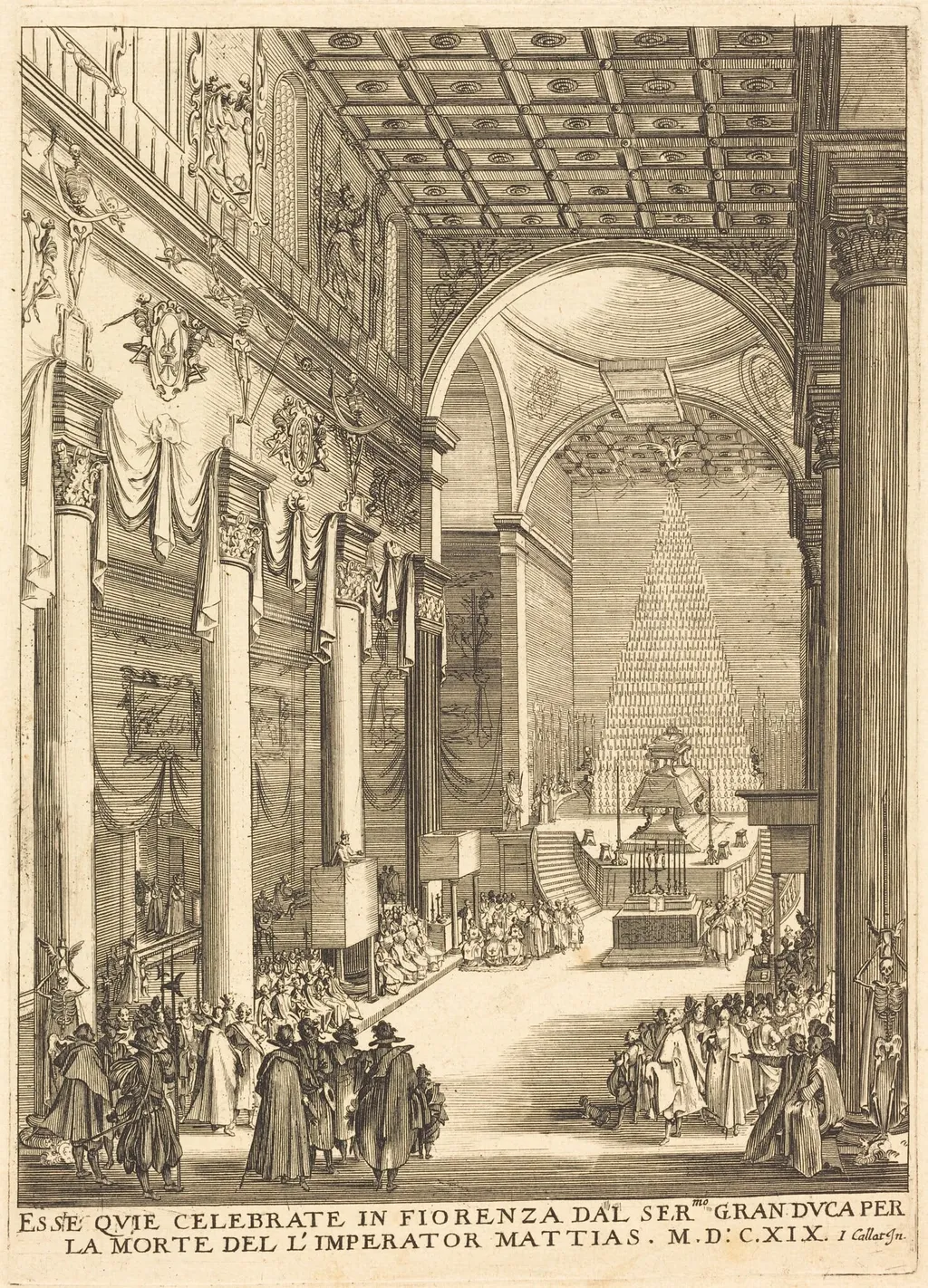
The Catafalque of the Emperor Mathias is an ink print by the Baroque artist French 17th Century. It dates from 1650 and is held in the collection of the National Gallery of Art. This print depicts the ceremonial catafalque erected for Emperor Matthias in Vienna, 1619.
About this work
Overview
This print depicts the ceremonial catafalque erected for Emperor Matthias in Vienna, 1619. Rendered in etching and engraving on laid paper, it captures the architectural grandeur of the imperial funeral structure within a vast, columned hall. The composition emphasizes verticality and symmetry, with figures arranged in orderly rows, underscoring the ritual formality of the occasion.
Subject & Meaning
The central monument serves as a symbolic tomb for the deceased emperor, adorned with allegorical figures and heraldic elements. Attendees, dressed in courtly attire, stand in silent tribute, reflecting the Habsburg tradition of public mourning as a political and spiritual act. The scene conveys imperial continuity and the solemnity of death within a dynastic context.
Technique & Style
Fine lines and cross-hatching define the marble surfaces, drapery, and architectural details, demonstrating mastery of engraving. The contrast between light and shadow enhances depth, while the precise rendering of figures and ornamentation aligns with Northern European print traditions of the early 17th century, echoing Baroque sensibilities without overt theatricality.
History & Provenance
Created shortly after Matthias’s death in 1619, the print was likely commissioned to document the imperial funeral rites. It circulated among nobility and courtiers as a commemorative artifact. Early copies are held in European royal collections, including the Albertina in Vienna, attesting to its role in preserving Habsburg ceremonial culture.
Context
The catafalque reflected the Habsburgs’ use of spectacle to reinforce authority during the Thirty Years’ War. Such elaborate funerary displays were common in Catholic Europe, blending religious ritual with dynastic propaganda. The print’s detailed architecture mirrors contemporary court buildings, grounding the event in a recognizable imperial setting.
Legacy
Though not widely reproduced, the print remains a key visual record of early 17th-century imperial mourning practices. It informs modern understanding of Habsburg ceremonial culture and the role of print media in disseminating state rituals. Its precision and restraint distinguish it from more flamboyant Baroque funeral imagery of the period.
Artist & collection

Artist
Seventeenth-century French printmakers turned ink into story. Their tools were burin and acid, paper their stage. Look at the Beggar Woman with Rosary (1622), etched on laid paper, her hands folded around faith, or The…

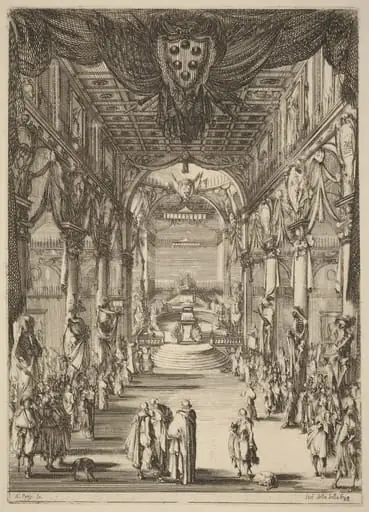 Funeral of Prince Francesco de Medici
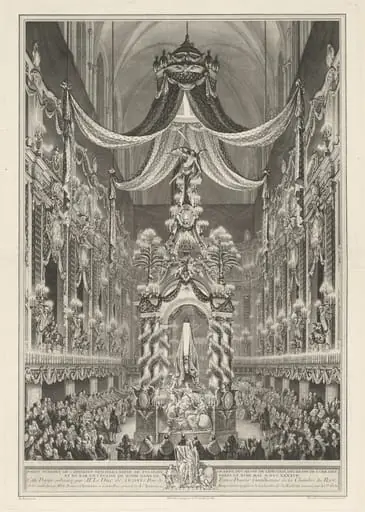 Pompe funèbre de Catherine Opalinska
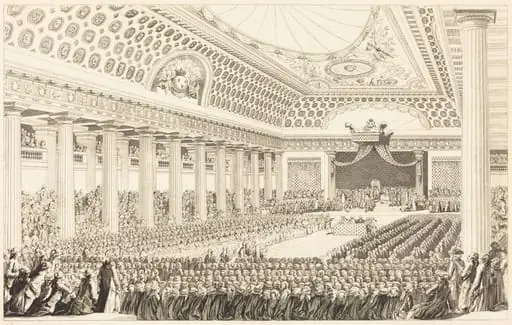 Ouverture des Etats-Généraux à Versailles, le 5 mars 1789
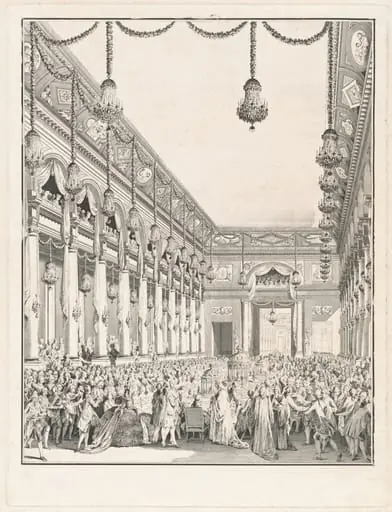 Le festin royal - Fête donnée à l'occasion de la naissance de Monseigneur le Dauphin, 21 janvier 1782
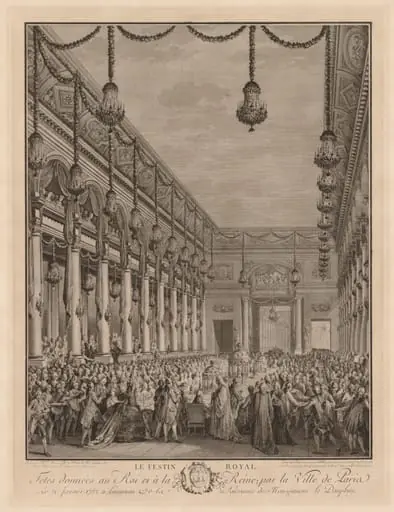 The Royal Banquet
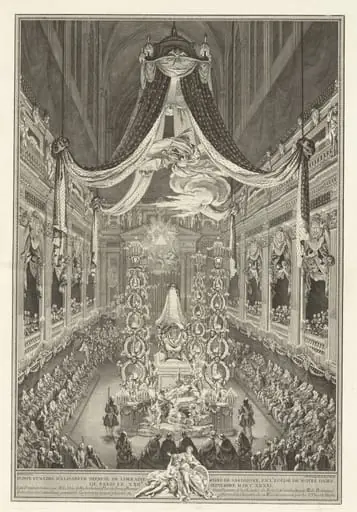 Pompe funèbre d'Élisabeth Therèse de Lorraine
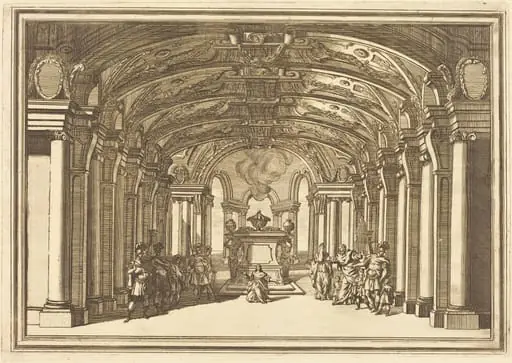 Il Greco in Troia: Plate 8
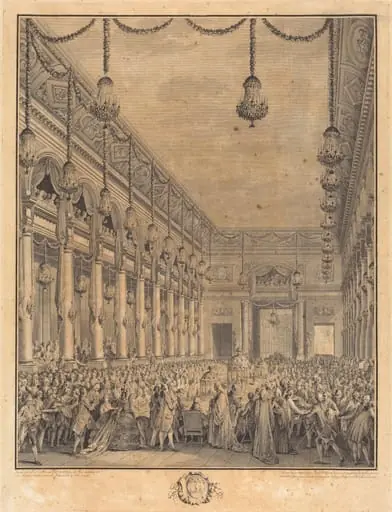 Le festin royal
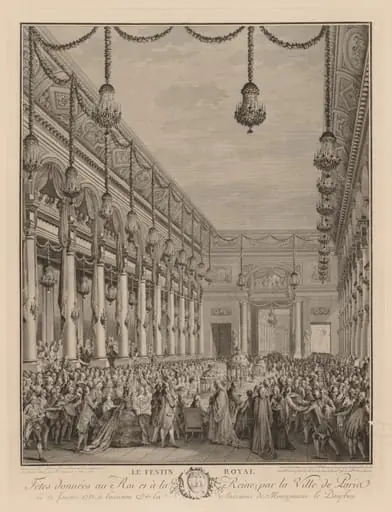 Royal Feast at the Hôtel de Ville, January 21, 1782