Artwork
Il Greco in Troia: Plate 8
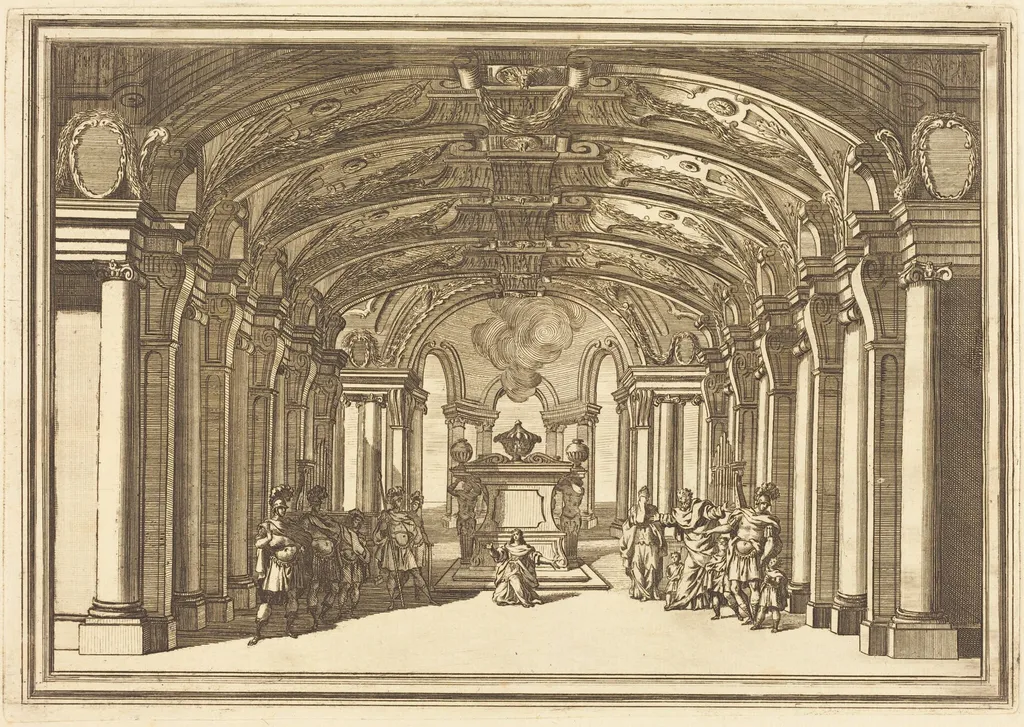
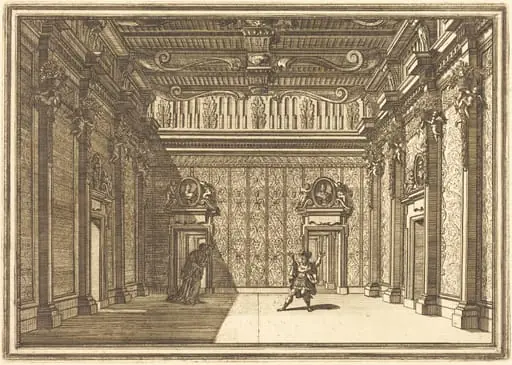
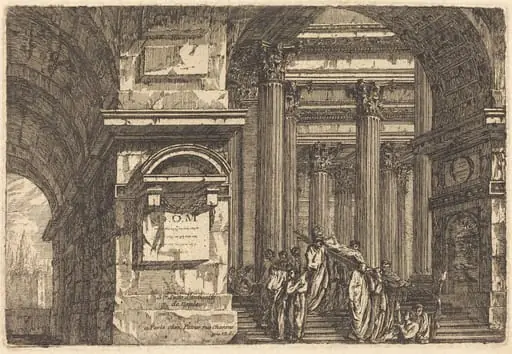
Il Greco in Troia: Plate 8 is an ink print by the Baroque artist Arnold von Westerhout. It dates from 1688 and is held in the collection of the National Gallery of Art.
About this work
Overview
Il Greco in Troia: Plate 8 is an etching and engraving by Arnold von Westerhout, produced in 1688 as a restrike from an original plate.
Il Greco in Troia: Plate 8 is an etching and engraving by Arnold von Westerhout, produced in 1688 as a restrike from an original plate. Rendered on laid paper, it belongs to a series illustrating scenes from the Trojan War, reflecting the late 17th-century European fascination with classical narratives. The print’s technical precision and compositional complexity align it with the graphic traditions of Baroque printmaking.
Subject & Meaning
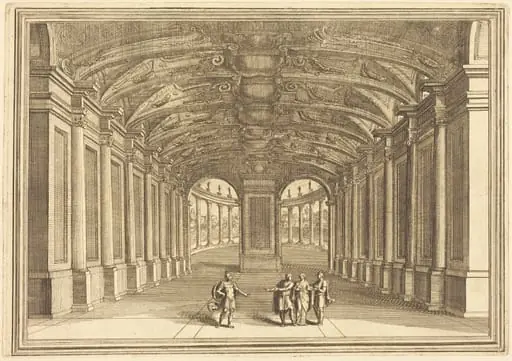
The scene depicts a moment from the Trojan War, likely a council or ritual within a monumental interior. Figures dressed in classical attire gather around a sculpted stone altar or monument, suggesting a moment of decision or homage. The arrangement of participants—some seated, others standing—implies hierarchy and ritual formality, reinforcing the gravity of the event through spatial composition rather than overt action.
Technique & Style
Westerhout employed fine lines of etching and engraving to define architectural details and figure contours. The use of tonal gradation creates spatial depth, with sharply rendered foreground figures contrasting against softer, attenuated forms in the background. The ceiling’s ornamental patterns and towering columns are rendered with meticulous line work, emphasizing the grandeur of the setting through controlled draftsmanship rather than dramatic lighting.
History & Provenance
The original plate was cut in 1688, and this impression is a later restrike, indicating continued demand for the series in the decades following its initial publication. Such restrikes were common among printmakers seeking to extend the commercial life of successful designs. The work likely circulated among collectors and scholars interested in classical antiquity and its visual reinterpretation.
Context
Created during the height of the Baroque era, the print reflects a broader cultural interest in reconstructing ancient history through idealized architecture and staged drama. Similar themes appeared in contemporary theater, literature, and decorative arts. Westerhout’s work aligns with the scholarly revival of classical motifs, particularly in Northern European print culture, where mythological subjects served both aesthetic and intellectual purposes.
Legacy
Though not widely known today, Westerhout’s plates contributed to the dissemination of classical narratives through accessible graphic media. His approach influenced later illustrators of mythological texts and helped sustain the visual language of antiquity in print form. The series remains a documented example of how Baroque artists translated epic literature into structured, architectural compositions for private and academic audiences.
Artist & collection


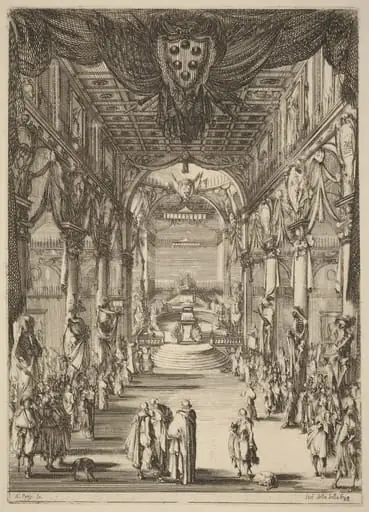 Funeral of Prince Francesco de Medici
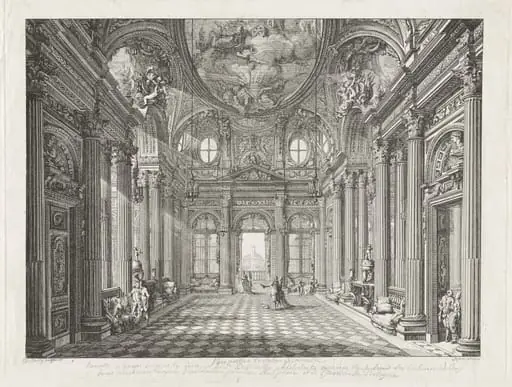 Perspectival View of the Salon of the Palazzo Spinola, Genoa
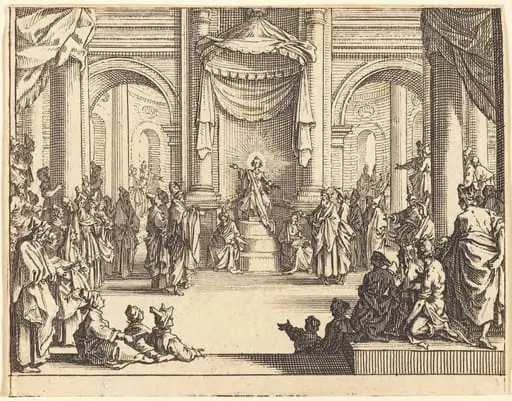 Christ Disputing with the Doctors
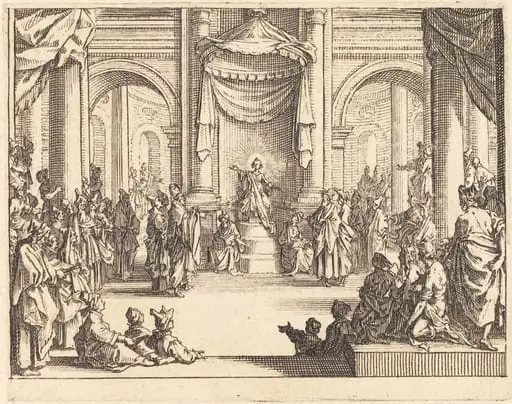 Christ Disputing with the Doctors
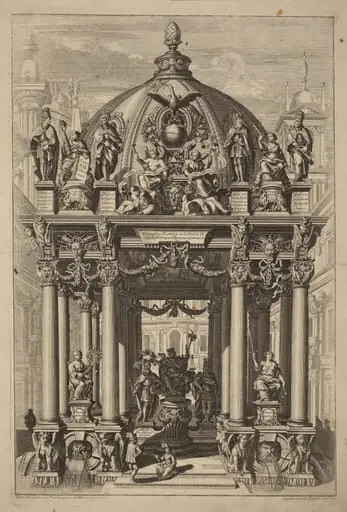 Triumphal Arch for Lotharius II
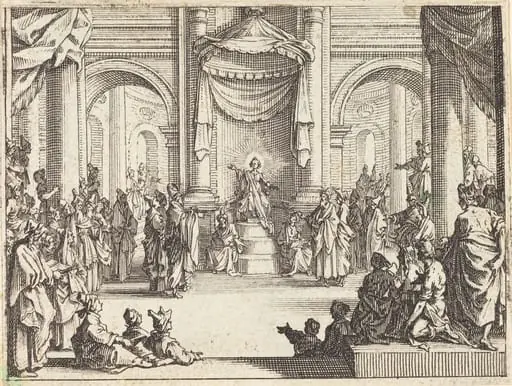 Christ Disputing with the Doctors
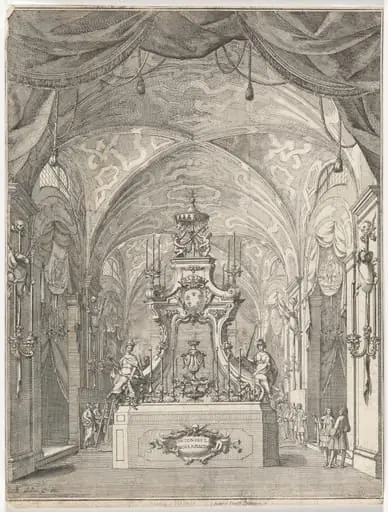 Catafalque for the Funeral of the Duke of Parma Antonio I in the Church of S. Maria Maddalena in Bologna
 Funeral Scene in Imaginary Architecture