Artwork
The Fan
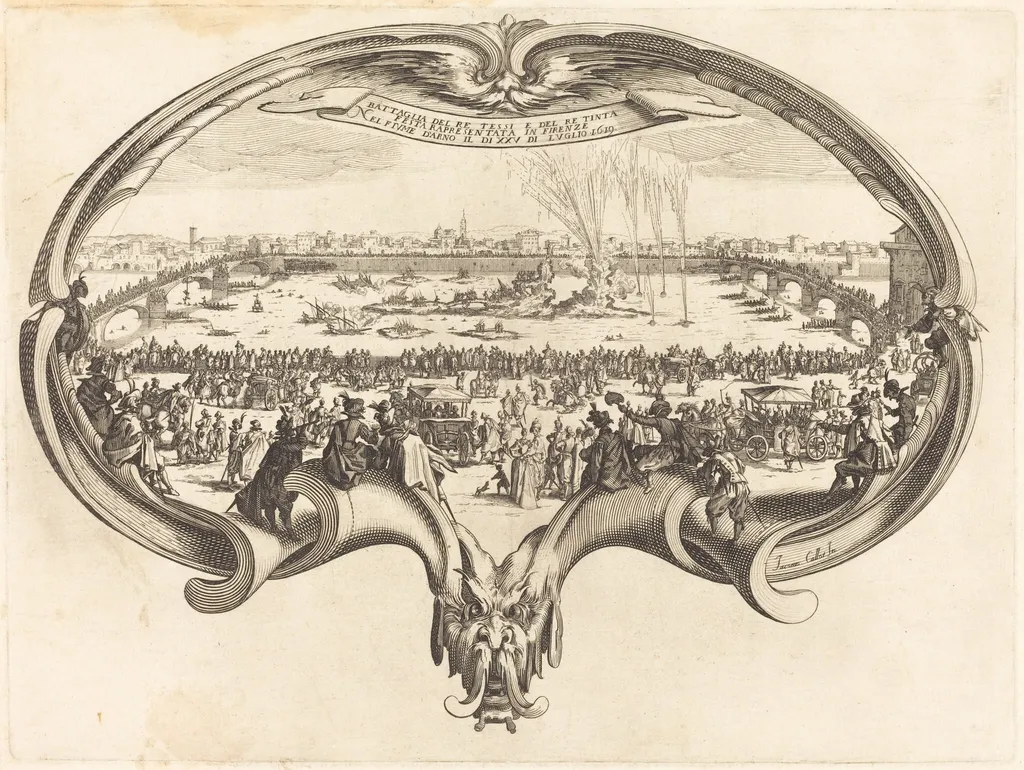
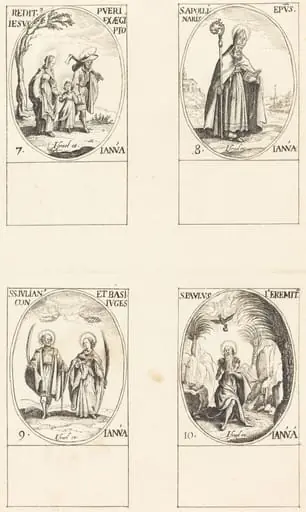
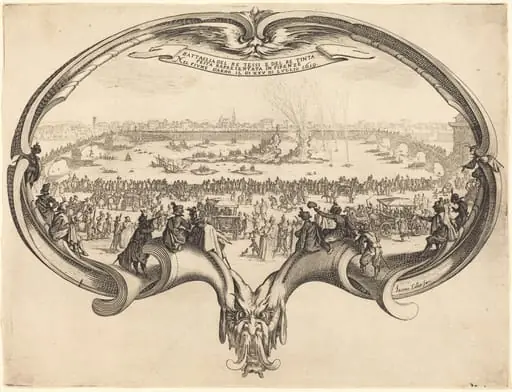
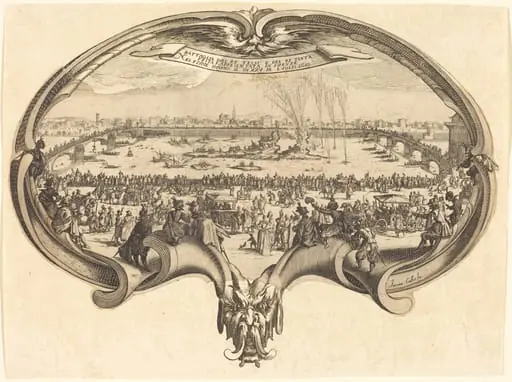
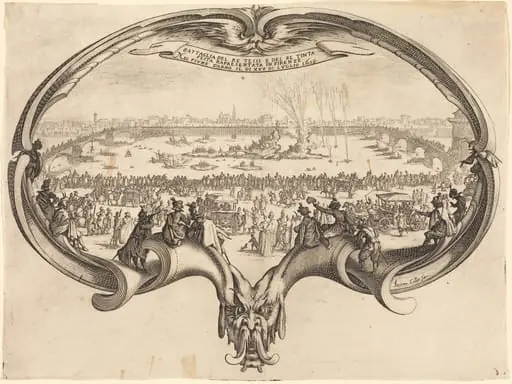
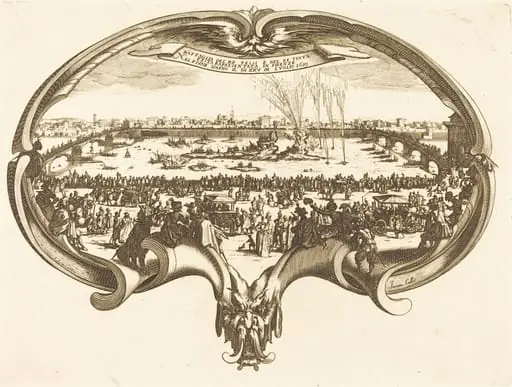
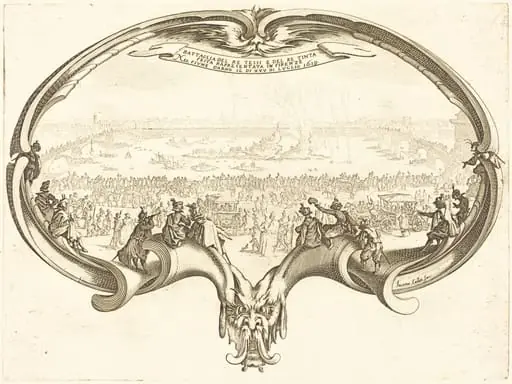
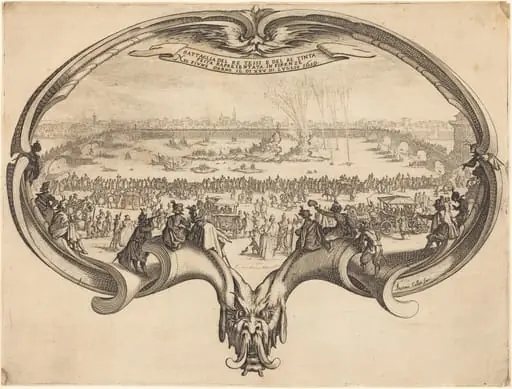
The Fan is an ink print by the Baroque artist French 17th Century. It dates from 1650 and is held in the collection of the National Gallery of Art. This 17th-century French print combines etching and engraving on laid paper to depict a bustling riverside scene.
About this work
The level of detail in the scene, from the clothing of the people to the architecture of the bridge, suggests a high level of skill and craftsmanship.
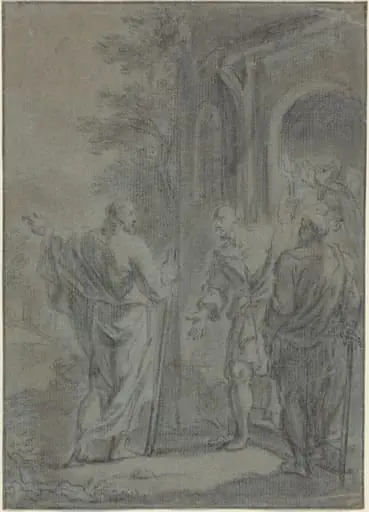
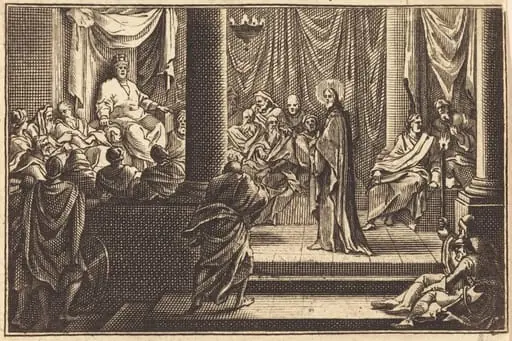
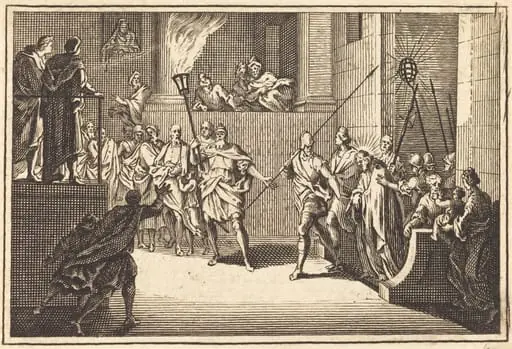
This painting, "The Fan," is an etching and engraving on laid paper, created in the 17th century by a French artist. The image depicts a lively scene of people gathered around a body of water, with boats and a bridge in the background. The scene is framed by an ornate border, featuring a dragon's head at the bottom and a banner with text at the top.
The artist's use of etching and engraving techniques creates a sense of depth and texture in the image. The level of detail in the scene, from the clothing of the people to the architecture of the bridge, suggests a high level of skill and craftsmanship.
For more information on the techniques used in this painting, you can explore the world of etching and drypoint.
Overview
This 17th-century French print combines etching and engraving on laid paper to depict a bustling riverside scene. The composition centers on figures gathered near water, with boats and a distant bridge framing the activity. An elaborate border encloses the image, adorned with a dragon’s head at the base and a textual banner above, suggesting a decorative or ceremonial function beyond mere illustration.
Subject & Meaning
The scene captures everyday life along a waterway, possibly a public promenade or market area. The presence of a bridge and multiple vessels implies a hub of commerce or social exchange. The ornate border, including symbolic elements like the dragon, may reference cultural motifs of protection or authority, though the precise narrative remains unstated, leaving interpretation open to the viewer’s context.
Technique & Style
Fine lines from etching and engraving define textures in clothing, water ripples, and architectural details, demonstrating precise handwork. The layered use of line weight creates spatial depth, while the laid paper’s subtle texture enhances the tonal richness. The border’s intricate design contrasts with the naturalistic scene, blending decorative tradition with observational realism.
History & Provenance
The work originates from a French artistic milieu where printmaking flourished as both art and reproduction. Its survival suggests it was valued by collectors or used in domestic settings. No documented ownership chain is known, but similar prints from the period were often circulated among educated elites interested in landscape and genre scenes.
Context
In 17th-century France, printmaking was increasingly used to disseminate images of urban and rural life beyond painting’s reach. Artists employed etching and engraving to capture detail and movement, catering to a growing market for affordable, collectible imagery. This piece reflects broader trends in visual culture, where leisure and landscape became subjects of artistic interest.
Legacy
Though not attributed to a major named artist, the work exemplifies the technical proficiency of lesser-known printmakers of the era. Its preservation contributes to understanding how everyday scenes were rendered and consumed in early modern Europe, offering insight into the visual habits of a society increasingly engaged with printed imagery.
Artist & collection

Artist
Seventeenth-century French printmakers turned ink into story. Their tools were burin and acid, paper their stage. Look at the Beggar Woman with Rosary (1622), etched on laid paper, her hands folded around faith, or The…