Artwork
The Fan
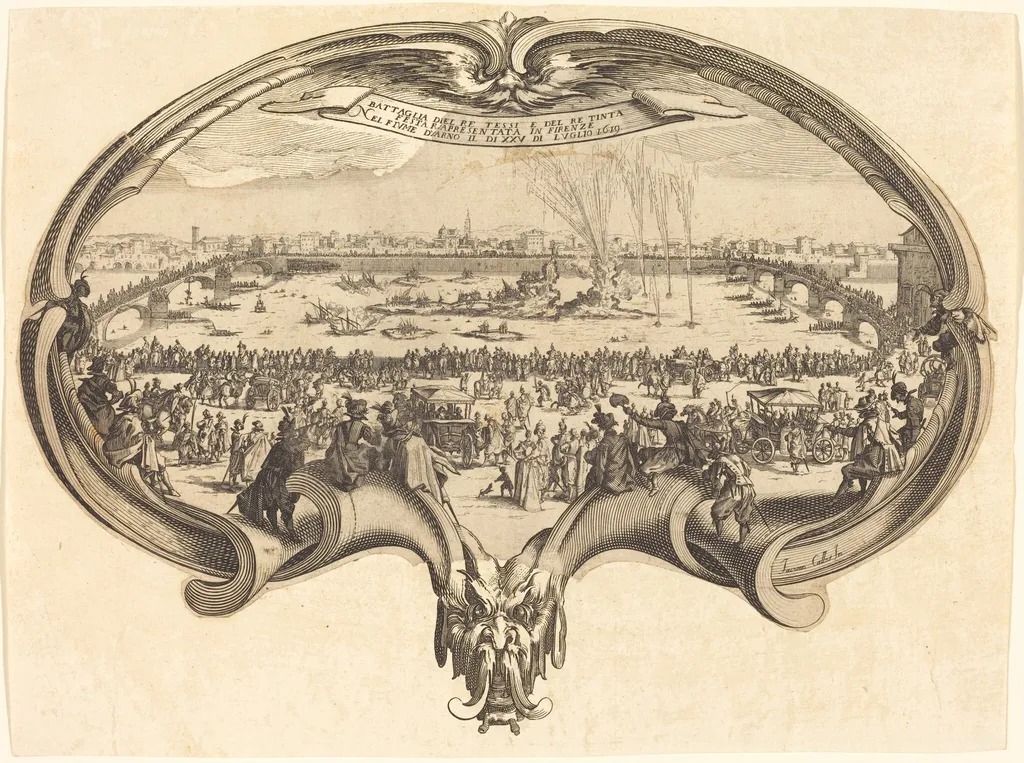
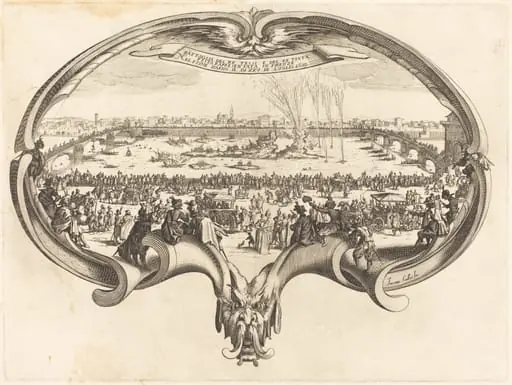
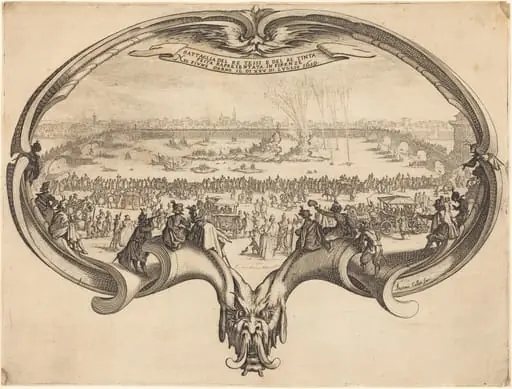
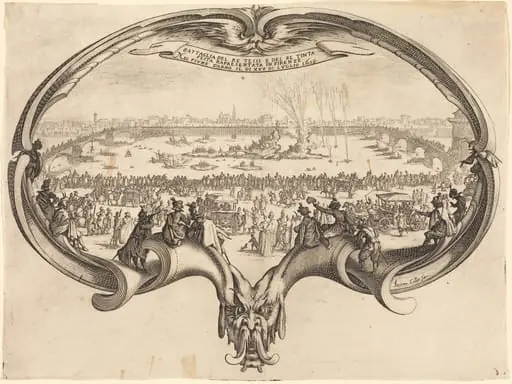
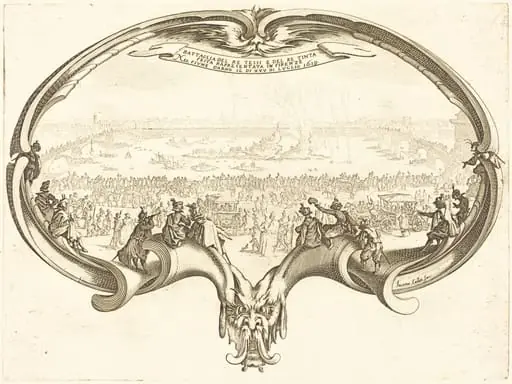
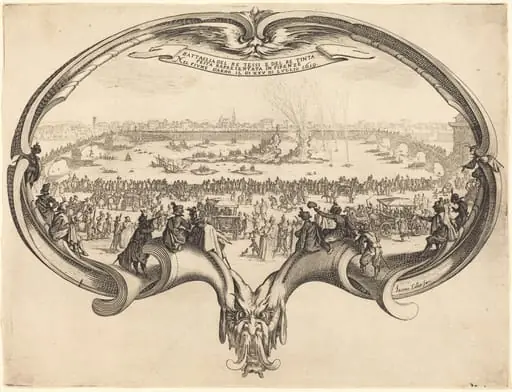
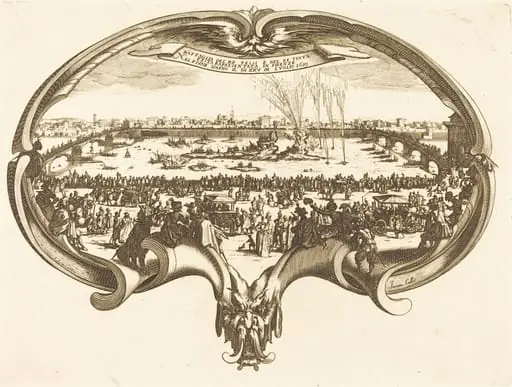
The Fan is an ink print by the Baroque artist French 17th Century. It dates from 1650 and is held in the collection of the National Gallery of Art. This print depicts a chaotic battle scene arranged in the shape of a decorative fan, created by joining two sheets of laid paper.
About this work
Overview
This print depicts a chaotic battle scene arranged in the shape of a decorative fan, created by joining two sheets of laid paper.
This print depicts a chaotic battle scene arranged in the shape of a decorative fan, created by joining two sheets of laid paper. The composition frames violent conflict on a river bridge and in boats, with onlookers lining the banks and a group of elegantly dressed figures near a carriage at the lower edge. An inscription at the top identifies the event as a battle, but the unusual format and theatrical staging suggest a blend of historical record and artistic presentation.
Subject & Meaning
The scene captures a military engagement amid civilian observers, emphasizing the spectacle of war rather than its strategic details. The presence of well-dressed spectators, some gesturing toward the fray, implies a public fascination with conflict, possibly reflecting contemporary attitudes toward warfare as both event and entertainment. The fan shape may reference decorative arts, subtly contrasting the violence within with the elegance of its form.
Technique & Style
Executed in etching and engraving, the image achieves fine detail through incised lines on metal plates, transferred to paper via printing. The use of two pasted sheets allowed the artist to extend the composition into an unconventional fan shape, a technical adaptation to accommodate the desired format. The dense arrangement of figures and dynamic lines conveys motion and tension, typical of Northern European printmaking traditions of the period.
History & Provenance
The work originates from a period when printed battle scenes circulated widely as both news and ornament. Its construction from two joined sheets suggests it was produced for a specific patron or purpose requiring an atypical format, possibly for display in domestic settings. No definitive record of its early ownership exists, but similar prints were commonly collected by middle-class audiences interested in current events and visual spectacle.
Context
During the 17th century, printed battle scenes were popular in Europe, often commissioned to commemorate conflicts or sold as broadsheets. The fan format, though rare, aligns with a broader trend of adapting print media to decorative forms, blurring lines between art, news, and interior design. This piece reflects a culture where war imagery was consumed not only for information but as a visual experience shaped by aesthetic conventions.
Legacy
Though not widely reproduced or studied, this print exemplifies how printmakers manipulated format and composition to enhance narrative impact. Its hybrid structure—combining documentary subject matter with decorative framing—offers insight into the flexibility of print as a medium. Later artists and collectors would continue to explore similar intersections of form and content, though few retained this specific fusion of battle scene and fan shape.
Artist & collection

Artist
Seventeenth-century French printmakers turned ink into story. Their tools were burin and acid, paper their stage. Look at the Beggar Woman with Rosary (1622), etched on laid paper, her hands folded around faith, or The…