Artwork
The Float of the Sun
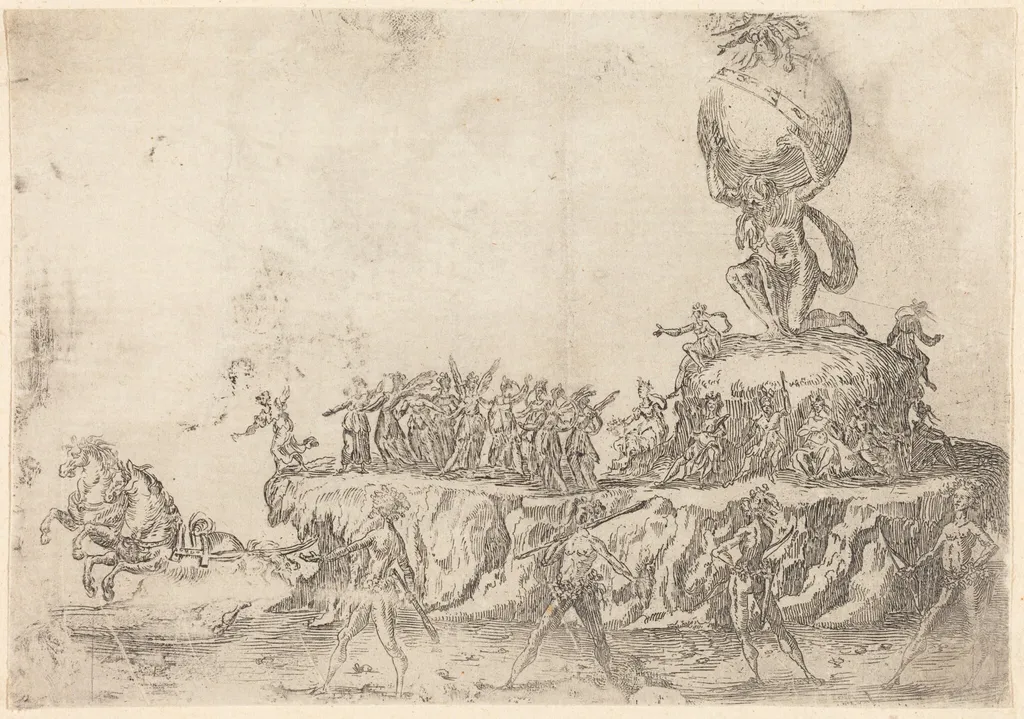
The Float of the Sun is an ink print by the Baroque artist French 17th Century. It dates from 1616 and is held in the collection of the National Gallery of Art.
About this work
Overview
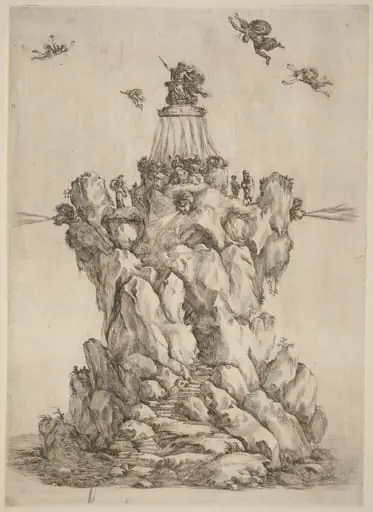
Below, horses and riders are depicted wading through water, while additional figures are shown climbing or hovering near the globe.
The work titled *The Float of the Sun* is an etching executed on laid paper. It presents a densely populated composition in which numerous diminutive figures occupy a chaotic space. Central to the image is a platform bearing a group of people who support a large, anthropomorphic globe. Below, horses and riders are depicted wading through water, while additional figures are shown climbing or hovering near the globe.
Subject & Meaning
The central globe, rendered with a surprised facial expression, appears to be thrust upward from the water, suggesting a symbolic emergence or upheaval. The surrounding crowd, the horses, and the varied postures convey a sense of collective effort or struggle, a motif frequently employed in Baroque visual language to encode moral or allegorical narratives about humanity’s relationship to the world.
Technique & Style
Created through the etching process, the image relies on incised lines that are both scratchy and densely layered, producing a sense of movement and turbulence. The use of laid paper contributes a textured background that interacts with the intricate line work, characteristic of Baroque prints that favor complex, crowded scenes and a high degree of visual information.
Context
The composition reflects the Baroque period’s penchant for richly populated, allegorical scenes that combine mythic or cosmic elements with everyday activity. By integrating a personified globe and a bustling crowd, the print aligns with contemporary artistic practices that sought to embed multiple layers of meaning within a single, visually dynamic tableau.
Artist & collection

Artist
Seventeenth-century French printmakers turned ink into story. Their tools were burin and acid, paper their stage. Look at the Beggar Woman with Rosary (1622), etched on laid paper, her hands folded around faith, or The…