Artwork
The Way of Salvation
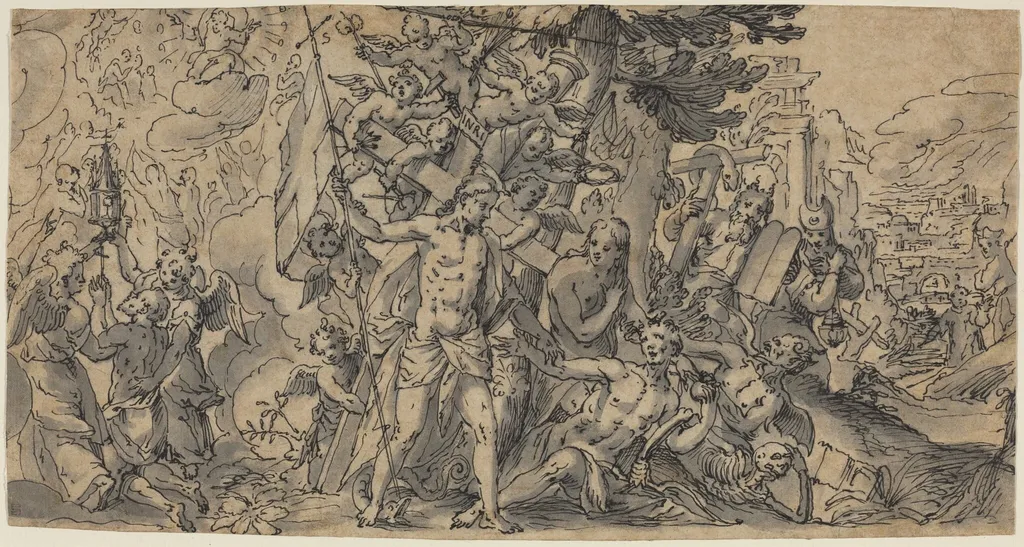
The Way of Salvation is an ink drawing by the Renaissance artist Georg Pecham. It dates from 1595 and is held in the collection of the National Gallery of Art.
About this work
If you're interested in learning more about this style, you might want to explore the Renaissance movement.
This image is an allegory titled "The Way of Salvation," created by Georg Pecham around 1595. It's a pen and black ink drawing with gray wash on light brown laid paper. The scene is crowded with many figures, some of whom are cherubs. A central figure holds a flag, while others are engaged in various activities.
In the background, there's a cityscape, and the overall mood seems to be one of chaos and turmoil. The drawing style is characteristic of the Renaissance period, with intricate details and textures.
If you're interested in learning more about this style, you might want to explore the Renaissance movement.
Overview
Georg Pecham’s drawing The Way of Salvation, executed around 1595, presents a densely populated allegorical scene on light‑brown laid paper. Rendered in pen and black ink with a subtle gray wash, the composition unfolds with numerous figures, including several cherubic beings, arranged around a central character who bears a flag. The background hints at an urban landscape, contributing to a sense of disorder and movement.
Subject & Meaning
The work functions as a visual meditation on salvation, employing a multitude of human and angelic figures to symbolize the chaotic journey toward spiritual deliverance. The flag‑bearing central figure may represent guidance or triumph, while the surrounding activity suggests the trials and distractions encountered on the path to redemption. The inclusion of cherubs underscores the interplay between divine assistance and earthly turmoil.
Technique & Style
Pecham combines precise pen work with a delicate gray wash, allowing for fine line detail and tonal variation on the textured surface of laid paper. The drawing’s intricate hatching and cross‑hatching reflect Renaissance sensibilities, emphasizing anatomical accuracy and spatial depth. The muted palette and careful modulation of ink create atmospheric layers that enhance the crowded composition without overwhelming the viewer.
History & Provenance
Created circa 1595, The Way of Salvation originates from the late Renaissance period in Central Europe, a time when allegorical drawings were employed for both devotional and instructional purposes. While specific ownership records are scarce, the piece has been documented in scholarly catalogues of Pecham’s oeuvre and remains a representative example of his graphic output during the turn of the seventeenth century.
Artist & collection

 The Baptism of Christ
 The Resurrection
 David Slaying Goliath
 Minerva, Mars and Venus after Jacopo Tintoretto’s painting in the Sala dell’Anticollegio, Doge’s Palace, Venice
 The Coronation of the Virgin with Angel Musicians and All Saints
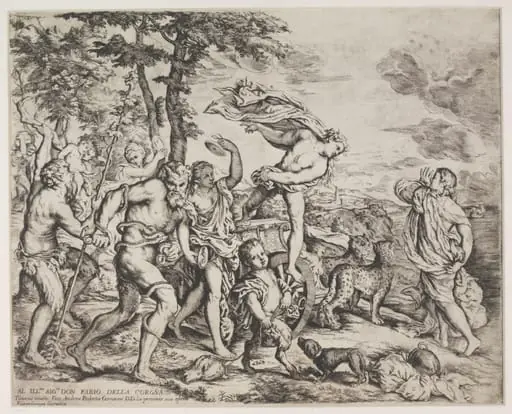 Bacchus and Ariadne
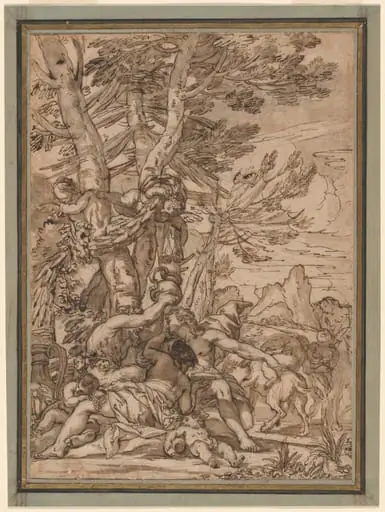 A Bacchanal
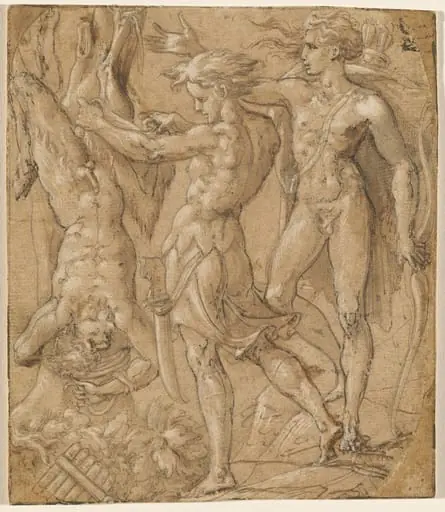 The Flaying of Marsyas
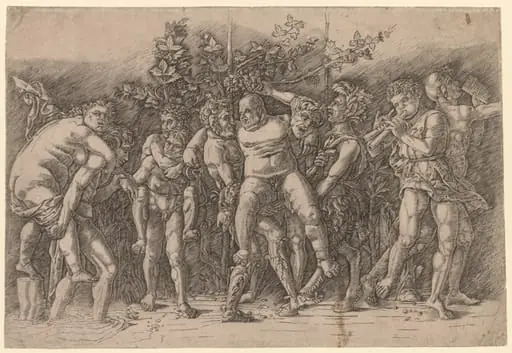 Bacchanal with Silenus
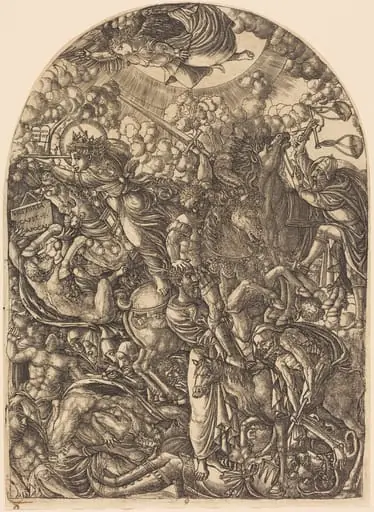 Saint John Sees the Four Horsemen
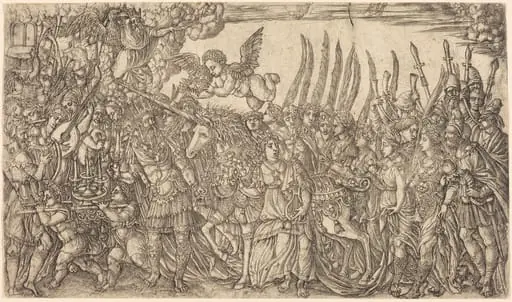 The Triumph of the Unicorn
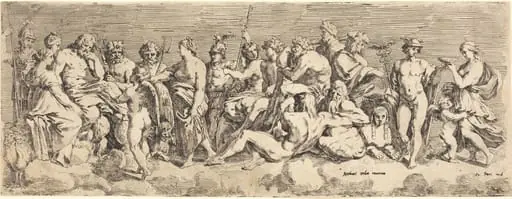 The Admission of Psyche to Olympia