Artwork
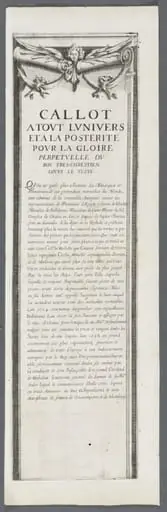
The Siege of La Rochelle [plate 13 of 16; set comprises 1952.8.97-112]
![The Siege of La Rochelle [plate 13 of 16; set comprises 1952.8.97-112], by French 17th Century, ink, 1630](https://artifactworldgallery.com/img/french-17th-century--the-siege-of-la-rochelle-plate-13-of-16-set-comprises-1952-8--832fb6aa37df6e9d-w1024.webp)
The Siege of La Rochelle [plate 13 of 16; set comprises 1952.8.97-112] is an ink print by the Baroque artist French 17th Century. It dates from 1630 and is held in the collection of the National Gallery of Art. This print is the thirteenth of sixteen plates in a series documenting the 1628 siege of La Rochelle.
About this work
La Rochelle sits under attack in this etching from 1628. Thick walls face cannons along the harbor. Ships crowd the bay, their rigging tangled.
This print shows war from a distance. We see the city holding firm, not the bloody close-ups. The artist used sharp lines to carve every fold in a soldier’s coat.
Look up etching, drypoint, and aquatint next.
Overview
This print is the thirteenth of sixteen plates in a series documenting the 1628 siege of La Rochelle. Executed in etching and engraving on laid paper, it captures the city under bombardment from a broad, elevated perspective. Rather than focusing on violence, the composition emphasizes the scale of military engineering and the resilience of the fortified urban landscape.
Subject & Meaning
The image portrays La Rochelle surrounded by French royal forces, with cannons positioned along the shoreline and a dense fleet anchored in the bay. The city’s walls remain intact, suggesting endurance rather than collapse. The absence of hand-to-hand combat or casualties frames the siege as a strategic standoff, highlighting the tension between siege and defense without glorifying bloodshed.
Technique & Style
Sharp, precise lines define the textures of armor, sails, and masonry, achieved through fine etching and engraving. The artist avoided aquatint or drypoint, relying instead on controlled incisions to render detail in clothing and rigging. The composition’s distance and clarity reflect a documentary intent, prioritizing architectural accuracy over emotional intensity.
History & Provenance
Created in 1628 during the siege, the plate was part of a commissioned series intended to record the campaign of Louis XIII’s forces against the Huguenot stronghold. The print entered the collection in 1952 as part of a bound set, its provenance tracing back to early 17th-century French military documentation practices.
Context
La Rochelle’s resistance was a pivotal moment in France’s religious wars, with the city’s fall marking a turning point in royal authority over Protestant enclaves. This print, produced contemporaneously, served both as propaganda and record, aligning with the crown’s effort to legitimize its military actions through visual chronicle.
Legacy
The series remains a rare visual archive of early modern siege warfare, valued for its topographical fidelity and restrained aesthetic. Unlike later romanticized battle scenes, these plates offer a sober, observational record, influencing how military campaigns were documented in print culture throughout the 17th century.
Artist & collection

Artist
Seventeenth-century French printmakers turned ink into story. Their tools were burin and acid, paper their stage. Look at the Beggar Woman with Rosary (1622), etched on laid paper, her hands folded around faith, or The…

![The Siege of La Rochelle [plate 8 of 16; set comprises 1952.8.97-112], by French 17th Century](https://artifactworldgallery.com/img/french-17th-century--the-siege-of-la-rochelle-plate-8-of-16-set-comprises-1952-8--8322a1faad6a889e-w320.webp) The Siege of La Rochelle [plate 8 of 16; set comprises 1952.8.97-112]
The Siege of La Rochelle [plate 8 of 16; set comprises 1952.8.97-112]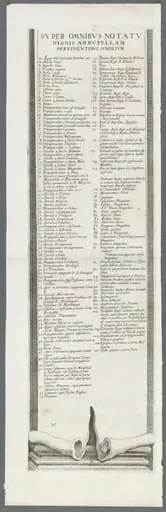 The Siege of La Rochelle: Plate 13
![The Siege of La Rochelle [plate 9 of 16; set comprises 1952.8.97-112], by French 17th Century](https://artifactworldgallery.com/img/french-17th-century--the-siege-of-la-rochelle-plate-9-of-16-set-comprises-1952-8--a3dc1104500fd252-w320.webp) The Siege of La Rochelle [plate 9 of 16; set comprises 1952.8.97-112]
The Siege of La Rochelle [plate 9 of 16; set comprises 1952.8.97-112]![The Siege of La Rochelle [plate 4 of 16; set comprises 1952.8.97-112], by French 17th Century](https://artifactworldgallery.com/img/french-17th-century--the-siege-of-la-rochelle-plate-4-of-16-set-comprises-1952-8--01ce9b7052de949f-w320.webp) The Siege of La Rochelle [plate 4 of 16; set comprises 1952.8.97-112]
The Siege of La Rochelle [plate 4 of 16; set comprises 1952.8.97-112]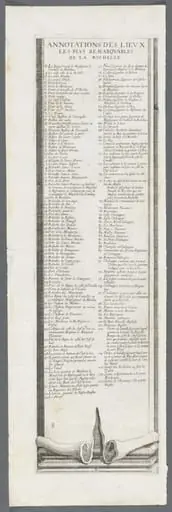 The Siege of La Rochelle: Plate 9
 The Siege of La Rochelle: Plate 4