Artwork
The Siege of La Rochelle [plate 8 of 16; set comprises 1952.8.97-112]
![The Siege of La Rochelle [plate 8 of 16; set comprises 1952.8.97-112], by French 17th Century, ink, 1630](https://artifactworldgallery.com/img/french-17th-century--the-siege-of-la-rochelle-plate-8-of-16-set-comprises-1952-8--8322a1faad6a889e-w1024.webp)
The Siege of La Rochelle [plate 8 of 16; set comprises 1952.8.97-112] is an ink print by the Baroque artist French 17th Century. It dates from 1630 and is held in the collection of the National Gallery of Art.
About this work
Overview
The composition features a dense arrangement of figures and structures rendered in fine linear detail, typical of the technique’s capacity for precision.
This print is the eighth plate in a sixteen-part series documenting the Siege of La Rochelle, produced through etching and engraving on laid paper. The composition features a dense arrangement of figures and structures rendered in fine linear detail, typical of the technique’s capacity for precision. A Latin inscription appears prominently at the top, accompanied by dense explanatory text below, suggesting an intent to inform as much as to depict.
Subject & Meaning
The scene captures a moment from the 1627–1628 siege, when French royal forces blockaded the Huguenot-held city. The crowded, chaotic imagery conveys military tension and urban entrapment, though individual actions are minimized by scale. The accompanying Latin text likely enumerates key events or positions, reinforcing the image’s role as a historical record rather than a dramatic narrative.
Technique & Style
The artist employed etching and engraving to achieve intricate detail across a compact format. Fine lines define architecture, troop formations, and fortifications, while subtle shading suggests depth and texture. The small scale and high density of elements reflect the conventions of topographical printmaking, prioritizing clarity and documentation over emotional impact.
History & Provenance
The plate belongs to a set of sixteen prints commissioned to chronicle the siege, likely produced shortly after its conclusion in 1628. The series was intended for circulation among political and military elites. This specific impression, cataloged as 1952.8.104, entered a public collection in the 20th century, preserving its original condition and contextual integrity.
Context
Produced during the height of Bourbon centralization under Louis XIII, the series served as state-sanctioned propaganda, legitimizing royal authority over Protestant resistance. Similar print series were common in early modern Europe, blending cartographic accuracy with political messaging. The inclusion of Latin text ensured accessibility to educated audiences across national borders.
Legacy
The series remains a valuable resource for understanding 17th-century military documentation and print culture. While not widely exhibited today, its technical precision and historical specificity offer insight into how early modern states visualized power and conflict. The print’s survival in institutional collections underscores its enduring role as archival material.
Artist & collection

Artist
Seventeenth-century French printmakers turned ink into story. Their tools were burin and acid, paper their stage. Look at the Beggar Woman with Rosary (1622), etched on laid paper, her hands folded around faith, or The…

![Lettering [bottom half], by Simon van de Passe](https://artifactworldgallery.com/img/simon-van-de-passe--lettering-bottom-half--9f50722d991807f6-w320.webp) Lettering [bottom half]
Lettering [bottom half] Print Collection
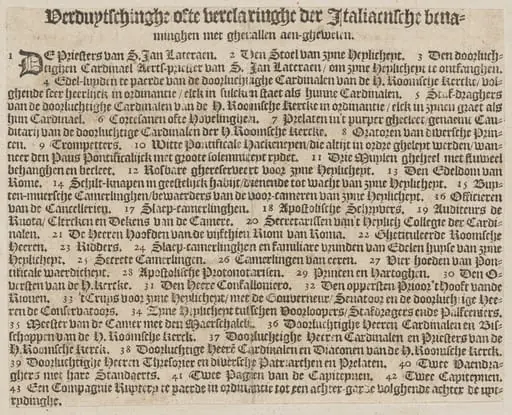 Dutch captions to 'La Calvacatura con le sue Cerimonie'
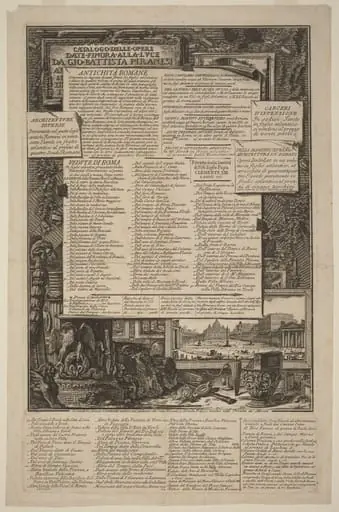 Catalogo delle Opere Date Finora Alla Lvce Da Gio Battista Piranesi
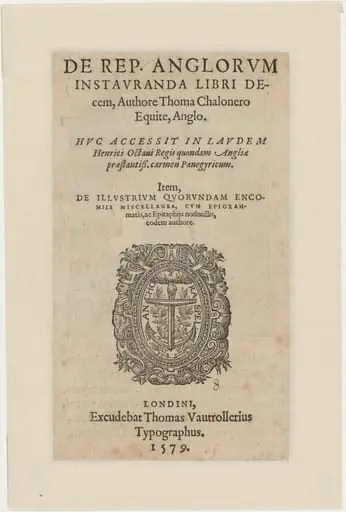 Title Page to De Republicae Anglorum by Thomas Chaloner
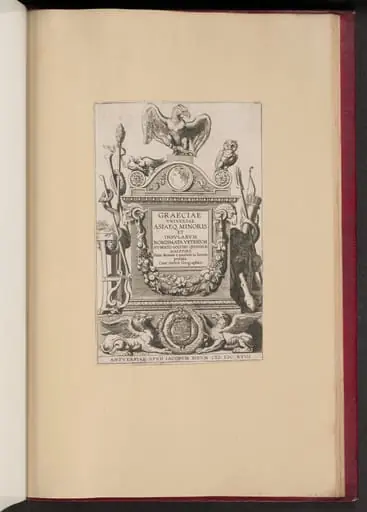 Title Page for Hubert Goltzius, Graeciae Vniversae Asiaeq. Minoris et Insularum Nomismata
![The Siege of La Rochelle [plate 4 of 16; set comprises 1952.8.97-112], by French 17th Century](https://artifactworldgallery.com/img/french-17th-century--the-siege-of-la-rochelle-plate-4-of-16-set-comprises-1952-8--01ce9b7052de949f-w320.webp) The Siege of La Rochelle [plate 4 of 16; set comprises 1952.8.97-112]
The Siege of La Rochelle [plate 4 of 16; set comprises 1952.8.97-112]