Artwork
Camel Caravan
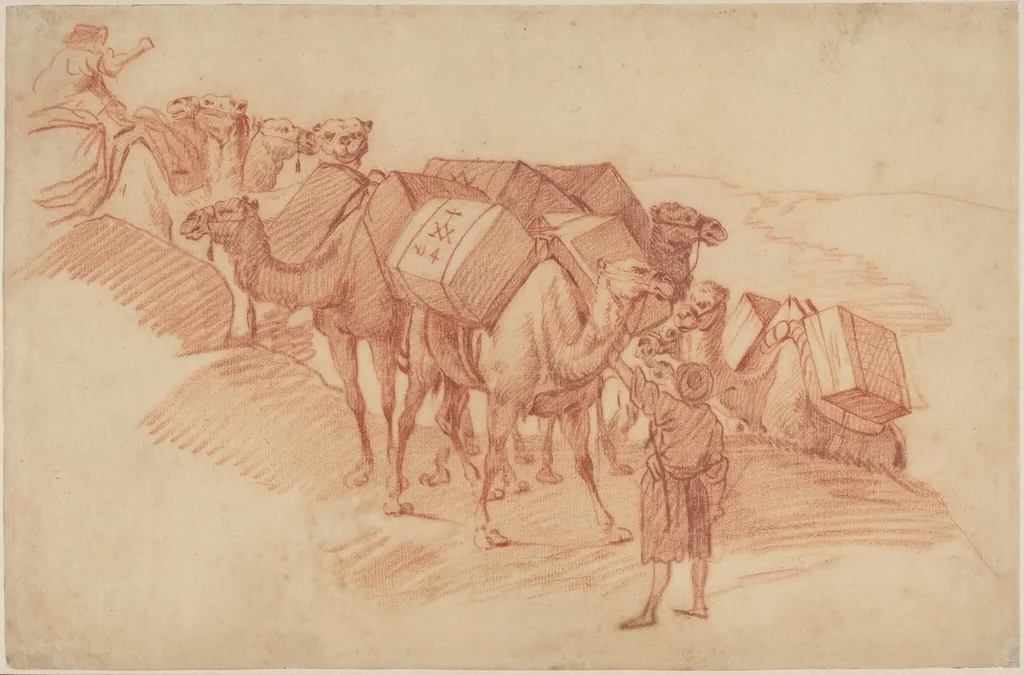
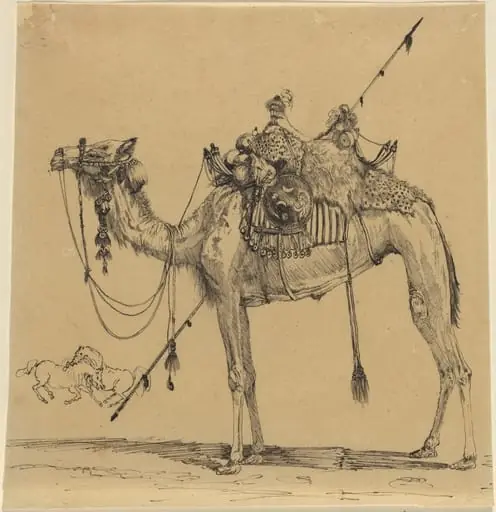
Camel Caravan is a chalk drawing by the Baroque artist French 18th Century. It dates from 1750 and is held in the collection of the National Gallery of Art.
About this work
Overview
Camel Caravan is a red‑chalk drawing on laid paper that records a procession of camels burdened with large, symbol‑marked sacks. Human figures accompany the animals, some carrying bags or guiding a small dog, while a loosely rendered hilly landscape forms the background.
Subject & Meaning
The composition captures a moment of desert trade or travel, emphasizing the weight of goods and the collaborative effort of humans and beasts. The presence of marked sacks hints at the identification of cargo, suggesting a narrative of commerce across arid terrain.
Technique & Style
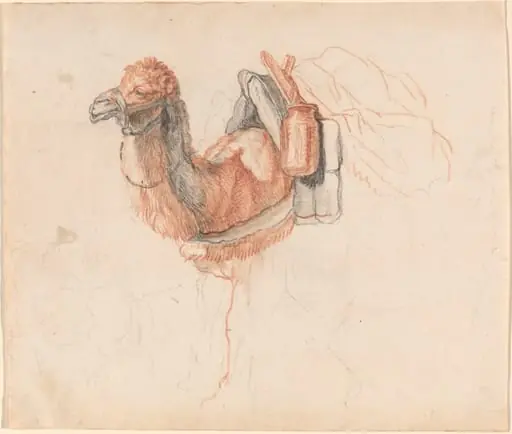
Executed entirely in red chalk, the artist allows the texture of the laid paper to show through, creating a tactile surface. Sketchy, fluid lines convey motion and immediacy, functioning as a rapid study rather than a finished, detailed rendering.
Context
The drawing belongs to a tradition of preparatory sketches that artists produced to plan larger works or document observed scenes. Its informal, energetic handling aligns with Baroque interests in dynamic movement and the vivid portrayal of everyday activity.
Artist & collection

Artist
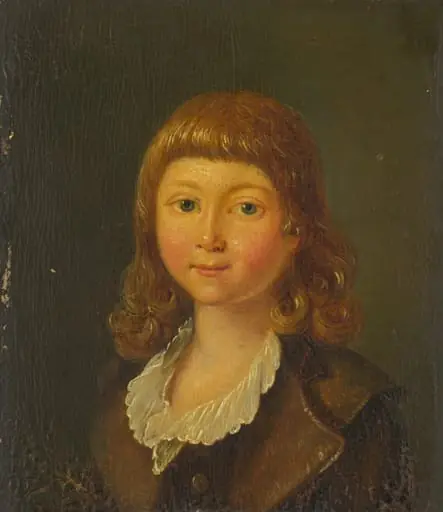
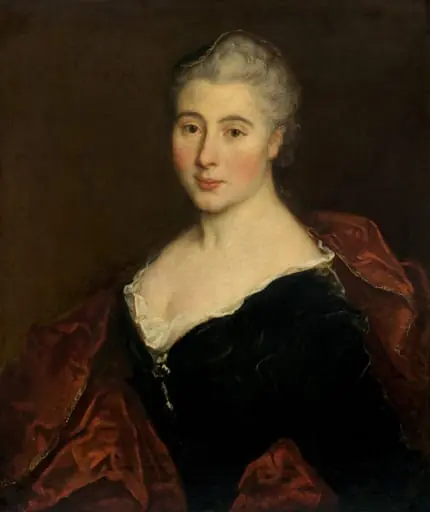
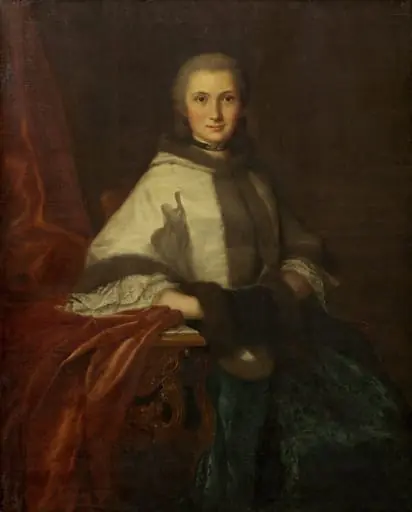
This artist worked in late 18th-century France, making portrait paintings and etched prints.