Artwork
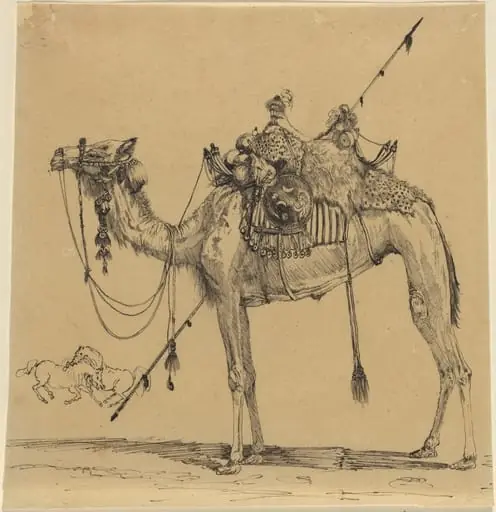
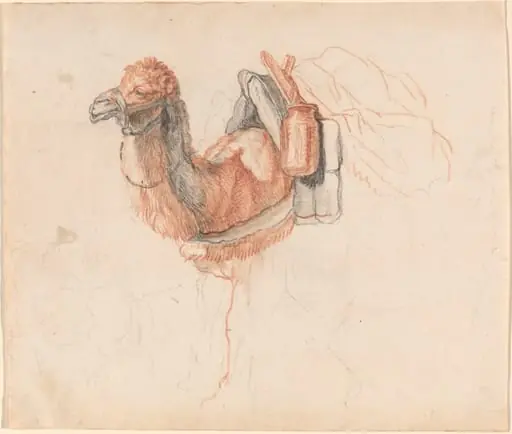
A Camel
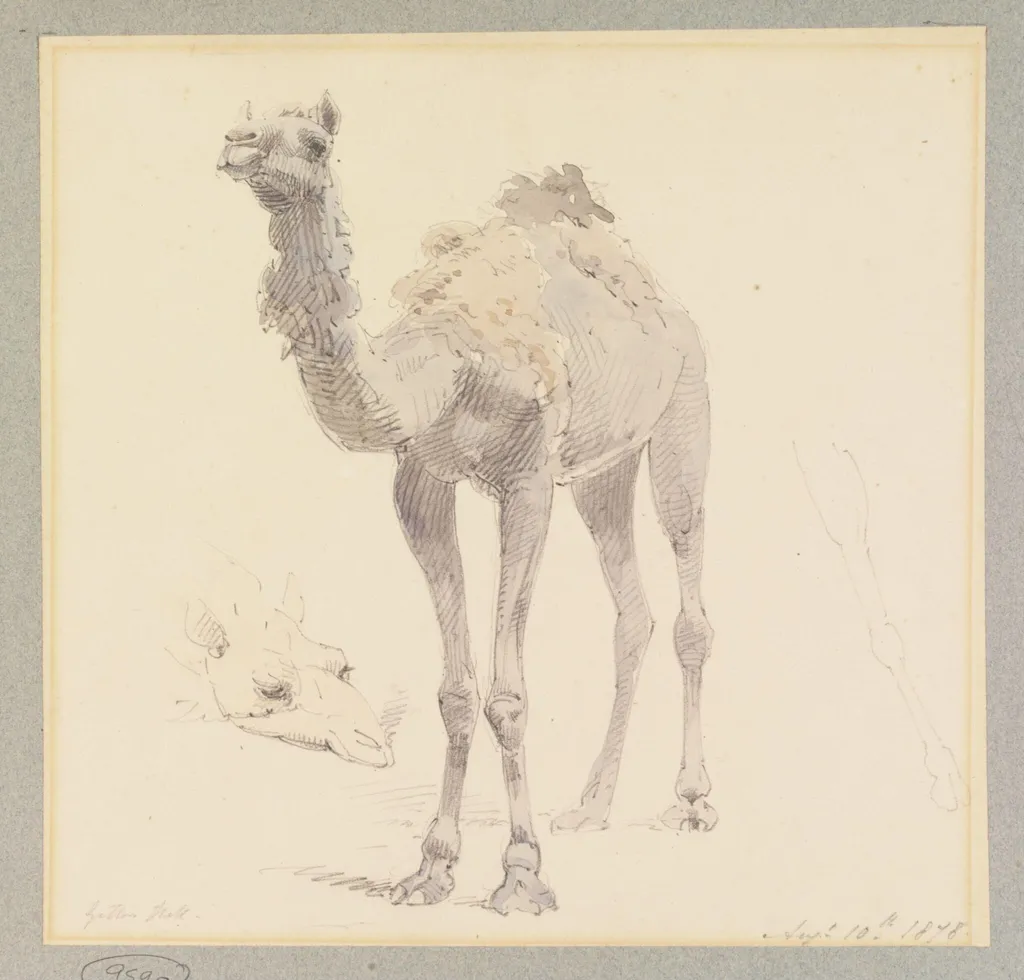
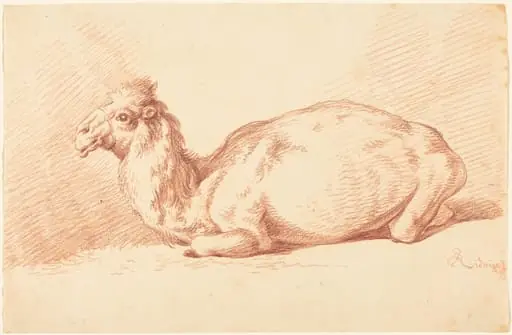
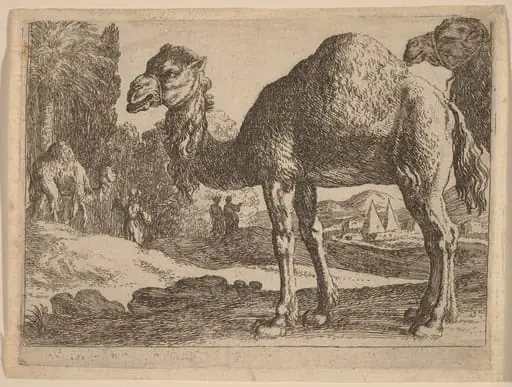
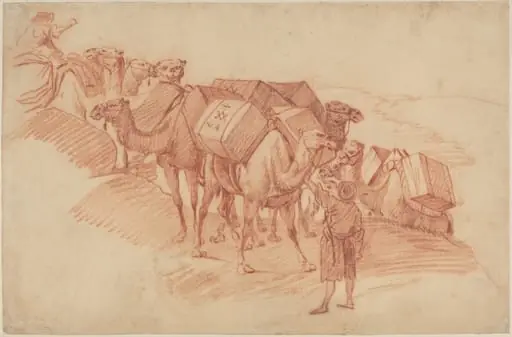
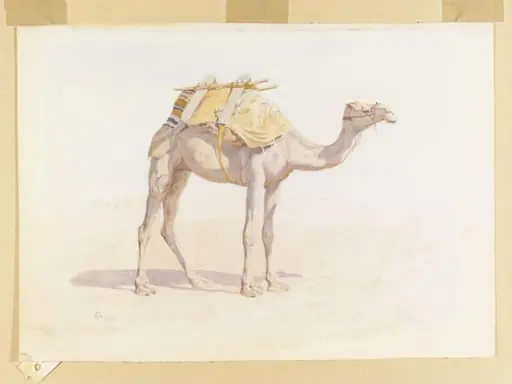
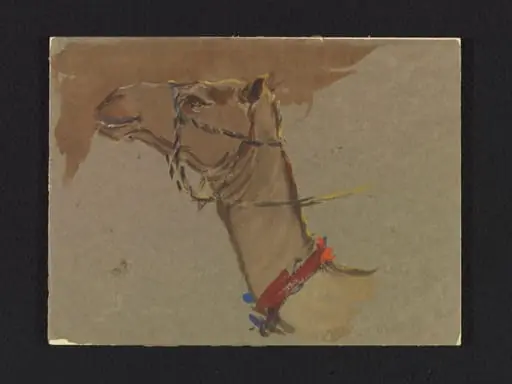
A Camel is a watercolor work on paper by the Impressionist artist William Strutt. It dates from 1878 and is held in the collection of the Victoria and Albert Museum.
About this work
Overview
The work’s loose handling and muted palette suggest it was intended as a rapid field study rather than a finished piece.
William Strutt’s 1878 watercolour presents a solitary camel rendered in a swift, observational manner. The composition occupies most of the sheet, with the animal’s elongated limbs and distinctive hump dominating the space, while a diminutive figure is barely indicated in the lower corner. The work’s loose handling and muted palette suggest it was intended as a rapid field study rather than a finished piece.
Subject & Meaning
The drawing captures a camel in profile, emphasizing its anatomical features without elaborate detail. The presence of a small, almost abstracted human figure hints at the animal’s role within a broader landscape or travel context, reflecting the artist’s interest in documenting everyday scenes encountered during his Egyptian sojourn.
Technique & Style
Strutt employs light, fluid strokes of watercolor to suggest the camel’s coat, avoiding precise rendering in favor of tonal suggestion. The lines are loose and gestural, and edges remain soft, creating a sense of immediacy. The paper’s margin is left visible, reinforcing the impression of a quick, on‑site sketch.
History & Provenance
Created while Strutt was in Egypt in 1878, the piece aligns with other works he produced that year, including two dated drawings of Nubian subjects held by the Victoria and Albert Museum. The camel study likely originated from the same period of travel, serving as part of Strutt’s visual record of the region.
Artist & collection
Artist
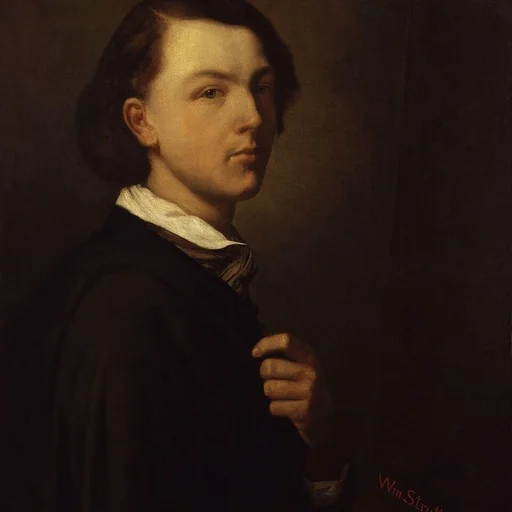
William Strutt (3 July 1825 – 3 January 1915) was an English artist. Strutt was born in Teignmouth, Devon, England, and came from a family of artists. His grandfather, Joseph Strutt, was a well-known author and artist,…