Artwork
A Dromedary Camel
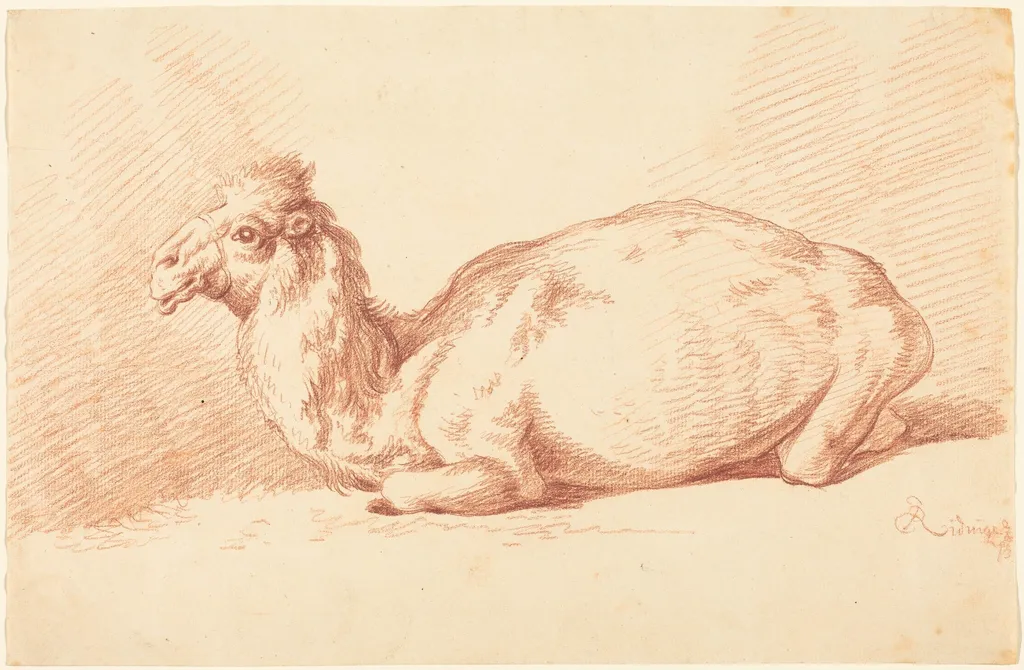
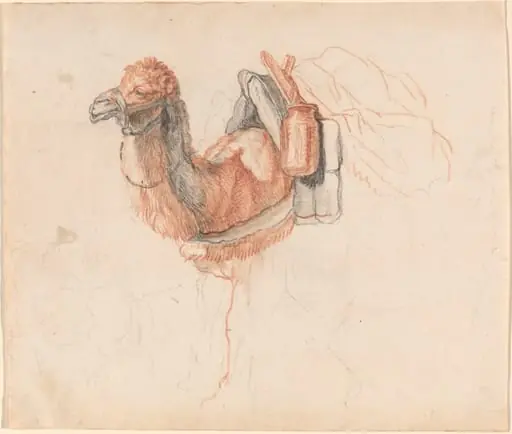
A Dromedary Camel is a chalk drawing by the Romanticist artist Johann Elias Ridinger. It dates from 1754 and is held in the collection of the National Gallery of Art.
About this work
Overview
Created circa 1754, this red‑chalk drawing portrays a dromedary camel at rest on a textured ground. The animal is depicted in a reclining pose, its head turned slightly toward the viewer, while the surrounding paper shows a warm, yellowish hue that frames the study. The work reflects a focused observation of the creature’s form and posture.
Subject & Meaning
The composition captures a single dromedary, emphasizing its distinctive single hump and elongated limbs. By presenting the animal in a relaxed state, the drawing highlights the natural anatomy and movement of a creature often associated with travel and exotic locales, offering a quiet counterpoint to the more dynamic hunting scenes typical of the artist’s oeuvre.
Technique & Style
Executed with red chalk on laid paper, the artist employs swift, gestural strokes to suggest the camel’s fur and musculature, while deeper, darker lines convey shadow and volume. The loose handling of the medium creates a soft, earthy atmosphere, and the paper’s subtle tone enhances the drawing’s tonal range without relying on heavy detailing.
History & Provenance
Johann Elias Ridinger, an 18th‑century German draughtsman and engraver, produced this study during his productive period in Augsburg, where he was renowned for animal depictions and designs for Meissen porcelain. The work exemplifies his practice of producing preparatory sketches that informed larger engravings and decorative projects.
Own this work as a print
Artist & collection
Artist
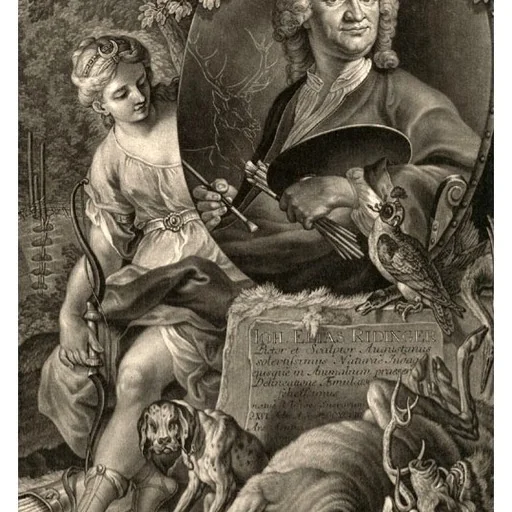
Johann Elias Ridinger (16 February 1698 in Ulm – 10 April 1767 in Augsburg) was a German painter, engraver, draughtsman and publisher.