Artwork
Imprimerie en Taille Douce: pl. I
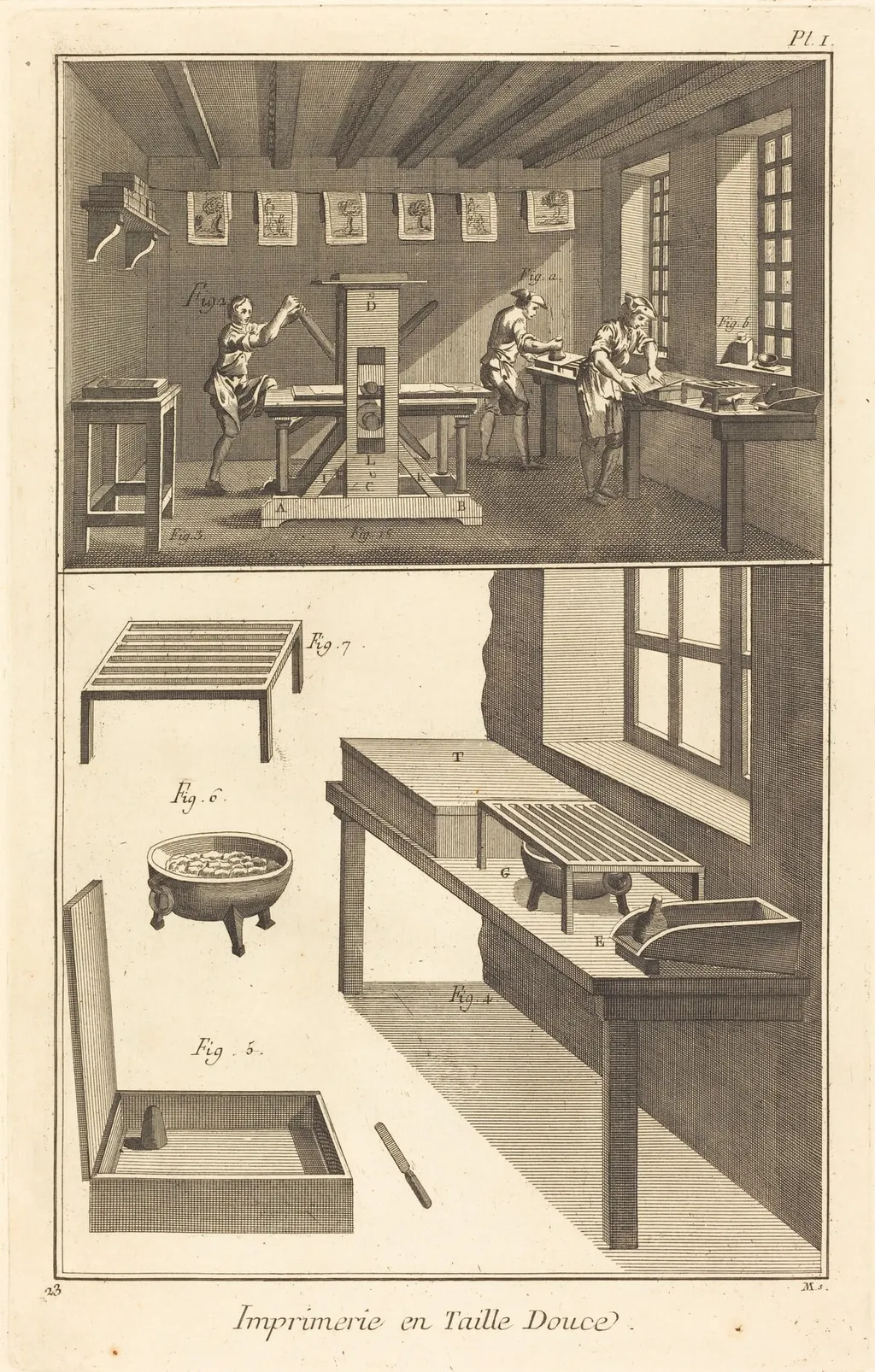
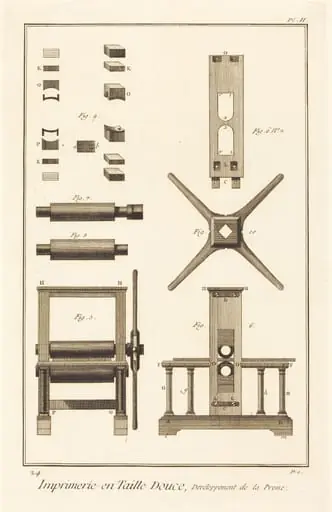
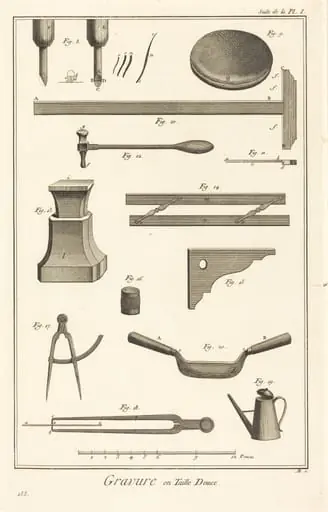
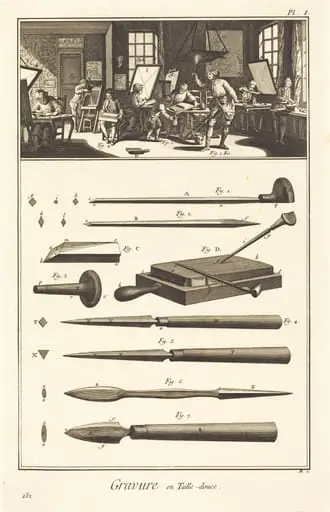
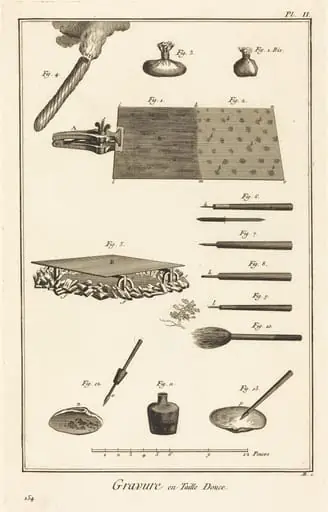
Imprimerie en Taille Douce: pl. I is an ink print by the Romanticist artist French 18th Century. It dates from 1775 and is held in the collection of the National Gallery of Art. Imprimerie en Taille Douce: pl.
About this work
Overview
Imprimerie en Taille Douce: pl. I is an engraving executed on laid paper, catalogued as a print. The image captures a printing press in operation, depicting a laborer drawing a sheet through the rollers. Rendered with fine, precise lines, the composition conveys the mechanical rhythm of eighteenth‑century printing.
Subject & Meaning
The work illustrates the practical steps of transferring ink onto paper, serving as a visual guide within a contemporary manual on printing techniques. By focusing on the press and its operator, the engraving emphasizes the craftsmanship and labor involved in producing printed material during the late 1700s.
Technique & Style
Created through cross‑hatching, the artist builds tonal variation by overlapping thin and thick lines, achieving subtle shadows and texture. The use of laid paper provides a faint ribbed pattern that interacts with the engraved marks, enhancing the sense of depth and the tactile quality of the press’s components.
History & Provenance
The engraving was produced as part of a printed treatise on printing methods published in the final decades of the eighteenth century. While its original publisher remains unidentified, the image now resides in the collection of the National Gallery of Art in Washington, where it is displayed among other historic printmaking examples.
Artist & collection

Artist
This artist worked in late 18th-century France, making portrait paintings and etched prints.