Artwork
Gravure en Taille-douce: pl. III
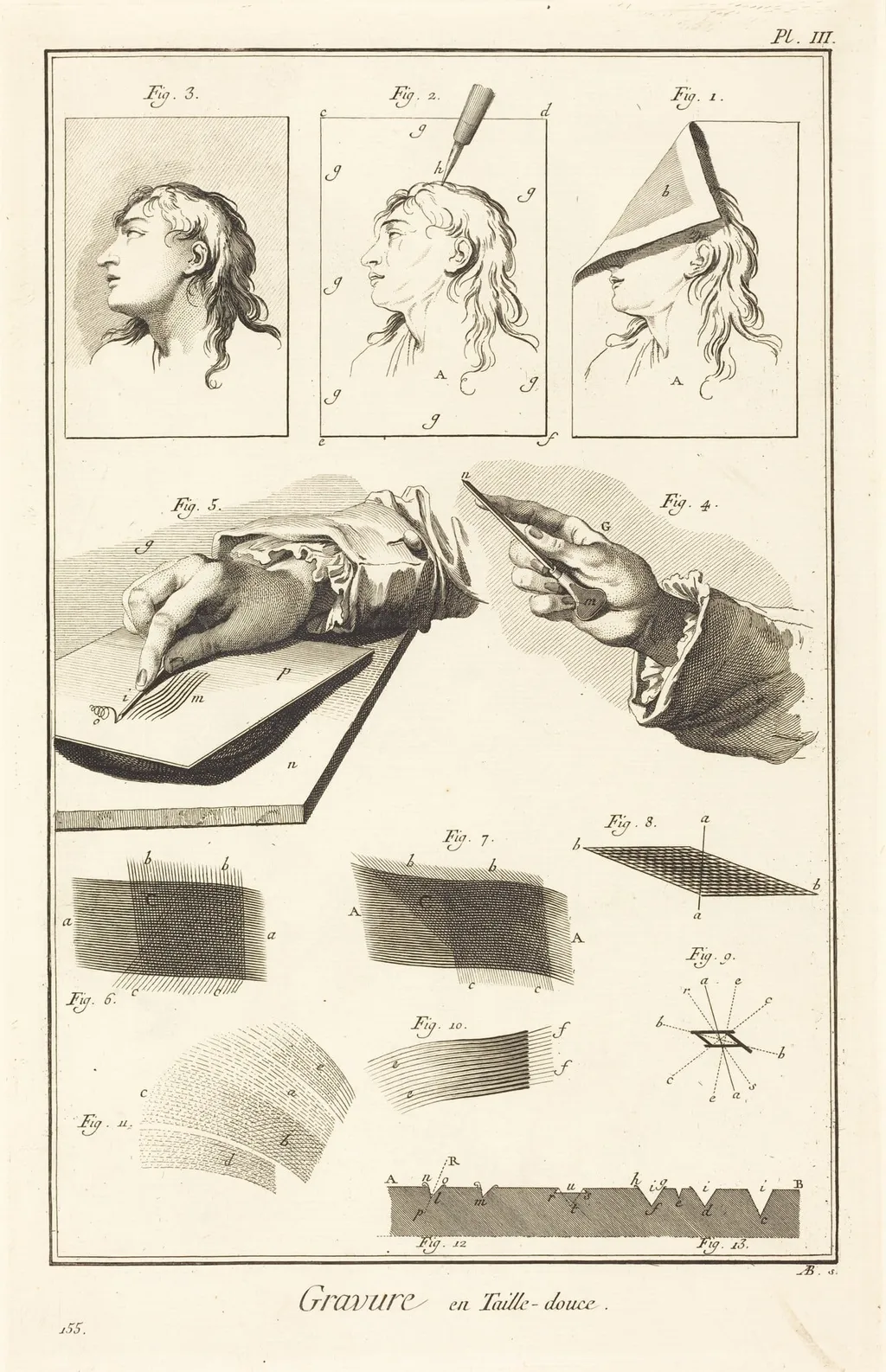
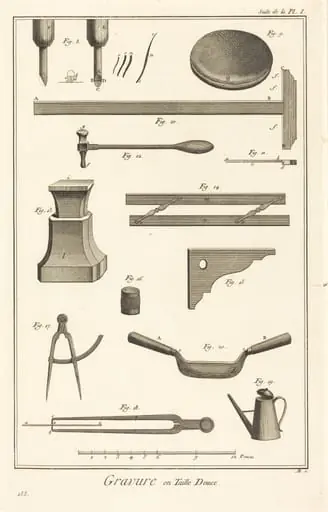
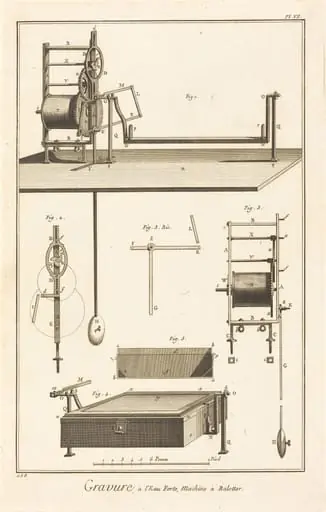
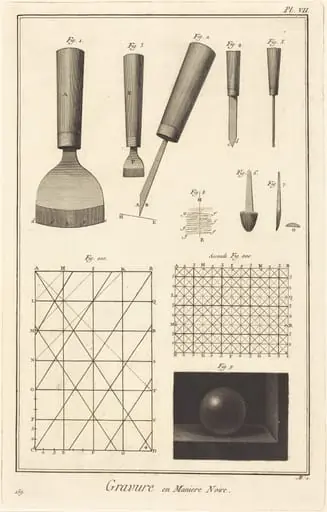
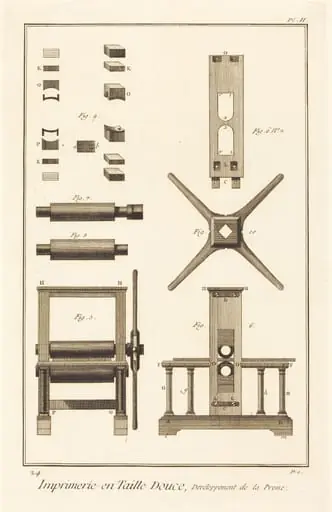
Gravure en Taille-douce: pl. III is an ink print by the Romanticist artist Antonio Baratta. It dates from 1775 and is held in the collection of the National Gallery of Art.
About this work
Overview
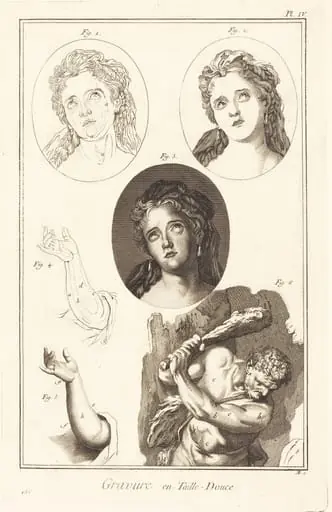
It serves as a didactic illustration, presenting step-by-step visual instruction for artists studying human anatomy in drawing.
Created in 1775 by Antonio Baratta, this engraving is the third plate from a series titled Gravure en Taille-douce. It serves as a didactic illustration, presenting step-by-step visual instruction for artists studying human anatomy in drawing. Executed in fine line engraving on laid paper, the plate combines figure studies with technical demonstrations of shading methods common in 18th-century printmaking.
Subject & Meaning
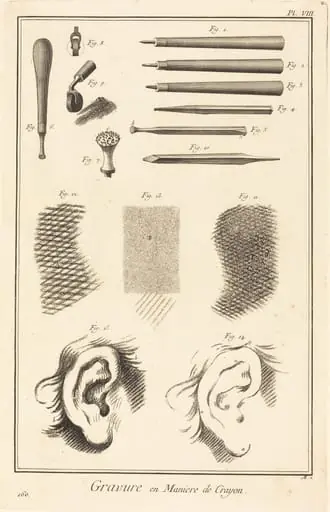
The plate displays three head profiles—simple, with a brush near the hair, and wearing a pointed hat—alongside a sequence of hands in varying poses. Below, small panels illustrate hatching techniques using parallel lines. These elements collectively function as a reference guide, emphasizing observation and controlled mark-making. The intent is pedagogical: to train the eye and hand in rendering form through tone rather than color.
Technique & Style
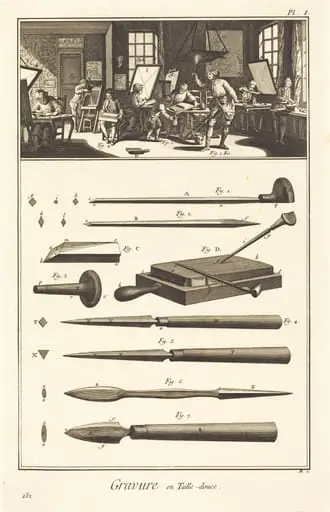
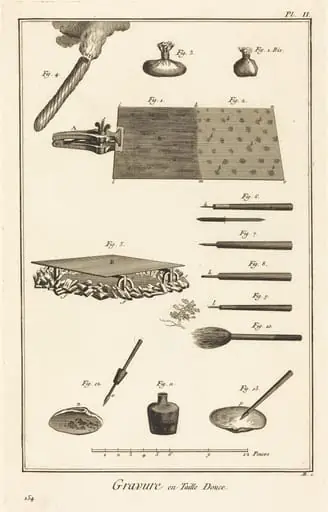
Baratta employed the taille-douce method, a form of engraving that allows for subtle tonal gradations by incising fine, parallel lines into a metal plate. The shading boxes rely on tightly spaced, uniform strokes to simulate shadow and volume. The precision of the lines reflects the engraver’s control and the print’s function as a teaching tool, prioritizing clarity and reproducibility over expressive flourish.
History & Provenance
The plate was produced as part of a series intended for art students and practitioners in late 18th-century Europe. While the full series is not widely documented, individual plates like this one appear in institutional collections focused on artistic pedagogy. Its survival suggests it was circulated among academies or private studios where technical training in drawing was emphasized.
Context
In the 1770s, art academies across Europe formalized instruction in life drawing and anatomical accuracy. Engravings like this one served as portable, reproducible aids where live models were unavailable. Baratta’s plate aligns with broader trends in artistic education, where printed manuals replaced oral instruction, standardizing techniques across regions and generations of artists.
Legacy
Though not attributed to a major artistic movement, this engraving represents a quiet but vital strand in the history of art education. Its structured approach to teaching form and shadow influenced later instructional prints and remains a tangible artifact of how technical skills were transmitted before photography. It endures as evidence of the discipline underlying artistic training.
Artist & collection