Artwork
Gravure en Taille Douce: suite de la pl. I
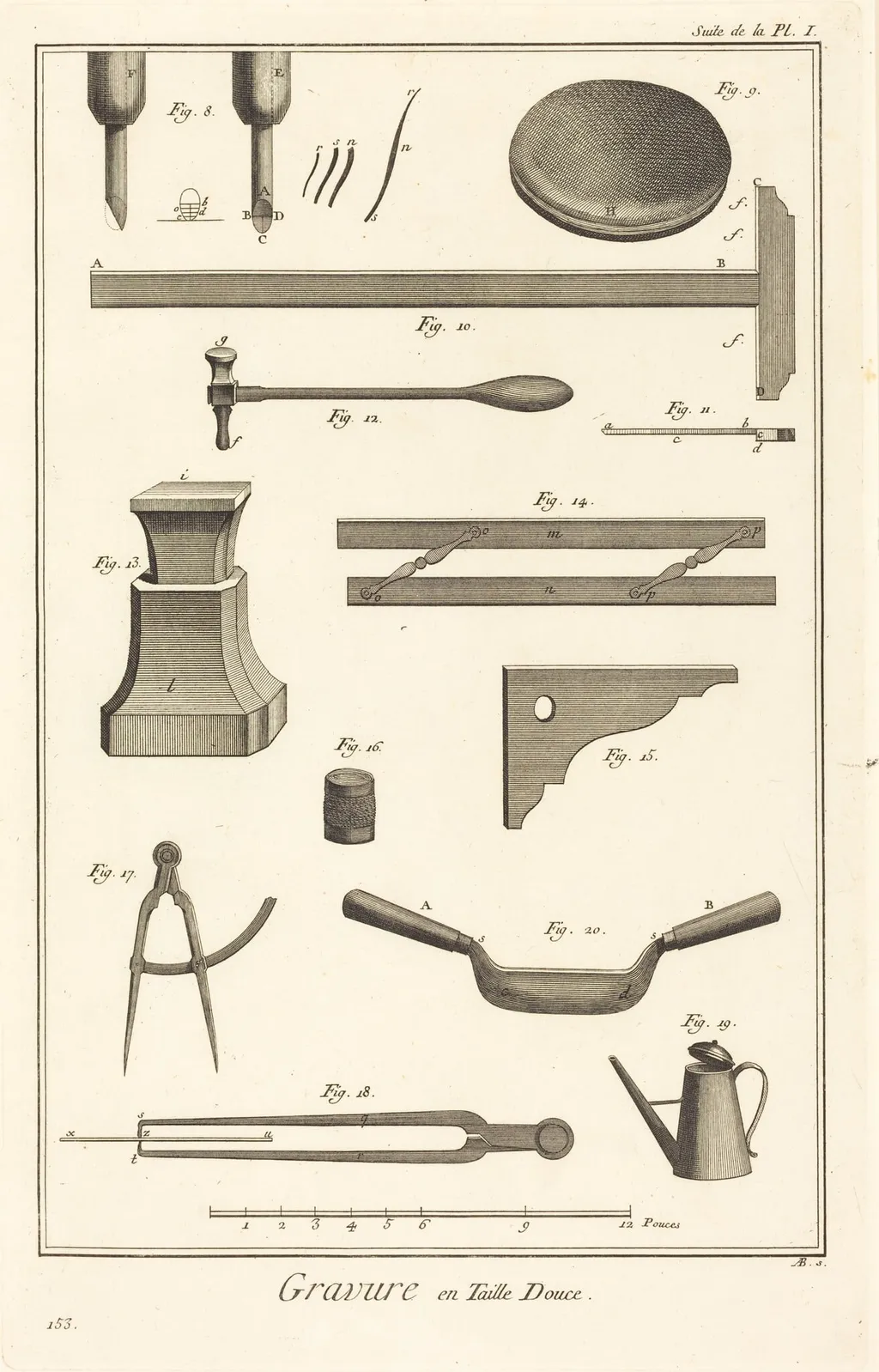
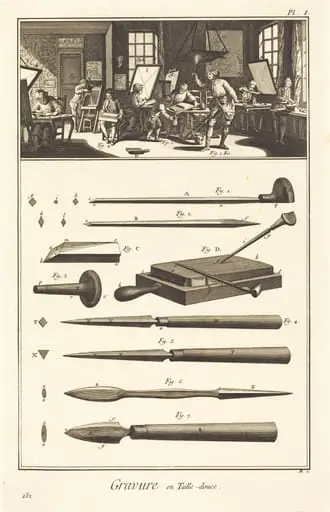
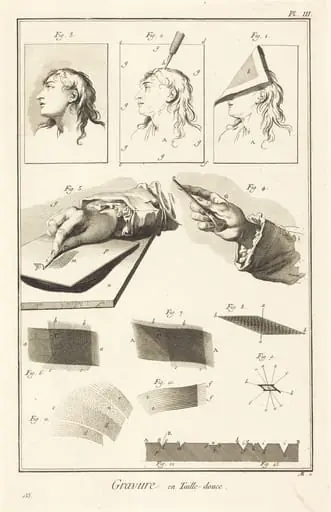
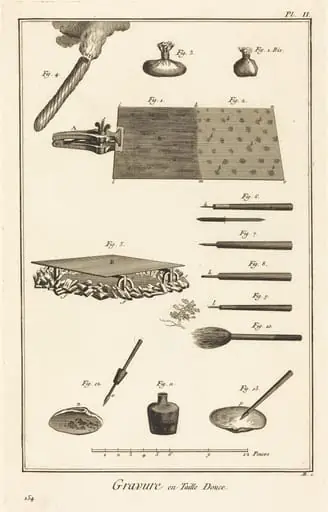
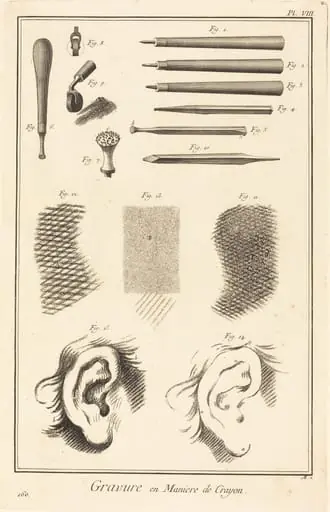
Gravure en Taille Douce: suite de la pl. I is an ink print by the Romanticist artist Antonio Baratta. It dates from 1775 and is held in the collection of the National Gallery of Art.
About this work
Overview
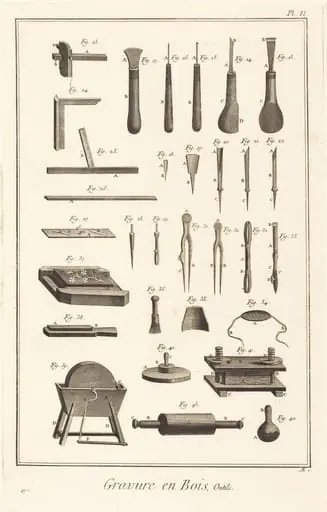
Rendered in fine black lines on light laid paper, it presents a precise arrangement of tools and objects, each labeled numerically.
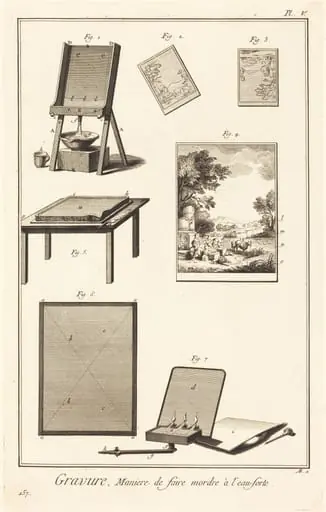
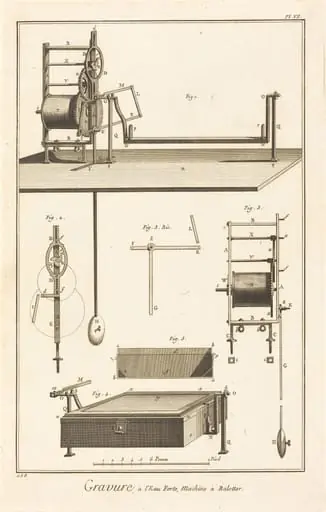
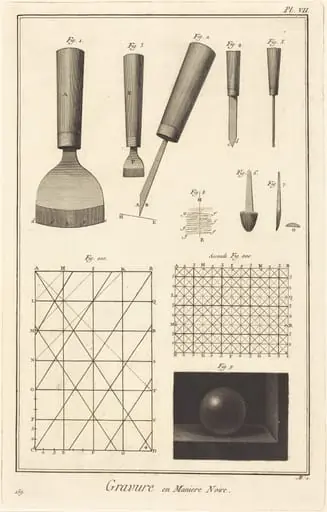
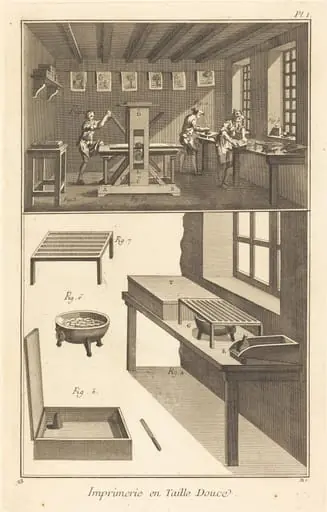
Created in 1775 by Antonio Baratta, this engraving is part of a series documenting practical instruments. Rendered in fine black lines on light laid paper, it presents a precise arrangement of tools and objects, each labeled numerically. The composition avoids color, relying solely on line work to define form and spatial relationships. The image functions as a technical record rather than a decorative piece, emphasizing clarity and order.
Subject & Meaning
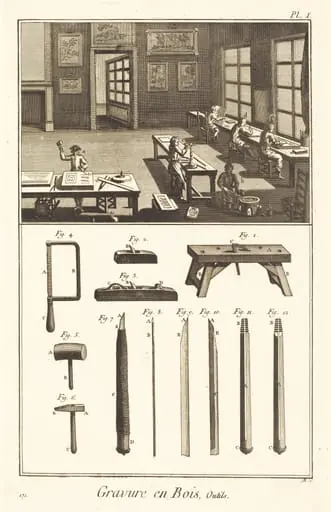
The scene displays a curated selection of artisanal tools—carving implements, dividers, a curved spoon-like instrument, a small pitcher, and rulers—arranged with methodical precision. Each object is numbered, suggesting an instructional or cataloguing purpose. The selection implies a focus on craftsmanship, possibly for training or archival use. The absence of human figures or context directs attention solely to the tools themselves as symbols of skill and measurement.
Technique & Style
Baratta employed the taille douce method, using fine, controlled incisions to model surfaces with subtle gradations of tone. Lines are densely packed to suggest texture—particularly on curved metal surfaces and the rounded object at the top—while leaving areas of negative space to imply light. The precision of the etching reveals a mastery of line as a tool for rendering volume and materiality without color or shading.
History & Provenance
This print originates from a series produced in the late 18th century, likely intended for use in artisanal schools or workshops. Its survival in institutional collections suggests it was valued for its documentary function. No known private ownership records exist prior to its inclusion in public archives, indicating its role was primarily educational rather than commercial or collectible.
Context
In the 1770s, detailed visual inventories of tools were increasingly used to standardize craft training across Europe. Baratta’s work aligns with this trend, reflecting Enlightenment-era interests in classification and technical literacy. Similar engravings appeared in manuals on sculpture, woodworking, and metalwork, serving as visual references for apprentices and masters alike.
Legacy
The engraving remains a quiet testament to the documentation of pre-industrial craftsmanship. While not widely reproduced, it contributes to the historical record of artisanal practices. Its clarity and restraint continue to inform studies of material culture, offering insight into how tools were perceived, organized, and transmitted across generations.
Artist & collection