Artwork
An Elegant Company Playing Board Games
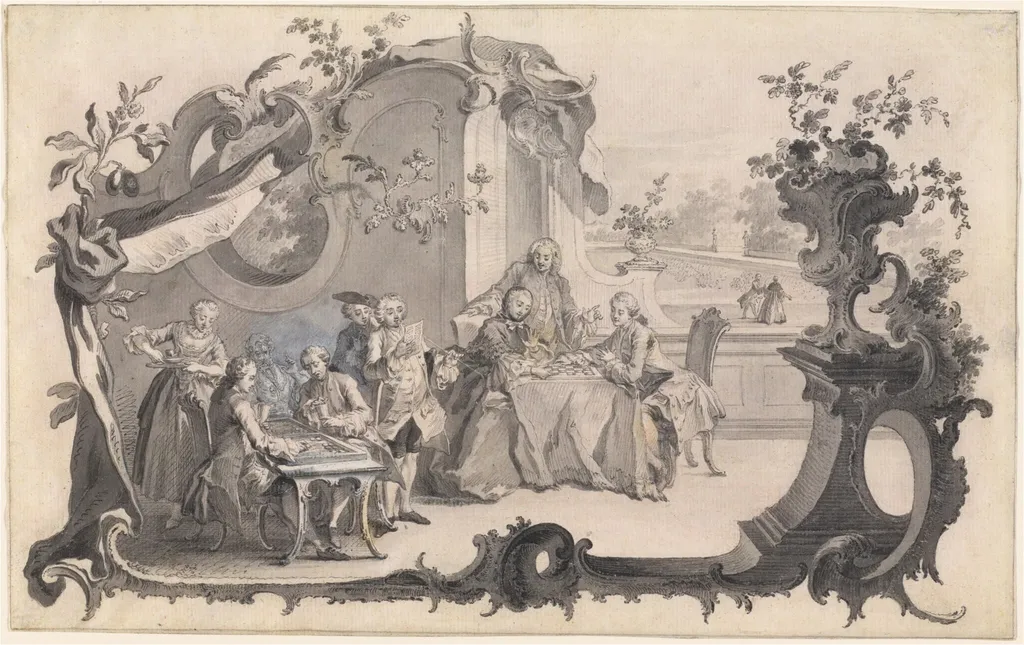
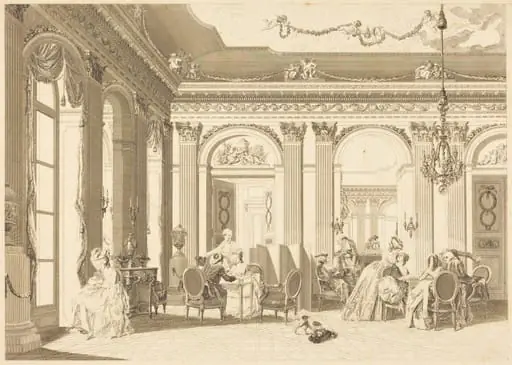
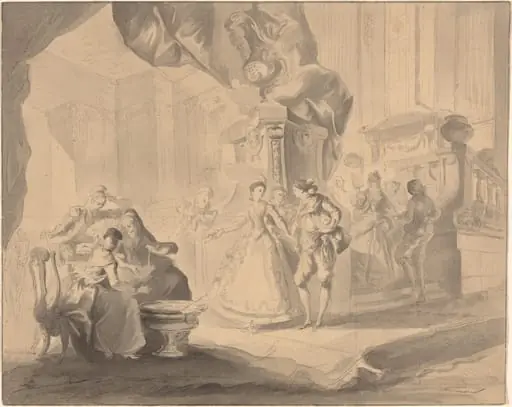
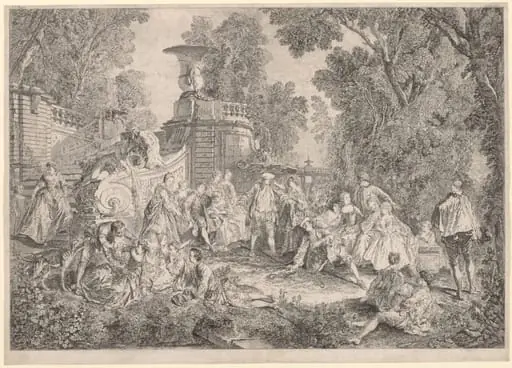
An Elegant Company Playing Board Games is an ink drawing by the Romanticist artist Johann Esaias Nilson. It dates from 1756 and is held in the collection of the National Gallery of Art.
About this work
Overview
Executed in pen and gray ink with gray wash and touches of white gouache, it retains visible graphite underdrawing and incised lines for definition.
This 1756 drawing by Johann Esaias Nilson depicts a refined interior scene where figures engage in board games and conversation. Executed in pen and gray ink with gray wash and touches of white gouache, it retains visible graphite underdrawing and incised lines for definition. The paper, handmade and laid, bears its textured surface, while the verso has been treated with a reddish wash to facilitate transfer. Decorative scrollwork frames the composition, suggesting its original function as a design for reproduction.
Subject & Meaning
The scene captures a moment of leisure among an upper-class group, gathered around tables with cards and game boards. Figures interact with quiet intimacy—some focused on play, others in quiet exchange. The garden visible through the window extends the sense of cultivated tranquility, reinforcing themes of domestic elegance and social ritual. The composition avoids narrative drama, instead emphasizing composure and shared quietude as markers of refinement.
Technique & Style
Nilson employed fine pen lines and layered gray washes to model forms with subtle gradations, while white gouache heightened highlights and details like facial features and fabric folds. The incised lines across the surface suggest a methodical transfer process, likely for engraving or printmaking. Handmade paper’s laid texture is visible, and the decorative border, rendered in delicate scrolls and foliage, reflects contemporary taste for ornamental framing in decorative arts.
History & Provenance
Created in 1756, the drawing likely served as a preparatory study for a printed image, given its transfer-ready verso treatment. Its survival as a finished work suggests it was valued beyond its utilitarian purpose. Though specific early ownership records are sparse, its technical precision and refined subject align with the Swedish artistic circles of the mid-18th century, where such scenes were commonly reproduced in prints for private collections.
Context
In mid-18th-century Sweden, depictions of genteel leisure were popular in decorative arts, reflecting Enlightenment ideals of refined sociability. Nilson’s work fits within a tradition of genre scenes that documented domestic life among the educated elite. The integration of garden views and ornamental borders echoes contemporary interior design and print culture, where images of polite recreation served both aesthetic and aspirational functions.
Legacy
Though not widely exhibited today, the drawing exemplifies the transitional role of drawing in pre-industrial print production. Its careful execution and preservation highlight how preparatory works could attain independent artistic merit. Nilson’s handling of light, texture, and social nuance contributes to a broader understanding of Nordic graphic arts in the Age of Reason, where precision and restraint defined visual culture.
Artist & collection

 Portrait of a Man
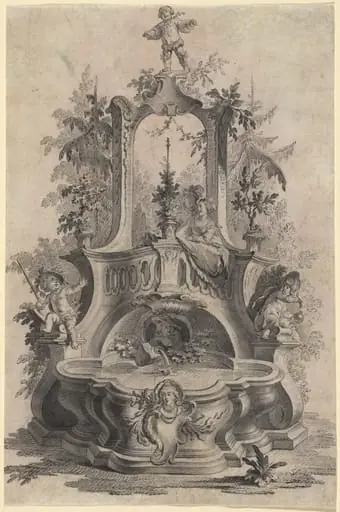 Rococo Fountain with Lovers and the Four Elements
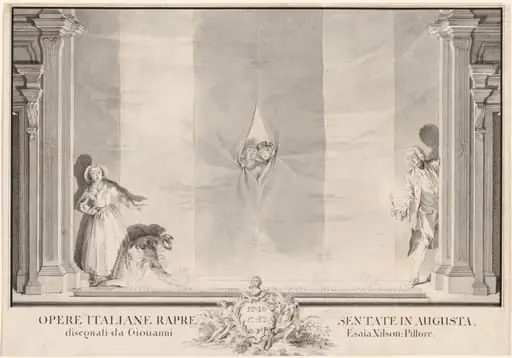 Two Actors Peeking through a Theater Curtain while Others Prepare the Footlights
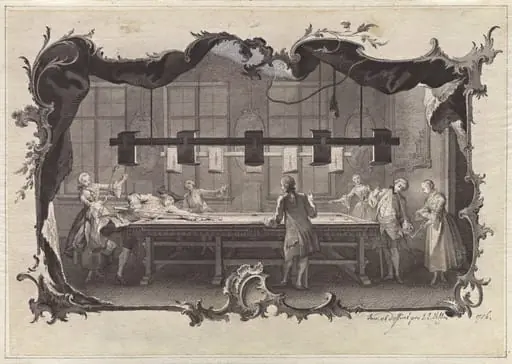 Ladies and Gentlemen Playing Billiards
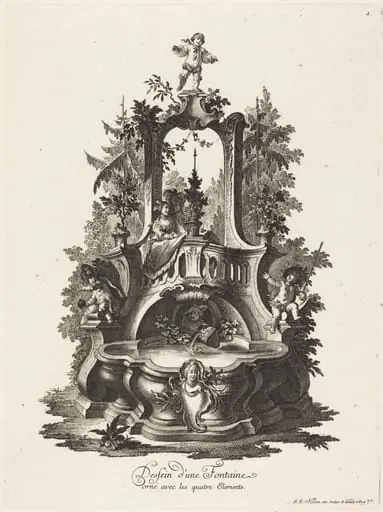 Dessein d'une Fontaine orné avec les quatre Elements (Design for a Fountain Decorated with the Four Elements)
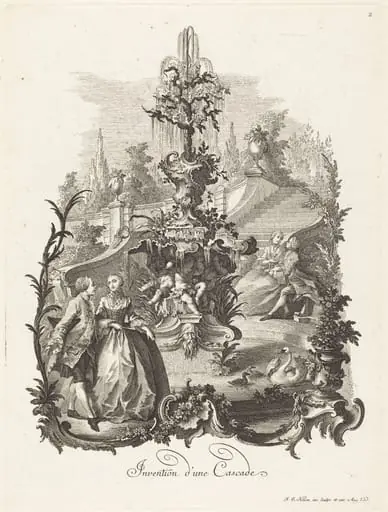 Invention d'une Cascade (Design for a Cascade)
![Cartouches Modernes orné avec des [diferentes Figures] (Plate VI-1 from the set), by Johann Esaias Nilson](https://artifactworldgallery.com/img/johann-esaias-nilson--cartouches-modernes-orne-avec-des-diferentes-figures-plate-v--37083fb67ce929ab-w320.webp) Cartouches Modernes orné avec des [diferentes Figures] (Plate VI-1 from the set)
Cartouches Modernes orné avec des [diferentes Figures] (Plate VI-1 from the set)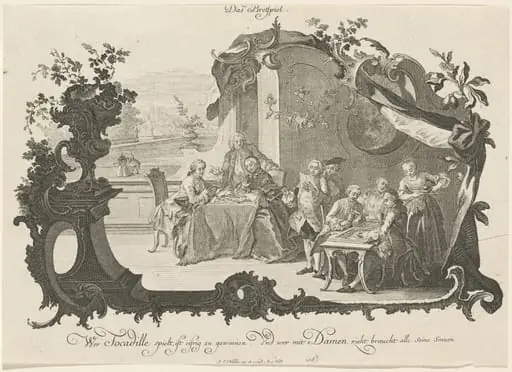 Das Bretspiel (Ladies and Gentlemen Playing Board Games)
![A Game of Cards [recto], by Anton Weiss](https://artifactworldgallery.com/img/anton-weiss--a-game-of-cards-recto--6bb6d053bcd336b7-w320.webp)