Artwork
Rustic Landscape
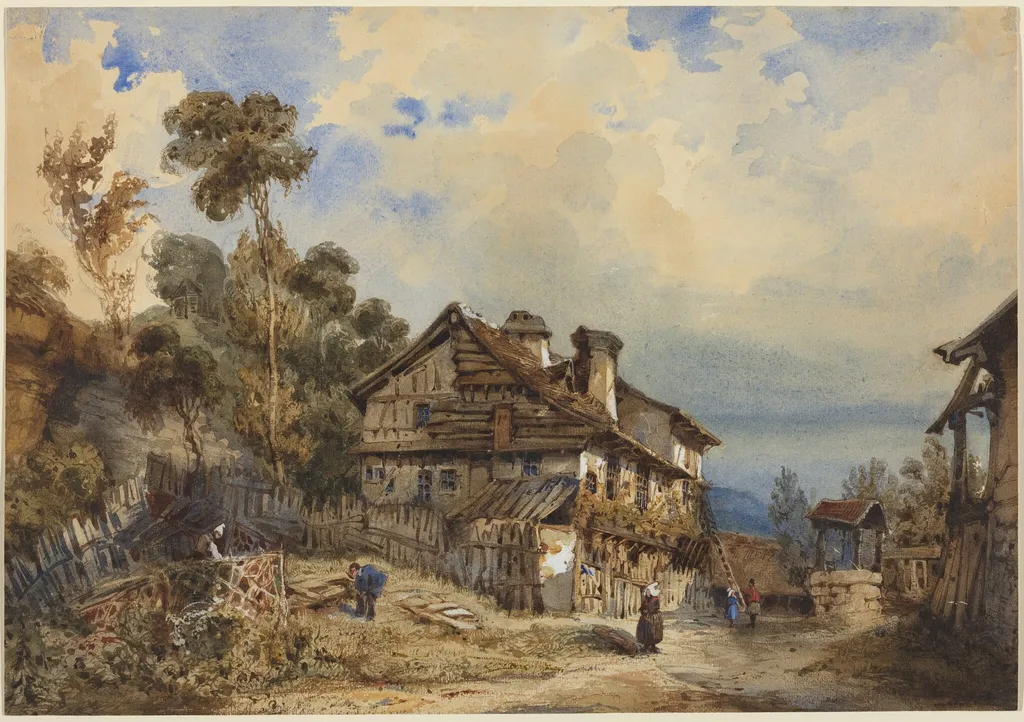
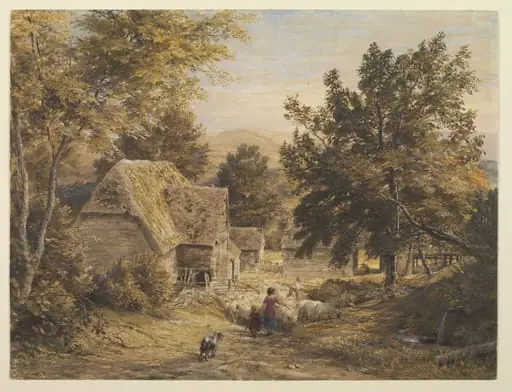
Rustic Landscape is a gouache drawing by the Romanticist artist French 19th Century. It dates from 1830 and is held in the collection of the National Gallery of Art.
About this work
Overview
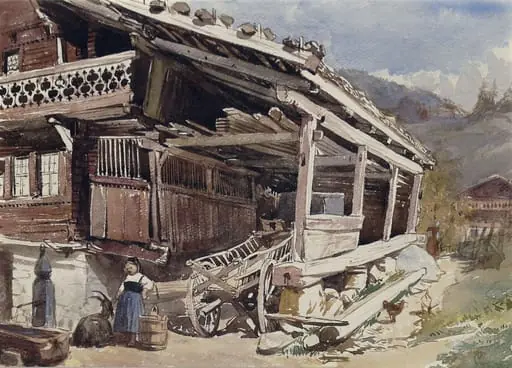
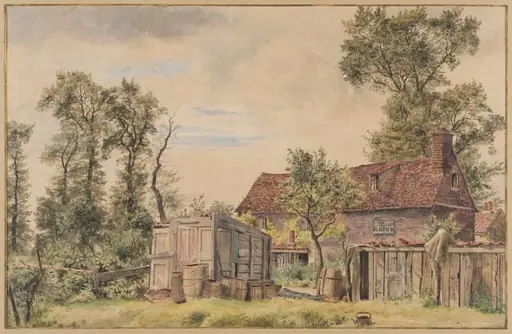
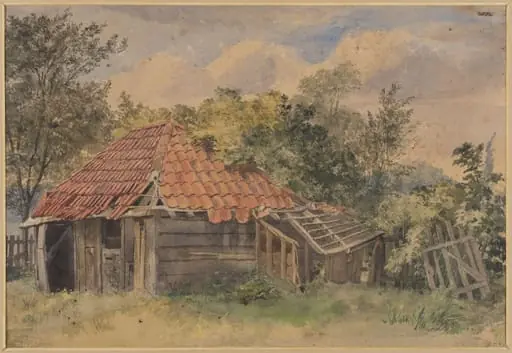
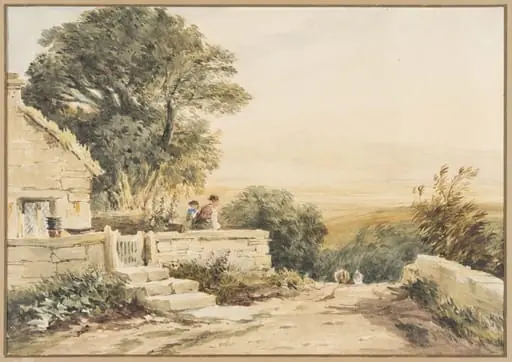
This watercolor and gouache drawing on laid paper depicts a tranquil rural scene, rendered with restrained tones and loose, sketch-like brushwork.
This watercolor and gouache drawing on laid paper depicts a tranquil rural scene, rendered with restrained tones and loose, sketch-like brushwork. The composition centers on a large wooden house with a sloped roof and smoking chimney, surrounded by figures engaged in quiet labor. The muted palette of earthy browns and soft blues, combined with delicate cloud formations, evokes a subdued, contemplative atmosphere typical of 19th-century landscape studies.
Subject & Meaning
The scene portrays everyday rural life without idealization—figures bend over fields or move near a fence, their actions unremarkable yet deliberate. The smoking chimney suggests domestic continuity, while bare trees and overcast skies imply a season of stillness. There is no narrative climax; instead, the work honors the dignity of routine existence in a modest village setting.
Technique & Style
The artist employed watercolor and gouache to build layered, translucent washes over a textured paper surface, enhancing the tactile quality of wood and fabric. Loose, uneven brushstrokes suggest movement and immediacy, while subtle highlights define the grain of timber and folds of clothing. The absence of sharp detail invites the viewer to perceive the scene through atmosphere rather than precision.
History & Provenance
The work’s origin is undocumented in public records, but its materials and handling align with 19th-century European drawing practices, particularly among artists engaged in plein-air studies. It likely originated as a private sketch, possibly part of a larger series of rural observations, and entered its current collection without known provenance prior to the 20th century.
Context
Created during a period when artists increasingly turned to rural subjects as industrialization reshaped society, this drawing reflects a broader interest in authentic, unembellished landscapes. Though not overtly political, its quiet realism resonates with Romantic-era sensibilities that valued nature and labor over urban grandeur, aligning it with contemporaneous studies by lesser-known regional draftsmen.
Legacy
The drawing stands as a quiet example of observational artistry from a time when landscape drawing served as both study and meditation. Its unadorned realism and emphasis on texture over drama influenced later generations of regional artists who sought to capture everyday rural life without sentimentality or embellishment.
Own this work as a print
Artist & collection

Artist
This sculptor liked to keep sharp tools in the studio and blunt ones in his pocket—his niece recalled finding him absentmindedly whittling a stick while talking philosophy.