Artwork
Piling Straw
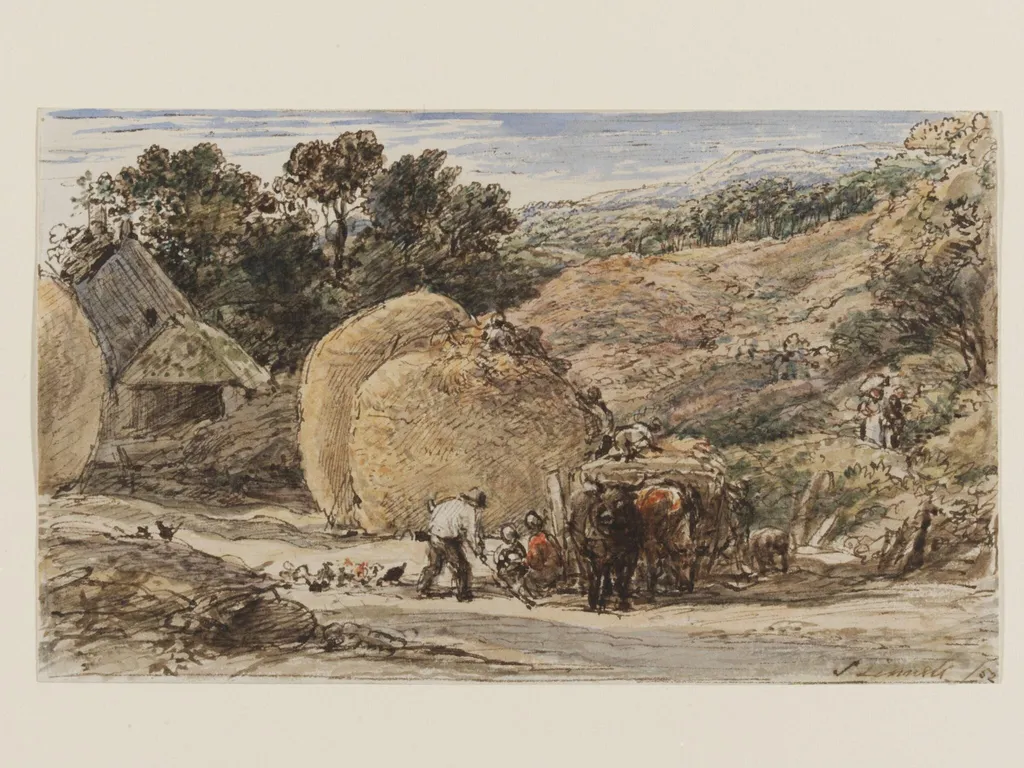
Piling Straw is a watercolor work on paper by the Impressionist artist John (II) the younger Linnell. It dates from 1852 and is held in the collection of the Victoria and Albert Museum. This watercolour study, signed and dated 1852 by John Linnell the younger, captures a moment of rural labor on the Isle of Wight.
About this work
Overview
This watercolour study, signed and dated 1852 by John Linnell the younger, captures a moment of rural labor on the Isle of Wight.
This watercolour study, signed and dated 1852 by John Linnell the younger, captures a moment of rural labor on the Isle of Wight. Created as a preparatory work for the oil painting *A Hillside Farm. Farmyard at Steep Hill, Isle of Wight*, it records the physical effort of stacking straw with quiet precision. The medium’s immediacy suits the transient nature of farmwork, preserving a scene otherwise lost to time.
Subject & Meaning
The scene depicts agricultural laborers managing a large round bale of straw, pulled by three oxen on a sled, with others pushing from behind. A modest hut and wooded slope frame the background, grounding the activity in a specific place. No dramatic narrative is present—instead, the work honors the routine rhythm of farm life, where collective effort sustains the seasonal cycle.
Technique & Style
Linnell employed swift, fluid brushwork to convey motion and the dryness of the landscape. Light washes of watercolour suggest a pale sky and sun-baked earth, while minimal detail in the figures emphasizes their role within the broader environment. The composition avoids sentimentality, favoring observational clarity and a restrained palette that enhances the scene’s authenticity.
History & Provenance
Created in 1852, this watercolour was part of Linnell’s process in developing his larger oil painting of the same farmstead. It likely remained in the artist’s possession until his death, later entering private or institutional collections. Its survival as a study offers insight into his method of translating direct observation into finished works.
Context
In mid-19th century England, rural life was undergoing change due to mechanization and shifting land use. Linnell’s focus on traditional labor—oxen-drawn sleds, hand-stacked straw—reflects a quiet resistance to romanticizing or erasing these practices. His work aligns with contemporaries who documented the countryside with documentary intent rather than idealization.
Legacy
As a preparatory study, this watercolour illuminates Linnell’s commitment to recording the details of agricultural life with fidelity. Though less known than his finished oils, such works contribute to a broader understanding of Victorian rural art—not as spectacle, but as quiet testimony to the rhythms of labor and land.
Own this work as a print
Artist & collection
Artist
John Linnell the younger made quiet, detailed watercolors of rural life in the 1800s.

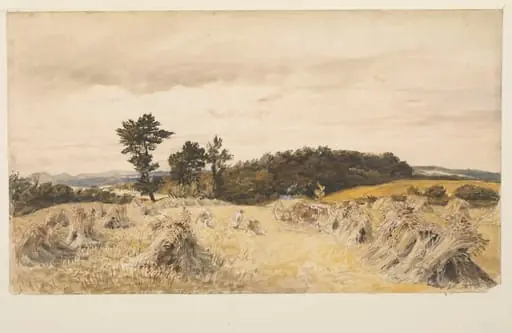 A Harvest Field
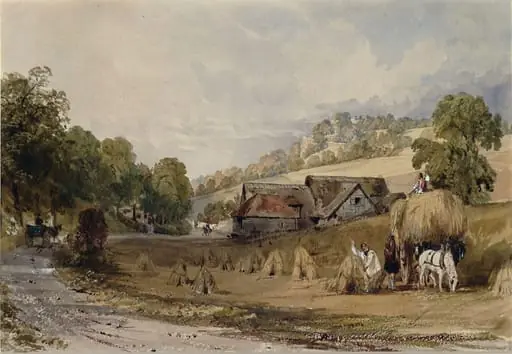 Haymaking at Ashurst, Surrey
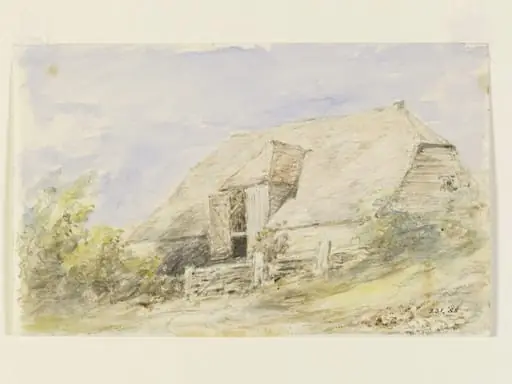 A barn.
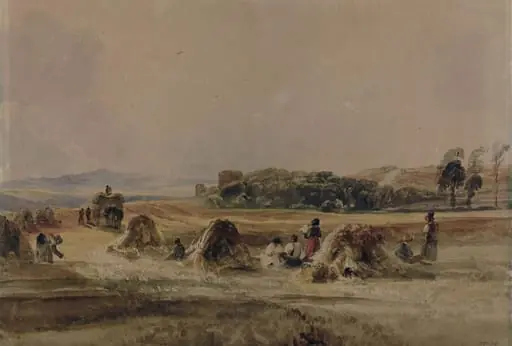 Cornfield with Harvesters
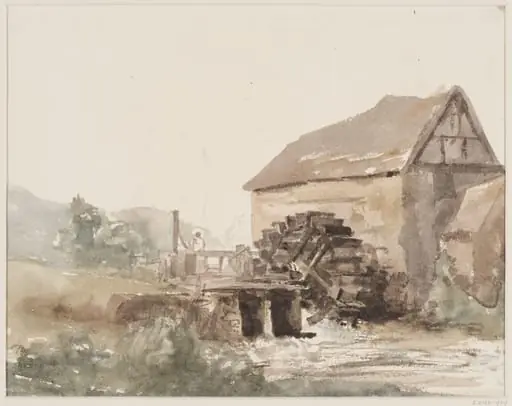 View of a water-mill near Ridware
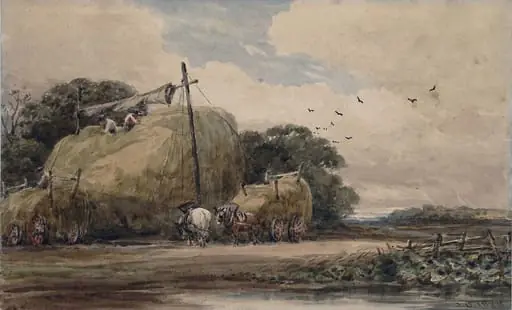 Landscape with Haystack
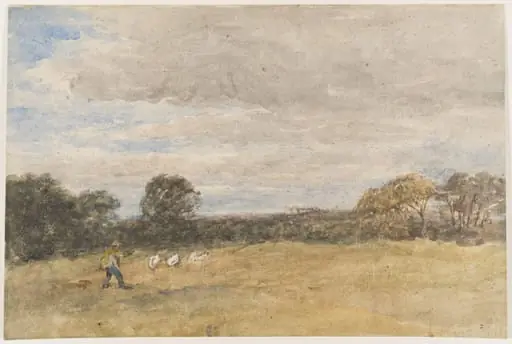 Distant View of Windsor
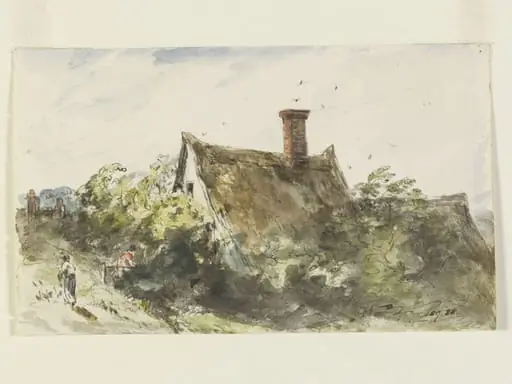 A thatched cottage and two figures
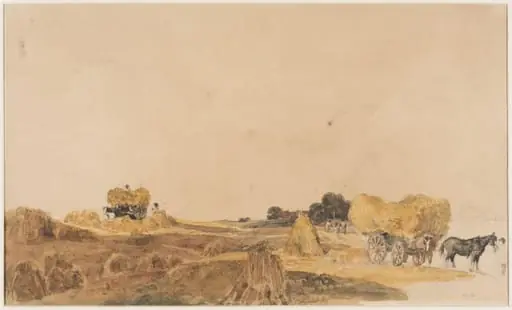 Cornfield with loaded wagons, near Lincoln
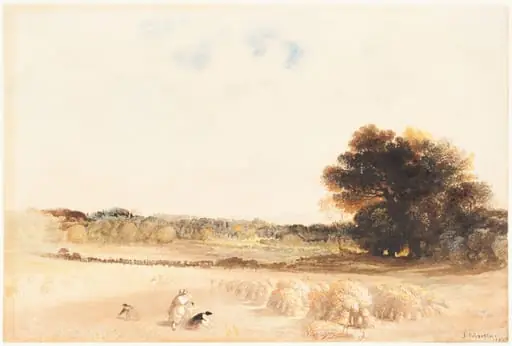 Gleaners in the Wheat Field
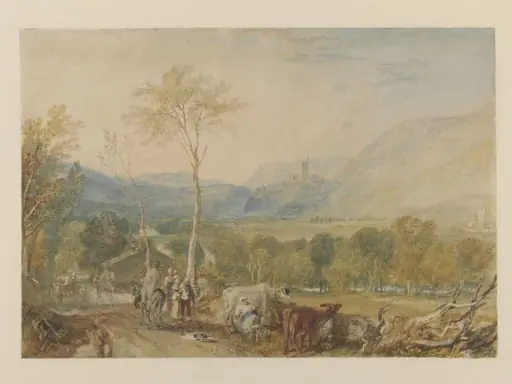 Hornby Castle, Lancashire, from Tatham Church
 A Welsh View - Morning