Artwork
Saint John the Baptist Pray for Us
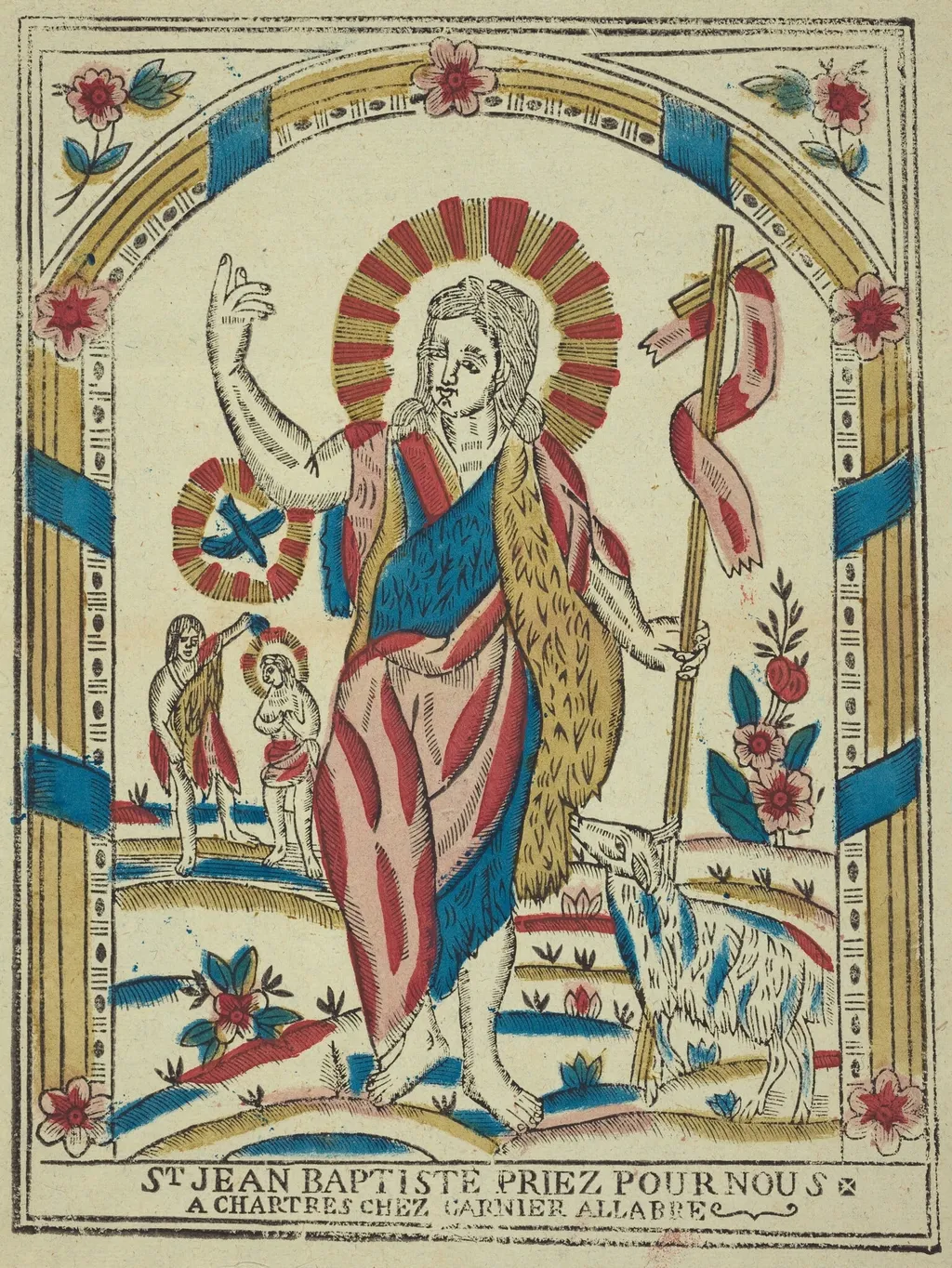
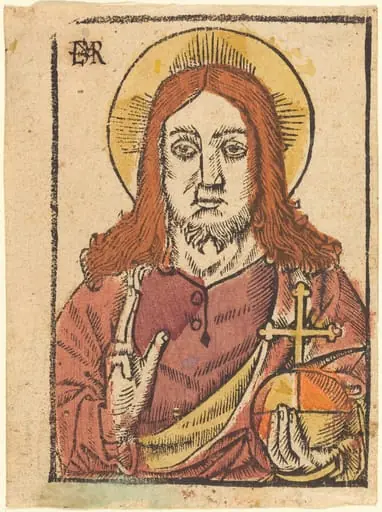
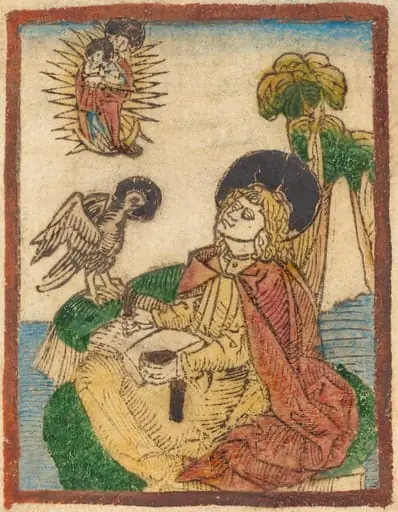
Saint John the Baptist Pray for Us is an ink print by the Romanticist artist French 19th Century. It dates from 1820 and is held in the collection of the National Gallery of Art. This hand-colored woodcut on blue laid paper depicts Saint John the Baptist in devotional pose, intended for private religious use.
About this work
Overview
This hand-colored woodcut on blue laid paper depicts Saint John the Baptist in devotional pose, intended for private religious use. The image combines printed lines with manual coloring, a common practice in late medieval and early modern Europe to enhance affordability and visual impact. Its small scale and devotional text suggest it was meant for domestic veneration rather than public display.
Subject & Meaning
He wears a layered robe of red and blue over a yellow tunic, colors symbolizing divinity and earthly humility.
Saint John the Baptist is shown with a halo, holding a cross-topped staff and raising his hand in blessing. He wears a layered robe of red and blue over a yellow tunic, colors symbolizing divinity and earthly humility. Surrounding flowers and a distant figure with a child allude to his role as precursor to Christ. The French inscription invokes his intercession, reflecting a common prayer practice among lay believers.
Technique & Style
The image was produced using a woodcut, where lines were carved into a wooden block, inked, and pressed onto paper. Hand coloring was added afterward, likely with water-based pigments, to highlight details like the halo, garments, and border. The decorative blue-and-gold frame echoes ecclesiastical illumination, blending folk art simplicity with sacred symbolism.
History & Provenance
Produced in late 15th or early 16th century France, this print belongs to a broader tradition of devotional imagery circulated among the laity. Similar prints were sold by itinerant vendors or in urban shops, often bound into prayer books or hung in homes. Its survival suggests it was cherished, possibly passed through generations as a personal object of faith.
Context
In pre-Reformation Europe, such prints served as accessible tools for personal piety, especially among those unable to read Latin or afford painted altarpieces. The use of French text, rather than Latin, indicates an effort to reach vernacular audiences. The blue paper, though costly, was chosen for its association with the Virgin Mary and heavenly grace.
Legacy
This print exemplifies how religious imagery bridged literacy gaps and reinforced communal faith through repetition and familiarity. Though mass-produced, each copy was uniquely colored, reflecting individual devotion. Such works laid groundwork for later Protestant and Catholic visual traditions, preserving devotional practices beyond institutional control.
Artist & collection

Artist
This sculptor liked to keep sharp tools in the studio and blunt ones in his pocket—his niece recalled finding him absentmindedly whittling a stick while talking philosophy.

![Saint John the Baptist [recto], by German 15th Century](https://artifactworldgallery.com/img/german-15th-century--saint-john-the-baptist-recto--4347da889e7eef62-w320.webp)